---
title: Publications - 0110.be
canonical: https://0110.be/Publications?page=1
markdown_url: https://0110.be/Publications.md?page=1
page: 1
posts_per_page: 30
total_posts: 57
filters:
content_page: Publications
tags:
- Presentation
- Research papers
previous: https://0110.be/Publications.md
next:
---
# Publications - 0110.be
# Publications
I have profiles on [UGent Biblio](https://biblio.ugent.be/person/000130780248), [Google Scholar](https://scholar.google.be/citations?user=3DN9bk8AAAAJ), [ResearchGate](https://www.researchgate.net/profile/Joren-Six), [Research Portal Flanders](https://www.researchportal.be/nl/onderzoeker/joren-six), and [UGent Research](https://research.ugent.be/web/person/joren-six-0/nl). However, this page is the most complete and regularly updated source for my publications. The full list can be found below.
## [TarsosDSP Paper and Presentation at AES 53rd International conference on Semantic Audio](https://0110.be/posts/TarsosDSP_Paper_and_Presentation_at_AES_53rd_International_conference_on_Semantic_Audio.md)
- Published: 2013-12-24T00:00:00Z
- Updated: 2014-01-16T13:25:46Z
- Author: Joren
- ID: 411
- Canonical: https://0110.be/posts/TarsosDSP_Paper_and_Presentation_at_AES_53rd_International_conference_on_Semantic_Audio
- Tags: [Presentation](https://0110.be/tags/Presentation.md), [Research papers](https://0110.be/tags/Research%20papers.md), [TarsosDSP](https://0110.be/tags/TarsosDSP.md), [UGent](https://0110.be/tags/UGent.md)
TarsosDSP will be presented at the [AES 53rd International conference on Semantic Audio](http://www.aes.org/conferences/53/) in London . During the conference both a presentation and demonstration of the paper "*TarsosDSP, a Real-Time Audio Processing Framework in Java*":\[aes53_tarsos_dsp.pdf\], by Joren Six, Olmo Cornelis and Marc Leman, in *Proceedings of the 53rd AES Conference (AES 53rd)*, 2014. From their website:
> *Semantic Audio is concerned with content-based management of digital audio recordings. The rapid evolution of digital audio technologies, e.g. audio data compression and streaming, the availability of large audio libraries online and offline, and recent developments in content-based audio retrieval have significantly changed the way digital audio is created, processed, and consumed. New audio content can be produced at lower cost, while also large audio archives at libraries or record labels are opening to the public. Thus the sheer amount of available audio data grows more and more each day. Semantic analysis of audio resulting in high-level metadata descriptors such as musical chords and tempo, or the identification of speakers facilitate content-based management of audio recordings. Aside from audio retrieval and recommendation technologies, the semantics of audio signals are also becoming increasingly important, for instance, in object-based audio coding, as well as intelligent audio editing, and processing. Recent product releases already demonstrate this to a great extent, however, more innovative functionalities relying on semantic audio analysis and management are imminent. These functionalities may utilise, for instance, (informed) audio source separation, speaker segmentation and identification, structural music segmentation, or social and Semantic Web technologies, including ontologies and linked open data.*
> *This conference will give a broad overview of the state of the art and address many of the new scientific disciplines involved in this still-emerging field. Our purpose is to continue fostering this line of interdisciplinary research. This is reflected by the wide variety of invited speakers presenting at the conference.*
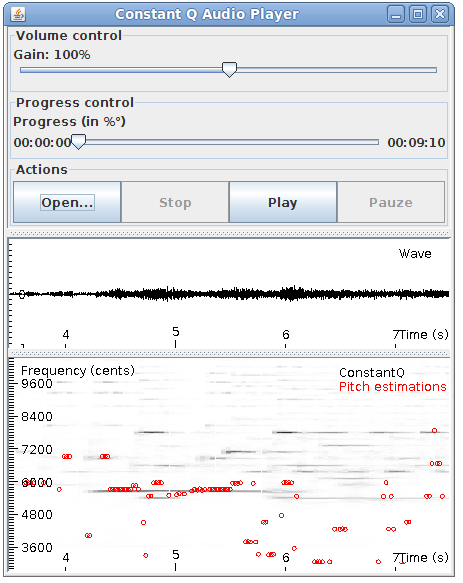
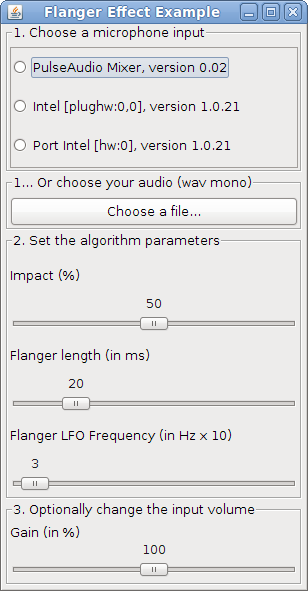
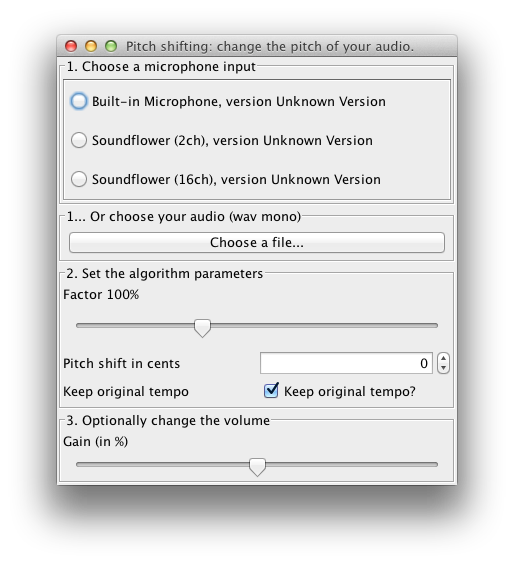
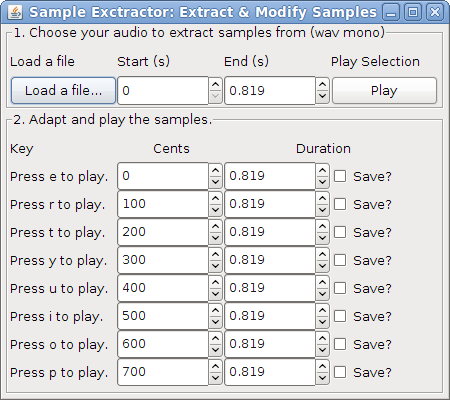
The paper presents TarsosDSP, a framework for real-time audio analysis and processing. Most libraries and frameworks offer either audio analysis and feature extraction or audio synthesis and processing. TarsosDSP is one of a only a few frameworks that offers both analysis, processing and feature extraction in real-time, a unique feature in the Java ecosystem. The framework contains practical audio processing algorithms, it can be extended easily, and has no external dependencies. Each algorithm is implemented as simple as possible thanks to a straightforward processing pipeline. TarsosDSP's features include a resampling algorithm, onset detectors, a number of pitch estimation algorithms, a time stretch algorithm, a pitch shifting algorithm, and an algorithm to calculate the Constant-Q. The framework also allows simple audio synthesis, some audio effects, and several filters. The Open Source framework is a valuable contribution to the MIR-Community and ideal fit for interactive MIR-applications on Android. The full paper can be downloaded "*TarsosDSP, a Real-Time Audio Processing Framework in Java*":\[aes53_tarsos_dsp.pdf\]
A BibTeX entry for the paper can be found below.
\`\`\`ruby\
\@inproceedings{six2014tarsosdsp,\
author = {Joren Six and Olmo Cornelis and Marc Leman},\
title = {{TarsosDSP, a Real-Time Audio Processing Framework in Java}},\
booktitle = {{Proceedings of the 53rd AES Conference (AES 53rd)}},\
year = 2014\
}\
\`\`\`

- [aes53\_tarsos\_dsp.pdf](https://0110.be/files/attachments/411/aes53_tarsos_dsp.pdf)
---
## [Evaluation and Recommendation of Pulse and Tempo Annotation in Ethnic Music - In Journal Of New Music Research](https://0110.be/posts/Evaluation_and_Recommendation_of_Pulse_and_Tempo_Annotation_in_Ethnic_Music_-_In_Journal_Of_New_Music_Research.md)
- Published: 2013-10-09T00:00:00Z
- Updated: 2013-12-05T18:19:15Z
- Author: Joren
- ID: 379
- Canonical: https://0110.be/posts/Evaluation_and_Recommendation_of_Pulse_and_Tempo_Annotation_in_Ethnic_Music_-_In_Journal_Of_New_Music_Research
- Tags: [HoGent](https://0110.be/tags/HoGent.md), [JNMR](https://0110.be/tags/JNMR.md), [Research papers](https://0110.be/tags/Research%20papers.md), [featured](https://0110.be/tags/featured.md)
The journal paper *Evaluation and Recommendation of Pulse and Tempo Annotation in Ethnic Music - In Journal Of New Music Research* by Cornelis, Six, Holzapfel and Leman was published in a special issue about Computational Ethnomusicology of [the Journal of New Music Research (JNMR)](http://www.tandfonline.com/toc/nnmr20/current) on the 20th of august 2013. Below you can find the abstract for the article, and the full text author version of the article itself.
> **Abstract:** Large digital archives of ethnic music require automatic tools to provide musical content descriptions. While various automatic approaches are available, they are to a wide extent developed for Western popular music. This paper aims to analyze how automated tempo estimation approaches perform in the context of Central-African music. To this end we collect human beat annotations for a set of musical fragments, and compare them with automatic beat tracking sequences. We first analyze the tempo estimations derived from annotations and beat tracking results. Then we examine an approach, based on mutual agreement between automatic and human annotations, to automate such analysis, which can serve to detect musical fragments with high tempo ambiguity.
To read the full text you can either download "Evaluation and Recommendation of Pulse ant Tempo Annotation in Ethnic Music, Author version":\[2013.10.09.Tempo_annotation_in_ethnic_music-JNMR-Author_Version.pdf\]. Or obtain the published version of [Evaluation and Recommendation of Pulse ant Tempo Annotation in Ethnic Music, published version](http://www.tandfonline.com/doi/full/10.1080/09298215.2013.812123)
Below the BibTex entry for the article is embedded.
\`\`\`ruby\
\@article{cornelis2013tempo_jnmr,\
author = {Olmo Cornelis, Joren Six, Andre Holzapfel, and Marc Leman},\
title = {{Evaluation and Recommendation of Pulse ant Tempo Annotation in Ethnic Music}},\
journal = {{Journal of New Music Research}},\
volume = {42},\
number = {2},\
pages = {131-149},\
year = {2013},\
doi = {10.1080/09298215.2013.812123}\
}\
\`\`\`
- [jnmr.cover.jpg](https://0110.be/files/attachments/379/jnmr.cover.jpg)
- [2013.10.09.Tempo\_annotation\_in\_ethnic\_music-JNMR-Author\_Version.pdf](https://0110.be/files/attachments/379/2013.10.09.Tempo_annotation_in_ethnic_music-JNMR-Author_Version.pdf)
---
## [Tarsos, a Modular Platform for Precise Pitch Analysis of Western and Non-Western Music - In Journal Of New Music Research](https://0110.be/posts/Tarsos%2C_a_Modular_Platform_for_Precise_Pitch_Analysis_of_Western_and_Non-Western_Music_-_In_Journal_Of_New_Music_Research.md)
- Published: 2013-08-22T00:00:00Z
- Updated: 2015-06-05T08:10:05Z
- Author: Joren
- ID: 331
- Canonical: https://0110.be/posts/Tarsos%2C_a_Modular_Platform_for_Precise_Pitch_Analysis_of_Western_and_Non-Western_Music_-_In_Journal_Of_New_Music_Research
- Tags: [Computational ethnomusicology](https://0110.be/tags/Computational%20ethnomusicology.md), [HoGent](https://0110.be/tags/HoGent.md), [JNMR](https://0110.be/tags/JNMR.md), [Java](https://0110.be/tags/Java.md), [Music Information Retrieval](https://0110.be/tags/Music%20Information%20Retrieval.md), [Research papers](https://0110.be/tags/Research%20papers.md), [Tarsos](https://0110.be/tags/Tarsos.md), [featured](https://0110.be/tags/featured.md)
The journal paper *Tarsos, a Modular Platform for Precise Pitch Analysis of Western and Non-Western Music* by Six, Cornelis, and Leman was published in a special issue about Computational Ethnomusicology of [the Journal of New Music Research (JNMR)](http://www.tandfonline.com/toc/nnmr20/current) on the 20th of august 2013. Below you can find the abstract for the article, and pointers to audio examples, the Tarsos software, and the author version of the article itself.
> **Abstract:** This paper presents Tarsos, a modular software platform used to extract and analyze pitch organization in music. With Tarsos pitch estimations are generated from an audio signal and those estimations are processed in order to form musicologically meaningful representations. Tarsos aims to offer a flexible system for pitch analysis through the combination of an interactive user interface, several pitch estimation algorithms, filtering options, immediate auditory feedback and data output modalities for every step. To study the most frequently used pitches, a fine-grained histogram that allows up to 1200 values per octave is constructed. This allows Tarsos to analyze deviations in Western music, or to analyze specific tone scales that differ from the 12 tone equal temperament, common in many non-Western musics. Tarsos has a graphical user interface or can be launched using an API - as a batch script. Therefore, it is fit for both the analysis of individual songs and the analysis of large music corpora. The interface allows several visual representations, and can indicate the scale of the piece under analysis. The extracted scale can be used immediately to tune a MIDI keyboard that can be played in the discovered scale. These features make Tarsos an interesting tool that can be used for musicological analysis, teaching and even artistic productions.
To read the full text you can either download "Tarsos, a Modular Platform for Precise Pitch Analysis of Western and Non-Western Music, Author version":\[2013.08.20.tarsos_jnmr_author_version.pdf\]. Or obtain the published version of [Tarsos, a Modular Platform for Precise Pitch Analysis of Western and Non-Western Music, published version](http://www.tandfonline.com/doi/full/10.1080/09298215.2013.797999)
Ladrang Kandamanyura (slendro pathet manyura), is the name of the piece used in the article throughout section 2. The album on which the piece can be found is available at [wergo](http://www.wergo.de/shop/en_UK/Audio_CDs/1000088/show,223736,n.html). Below a thirty second fragment is embedded. You can also "download":\[08.\_Ladrang_Kandamanyura_10s-20s_up.wav\] the thirty second fragment to analyse it yourself.
Below the BibTex entry for the article is embedded.
\`\`\`ruby\
\@article{six2013tarsos_jnmr,\
author = {Six, Joren and Cornelis, Olmo and Leman, Marc},\
title = {Tarsos, a Modular Platform for Precise Pitch Analysis\
of Western and Non-Western Music},\
journal = {Journal of New Music Research},\
volume = {42},\
number = {2},\
pages = {113-129},\
year = {2013},\
doi = {10.1080/09298215.2013.797999},\
URL = {http://www.tandfonline.com/doi/abs/10.1080/09298215.2013.797999}\
}\
\`\`\`
- [jnmr.cover.jpg](https://0110.be/files/attachments/331/jnmr.cover.jpg)
- [08.\_Ladrang\_Kandamanyura\_10s-20s\_up.wav](https://0110.be/files/attachments/331/08._Ladrang_Kandamanyura_10s-20s_up.wav)
- [2013.08.20.tarsos\_jnmr\_author\_version.pdf](https://0110.be/files/attachments/331/2013.08.20.tarsos_jnmr_author_version.pdf)
---
## [FMA 2013 - Computer Assisted Transcripton of Ethnic Music](https://0110.be/posts/FMA_2013_-_Computer_Assisted_Transcripton_of_Ethnic_Music.md)
- Published: 2013-06-14T00:00:00Z
- Updated: 2014-02-25T09:22:13Z
- Author: Joren
- ID: 377
- Canonical: https://0110.be/posts/FMA_2013_-_Computer_Assisted_Transcripton_of_Ethnic_Music
- Tags: [Computational ethnomusicology](https://0110.be/tags/Computational%20ethnomusicology.md), [Computational musicology](https://0110.be/tags/Computational%20musicology.md), [Folk Music Analysis (FMA) conference](https://0110.be/tags/Folk%20Music%20Analysis%20%28FMA%29%20conference.md), [HoGent](https://0110.be/tags/HoGent.md), [Java](https://0110.be/tags/Java.md), [Research papers](https://0110.be/tags/Research%20papers.md), [Tarsos](https://0110.be/tags/Tarsos.md), [featured](https://0110.be/tags/featured.md)
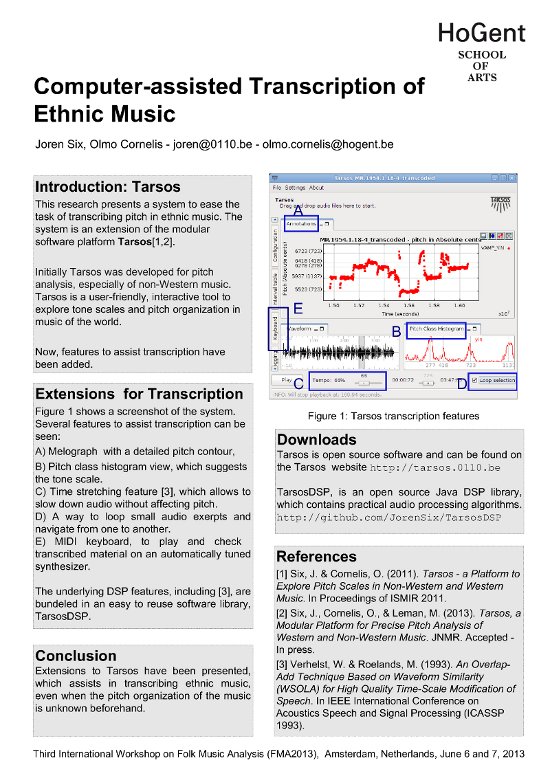
At [the third international workshop on Folk Music Analysis (FMA2013)](http://www.elab-oralculture.nl/fma2013) we presented a poster titled "Computer Assisted Transcription of Ethnic Music":\[A0-Poster.png\]. The workshop took place in Amsterdam, Netherlands, June 6 and 7, 2013.
In the extended abstract, also titled "Computer Assisted Transcription of Ethnic Music":\[FMA_2013.computer_assisted_transcription.pdf\], it is described how the Tarsos software program now has features aiding transcription. Tarsos is especially practical for ethnic music of which the tone scale is not known beforehand. [The proceedings of FMA 2013](http://igitur-archive.library.uu.nl/math/2013-0604-200726/UUindex.html) are available as well.
"":\[A0-Poster.jpg\]
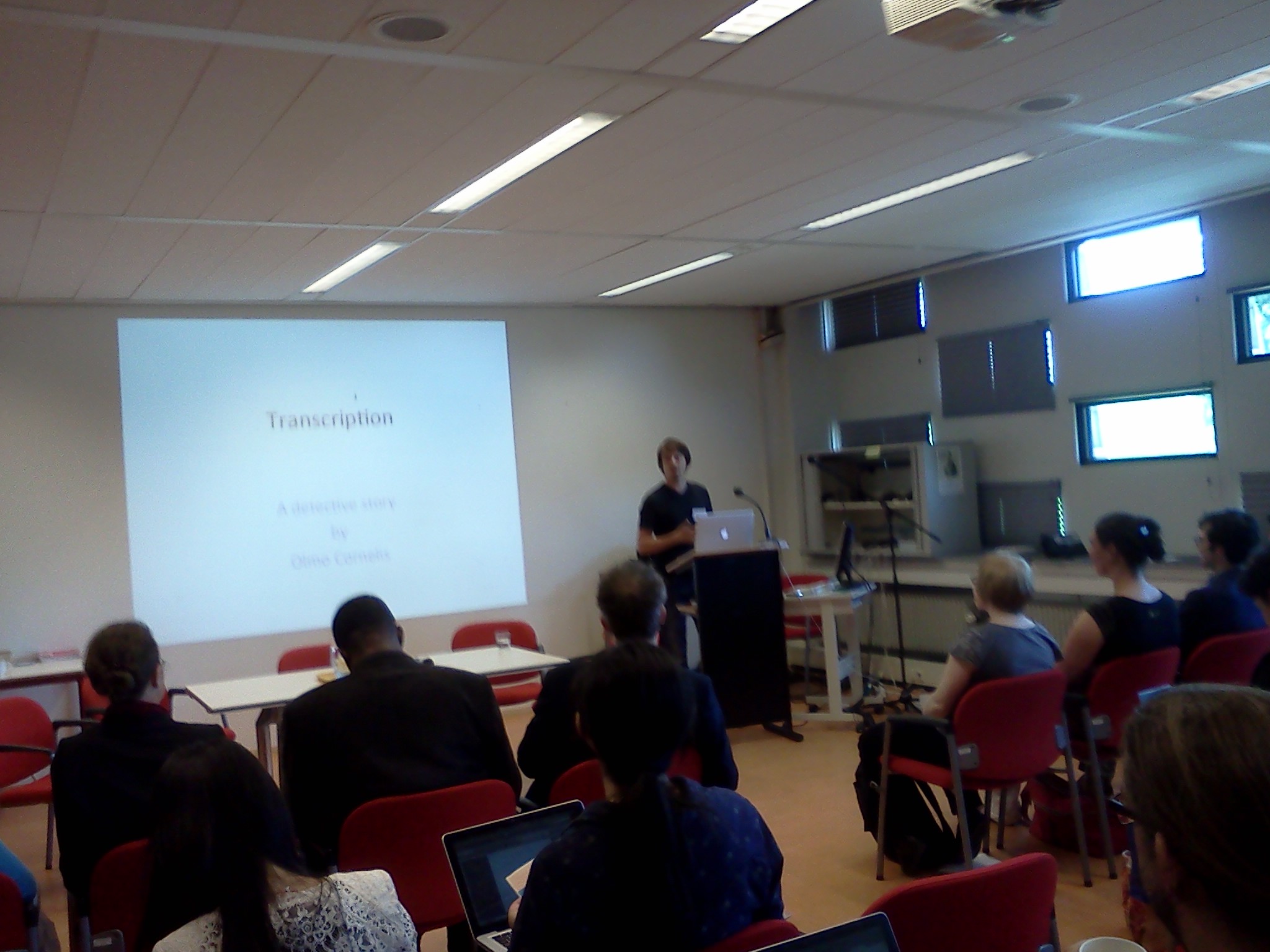
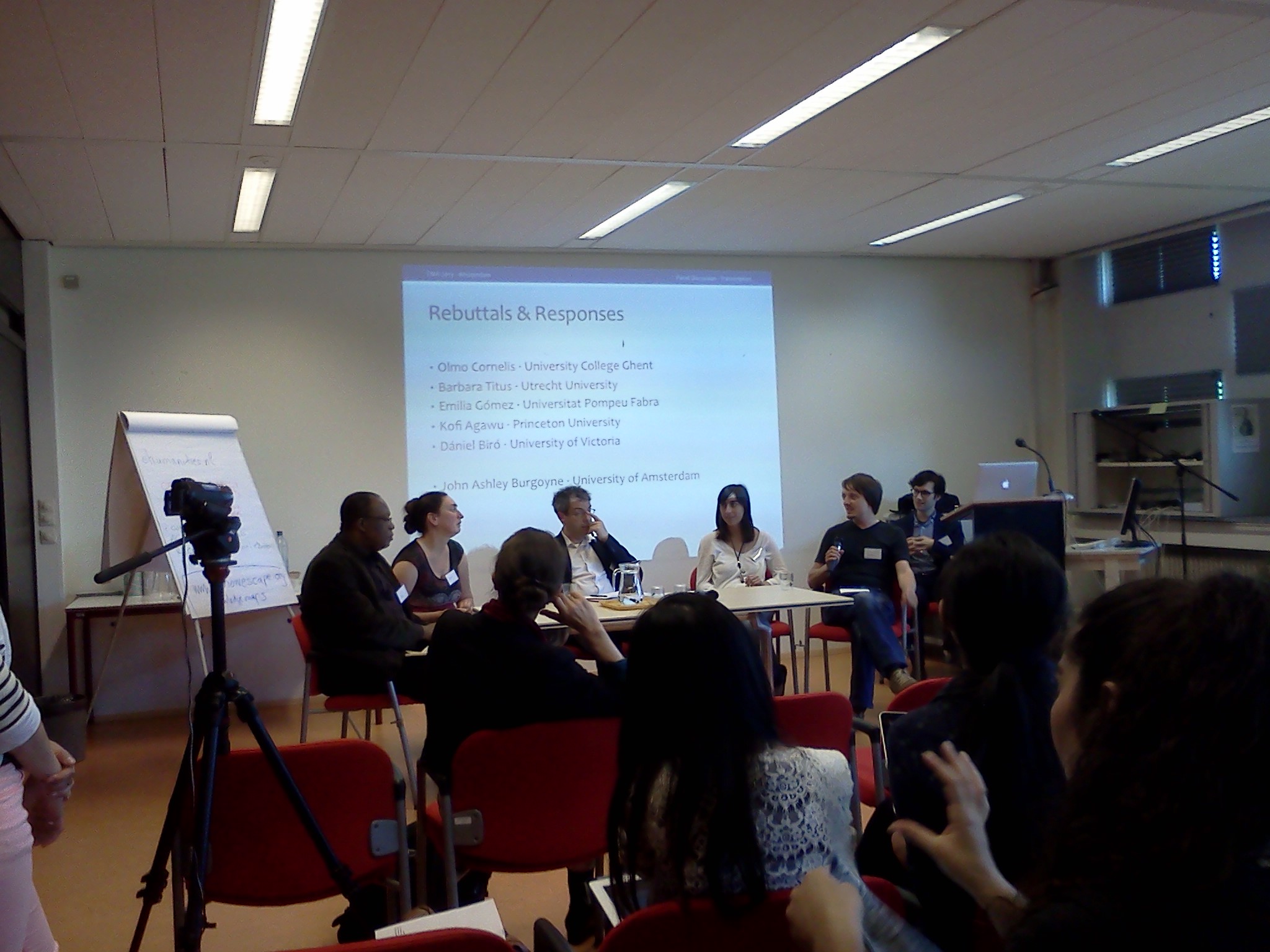
During the conference there also was an interesting panel on transcription. The following people participated: John Ashley Burgoyne, moderator (University of Amsterdam), Kofi Agawu (Princeton University), Dániel P. Biró (University of Victoria), Olmo Cornelis (University College Ghent, Belgium), Emilia Gómez (Universitat Pompeu Fabra, Barcelona), and Barbara Titus (Utrecht University). Some pictures can be found below.
- [A0-Poster.pdf](https://0110.be/files/attachments/377/A0-Poster.pdf)
- [FMA\_2013.computer\_assisted\_transcription.pdf](https://0110.be/files/attachments/377/FMA_2013.computer_assisted_transcription.pdf)
- [A0-Poster.jpg](https://0110.be/files/attachments/377/A0-Poster.jpg)
- [FMA\_2013.computer\_assisted\_transcription.pdf](https://0110.be/files/attachments/377/FMA_2013.computer_assisted_transcription.pdf)
- [IMG\_20130607\_152620.jpg](https://0110.be/files/attachments/377/IMG_20130607_152620.jpg)
- [IMG\_20130607\_140442.jpg](https://0110.be/files/attachments/377/IMG_20130607_140442.jpg)
---
## [ICMC 2012 - Sound to Scale to Sound, a Setup for Microtonal Exploration and Composition](https://0110.be/posts/ICMC_2012_-_Sound_to_Scale_to_Sound%2C_a_Setup_for_Microtonal_Exploration_and_Composition.md)
- Published: 2012-08-31T00:00:00Z
- Updated: 2014-02-13T10:53:56Z
- Author: Joren
- ID: 369
- Canonical: https://0110.be/posts/ICMC_2012_-_Sound_to_Scale_to_Sound%2C_a_Setup_for_Microtonal_Exploration_and_Composition
- Tags: [Computational ethnomusicology](https://0110.be/tags/Computational%20ethnomusicology.md), [HoGent](https://0110.be/tags/HoGent.md), [Java](https://0110.be/tags/Java.md), [Presentation](https://0110.be/tags/Presentation.md), [Tarsos](https://0110.be/tags/Tarsos.md), [featured](https://0110.be/tags/featured.md)
At this years ICMC Conference, [ICMC 2012](http://www.icmc2012.si/) we presented a paper describing a way to experiment with tone scales and how to use Tarsos as a compositional tool. What follows are some pointers to the presentation, paper and to other interesting talks that were presented there.
ICMC 2012 was organized in Ljubljana from the 9 to 14 septembre and had a very dense program of talks, posters, presentations, demos and concerts.
Since 1974 the International Computer Music Conference has been the major international forum for the presentation of the full range of outcomes from technical and musical research, both musical and theoretical, related to the use of computers in music. This annual conference regularly travels the globe, with recent conferences in the Americas, Europe and Asia. This year we welcome the conference to Slovenia for the first time.
### Sound to Scale to Sound, a Setup for Microtonal Exploration and Composition
Our contribution to the conference was a paper titled "Sound to Scale to Sound, a Setup for Microtonal Exploration and Composition":\[icmc2012_submission_45.pdf\].
If you want to cite our work, this BibTeX entry is included for your convenience:
\`\`\`ruby\
\@inproceedings{cornelis2012sound_to_scale,\
author = {Olmo Cornelis and Joren Six},\
title = {{Sound to Scale to Sound, a Setup for Microtonal Exploration and Composition}},\
booktitle = {{Proceedings of the 2012 International Computer Music Conference,\
(ICMC 2012)}},\
year = {2012},\
publisher = {The International Computer Music Association}\
}\
\`\`\`
### Program highlights
What follows are a number of pointers to my personal program highlights.
Verena Thomas presented two very well polished software tools. One to detect patterns in scores, called motifviewer and a tool to search in score databases in a multi-modal way. The [Probado tool](http://probado.iai.uni-bonn.de:8080/) does score-to-audio alignment and much more.
[Gibber](http://www.charlie-roberts.com/gibber/) is an impressive live-coding environment with an easy syntax. Since it is all done with javascript you can start playing with it immediately. [Overtone](http://overtone.github.com/) Another live-coding environment, presented at the conference by Sam Aaron, was equally impressive. It is programmed using the Closure language.
At ICMC there were a number of tools to assist in composition. One of those is [The Bach Project](http://www.bachproject.net/bach/home_page.html), by Andrea Agostini. Togheter with CatART by Diemo Swartz it forms a very expressive platform to work with sound, which was demonstrated by Aaron Einbond and Christopher Trapani in their paper titled *Precise Pitch Control In Real Time Corpus-Based Concatenative Synthesis*. Diemo Swartz presented work on Audio Mosaicing, it can be seen as a follow-up to [AuidioGuild](http://crca.ucsd.edu/~ben/audioGuide/) by Ben Hackbarth.
I also got to know the work by [Thomas Grill](http://grrrr.org), on his website a nice piece of software can be found a Python implementation of the [Non Stationary Gabor Transform (NSGT)](http://grrrr.org/research/software/nsgt/). Another software system I got to know is the functional signal processing programming language [FAUST](http://en.wikipedia.org/wiki/FAUST_(programming_language))
My personal highlights of the concert programme include the works by Johannes Kreidler, Aura Pon, Daniel Mayer, Alexander Schubert and the remarkable performance by Dexter Ford. The concept behind Soundlog by Johannes Kretz was also interesting.
- [ICMC\_Logo.png](https://0110.be/files/attachments/369/ICMC_Logo.png)
- [2012.09.08-Sound\_to\_Scale\_to\_Sound\_\_a\_Setup\_for\_Microtonal\_Exploration\_and\_Composition.odp](https://0110.be/files/attachments/369/2012.09.08-Sound_to_Scale_to_Sound__a_Setup_for_Microtonal_Exploration_and_Composition.odp)
- [icmc2012\_submission\_45.pdf](https://0110.be/files/attachments/369/icmc2012_submission_45.pdf)
---
## [CIM 2012 - Revealing and Listening to Scales From the Past; Tone Scale Analysis of Archived Central-African Music Using Computational Means](https://0110.be/posts/CIM_2012_-_Revealing_and_Listening_to_Scales_From_the_Past%3B_Tone_Scale_Analysis_of_Archived_Central-African_Music_Using_Computational_Means.md)
- Published: 2012-08-31T00:00:00Z
- Updated: 2014-02-13T10:58:38Z
- Author: Joren
- ID: 351
- Canonical: https://0110.be/posts/CIM_2012_-_Revealing_and_Listening_to_Scales_From_the_Past%3B_Tone_Scale_Analysis_of_Archived_Central-African_Music_Using_Computational_Means
- Tags: [Computational musicology](https://0110.be/tags/Computational%20musicology.md), [HoGent](https://0110.be/tags/HoGent.md), [Music Information Retrieval](https://0110.be/tags/Music%20Information%20Retrieval.md), [Presentation](https://0110.be/tags/Presentation.md), [Research papers](https://0110.be/tags/Research%20papers.md), [Tarsos](https://0110.be/tags/Tarsos.md), [featured](https://0110.be/tags/featured.md)
What follows is about the [Conference on Interdisciplinary Musicology (CIM2012)](http://gfm2012.uni-goettingen.de/cim12/CIM12/Home.html) and the [15th international Conference of the Gesellschaft fur Musikfoschung](http://gfm2012.uni-goettingen.de/GfM2012/Home.html). First this text will give information about our contribution to CIM2012: *Revealing and Listening to Scales From the Past; Tone Scale Analysis of Archived Central-African Music Using Computational Means* and then a number of highlights of the conference follow. The joint conference took place from the 4th to the 8th of september 2012.
In 2012, CIM will tackle the subject of History. Hosted by the University of Göttingen, whose one time music director Johann Nikolaus Forkel is widely regarded as one of the founders of modern music historiography, CIM12 aims to promote collaborations that provoke and explore new methods and methodologies for establishing, evaluating, preserving and communicating knowledge of music and musical practices of past societies and the factors implicated in both the preservation and transformation of such practices over time.
### Revealing and Listening to Scales From the Past; Tone Scale Analysis of Archived Central-African Music Using Computational Means
Our contribution ton CIM 2012 is titled "Revealing and Listening to Scales From the Past; Tone Scale Analysis of Archived Central-African Music Using Computational Means":\[CIM12_Submission.pdf\]. The aim was to show how tone scales of the past, e.g. organ tuning, can be extracted and sonified. During the demo special attention was given to historic Central African tuning systems. The presentation I gave is included below and or available for "download":\[2012.09.05-Revealing_and_listening_to_scales_from_the_past\_\_tone_scale_analysis_of_archived_Central-African_music_using_computational_means..ppt\]
### Highlights
What follows are some personal highlights for the [Conference on Interdisciplinary Musicology (CIM2012)](http://gfm2012.uni-goettingen.de/cim12/CIM12/Home.html) and the [15th international Conference of the Gesellschaft fur Musikfoschung](http://gfm2012.uni-goettingen.de/GfM2012/Home.html). The joint conference took place from the 4th to the 8th of september 2012.
The work presented by Rytis Ambrazevicius et al. *Modal changes in traditional Lithuanian singing: Diachronic aspect* has a lot in common with our research, it was interesting to see their approach. Another highlight of the conference was the whole session organized by Klaus-Peter Brenner around Mbira music.
Rainer Polak gave a talk titled *'Swing, Groove and Metre. Asymmetric Feels, Metric Ambiguity and Metric Transformation in African Musics'*. He showed how research about rhythm in jazz research, music theory and empirical musicology ( amongst others) could be bridged and applied to ethnic music.
The overview Eleanore Selfridge-Field gave during her talk *Between an Analogue Past and a Digital Future: The Evolving Digital Present* was refreshing. She had a really clear view on all the different ways musicology and digital media can benifit from each-other.
From the concert programme I found two especially interesting: the lecture-performance by Margarete Maierhofer-Lischka and Frauke Aulbert of [*Lotofagos*](http://www.youtube.com/watch?v=tYD30v0PgoI), a piece by Beat Furrer and *Burdocks* composed and performed by Christian Wolff and a bunch of enthusiastic students.
- [Forkeljpg.jpg](https://0110.be/files/attachments/351/Forkeljpg.jpg)
- [CIM12\_Submission.pdf](https://0110.be/files/attachments/351/CIM12_Submission.pdf)
- [2012.09.05-Revealing\_and\_listening\_to\_scales\_from\_the\_past\_\_tone\_scale\_analysis\_of\_archived\_Central-African\_music\_using\_computational\_means..ppt](https://0110.be/files/attachments/351/2012.09.05-Revealing_and_listening_to_scales_from_the_past__tone_scale_analysis_of_archived_Central-African_music_using_computational_means..ppt)
---
## [Analytical Approaches To World Music - Microtonal Scale Exploration in Central Africa](https://0110.be/posts/Analytical_Approaches_To_World_Music_-_Microtonal_Scale_Exploration_in_Central_Africa.md)
- Published: 2012-06-06T06:54:04Z
- Updated: 2013-12-05T18:19:15Z
- Author: Joren
- ID: 342
- Canonical: https://0110.be/posts/Analytical_Approaches_To_World_Music_-_Microtonal_Scale_Exploration_in_Central_Africa
- Tags: [Computational ethnomusicology](https://0110.be/tags/Computational%20ethnomusicology.md), [Computational musicology](https://0110.be/tags/Computational%20musicology.md), [HoGent](https://0110.be/tags/HoGent.md), [Presentation](https://0110.be/tags/Presentation.md), [Tarsos](https://0110.be/tags/Tarsos.md), [featured](https://0110.be/tags/featured.md)
At the 2012 [AAWM (Analytical Approaches To World Music)](http://www.aawmconference.com/aawm2012/papers.htm) conference we presented a way to explore tone scales in the music of Central Africa. Since the audience consisted of (ethno)musicologists, the main focus of the presentation was on the applicication part, the technical aspects were only briefly mentioned.
The extended abstract can be consulted: [Towards the tangible: microtonal scale exploration in Central-African music](http://www.aawmconference.com/aawm2012/papers/cornelis_p.pdf)
The conference program itself was very diverse and interesting.
- [2012.05.11-Towards\_the\_Tangible\_-\_Microtonal\_Scale\_Exploration\_in\_Central-African\_Music.odp](https://0110.be/files/attachments/342/2012.05.11-Towards_the_Tangible_-_Microtonal_Scale_Exploration_in_Central-African_Music.odp)
- [AAWM\_abstract\_short.doc](https://0110.be/files/attachments/342/AAWM_abstract_short.doc)
---
## [Guest Lecture at MIT - Ethnic Music Analysis: Challenges & Opportunities - Tarsos as a Case Study](https://0110.be/posts/Guest_Lecture_at_MIT_-_Ethnic_Music_Analysis%3A__Challenges_%26_Opportunities_-_Tarsos_as_a_Case_Study.md)
- Published: 2012-05-07T00:00:00Z
- Updated: 2014-02-13T10:56:44Z
- Author: Joren
- ID: 362
- Canonical: https://0110.be/posts/Guest_Lecture_at_MIT_-_Ethnic_Music_Analysis%3A__Challenges_%26_Opportunities_-_Tarsos_as_a_Case_Study
- Tags: [Computational ethnomusicology](https://0110.be/tags/Computational%20ethnomusicology.md), [HoGent](https://0110.be/tags/HoGent.md), [Presentation](https://0110.be/tags/Presentation.md)
Thursday the 3th of May I gave a guest lecture titled 'Ethnic Music Analysis: Challenges & Opportunities' it featured Tarsos as a Case Study. The goal was to identify the difficulties when dealing with ethnic music and to show a possible approach, the approach implemented by Tarsos.
The invitation to give the guest lecture came from [Michael Cuthbert](http://web.mit.edu/music/facstaff/cuthbert.html) who is one of the driving forces behind [music21](http://mit.edu/music21/). The audience was a small group of double majors in both musicology and computer science: the ideal profile to gather useful feedback.
- [2012.05.03-Ethnic\_Music\_Analysis.pdf](https://0110.be/files/attachments/362/2012.05.03-Ethnic_Music_Analysis.pdf)
- [2012.05.03-Ethnic\_Music\_Analysis.odp](https://0110.be/files/attachments/362/2012.05.03-Ethnic_Music_Analysis.odp)
---
## [Kinderuniversiteit - Muziek onder de microscoop!](https://0110.be/posts/Kinderuniversiteit_-_Muziek_onder_de_microscoop%21.md)
- Published: 2011-12-12T08:41:21Z
- Updated: 2013-12-05T18:19:15Z
- Author: Joren
- ID: 326
- Canonical: https://0110.be/posts/Kinderuniversiteit_-_Muziek_onder_de_microscoop%21
- Tags: [Dutch](https://0110.be/tags/Dutch.md), [HoGent](https://0110.be/tags/HoGent.md), [Java](https://0110.be/tags/Java.md), [Presentation](https://0110.be/tags/Presentation.md)
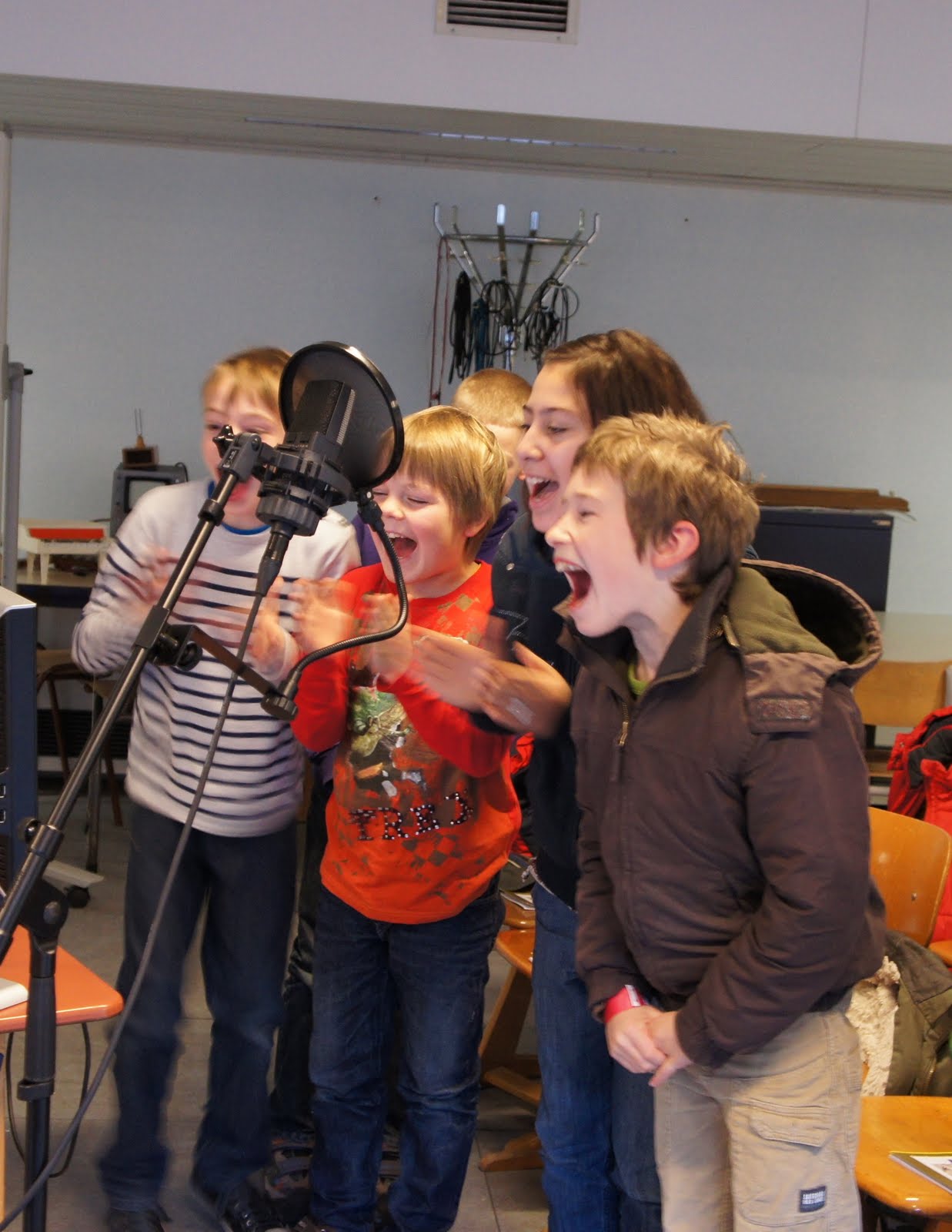
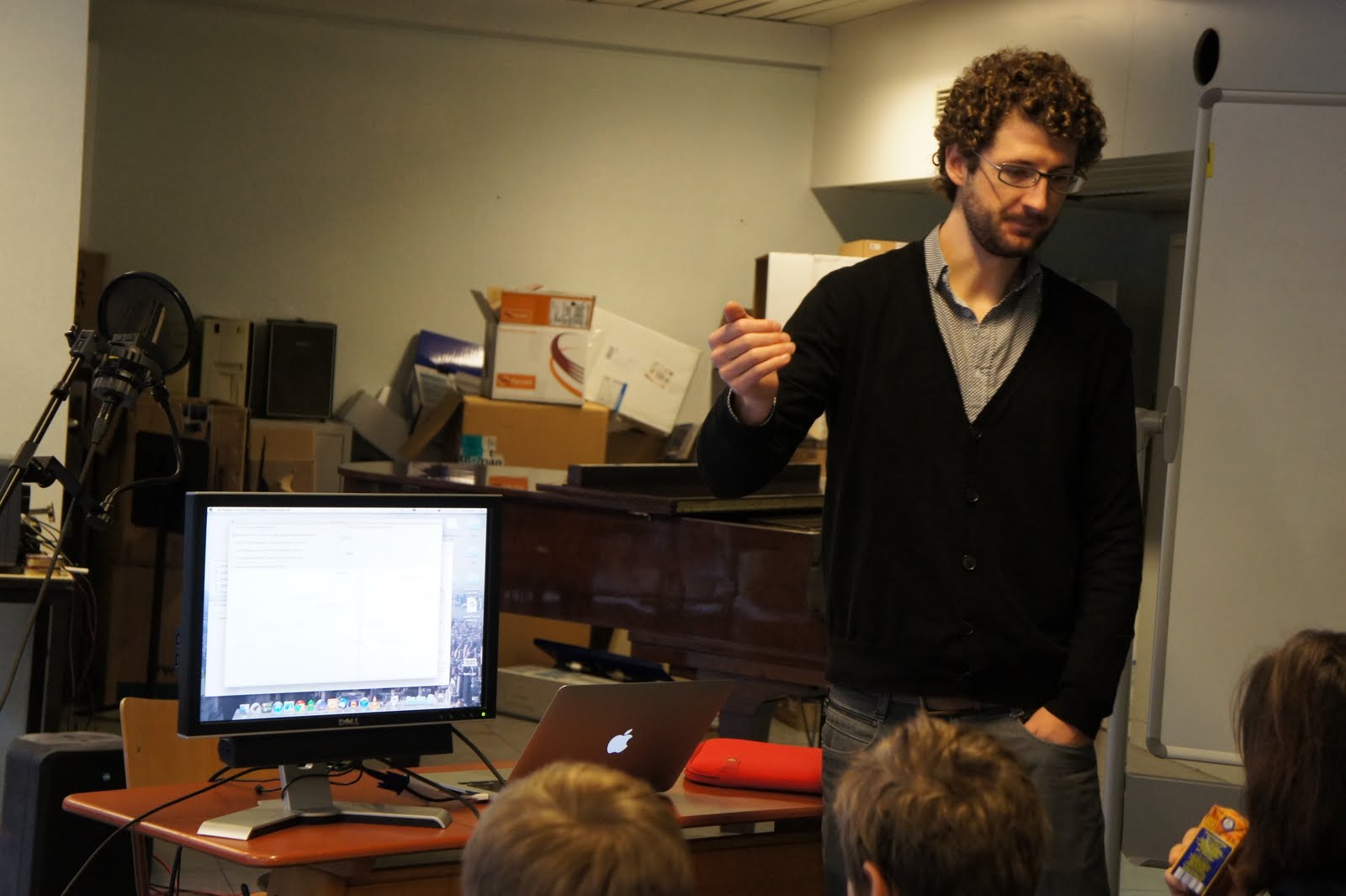
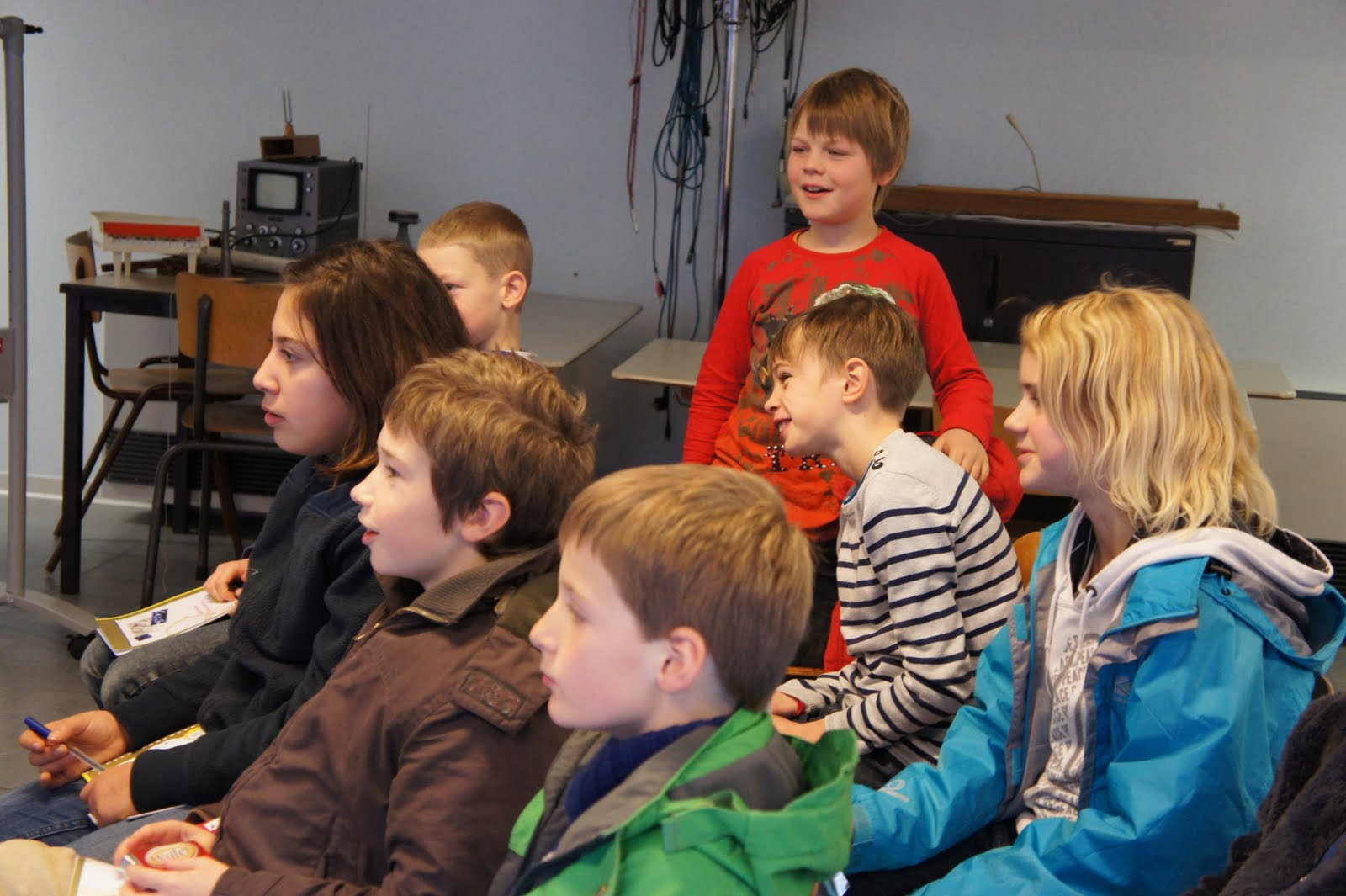
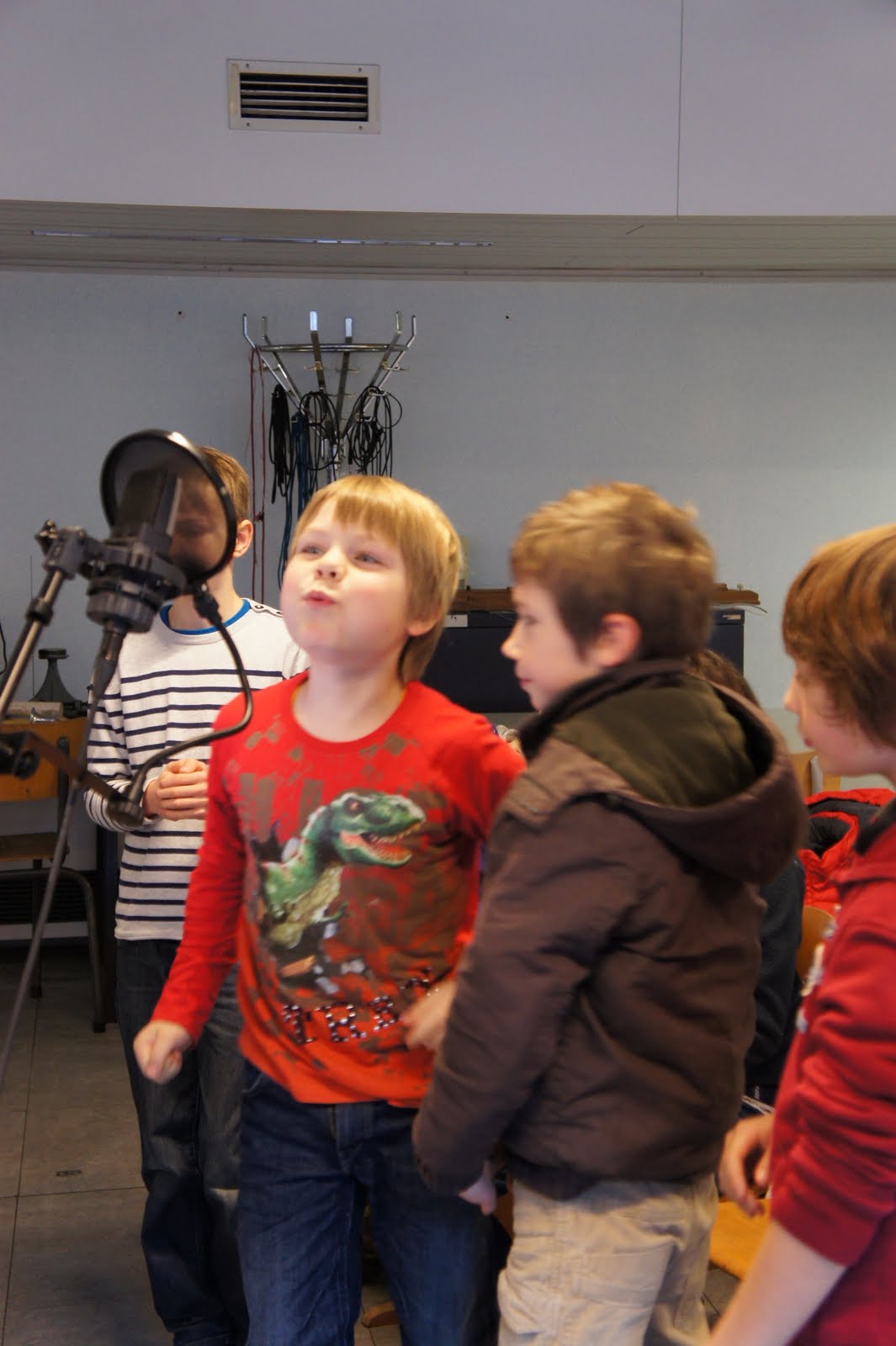
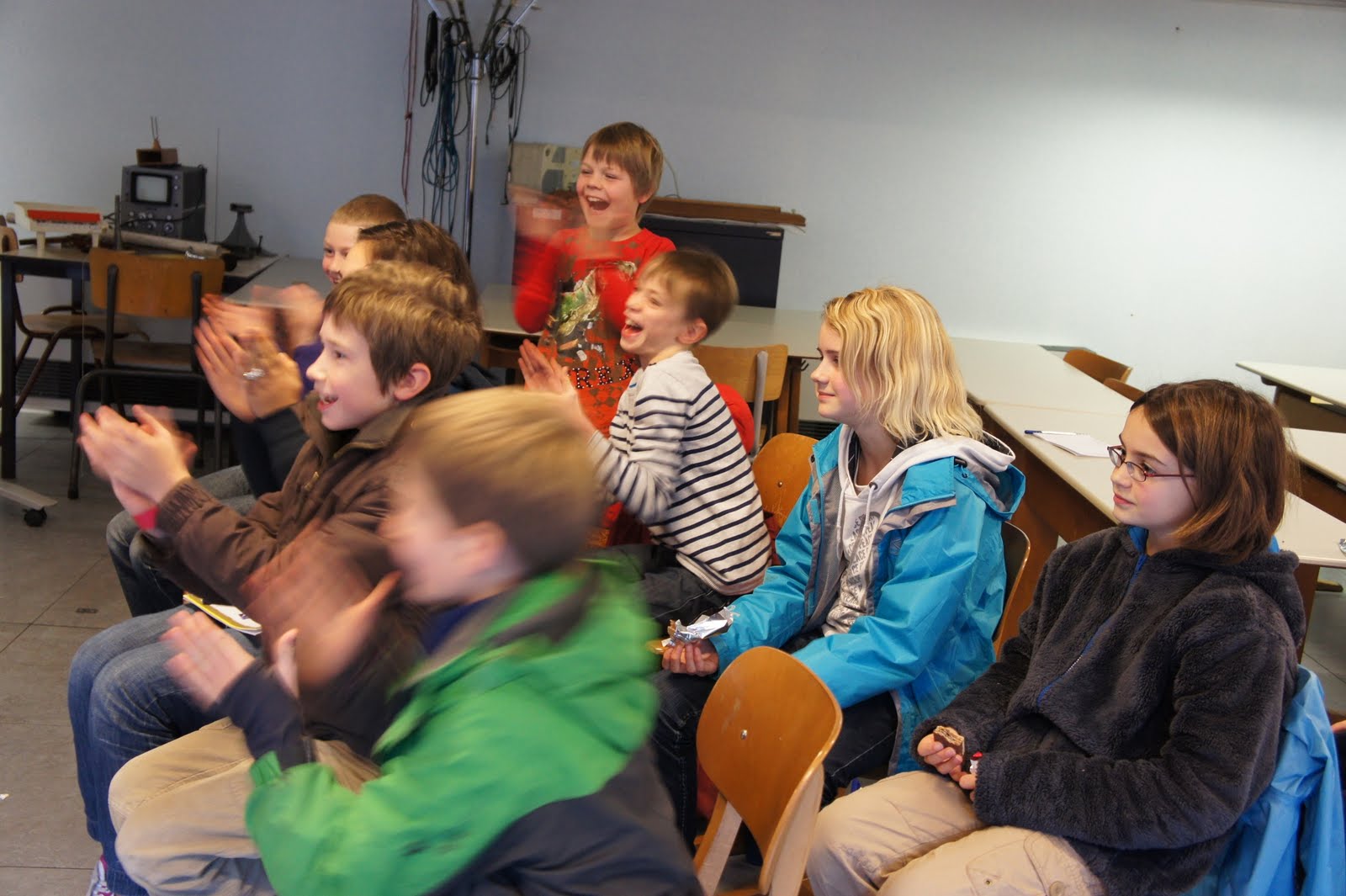
Zondag 18 december 2011 gaf ik een workshop voor de [Gentse kinderuniversiteit](http://kinderuniversiteit.be). Het thema van de kinderuniversiteit was [Muziek onder de microscoop](http://www.kinderuniversiteit.be/event/muziek-onder-de-microscoop). De teaser voor de workshop is hier te vinden:
WORKSHOP - Muziek (ont)luisteren op de computer\
Is het mogelijk om piano te spelen op een tafel? Kan een computer luisteren naar muziek en er van genieten? Wat is muziek eigenlijk, en hoe werkt geluid? \
Tijdens deze workshop worden de voorgaande vragen beantwoord met enkele computerprogramma's!
Concreet worden enkele componenten van geluid (en bij uitbreiding, muziek) gedemonstreerd met computerprogrammaatjes gemaakt in het conservatorium:
- "Geluidssterkte":\[SoundDetector.jar\]: een decibel-meter met een bepaalde drempelwaarde. Probeer zo luid mogelijk te doen en zie hoe moeilijk het is om, eens een bepaald niveau bereikt is, in decibel te stijgen.
- "Toonhoogte":\[UtterAsterisk.jar\]: een klein spelletje om toonhoogte aan te tonen. Probeer zo juist mogelijk te zingen of te fluiten en vergelijk je score.
- "Percussie":\[PercussionDetector.jar\]: dit programma reageert op handgeklap. Hoe kan je het onderscheid maken tussen bijvoorbeeld een fluittoon en handgeklap?
De foto's hieronder geven een sfeerbeeld.

- [logo-with-arrow.png](https://0110.be/files/attachments/326/logo-with-arrow.png)
- [UtterAsterisk.jar](https://0110.be/files/attachments/326/UtterAsterisk.jar)
- [PercussionDetector.jar](https://0110.be/files/attachments/326/PercussionDetector.jar)
- [PitchDetector.jar](https://0110.be/files/attachments/326/PitchDetector.jar)
- [SoundDetector.jar](https://0110.be/files/attachments/326/SoundDetector.jar)
---
## [Software for Music Analysis](https://0110.be/posts/Software_for_Music_Analysis.md)
- Published: 2011-12-02T00:00:00Z
- Updated: 2016-08-22T13:10:11Z
- Author: Joren
- ID: 383
- Canonical: https://0110.be/posts/Software_for_Music_Analysis
- Tags: [Computational musicology](https://0110.be/tags/Computational%20musicology.md), [HoGent](https://0110.be/tags/HoGent.md), [Music Information Retrieval](https://0110.be/tags/Music%20Information%20Retrieval.md), [Presentation](https://0110.be/tags/Presentation.md)
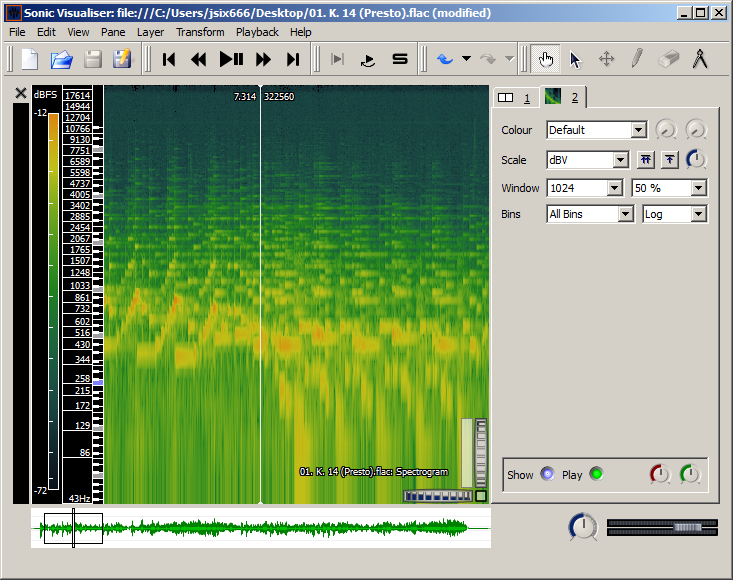
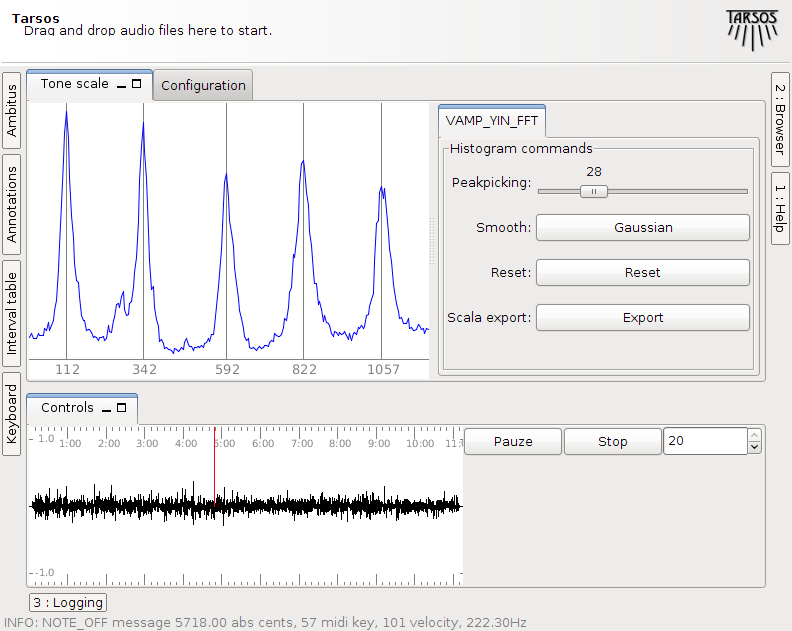
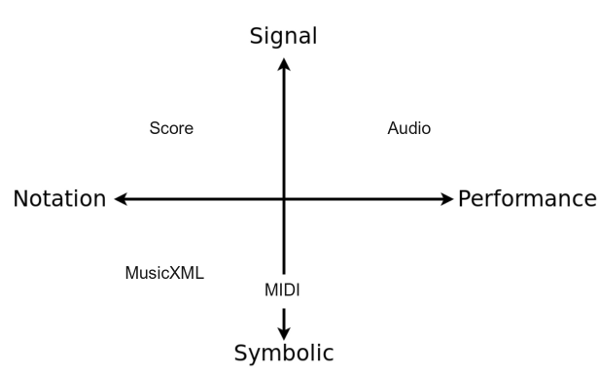
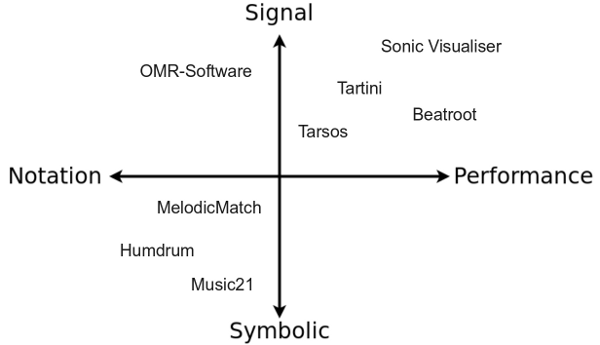
Friday the second of December I presented a talk about software for music analysis. The aim was to make clear which type of research topics can benefit from measurements by software for music analysis. Different types of digital music representations and examples of software packages were explained.
Following presentation was used during the talk. ("ppt":\[2011.12.02.software_for_music_analysis.ppt\], "odp":\[2011.12.02.software_for_music_analysis.odp\]):
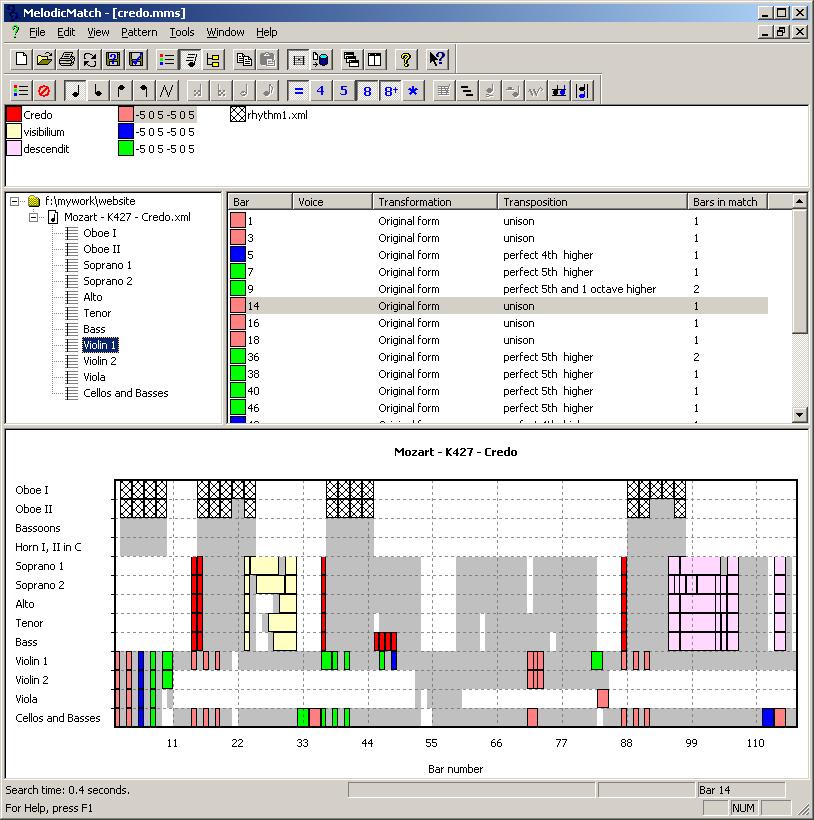
- [Sonic Visualizer](http://www.sonicvisualiser.org): As its name suggests Sonic Visualizer contains a lot different visualisations for audio. It can be used for analysis (pitch,beat,chroma,...) with [VAMP-plugins](http://vamp-plugins.org). To quote *"The aim of Sonic Visualiser is to be the first program you reach for when want to study a musical recording rather than simply listen to it"*. It is the swiss army knife of audio analysis.
- [BeatRoot](http://www.eecs.qmul.ac.uk/~simond/beatroot/) is designed specifically for one goal: beat tracking. It can be used for e.g. comparing tempi of different performances of the same piece or to track tempo deviation within one piece.
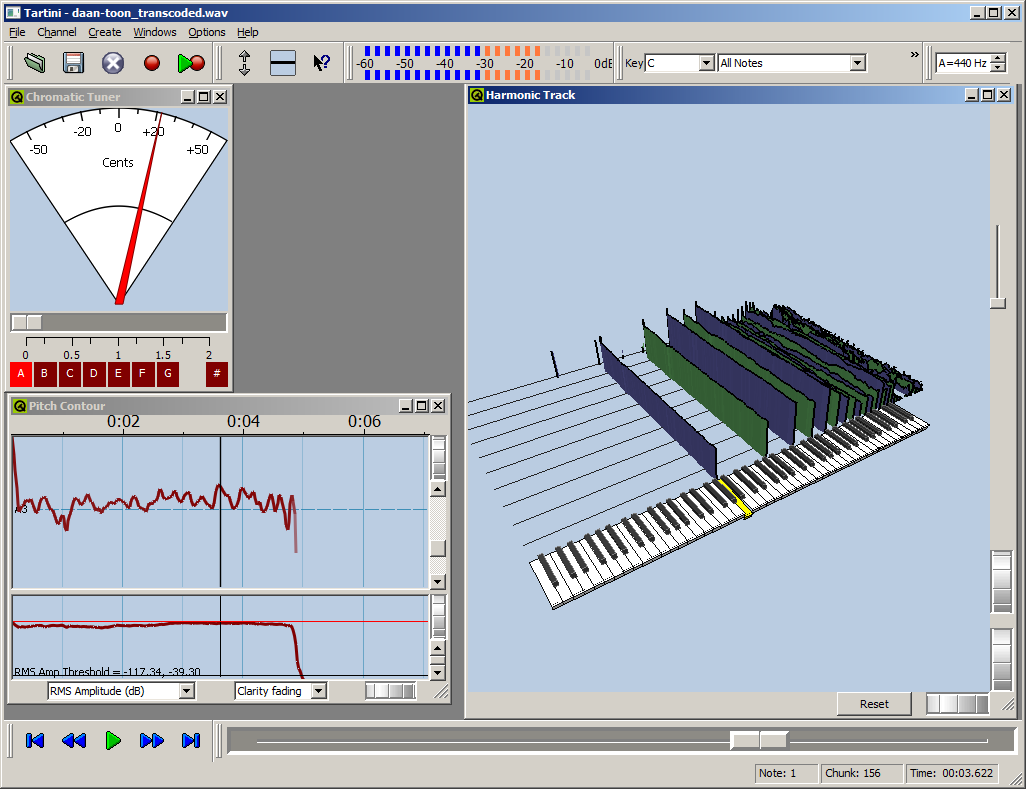
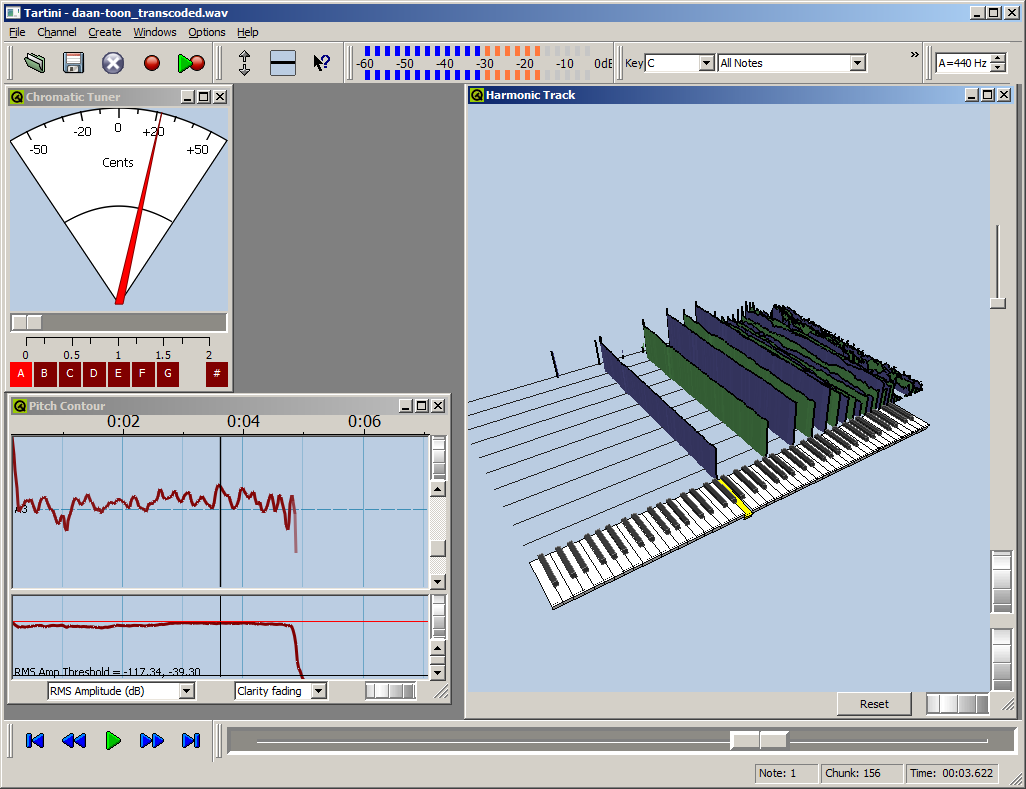
- [Tartini](http://tartini.net) is capable to do real-time pitch analysis of sound. You can e.g. play into a microphone with a violin and see the harmonics you produce and adapt you playing style based on visual feedback. It also contains a pitch deviation measuring apparatus to analyse vibrato.
- [Tarsos](http://tarsos.0110.be) is software for tone scale analysis. It is useful to extract tone scales from audio. Different tuning systems can be seen, extracted and compared. It also contains the ability to play along with the original song with a tuned midi keyboard .
To show the different digital representations of music one example (Liebestraum 3 by Liszt) was used in different formats:
- "Score (PDF)":\[00.partituur.liebestraum_3.pdf\]
- "MusicXML":\[01.musicXML-liebestraum_no_3.xml\]
- "MIDI as notation":\[01.deadpan_midi.wav\]
- "MIDI as performance":\[02.performed_midi.wav\]
- "Acoustic performance":\[03.human.performance.wav\]
- [02.performed\_midi.wav](https://0110.be/files/attachments/383/02.performed_midi.wav)
- [01.deadpan\_midi.wav](https://0110.be/files/attachments/383/01.deadpan_midi.wav)
- [2011.12.02.software\_for\_music\_analysis.ppt](https://0110.be/files/attachments/383/2011.12.02.software_for_music_analysis.ppt)
- [2011.12.02.software\_for\_music\_analysis.odp](https://0110.be/files/attachments/383/2011.12.02.software_for_music_analysis.odp)
- [03.human.performance.wav](https://0110.be/files/attachments/383/03.human.performance.wav)
- [digital\_registration\_filetypes.png](https://0110.be/files/attachments/383/digital_registration_filetypes.png)
- [00.partituur.liebestraum\_3.pdf](https://0110.be/files/attachments/383/00.partituur.liebestraum_3.pdf)
- [01.MusicXML-extract.txt](https://0110.be/files/attachments/383/01.MusicXML-extract.txt)
- [digital\_registration\_software.png](https://0110.be/files/attachments/383/digital_registration_software.png)
- [01.musicXML-liebestraum\_no\_3.xml](https://0110.be/files/attachments/383/01.musicXML-liebestraum_no_3.xml)
- [2011.12.02.software\_for\_music\_analysis.pdf](https://0110.be/files/attachments/383/2011.12.02.software_for_music_analysis.pdf)
---
## [Tarsos at 'Study Day: Tuning and Temperament - Insitute of Musical Research, London' ](https://0110.be/posts/Tarsos_at_%27Study_Day%3A_Tuning_and_Temperament_-_Insitute_of_Musical_Research%2C_London%27_.md)
- Published: 2011-10-25T22:03:49Z
- Updated: 2013-12-05T18:19:15Z
- Author: Joren
- ID: 374
- Canonical: https://0110.be/posts/Tarsos_at_%27Study_Day%3A_Tuning_and_Temperament_-_Insitute_of_Musical_Research%2C_London%27_
- Tags: [Computational ethnomusicology](https://0110.be/tags/Computational%20ethnomusicology.md), [Computational musicology](https://0110.be/tags/Computational%20musicology.md), [HoGent](https://0110.be/tags/HoGent.md), [Presentation](https://0110.be/tags/Presentation.md), [Tarsos](https://0110.be/tags/Tarsos.md)
The 17th of Octobre 2011 Tarsos was presented at the [Study Day: Tuning and Temperament](http://music.sas.ac.uk/imr-events/imr-conferences-colloquia-performance-events/study-day-tuning-and-temperament.html) which was held at the Institue of Music Research in Londen. The study day was organised by Dan Tidhar. A short description of the aim of the study day:
This is an interdisciplinary study day, bringing together musicologists, harpsichord specialists, and digital music specialists, with the aim of exploring the different angles these fields provide on the subject, and how these can be fruitfully interconnected.
We offer an optional introduction to temperament for non specialists, to equip all potential listeners with the basic concepts and terminology used throughout the day.
---
## [Tarsos presentation at 'ISMIR 2011'](https://0110.be/posts/Tarsos_presentation_at_%27ISMIR_2011%27.md)
- Published: 2011-10-25T21:55:27Z
- Updated: 2013-12-05T18:19:15Z
- Author: Joren
- ID: 368
- Canonical: https://0110.be/posts/Tarsos_presentation_at_%27ISMIR_2011%27
- Tags: [Computational ethnomusicology](https://0110.be/tags/Computational%20ethnomusicology.md), [HoGent](https://0110.be/tags/HoGent.md), [ISMIR](https://0110.be/tags/ISMIR.md), [Music Information Retrieval](https://0110.be/tags/Music%20Information%20Retrieval.md), [Presentation](https://0110.be/tags/Presentation.md), [Research papers](https://0110.be/tags/Research%20papers.md), [Tarsos](https://0110.be/tags/Tarsos.md)
Olmo Cornelis and myself just gave a presentation about Tarsos at the at the [12th International Society for Music Information Retrieval Conference](http://ismir2011.ismir.net/) which is held at Miami.
The live demo we gave went well and we got a lot of positive, interesting feedback. The [presentation about Tarsos](https://0110.be/25.10.2011.ismir_tarsos.pdf) is available here.
It was the first time in the history of ISMIR that there was a session with oral [presentations about Non-Western Music](http://ismir2011.ismir.net/program.html#OS2). We were pleased to be part of this.
The peer reviewed paper about our work: [Tarsos - a Platform to Explore Pitch Scales in Non-Western and Western Music](http://ismir2011.ismir.net/program.html#OS2) is available from the ISMIR website and embedded below:
- [2011.10.25.ismir\_tarsos.pdf](https://0110.be/files/attachments/368/2011.10.25.ismir_tarsos.pdf)
---
## [Tarsos at 'WASPAA 2011'](https://0110.be/posts/Tarsos_at_%27WASPAA_2011%27.md)
- Published: 2011-10-18T13:59:12Z
- Updated: 2013-12-05T18:19:15Z
- Author: Joren
- ID: 367
- Canonical: https://0110.be/posts/Tarsos_at_%27WASPAA_2011%27
- Tags: [HoGent](https://0110.be/tags/HoGent.md), [Presentation](https://0110.be/tags/Presentation.md), [Tarsos](https://0110.be/tags/Tarsos.md), [featured](https://0110.be/tags/featured.md)
During the the demo session of the [IEEE Workshop on Applications of Signal Processing to Audio and Acoustics (WASPAA)](http://waspaa.com) a demonstration of Tarsos was given. During the demo, [the 18th of Octobre 2011](http://www.waspaa.com/waspaa11/information-for-attendees/schedule/index.html#DM) feedback was gathered.
During the conference I met interesting people and their work:
Carnatic Music Analysis: Shadja, Swara Identification and Raga Verification in Alapana using Stochastic Models\
Ranjani HG, Arthi S, Sreenivas TV
Simulation of the Violin Section Sound based on the analysis of orchestra performance\
Jukka Pätynen, Sakari Tervo, Tapio Lokki
Another interesting paper is [Informed Source Separation: Source Coding Meets Source Separation](http://hal.inria.fr/docs/00/61/05/26/PDF/Ozerov_et_al_WASPAA11_v6.pdf). A demo of this can be found [here](http://www.irisa.fr/metiss/ozerov/ciss_demo.html).
---
## [Bruikbare software voor muziekanalyse](https://0110.be/posts/Bruikbare_software_voor_muziekanalyse.md)
- Published: 2011-10-04T09:48:55Z
- Updated: 2013-12-05T18:19:15Z
- Author: Joren
- ID: 360
- Canonical: https://0110.be/posts/Bruikbare_software_voor_muziekanalyse
- Tags: [Dutch](https://0110.be/tags/Dutch.md), [HoGent](https://0110.be/tags/HoGent.md), [Presentation](https://0110.be/tags/Presentation.md)
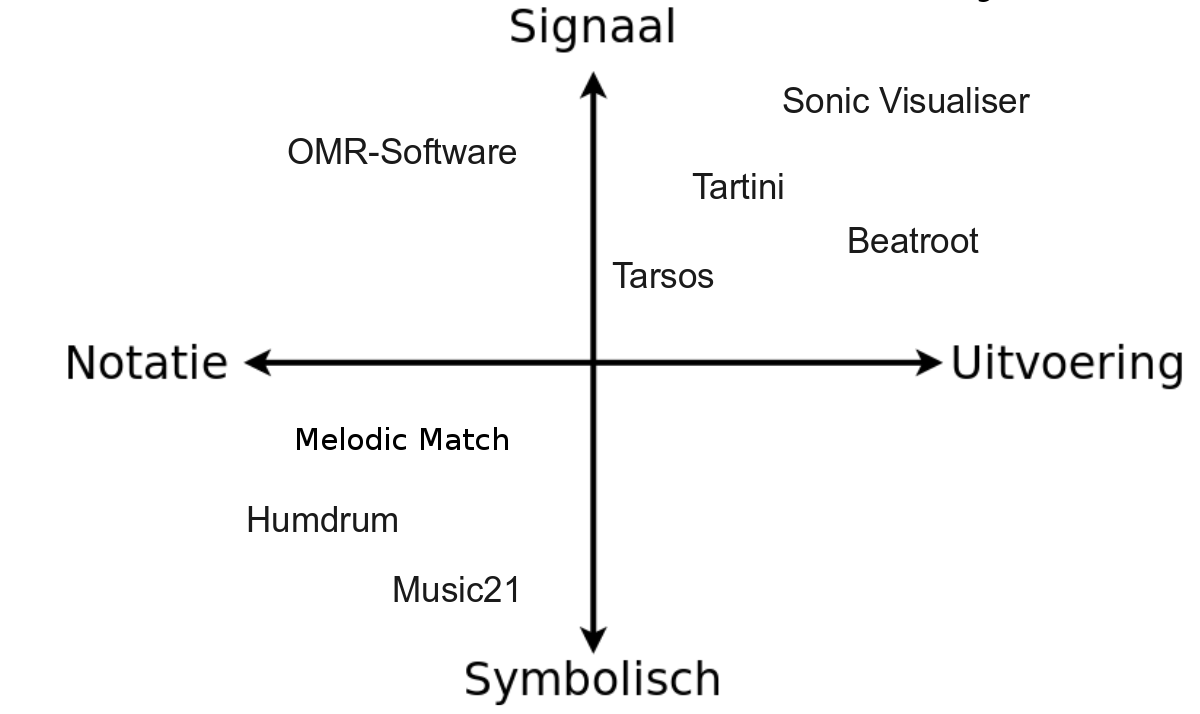
Op dinsdag vier oktober 2011 werd een les gegeven over bruikbare software voor muziekanalyse. Het doel was om duidelijk te maken welk type onderzoeksvragen van bachelor/masterproeven baat kunnen hebben bij objectieve metingen met software voor klankanalyse. Ook de manier waarop werd besproken: soorten digitale representaties van muziek met voorbeelden van softwaretoepassingen werden behandeld.
Voor de les werden volgende slides gebruikt ("ppt":\[2011.10.04.bruikbare_software_voor_muziekanalyse.ppt\], "odp":\[2011.10.04.bruikbare_software_voor_muziekanalyse.odp\]):
De behandelde software voor klank als signaal werd al [eerder besproken](https://0110.be/artikels/lees/Seminar_-_Research_on_Music_History_and_Analysis):
* [Sonic Visualizer](http://www.sonicvisualiser.org): As its name suggests Sonic Visualizer contains a lot different visualisations for audio. It can be used for analysis (pitch,beat,chroma,...) with [VAMP-plugins](http://vamp-plugins.org). To quote *"The aim of Sonic Visualiser is to be the first program you reach for when want to study a musical recording rather than simply listen to it"*. It is the swiss army knife of audio analysis.
* [BeatRoot](http://www.eecs.qmul.ac.uk/~simond/beatroot/) is designed specifically for one goal: beat tracking. It can be used for e.g. comparing tempi of different performances of the same piece or to track tempo deviation within one piece.
* [Tartini](http://tartini.net) is capable to do real-time pitch analysis of sound. You can e.g. play into a microphone with a violin and see the harmonics you produce and adapt you playing style based on visual feedback. It also contains a pitch deviation measuring apparatus to analyse vibrato.
* [Tarsos](http://tarsos.0110.be) is software for tone scale analysis. It is useful to extract tone scales from audio. Different tuning systems can be seen, extracted and compared. It also contains the ability to play along with the original song with a tuned midi keyboard .
* [music21](http://mit.edu/music21/) from their website: "music21 is a set of tools for helping scholars and other active listeners answer questions about music quickly and simply. If you've ever asked yourself a question like, "I wonder how often Bach does that" or "I wish I knew which band was the first to use these chords in this order," or "I'll bet we'd know more about Renaissance counterpoint (or Indian ragas or post-tonal pitch structures or the form of minuets) if I could write a program to automatically write more of them," then music21 can help you with your work."
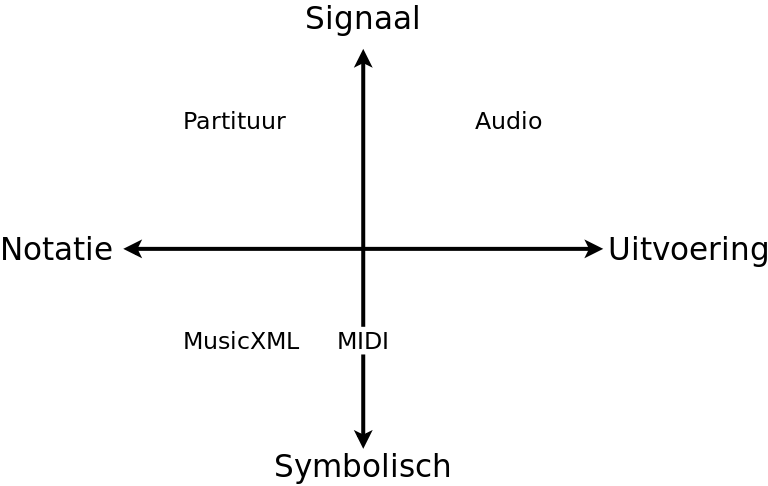
Om aan te duiden welke digitale representaties welke informatie bevatten werd een stuk van Franz Liszt in verschillende formaten gebruikt:
- "Partituur (PDF)":\[00.partituur.liebestraum_3.pdf\]
- "MusicXML":\[01.musicXML-liebestraum_no_3.xml\]
- "MIDI als partituur":\[01.deadpan_midi.wav\]
- "MIDI als uitvoering":\[02.performed_midi.wav\]
- "Acoustische uitvoering":\[03.human.performance.wav\]
- [01.BeatRoot.tempo.wav](https://0110.be/files/attachments/360/01.BeatRoot.tempo.wav)
- [beatroot-0.5.8-rc1.jar](https://0110.be/files/attachments/360/beatroot-0.5.8-rc1.jar)
- [03.human.performance.wav](https://0110.be/files/attachments/360/03.human.performance.wav)
- [02.performed\_midi.wav](https://0110.be/files/attachments/360/02.performed_midi.wav)
- [01.deadpan\_midi.wav](https://0110.be/files/attachments/360/01.deadpan_midi.wav)
- [01.musicXML-liebestraum\_no\_3.xml](https://0110.be/files/attachments/360/01.musicXML-liebestraum_no_3.xml)
- [00.partituur.liebestraum\_3.pdf](https://0110.be/files/attachments/360/00.partituur.liebestraum_3.pdf)
- [2011.10.04.bruikbare\_software\_voor\_muziekanalyse.ppt](https://0110.be/files/attachments/360/2011.10.04.bruikbare_software_voor_muziekanalyse.ppt)
- [2011.10.04.bruikbare\_software\_voor\_muziekanalyse.odp](https://0110.be/files/attachments/360/2011.10.04.bruikbare_software_voor_muziekanalyse.odp)
---
## [PeachNote Piano at the ISMIR 2011 demo session](https://0110.be/posts/PeachNote_Piano_at_the_ISMIR_2011_demo_session.md)
- Published: 2011-09-26T07:32:02Z
- Updated: 2013-12-05T18:19:15Z
- Author: Joren
- ID: 340
- Canonical: https://0110.be/posts/PeachNote_Piano_at_the_ISMIR_2011_demo_session
- Tags: [Code](https://0110.be/tags/Code.md), [Computational musicology](https://0110.be/tags/Computational%20musicology.md), [HoGent](https://0110.be/tags/HoGent.md), [ISMIR](https://0110.be/tags/ISMIR.md), [Music Information Retrieval](https://0110.be/tags/Music%20Information%20Retrieval.md), [PeachNote Piano](https://0110.be/tags/PeachNote%20Piano.md), [Presentation](https://0110.be/tags/Presentation.md), [Research papers](https://0110.be/tags/Research%20papers.md)
The extended abstract about PeachNote Piano has been accepted as a demonstration presentation to appear at the ISMIR (International Society for Music Information Retrieval) 2011 conference in Miami. To know more about PeachNote Piano come see us at our demo stand (during the [Late Breaking and Demo Session](http://ismir2011.ismir.net/program2011.html#demo)) or read the paper: "Peachnote Piano: Making MIDI instruments social and smart using Arduino, Android and Node.js":\[PeachNote_Piano_ISMIR_Demo.pdf\]. What follows here is the introduction of the extended abstract:
Playing music instruments can bring a lot of joy and satisfaction, but not all apsects of music practice are always enjoyable. In this contribution we are addressing two such sometimes unwelcome aspects: the solitude of practicing and the "dumbness" of instruments.
The process of practicing and mastering of music instruments often takes place behind closed doors. A student of piano spends most of her time alone with the piano. Sounds of her playing get lost, and she can't always get feedback from friends, teachers, or, most importantly, random Internet users. Analysing her practicing sessions is also not easy. The technical possibility to record herself and put the recordings online is there, but the needed effort is relatively high, and so one does it only occasionally, if at all.
Instruments themselves usually do not exhibit any signs of intelligence. They are practically mechanic devices, even when implemented digitally. Usually they react only to direct actions of a player, and the player is solely responsible for the music coming out of the insturment and its quality. There is no middle ground between passive listening to music recordings and active music making for someone who is alone with an instrument.
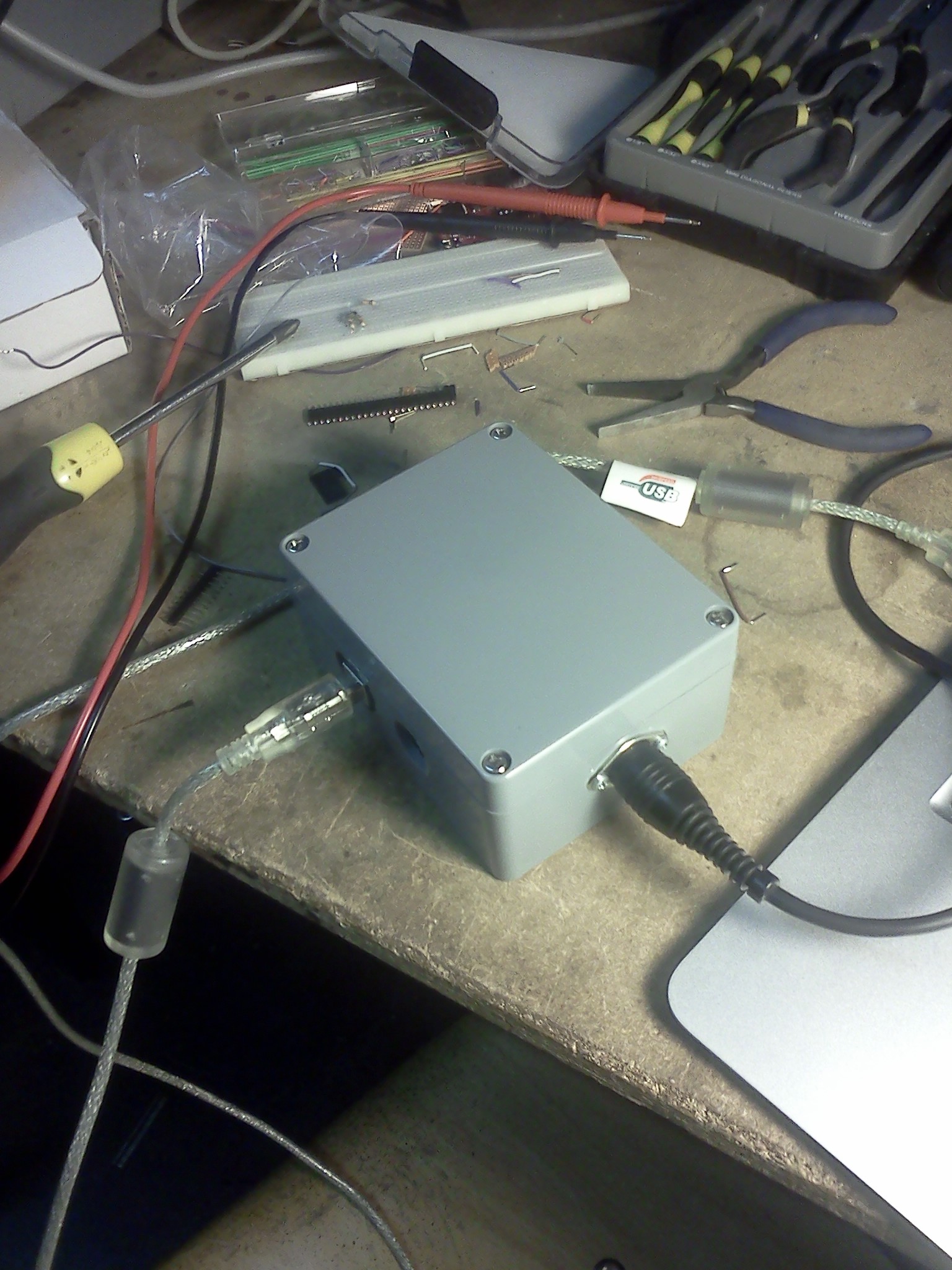
We have built a prototype of a system that strives to offer a practical solution to the above problems for digital pianos. From ground up, we have built a system which is capable of transmitting MIDI data from a MIDI instrument to a web service and back, exposing it in real-time to the world and optionally enriching it.
A previous post [about PeachNote Piano](http://tarsos.0110.be/artikels/lees/PeachNote_Piano) has more technical details together with a video showing the core functionality (quasi-instantaneous USB-BlueTooth-MIDI communication). Some photos can be found below.
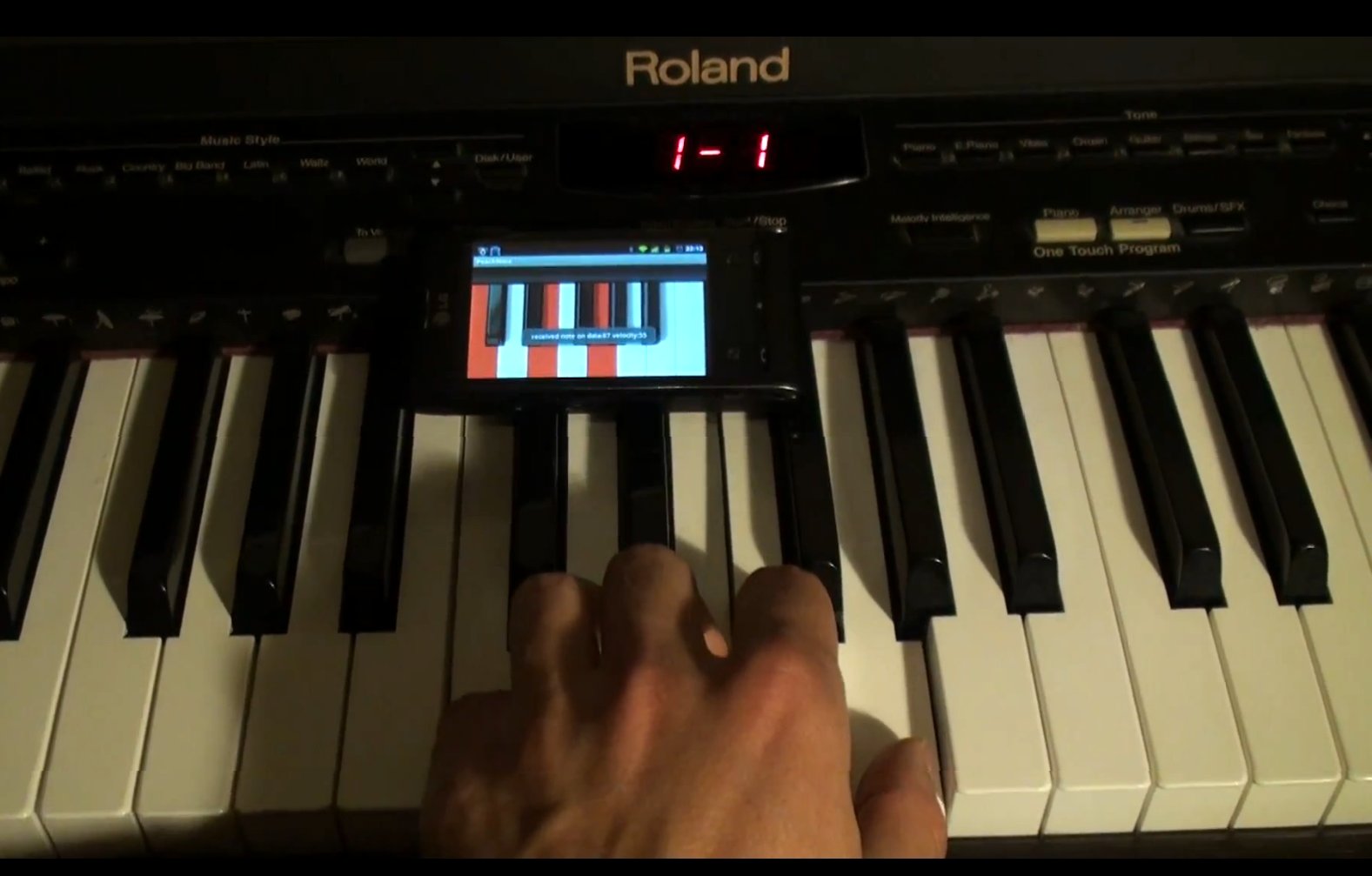
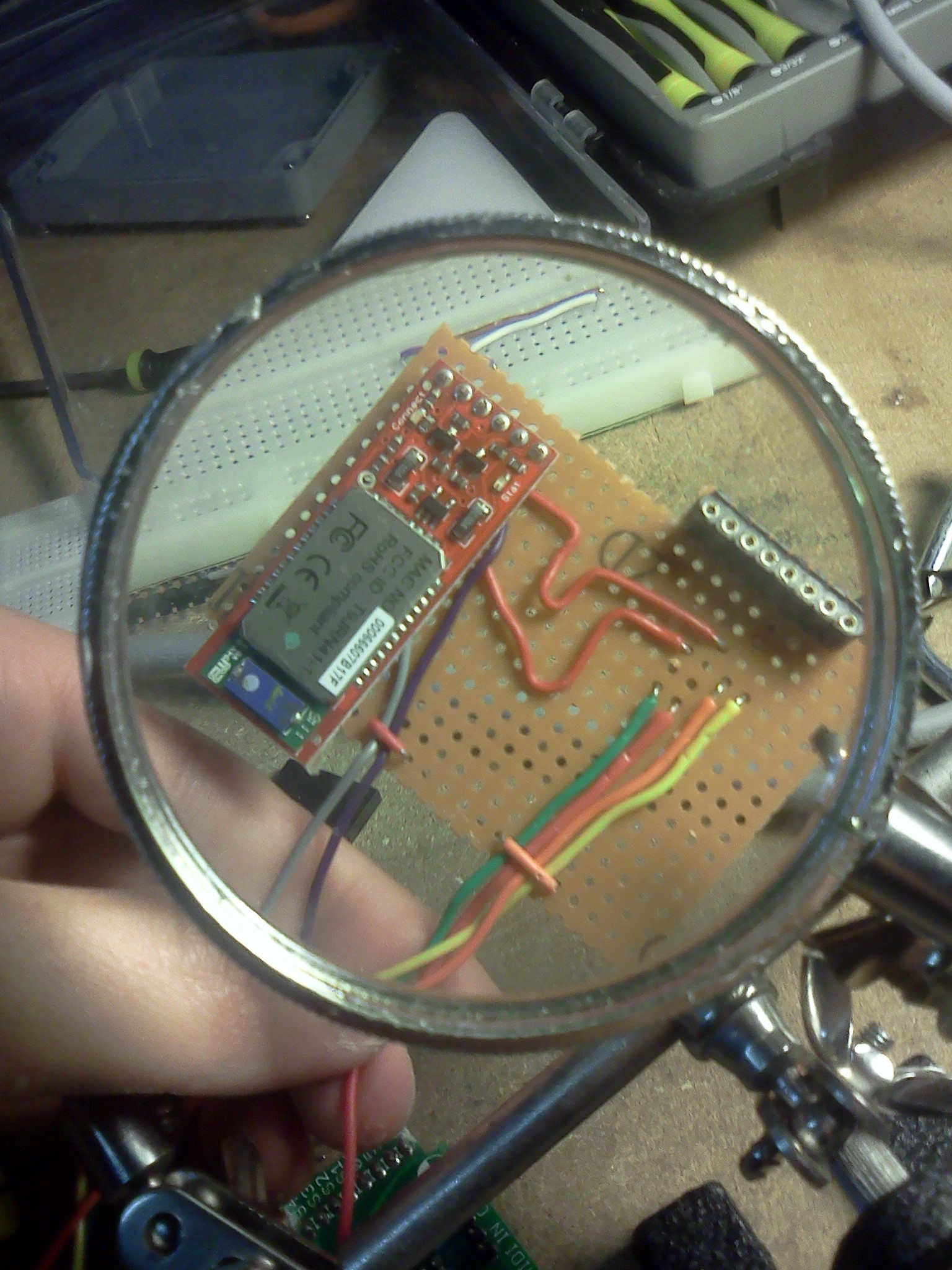
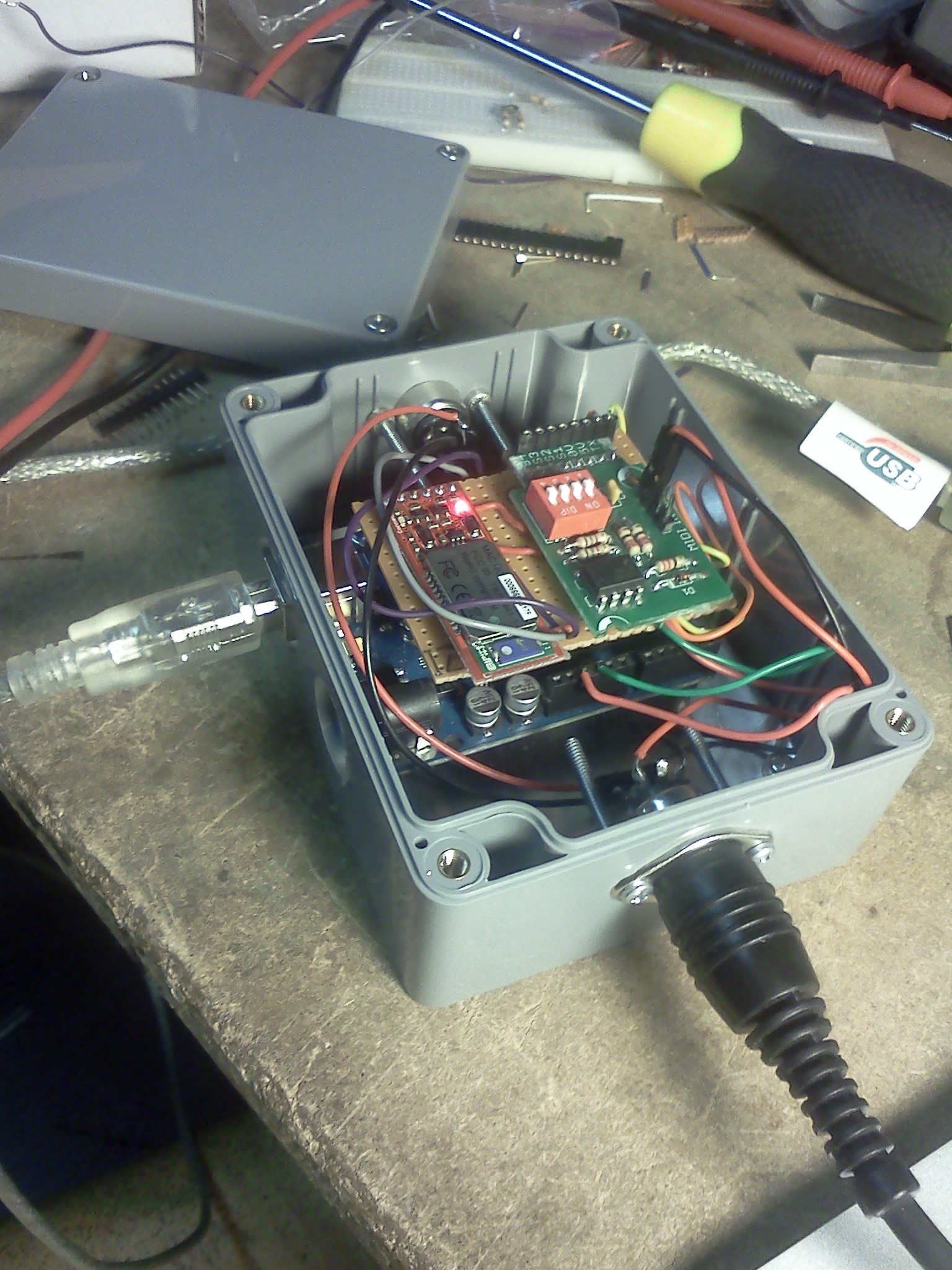
- [PeachNote\_Piano\_ISMIR\_Demo.pdf](https://0110.be/files/attachments/340/PeachNote_Piano_ISMIR_Demo.pdf)
---
## [Simplify Collaboration on a LaTeX Documents with Dropbox and a Build Server](https://0110.be/posts/Simplify_Collaboration_on_a_LaTeX_Documents_with_Dropbox_and_a_Build_Server.md)
- Published: 2011-09-21T09:46:41Z
- Updated: 2013-12-05T18:19:15Z
- Author: Joren
- ID: 409
- Canonical: https://0110.be/posts/Simplify_Collaboration_on_a_LaTeX_Documents_with_Dropbox_and_a_Build_Server
- Tags: [Code](https://0110.be/tags/Code.md), [HoGent](https://0110.be/tags/HoGent.md), [LaTeX](https://0110.be/tags/LaTeX.md), [Research papers](https://0110.be/tags/Research%20papers.md)
### Problem
While working on a Latex document with several collaborators some problems arise:
- Who has the latest version of the TeX-files?
- Which LaTeX distributions are in use (MiKTeX, LiveTex,...)
- Are all [LaTeX packages](http://en.wikibooks.org/wiki/LaTeX/Packages) correctly installed on each computer?
- Why is the bibliography, generated with BiBTeX, not included or incomplete?
- How does the final PDF look like when it is build by one of the collaborators, with a different LaTeX distribution?
Especially installing and maintaining LaTeX distributions on different platforms (Mac OS X, Linux, Windows) in combination with a lot of LaTeX packages can be challenging. This blog post presents a way to deal with these problems.
### Solution
The solution proposed here uses a build-server. The server is responsible for compiling the LaTeX source files and creating a PDF-file when the source files are modified. The source files should be available on the server should be in sync with the latest versions of the collaborators. Also the new PDF-file should be distributed. The syncing and distribution of files is done using a Dropbox install. Each author installs a Dropbox share (available on all platforms) which is also installed on the server. When an author modifies a file, this change is propagated to the server, which, in turn, builds a PDF and sends the resulting file back. This has the following advantages:
- Everyone always has the latest version of files;
- Only one LaTeX install needs to be maintained (on the server);
- The PDF is the same for each collaborator;
- You can modify files on every platform with Dropbox support (Linux, Mac OS X, Windows) and even smartphones;
- Compiling a large LaTeX file can be computationally intensive, a good task for a potentially beefy server.
### Implementation
The implementation of this is done with a couple of bash-scripts running on Ubuntu Linux. LaTeX compilation is handeled by the LiveTeX distribution. The first script `compile.bash` handles compilation in multiple stages: the cross referencing and BiBTeX bibliography need a couple of runs to get everything right.
\`\`\`ruby\
#!/bin/bash\
#first iteration: generate aux file\
pdflatex -interaction=nonstopmode ---src-specials article.tex\
#run bibtex on the aux file\
bibtex article.aux\
#second iteration: include bibliography\
pdflatex -interaction=nonstopmode ---src-specials article.tex\
#third iteration: fix references\
pdflatex -interaction=nonstopmode ---src-specials article.tex\
#remove unused files\
rm article.aux article.bbl article.blg article.out\
\`\`\`
The second script `watcher.bash` is more interesting. It watches the Dropbox directory for changes (only in .tex-files) using the efficient inotify library. If a modification is detected the compile script (above) is executed.
\`\`\`ruby\
#!/bin/bash\
directory=/home/user/Dropbox/article/\
#recursivly watch te directory\
while inotifywait -r \$directory; do\
#find all files changed the last minute that match tex\
#if there are matches then do something...\
if find \$directory -mmin --1 \| grep tex; then\
#tex files changed =\> recompile\
echo "Tex file changed... compiling"\
/bin/bash \$directory/compile.bash\
#sleep a minute to prevent recompilation loop\
sleep 60\
fi\
done\
\`\`\`
To summarize: a user-friendly way of collaboration on LaTeX documents was presented. Some server side configuration needs to be done but the clients only need Dropbox and a simple text editor and can start working togheter.
---
## [PeachNote Piano](https://0110.be/posts/PeachNote_Piano.md)
- Published: 2011-09-08T06:32:37Z
- Updated: 2013-12-05T18:19:15Z
- Author: Joren
- ID: 407
- Canonical: https://0110.be/posts/PeachNote_Piano
- Tags: [Code](https://0110.be/tags/Code.md), [HoGent](https://0110.be/tags/HoGent.md), [Java](https://0110.be/tags/Java.md), [PeachNote Piano](https://0110.be/tags/PeachNote%20Piano.md), [Presentation](https://0110.be/tags/Presentation.md)
This is about PeachNote Piano, a project only tangentially related to Tarsos. PeachNote Piano aims to capture as many piano practice sessions as possible and offer useful services using this data. The system does this by capturing and redirecting MIDI events on a Bluetooth enabled smartphone. It is done together with [Vladimir Viro](http://www.peachnote.com/about.html) and builds on the existing [PeachNote](http://peachnote.com) infrastructure.
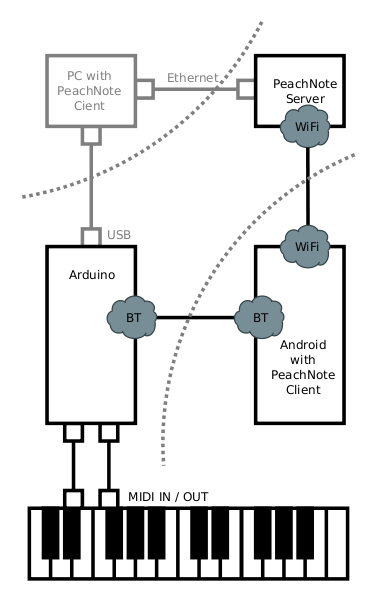
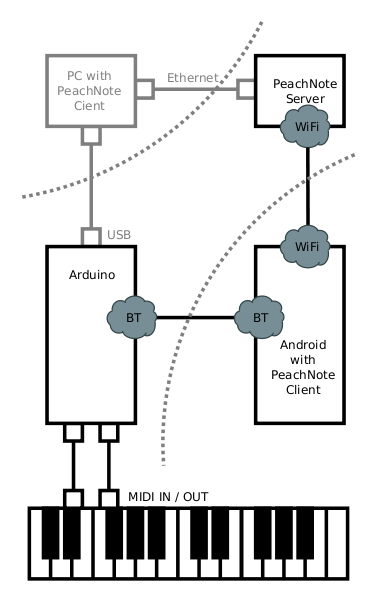
The schema - right - shows the components of the PeachNote Piano system. At the bottom you have a MIDI keyboard connected to the MIDI-Bluetooth-bridge. A smartphone (middle left) receives these MIDI events via Bluetooth and controls the communication to the server (top left). An alternative path goes through a standard computer (top right).
The Arduino based Bluetooth to MIDI bridge is an improvement on the work by [Peter Brinkmann](http://nettoyeur.noisepages.com/). The video below shows communication between USB-MIDI, Bluetooth MIDI and MIDI IN/OUT ports.
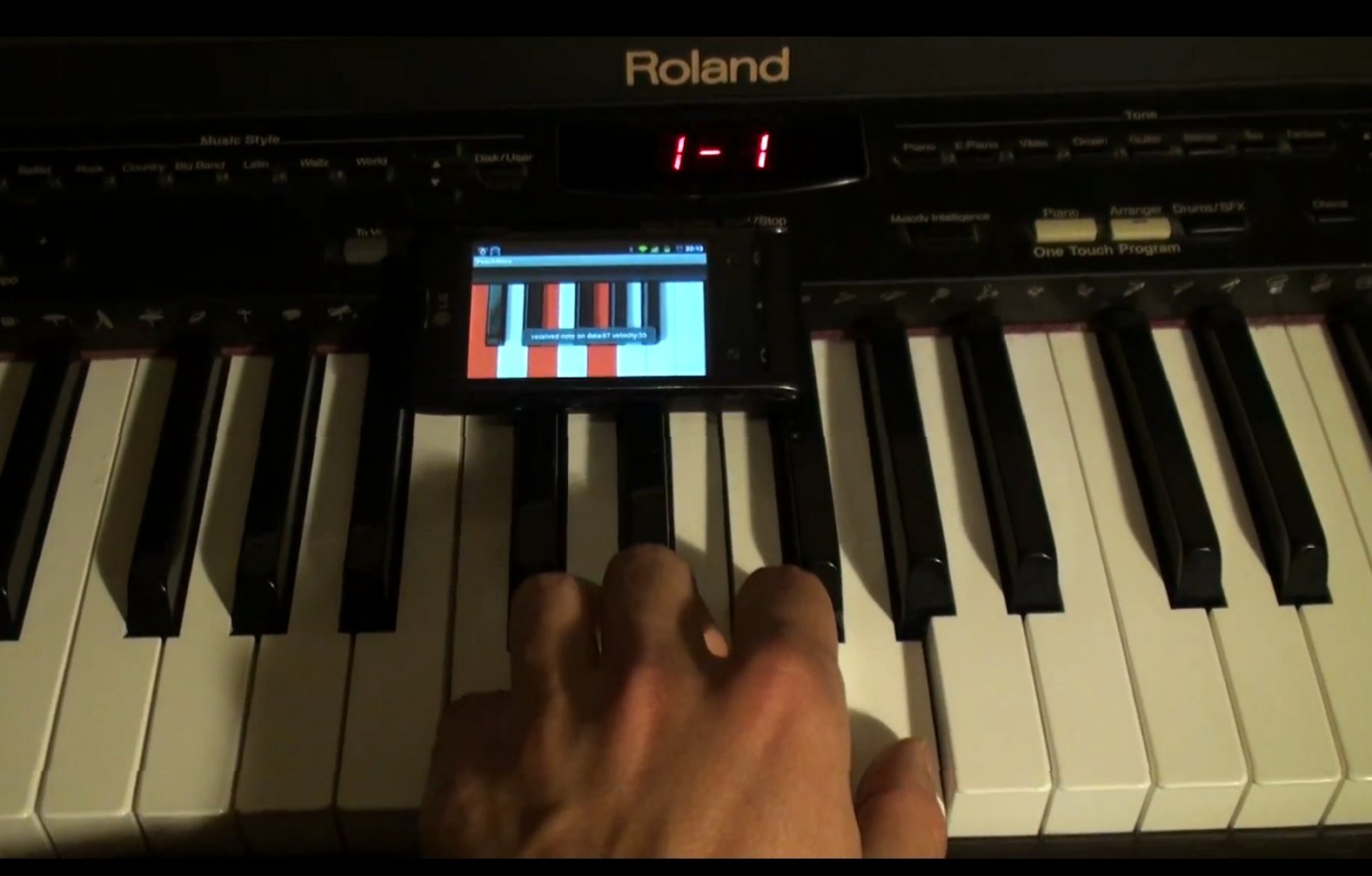
As an example application of the PeachNote Piano system we implemented a "Continue a Melody" service which works as follows: a user plays something on a keyboard, maybe just a few notes, and pauses for a few seconds. In the meantime, the server searches through a large database of MIDI piano recordings, finds the longest fuzzy match for the user's most recent input, and, after a short silence on the users part, starts streaming the continuation of the best matched performance from the database to the user. This mechanism, in fact, is way of browsing a music collection. Users may play a known leitmotiv or just improvise something, and the system continues playing a high quality recording, "replying" to the musical proposition of the user.
### More technical details
The melody matching is done on the server, which is implemented in Javascript in the Node.js framework. The whole dataset (about 350 hours of piano recordings) resides in memory in two representations: as a sequence of pitches, and as a sequence of "densities" at the corresponding places of the pitch sequence dataset. This second array is used to store the rough tempo information (number of notes per second) absent in the pitch sequence data.\
By combining the two search criteria we can achieve reasonable approximation of the tempo-aware search without its computational complexity.
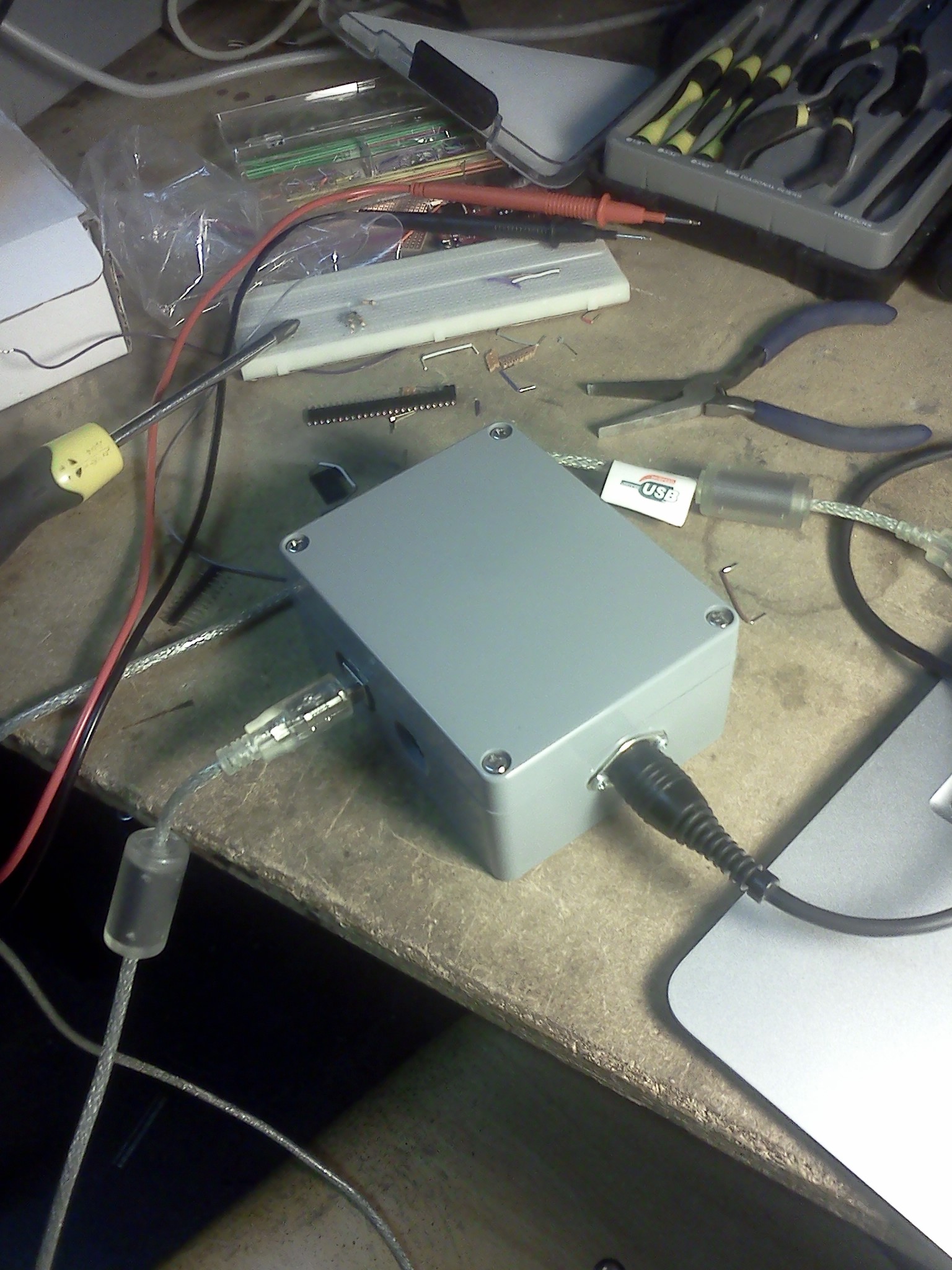
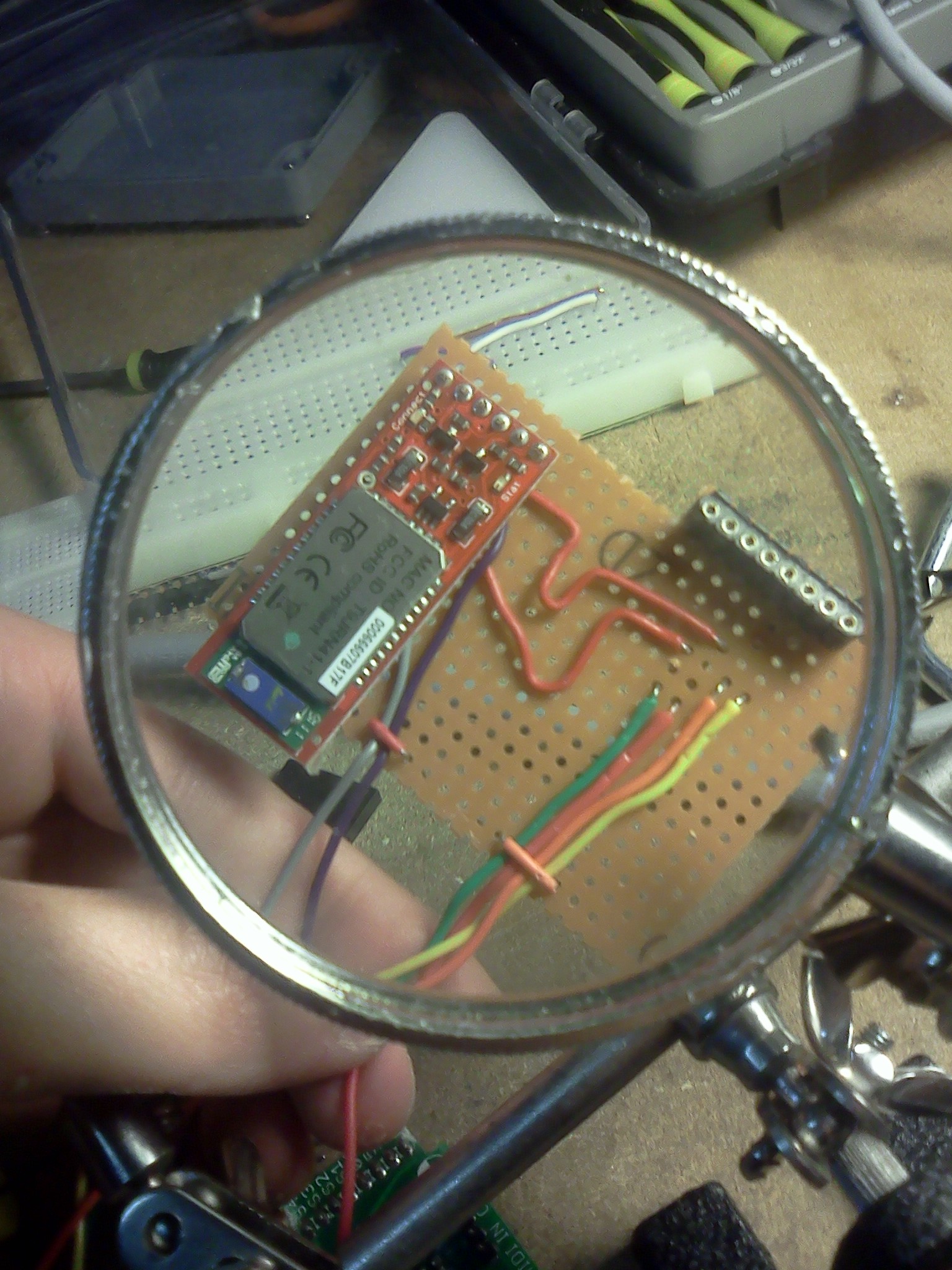
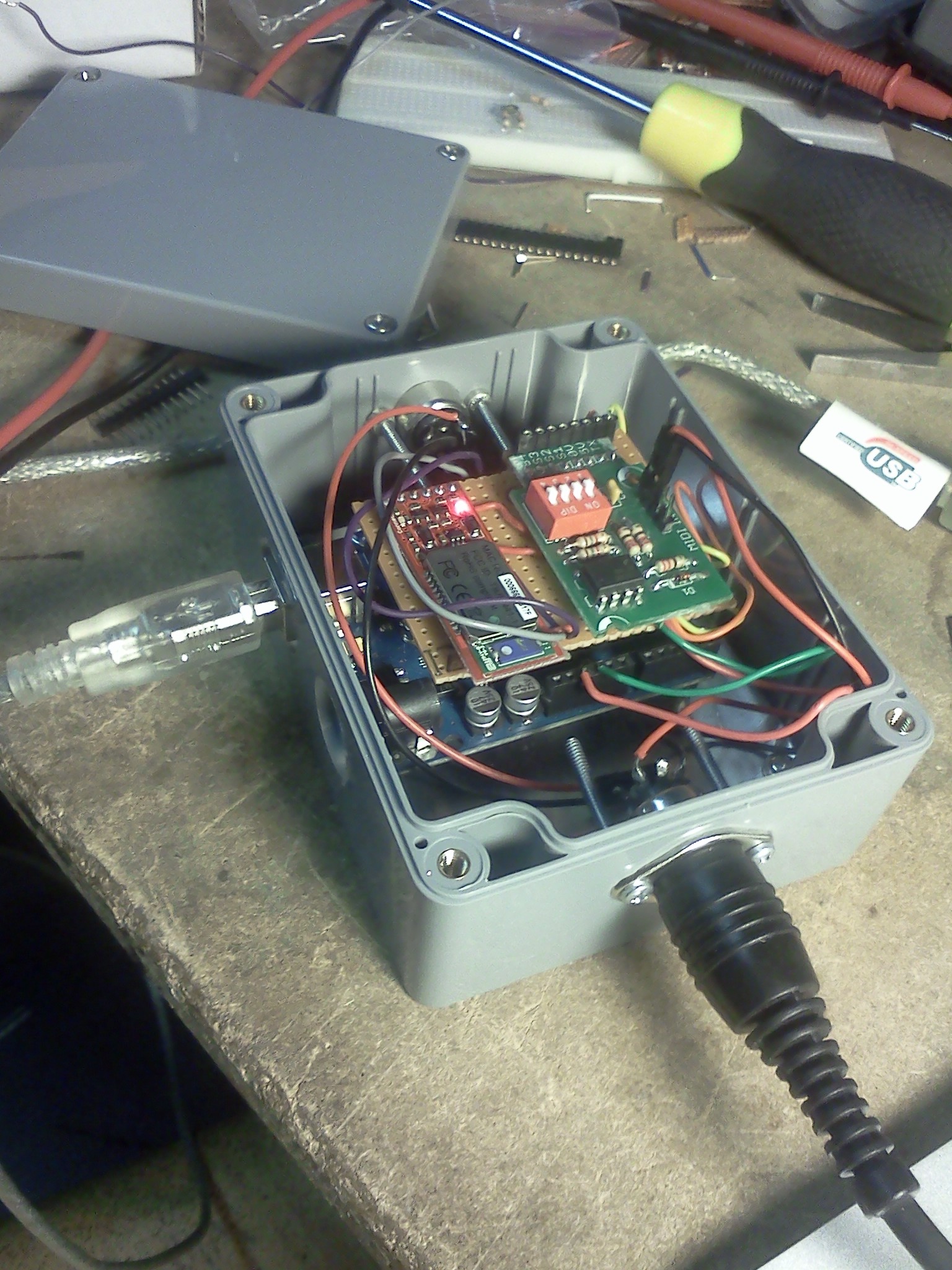
The implementation of the hardware is based on the open-source electronic prototyping platform Arduino. Optocoupled MIDI ports (IN/OUT) and the BlueSMiRF Bluetooth module were attached to the main board, as can be seen in the middle left block of the schema. The BlueTooth module is configured to use the Serial Port Profile (SPP) which emulates RS-232. The software on the Arduino manages bi-directional, low latency message passing between three serial ports: USB (through an FTDI chip), BlueTooth and the hardware MIDI-IN and OUT port.
The standard Arduino firmware has been replaced with firmware that implements the "Universal Serial Bus Device Class Definition for MIDI Devices": when attached to a computer via USB, the Arduino shows up as a standard MIDI device, which makes it compatible with all available MIDI software. The software client currently works on the Android smartphone platform. It is represented using the middle right block in the schema. The client can send and receive MIDI events over its Bluetooth port. Pairing, connecting and communicating with the device is done using the [Amarino software library](http://www.amarino-toolkit.net/). The client communicates with the Peachnote Piano server using TCP sockets implemented on the Dalvik Java runtime.
---
## [Tarsos at 'ISMIR 2011'](https://0110.be/posts/Tarsos_at_%27ISMIR_2011%27.md)
- Published: 2011-08-22T08:26:09Z
- Updated: 2013-12-05T18:19:15Z
- Author: Joren
- ID: 405
- Canonical: https://0110.be/posts/Tarsos_at_%27ISMIR_2011%27
- Tags: [Code](https://0110.be/tags/Code.md), [Computational ethnomusicology](https://0110.be/tags/Computational%20ethnomusicology.md), [HoGent](https://0110.be/tags/HoGent.md), [ISMIR](https://0110.be/tags/ISMIR.md), [Music Information Retrieval](https://0110.be/tags/Music%20Information%20Retrieval.md), [Research papers](https://0110.be/tags/Research%20papers.md), [Tarsos](https://0110.be/tags/Tarsos.md), [featured](https://0110.be/tags/featured.md)
A paper about Tarsos was submitted for review at the [12th International Society for Music Information Retrieval Conference](http://ismir2011.ismir.net/) which will be held in Miami. The paper "Tarsos - a Platform to Explore Pitch Scales in Non-Western and Western Music":\[tarsos_ismir_2011.pdf\] was reviewed and accepted, it will be published in this year's proceedings of the ISMIR conference. It can be read below as well.
An oral presentation about Tarsos is going to take place Tuesday, the 25 of October during the afternoon, as can be seen on the [ISMIR preliminary program schedule](http://ismir2011.ismir.net/program.html#OS2).
If you want to cite our work, please use the following data:
\`\`\`ruby\
\@inproceedings{six2011tarsos,\
author = {Joren Six and Olmo Cornelis},\
title = {Tarsos - a Platform to Explore Pitch Scales\
in Non-Western and Western Music},\
booktitle = {Proceedings of the 12th International\
Society for Music Information Retrieval Conference,\
ISMIR 2011},\
year = {2011},\
publisher = {International Society for Music Information Retrieval}\
}\
\`\`\`
- [tarsos\_ismir\_paper.bibtex.txt](https://0110.be/files/attachments/405/tarsos_ismir_paper.bibtex.txt)
- [tarsos\_ismir\_2011.pdf](https://0110.be/files/attachments/405/tarsos_ismir_2011.pdf)
---
## [Tarsos at 'IPEM Open House'](https://0110.be/posts/Tarsos_at_%27IPEM_Open_House%27.md)
- Published: 2011-05-27T10:02:51Z
- Updated: 2013-12-05T18:19:15Z
- Author: Joren
- ID: 400
- Canonical: https://0110.be/posts/Tarsos_at_%27IPEM_Open_House%27
- Tags: [Computational ethnomusicology](https://0110.be/tags/Computational%20ethnomusicology.md), [Computational musicology](https://0110.be/tags/Computational%20musicology.md), [HoGent](https://0110.be/tags/HoGent.md), [Presentation](https://0110.be/tags/Presentation.md), [Tarsos](https://0110.be/tags/Tarsos.md), [featured](https://0110.be/tags/featured.md)
The 25th of May 2011 Tarsos was present at the [IPEM (Institute for Psychoacoustics and Electronic Music)](http://www.ipem.ugent.be/) open house.
> IPEM (Institute for Psychoacoustics and Electronic Music) is the research center of the Department of Musicology, which is part of the Department of Art, Music and Theater Studies of Ghent University. IPEM provides a scientific basis for the cultural and creative sector, especially for music and performance arts, and does pioneering research work on the relationship between music body movement and new technologies. The institute consists of an interdisciplinary team but also welcomes visiting researchers from all over the world. One of its aims is also to actively try and validate research results during public events and by means of user studies.
There are close relations between the Royal Conservatory Ghent, where we are located, and IPEM. There is more information [about the IPEM open house](http://www.ipem.ugent.be/node/292) available. Also available is [the program of the IPEM open house 2011](http://www.ipem.ugent.be/node/293)
Tarsos was presented using a poster, a flyer and a live demo. The "poster about Tarsos":\[tarsos_poster.pdf\] and the "flyer about Tarsos":\[tarsos_flyer.pdf\] are both downloadable.
- [tarsos\_flyer.pdf](https://0110.be/files/attachments/400/tarsos_flyer.pdf)
- [tarsos\_poster.pdf](https://0110.be/files/attachments/400/tarsos_poster.pdf)
- [ipem\_logo.gif](https://0110.be/files/attachments/400/ipem_logo.gif)
---
## [Tarsos at 'First International Workhop of Folk Music Analysis'](https://0110.be/posts/Tarsos_at_%27First_International_Workhop_of_Folk_Music_Analysis%27.md)
- Published: 2011-05-13T09:46:54Z
- Updated: 2013-12-05T18:19:15Z
- Author: Joren
- ID: 393
- Canonical: https://0110.be/posts/Tarsos_at_%27First_International_Workhop_of_Folk_Music_Analysis%27
- Tags: [Computational musicology](https://0110.be/tags/Computational%20musicology.md), [Computational musicology](https://0110.be/tags/Computational%20musicology.md), [HoGent](https://0110.be/tags/HoGent.md), [Presentation](https://0110.be/tags/Presentation.md), [Tarsos](https://0110.be/tags/Tarsos.md), [featured](https://0110.be/tags/featured.md)
Tarsos will be presented at the [First International Workhop of Folk Music Analysis: Symbolic and Signal Processing](http://www.arehna.di.uoa.gr/fma/):
> "The First International Workhop of Folk Music Analysis: Symbolic and Signal Processing, will take place in Athens, Greece, on the 19th and 20th of May, 2011. ... The purpose of the event is to gather reseachers who work in the area of computational folk music analysis, using symbolic or singal processing methods, to present their work, discuss and exchange views on the topic."
The "submitted abstract about Tarsos":\[Tarsos_FMA_2011.pdf\] can be downloaded. "A presentation about Tarsos":\[2011-05-20-tarsos_at_athens.pdf\] is also available.
- [Tarsos\_FMA\_2011.pdf](https://0110.be/files/attachments/393/Tarsos_FMA_2011.pdf)
- [2011-05-20-tarsos\_at\_athens.pdf](https://0110.be/files/attachments/393/2011-05-20-tarsos_at_athens.pdf)
---
## [ARIP: Programma](https://0110.be/posts/ARIP%3A_Programma.md)
- Published: 2011-03-08T13:23:14Z
- Updated: 2013-12-05T18:19:15Z
- Author: Joren
- ID: 389
- Canonical: https://0110.be/posts/ARIP%3A_Programma
- Tags: [ARIP](https://0110.be/tags/ARIP.md), [Dutch](https://0110.be/tags/Dutch.md), [HoGent](https://0110.be/tags/HoGent.md), [Presentation](https://0110.be/tags/Presentation.md)
Tijdens ARIP( Artistic Research in Progress) wordt Tarsos voorgesteld en kan het zelfs uitgetest worden. Volgens de [ARIP website](http://cons.hogent.be/nl/nieuws-en-agenda/nieuws/dag-van-het-onderzoek-arip-371) : *"Op 18 maart 2011 stellen de verschillende onderzoekers hun onderzoeksproject voor: geen afgewerkte producten of eindresultaten, maar wel momentopnames. Samen bieden ze een interessante en intrigerende kijk in wat het onderzoek in ons Conservatorium te bieden heeft".*
Het tekstje over Tarsos:
> Tarsos is een softwareprogramma waarmee toonhoogte in muziek onderzocht kan worden in onder meer etnische muziek. Tarsos heeft nu ook nieuwe, real-time mogelijkheden. Geluid afkomstig van een microfoon wordt meteen geanalyseerd en onmiddellijke feedback toont een gespeeld of gezongen interval. Het maakt kwarttonen of andere (ongewone) intervallen visueel duidelijk.\
> Tijdens ARIP zal er kort wat uitleg gegeven worden over Tarsos en mag je een demo verwachten. Zangers of instrumentalisten die willen experimenteren met intonatie zijn ook meer dan welkom om Tarsos *zelf uit te proberen*.
---
## [Tarsos at 'Lectures on Computational Ethnomusicology'](https://0110.be/posts/Tarsos_at_%27Lectures_on_Computational_Ethnomusicology%27.md)
- Published: 2011-02-24T13:09:23Z
- Updated: 2013-12-05T18:19:15Z
- Author: Joren
- ID: 385
- Canonical: https://0110.be/posts/Tarsos_at_%27Lectures_on_Computational_Ethnomusicology%27
- Tags: [Computational ethnomusicology](https://0110.be/tags/Computational%20ethnomusicology.md), [HoGent](https://0110.be/tags/HoGent.md), [Presentation](https://0110.be/tags/Presentation.md), [Tarsos](https://0110.be/tags/Tarsos.md), [featured](https://0110.be/tags/featured.md)
This monday the 28th of February Tarsos will be presented at "Lectures on Computational Ethnomusicology" which is held at Izmir, Turkey. "The presentation of Tarsos":\[2011-02-28_tarsos_at_izmir.pdf\] is available here.
Next to the interesting "programme":\[programme_lectures_on_comp_ethno_izmir.pdf\] it is a great opportunity to meet [Baris Bozkurt](http://web.iyte.edu.tr/~barisbozkurt/) who has been working on similar research but applied to [Makam music](http://likya.iyte.edu.tr/eee/labs/audio/Main.html).
On wednesday the second of March there is a small seminar at Electrical and Electronics Eng. Dept. of [İzmir Yüksek Teknoloji Enstitüsü](http://www.iyte.edu.tr/) where Tarsos will be presented also.
- [2011-02-28\_tarsos\_at\_izmir.pdf](https://0110.be/files/attachments/385/2011-02-28_tarsos_at_izmir.pdf)
- [2011-02-28-tarsos\_at\_izmir.odp](https://0110.be/files/attachments/385/2011-02-28-tarsos_at_izmir.odp)
- [programme\_lectures\_on\_comp\_ethno\_izmir.pdf](https://0110.be/files/attachments/385/programme_lectures_on_comp_ethno_izmir.pdf)
---
## [ARIP: Artistic Research In Progress](https://0110.be/posts/ARIP%3A_Artistic_Research_In_Progress.md)
- Published: 2011-02-01T10:35:52Z
- Updated: 2013-12-05T18:19:15Z
- Author: Joren
- ID: 386
- Canonical: https://0110.be/posts/ARIP%3A_Artistic_Research_In_Progress
- Tags: [ARIP](https://0110.be/tags/ARIP.md), [Computational ethnomusicology](https://0110.be/tags/Computational%20ethnomusicology.md), [Computational musicology](https://0110.be/tags/Computational%20musicology.md), [HoGent](https://0110.be/tags/HoGent.md), [Presentation](https://0110.be/tags/Presentation.md), [Research papers](https://0110.be/tags/Research%20papers.md), [Tarsos](https://0110.be/tags/Tarsos.md)
Voor ARIP (Artistic Research In Progress) heb ik een "artikel over Tarsos":\[arip.pdf\] geschreven. Het motiveert kort de bestaansredenen van Tarsos - een applicatie om toonhoogtegebruik in muziek te analyseren - en het artikel geeft een overzicht van de werking van Tarsos aan de hand van een voorbeeld. Hieronder zijn multimediale aanvullingen te vinden bij het artikel.
Ladrang Kandamanyura (slendro pathet manyura), zo heet het muziekfragment dat gebruikt werd in het artikel als voorbeeld van een stuk muziek met een ongewone (voor onze westerse oren toch) toonladder. De CD waarop het stuk te vinden is, is bij [wergo](http://www.wergo.de/shop/en_UK/Audio_CDs/1000088/show,223736,n.html) te verkrijgen. Een fragment van 30 seconden is hier te beluisteren:
Het fragment kan je ook "downloaden":\[08.\_Ladrang_Kandamanyura_10s-20s.wav\] om zelf te analyseren met Tarsos.
Ladrang Kandamanyura (slendro pathet manyura) \
Courtesy of: WERGO/Schott Music & Media, Mainz, Germany, [www.wergo.de](http://wergo.de) and Museum Collection Berlin \
Lestari - The Hood Collection, Early Field Recordings from Java ([SM 1712 2](http://www.wergo.de/shop/en_UK/Audio_CDs/1000088/show,223736,n.html)) \
Recorded in 1957 and 1958 in Java - First release
### Tarsos Live
Het onderstaande videofragment geeft aan hoe Tarsos gebruikt kan worden om in real time stemmingen te meten. Geluid afkomstig van een microfoon wordt dan meteen geanalyseerd en onmiddellijke feedback toont een gespeeld of gezongen interval. Het maakt kwarttonen of andere (ongewone) intervallen visueel duidelijk. Tarsos kan zo gebruikt worden door zangers of strijkers die willen experimenteren met microtonaliteit. Ook kan het handig zijn voor etnomusicologisch veldwerk: bijvoorbeeld om kora (een Afrikaanse harp) toonladders te documenteren.


- [arip.doc](https://0110.be/files/attachments/386/arip.doc)
- [08.\_Ladrang\_Kandamanyura\_10s-20s.wav](https://0110.be/files/attachments/386/08._Ladrang_Kandamanyura_10s-20s.wav)
- [arip.pdf](https://0110.be/files/attachments/386/arip.pdf)
---
## [ Digital Music Research Network Workshop - Queen Mary University London](https://0110.be/posts/_Digital_Music_Research_Network_Workshop_-_Queen_Mary_University_London.md)
- Published: 2010-12-22T14:00:56Z
- Updated: 2013-12-05T18:19:15Z
- Author: Joren
- ID: 366
- Canonical: https://0110.be/posts/_Digital_Music_Research_Network_Workshop_-_Queen_Mary_University_London
- Tags: [Computational ethnomusicology](https://0110.be/tags/Computational%20ethnomusicology.md), [Computational musicology](https://0110.be/tags/Computational%20musicology.md), [HoGent](https://0110.be/tags/HoGent.md), [Research papers](https://0110.be/tags/Research%20papers.md), [featured](https://0110.be/tags/featured.md)
Monday the 20th and Tuesday the 21th of December I attended two workshops at The Queen Mary University of London: [The Machine Listening Workshop](http://www.eecs.qmul.ac.uk/events/mlw/mlw2010/) and [Digital Music Research Network One-day Workshop 2010](http://www.elec.qmul.ac.uk/dmrn/events/dmrnp5/)
At the workshop I had an interesting meeting with Dan Tidhar. He researches harpsichord temperament estimation at QMUL (Queen Mary University of London). Together they created the [Tempest web service](http://www.isophonics.net/sawa/tempest/) where you can upload harpsichord audio and let the system guess the temperament. The process is described in the paper "High precision frequency estimation for harpsichord tuning classification". Although Tarsos was not officially part of the programme I hijacked the poster sessions to show a live demo of Tarsos with Dan's dataset.
Another interesting talk was about [2032](http://www.dynamictonality.com/2032), a tunable synthesizer with definable Harmonics. It elaborates on the ideas of Sethares about tone scales .
---
## [Latex & Version Control Introduction](https://0110.be/posts/Latex__%26_Version_Control_Introduction.md)
- Published: 2010-11-30T08:56:17Z
- Updated: 2013-12-05T18:19:15Z
- Author: Joren
- ID: 365
- Canonical: https://0110.be/posts/Latex__%26_Version_Control_Introduction
- Tags: [HoGent](https://0110.be/tags/HoGent.md), [Presentation](https://0110.be/tags/Presentation.md)
Monday, I'll give a small presentation about Latex and Version Control for the research team at the [University College Gent, Faculty of Music](http://cons.hogent.be). The idea is to give a pragmatic overview of working with Latex and version control. The "presentation about Latex & Version control (in Dutch)":\[latex_svn_presentatie.pdf\] can be downloaded. The presentation itself is created using Latex and "the source of the presentation":\[latex_svn_presentatie.zip\] is also available. A good description of Latex can be found [here](http://swik.net/LaTeX):
> LaTeX (pronounced "latech") is a document preparation system for high-quality typesetting based on, and succeeding TeX formatting. It is a very popular format in academia, as it allows advanced document formatting capabilities not found in other common document formatting systems. Some of these capabilities include table figure notations, bibliography formatting (see BibTeX), and an advanced macro language.
Some useful references:
- [Practical Latex introduction course (in Dutch)](http://zeus.ugent.be/~gaspard/latex/)
- [UGent Latex website](http://latex.ugent.be)
- [WikiBook about Latex](http://en.wikibooks.org/wiki/Latex)
- [Eclipse](http://eclipse.org): an IDE (Integrated Development Environment) which can be used as Latex editor with version control by installing the [TeXclipse](http://texlipse.sourceforge.net/) and [Subclipse](http://subclipse.tigris.org/) plugins.
- [latex\_svn\_presentatie.zip](https://0110.be/files/attachments/365/latex_svn_presentatie.zip)
- [latex\_icon.png](https://0110.be/files/attachments/365/latex_icon.png)
- [latex\_svn\_presentatie.pdf](https://0110.be/files/attachments/365/latex_svn_presentatie.pdf)
---
## [Seminar - Research on Music History and Analysis](https://0110.be/posts/Seminar_-_Research_on_Music_History_and_Analysis.md)
- Published: 2010-11-26T14:39:40Z
- Updated: 2013-12-05T18:19:15Z
- Author: Joren
- ID: 364
- Canonical: https://0110.be/posts/Seminar_-_Research_on_Music_History_and_Analysis
- Tags: [Computational musicology](https://0110.be/tags/Computational%20musicology.md), [HoGent](https://0110.be/tags/HoGent.md), [Music Information Retrieval](https://0110.be/tags/Music%20Information%20Retrieval.md), [Presentation](https://0110.be/tags/Presentation.md)
This post contains links to genuinely useful software to do signal based audio analysis.
- [Sonic Visualizer](http://www.sonicvisualiser.org): As its name suggests Sonic Visualizer contains a lot different visualisations for audio. It can be used for analysis (pitch,beat,chroma,...) with [VAMP-plugins](http://vamp-plugins.org). To quote *"The aim of Sonic Visualiser is to be the first program you reach for when want to study a musical recording rather than simply listen to it"*. It is the swiss army knife of audio analysis.
- [BeatRoot](http://www.eecs.qmul.ac.uk/~simond/beatroot/) is designed specifically for one goal: beat tracking. It can be used for e.g. comparing tempi of different performances of the same piece or to track tempo deviation within one piece.
- [Tartini](http://tartini.net) is capable to do real-time pitch analysis of sound. You can e.g. play into a microphone with a violin and see the harmonics you produce and adapt you playing style based on visual feedback. It also contains a pitch deviation measuring apparatus to analyse vibrato.
- [Tarsos](http://tarsos.0110.be) is software for tone scale analysis. It is useful to extract tone scales from audio. Different tuning systems can be seen, extracted and compared. It also contains the ability to play along with the original song with a tuned midi keyboard .
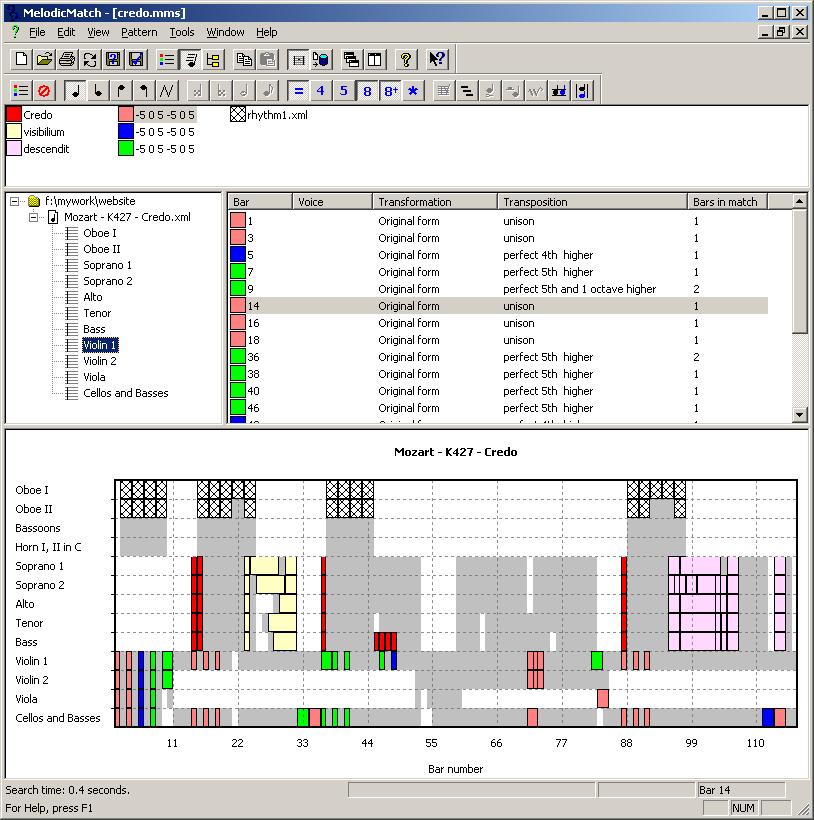
[Melodic Match](http://www.melodicmatch.com) is a different beast. It does not work on signal level but processes symbolic audio. More to the point it searches through MusicXML files - which can be created from MIDI-files. See its website for use cases. Melodic Match is only available for Windows.
During a lecture at the [University College Gent, Faculty of Music](http://cons.hogent.be) these tools were presented with some examples. "The slides (Slides in Dutch)":\[presentatie.pdf\] and "a zip-file with audio samples, slides and software":\[Tarsos-presentatie.zip\] are available for reference. Most of the time was given to Tarsos, the software we developed.
[Olmo Cornelis](http://webs.hogent.be/olmocornelis/) also gave a lecture about his own research and how Tarsos fits in the bigger picture. "His presentation (Slides in English)":\[lezing_Olmo_Cornelis_zonder_audio.ppt\] and "the presentation with audio":\[lezing_Olmo_Cornelis_met_audio.zip\] are also available here.
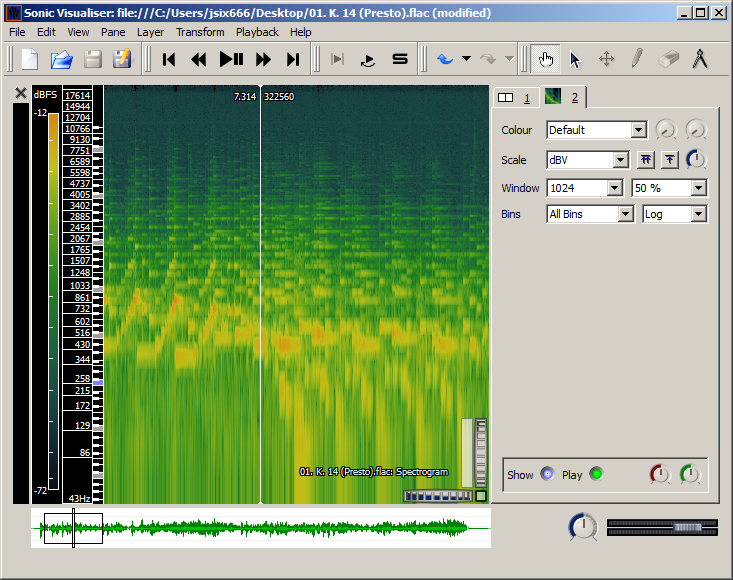
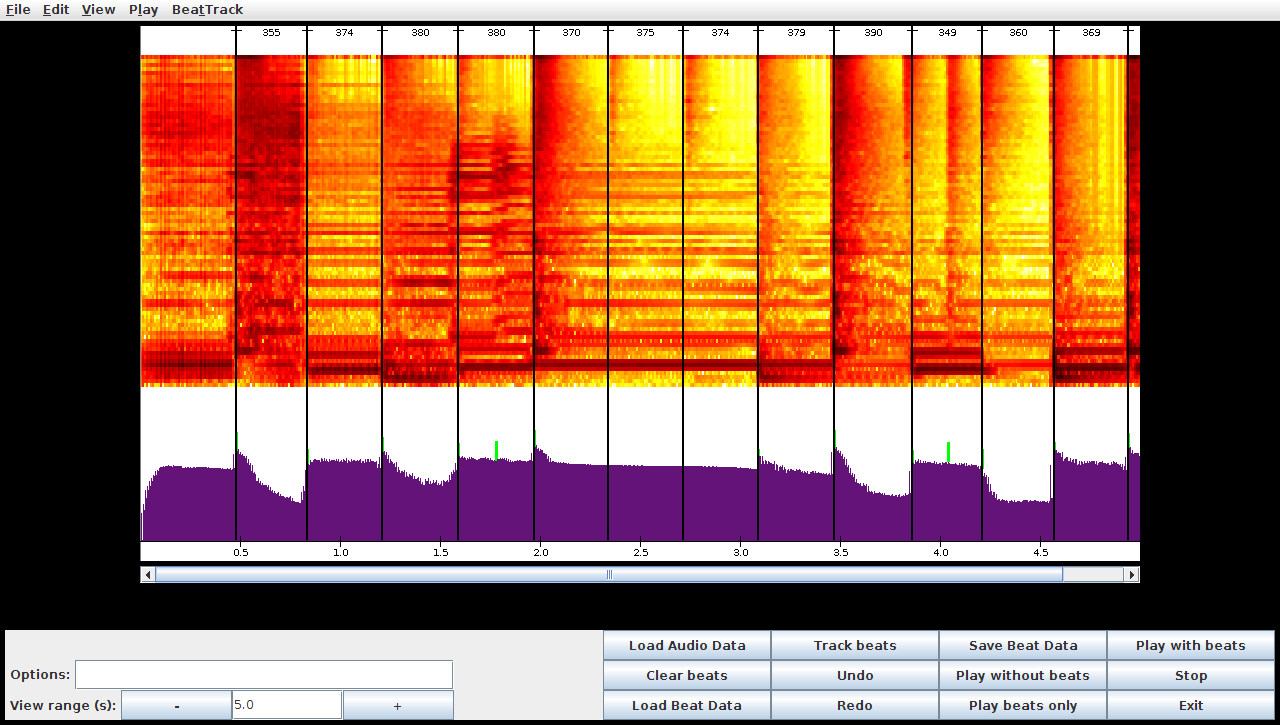
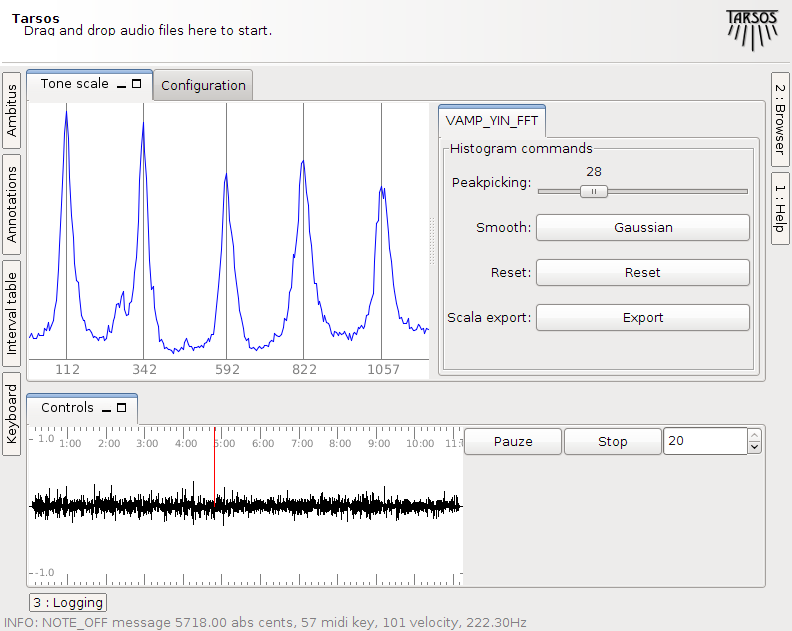
- [presentatie.pdf](https://0110.be/files/attachments/364/presentatie.pdf)
- [Tarsos-presentatie.zip](https://0110.be/files/attachments/364/Tarsos-presentatie.zip)
- [lezing\_Olmo\_Cornelis\_zonder\_audio.ppt](https://0110.be/files/attachments/364/lezing_Olmo_Cornelis_zonder_audio.ppt)
- [lezing\_Olmo\_Cornelis\_met\_audio.zip](https://0110.be/files/attachments/364/lezing_Olmo_Cornelis_met_audio.zip)
---
## [Tarsos Presented at the "Perspectives for Computational Musicology" Symposium](https://0110.be/posts/Tarsos_Presented_at_the_%22Perspectives_for_Computational_Musicology%22_Symposium.md)
- Published: 2010-10-06T14:42:01Z
- Updated: 2013-12-05T18:19:15Z
- Author: Joren
- ID: 341
- Canonical: https://0110.be/posts/Tarsos_Presented_at_the_%22Perspectives_for_Computational_Musicology%22_Symposium
- Tags: [Computational ethnomusicology](https://0110.be/tags/Computational%20ethnomusicology.md), [HoGent](https://0110.be/tags/HoGent.md), [Music Information Retrieval](https://0110.be/tags/Music%20Information%20Retrieval.md), [Presentation](https://0110.be/tags/Presentation.md), [featured](https://0110.be/tags/featured.md)
Yesterday Tarsos was publicly presented at the symposium [Perspectives for Computational Musicology](https://www.meertens.knaw.nl/cms/nl/agenda-othermenu-70/143334-5-oktober-2010) in Amsterdam. The first public presentation of Tarsos, excluding this website. The symposium was organized by [the Meertens Institute](https://www.meertens.knaw.nl/cms/en) on the occasion of Peter van Kranenburg's PhD defense.
The presentation included a live demo of a daily build of Tarsos (a Friday evening build) which worked, surprisingly, without hiccups. The presentation was done by [Olmo Cornelis](http://cons.hogent.be/nl/onderzoek/onderzoeksprojecten/olmo-cornelis/bio). This was the small introduction:
> **Tarsos - a Platform for Pitch Analysis of Ethnic Music** \
> Ethnic music is a vulnerable cultural heritage that has received only recently more attention within the Music Information Retrieval community. However, access to ethnic music remains problematic, as this music does not always correspond to the Western concepts of music and metadata that underlie the currently available content-based methods. During this lecture, we like to present our current research on pitch analysis of African music. TARSOS, a platform for analysis, will be presented as a powerful tool that can describe and compare scales with great detail.
To give Tarsos a try ou can start Tarsos using JAVA WebStart or download the [executable Tarsos JAR-file](https://0110.be/attachment/tarsos.jar). A JAVA 1.5 runtime is required.
---
[Newer posts](https://0110.be/Publications.md)
 ":\[A0-Poster.jpg\]
 The journal paper *Evaluation and Recommendation of Pulse and Tempo Annotation in Ethnic Music - In Journal Of New Music Research* by Cornelis, Six, Holzapfel and Leman was published in a special issue about Computational Ethnomusicology of [the Journal of New Music Research (JNMR)](http://www.tandfonline.com/toc/nnmr20/current) on the 20th of august 2013. Below you can find the abstract for the article, and the full text author version of the article itself.
> **Abstract:** Large digital archives of ethnic music require automatic tools to provide musical content descriptions. While various automatic approaches are available, they are to a wide extent developed for Western popular music. This paper aims to analyze how automated tempo estimation approaches perform in the context of Central-African music. To this end we collect human beat annotations for a set of musical fragments, and compare them with automatic beat tracking sequences. We first analyze the tempo estimations derived from annotations and beat tracking results. Then we examine an approach, based on mutual agreement between automatic and human annotations, to automate such analysis, which can serve to detect musical fragments with high tempo ambiguity.
To read the full text you can either download "Evaluation and Recommendation of Pulse ant Tempo Annotation in Ethnic Music, Author version":\[2013.10.09.Tempo_annotation_in_ethnic_music-JNMR-Author_Version.pdf\]. Or obtain the published version of [Evaluation and Recommendation of Pulse ant Tempo Annotation in Ethnic Music, published version](http://www.tandfonline.com/doi/full/10.1080/09298215.2013.812123)
Below the BibTex entry for the article is embedded.
\`\`\`ruby\
\@article{cornelis2013tempo_jnmr,\
author = {Olmo Cornelis, Joren Six, Andre Holzapfel, and Marc Leman},\
title = {{Evaluation and Recommendation of Pulse ant Tempo Annotation in Ethnic Music}},\
journal = {{Journal of New Music Research}},\
volume = {42},\
number = {2},\
pages = {131-149},\
year = {2013},\
doi = {10.1080/09298215.2013.812123}\
}\
\`\`\`
- [jnmr.cover.jpg](https://0110.be/files/attachments/379/jnmr.cover.jpg)
- [2013.10.09.Tempo\_annotation\_in\_ethnic\_music-JNMR-Author\_Version.pdf](https://0110.be/files/attachments/379/2013.10.09.Tempo_annotation_in_ethnic_music-JNMR-Author_Version.pdf)
---
## [Tarsos, a Modular Platform for Precise Pitch Analysis of Western and Non-Western Music - In Journal Of New Music Research](https://0110.be/posts/Tarsos%2C_a_Modular_Platform_for_Precise_Pitch_Analysis_of_Western_and_Non-Western_Music_-_In_Journal_Of_New_Music_Research.md)
- Published: 2013-08-22T00:00:00Z
- Updated: 2015-06-05T08:10:05Z
- Author: Joren
- ID: 331
- Canonical: https://0110.be/posts/Tarsos%2C_a_Modular_Platform_for_Precise_Pitch_Analysis_of_Western_and_Non-Western_Music_-_In_Journal_Of_New_Music_Research
- Tags: [Computational ethnomusicology](https://0110.be/tags/Computational%20ethnomusicology.md), [HoGent](https://0110.be/tags/HoGent.md), [JNMR](https://0110.be/tags/JNMR.md), [Java](https://0110.be/tags/Java.md), [Music Information Retrieval](https://0110.be/tags/Music%20Information%20Retrieval.md), [Research papers](https://0110.be/tags/Research%20papers.md), [Tarsos](https://0110.be/tags/Tarsos.md), [featured](https://0110.be/tags/featured.md)
 The journal paper *Tarsos, a Modular Platform for Precise Pitch Analysis of Western and Non-Western Music* by Six, Cornelis, and Leman was published in a special issue about Computational Ethnomusicology of [the Journal of New Music Research (JNMR)](http://www.tandfonline.com/toc/nnmr20/current) on the 20th of august 2013. Below you can find the abstract for the article, and pointers to audio examples, the Tarsos software, and the author version of the article itself.
> **Abstract:** This paper presents Tarsos, a modular software platform used to extract and analyze pitch organization in music. With Tarsos pitch estimations are generated from an audio signal and those estimations are processed in order to form musicologically meaningful representations. Tarsos aims to offer a flexible system for pitch analysis through the combination of an interactive user interface, several pitch estimation algorithms, filtering options, immediate auditory feedback and data output modalities for every step. To study the most frequently used pitches, a fine-grained histogram that allows up to 1200 values per octave is constructed. This allows Tarsos to analyze deviations in Western music, or to analyze specific tone scales that differ from the 12 tone equal temperament, common in many non-Western musics. Tarsos has a graphical user interface or can be launched using an API - as a batch script. Therefore, it is fit for both the analysis of individual songs and the analysis of large music corpora. The interface allows several visual representations, and can indicate the scale of the piece under analysis. The extracted scale can be used immediately to tune a MIDI keyboard that can be played in the discovered scale. These features make Tarsos an interesting tool that can be used for musicological analysis, teaching and even artistic productions.
To read the full text you can either download "Tarsos, a Modular Platform for Precise Pitch Analysis of Western and Non-Western Music, Author version":\[2013.08.20.tarsos_jnmr_author_version.pdf\]. Or obtain the published version of [Tarsos, a Modular Platform for Precise Pitch Analysis of Western and Non-Western Music, published version](http://www.tandfonline.com/doi/full/10.1080/09298215.2013.797999)
Ladrang Kandamanyura (slendro pathet manyura), is the name of the piece used in the article throughout section 2. The album on which the piece can be found is available at [wergo](http://www.wergo.de/shop/en_UK/Audio_CDs/1000088/show,223736,n.html). Below a thirty second fragment is embedded. You can also "download":\[08.\_Ladrang_Kandamanyura_10s-20s_up.wav\] the thirty second fragment to analyse it yourself.
Below the BibTex entry for the article is embedded.
\`\`\`ruby\
\@article{six2013tarsos_jnmr,\
author = {Six, Joren and Cornelis, Olmo and Leman, Marc},\
title = {Tarsos, a Modular Platform for Precise Pitch Analysis\
of Western and Non-Western Music},\
journal = {Journal of New Music Research},\
volume = {42},\
number = {2},\
pages = {113-129},\
year = {2013},\
doi = {10.1080/09298215.2013.797999},\
URL = {http://www.tandfonline.com/doi/abs/10.1080/09298215.2013.797999}\
}\
\`\`\`
- [jnmr.cover.jpg](https://0110.be/files/attachments/331/jnmr.cover.jpg)
- [08.\_Ladrang\_Kandamanyura\_10s-20s\_up.wav](https://0110.be/files/attachments/331/08._Ladrang_Kandamanyura_10s-20s_up.wav)
- [2013.08.20.tarsos\_jnmr\_author\_version.pdf](https://0110.be/files/attachments/331/2013.08.20.tarsos_jnmr_author_version.pdf)
---
## [FMA 2013 - Computer Assisted Transcripton of Ethnic Music](https://0110.be/posts/FMA_2013_-_Computer_Assisted_Transcripton_of_Ethnic_Music.md)
- Published: 2013-06-14T00:00:00Z
- Updated: 2014-02-25T09:22:13Z
- Author: Joren
- ID: 377
- Canonical: https://0110.be/posts/FMA_2013_-_Computer_Assisted_Transcripton_of_Ethnic_Music
- Tags: [Computational ethnomusicology](https://0110.be/tags/Computational%20ethnomusicology.md), [Computational musicology](https://0110.be/tags/Computational%20musicology.md), [Folk Music Analysis (FMA) conference](https://0110.be/tags/Folk%20Music%20Analysis%20%28FMA%29%20conference.md), [HoGent](https://0110.be/tags/HoGent.md), [Java](https://0110.be/tags/Java.md), [Research papers](https://0110.be/tags/Research%20papers.md), [Tarsos](https://0110.be/tags/Tarsos.md), [featured](https://0110.be/tags/featured.md)
At [the third international workshop on Folk Music Analysis (FMA2013)](http://www.elab-oralculture.nl/fma2013) we presented a poster titled "Computer Assisted Transcription of Ethnic Music":\[A0-Poster.png\]. The workshop took place in Amsterdam, Netherlands, June 6 and 7, 2013.
In the extended abstract, also titled "Computer Assisted Transcription of Ethnic Music":\[FMA_2013.computer_assisted_transcription.pdf\], it is described how the Tarsos software program now has features aiding transcription. Tarsos is especially practical for ethnic music of which the tone scale is not known beforehand. [The proceedings of FMA 2013](http://igitur-archive.library.uu.nl/math/2013-0604-200726/UUindex.html) are available as well.
 At this years ICMC Conference, [ICMC 2012](http://www.icmc2012.si/) we presented a paper describing a way to experiment with tone scales and how to use Tarsos as a compositional tool. What follows are some pointers to the presentation, paper and to other interesting talks that were presented there.
ICMC 2012 was organized in Ljubljana from the 9 to 14 septembre and had a very dense program of talks, posters, presentations, demos and concerts.
 What follows is about the [Conference on Interdisciplinary Musicology (CIM2012)](http://gfm2012.uni-goettingen.de/cim12/CIM12/Home.html) and the [15th international Conference of the Gesellschaft fur Musikfoschung](http://gfm2012.uni-goettingen.de/GfM2012/Home.html). First this text will give information about our contribution to CIM2012: *Revealing and Listening to Scales From the Past; Tone Scale Analysis of Archived Central-African Music Using Computational Means* and then a number of highlights of the conference follow. The joint conference took place from the 4th to the 8th of september 2012.
WORKSHOP - Muziek (ont)luisteren op de computer\ Is het mogelijk om piano te spelen op een tafel? Kan een computer luisteren naar muziek en er van genieten? Wat is muziek eigenlijk, en hoe werkt geluid?
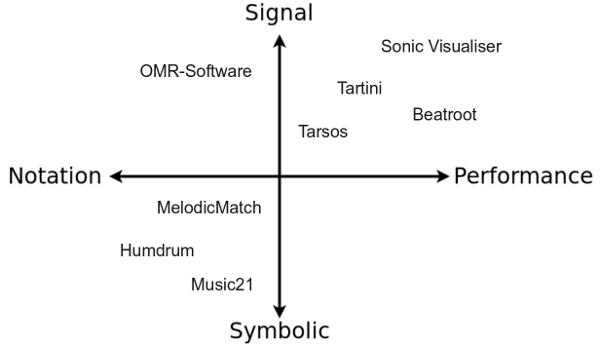
 The 17th of Octobre 2011 Tarsos was presented at the [Study Day: Tuning and Temperament](http://music.sas.ac.uk/imr-events/imr-conferences-colloquia-performance-events/study-day-tuning-and-temperament.html) which was held at the Institue of Music Research in Londen. The study day was organised by Dan Tidhar. A short description of the aim of the study day:
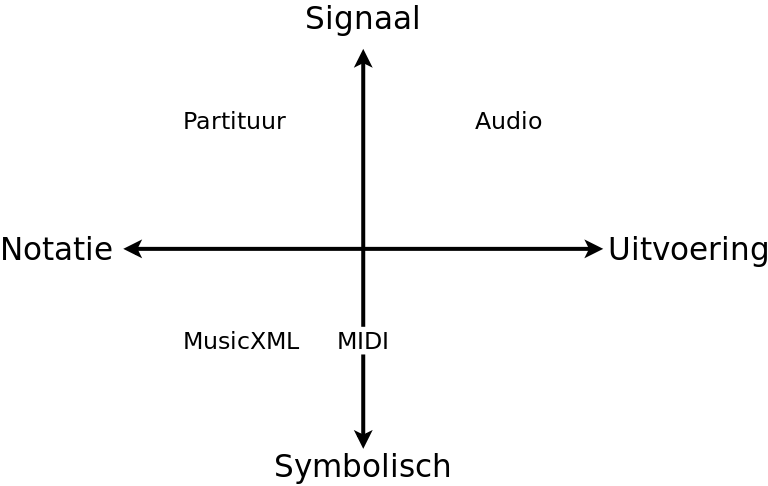
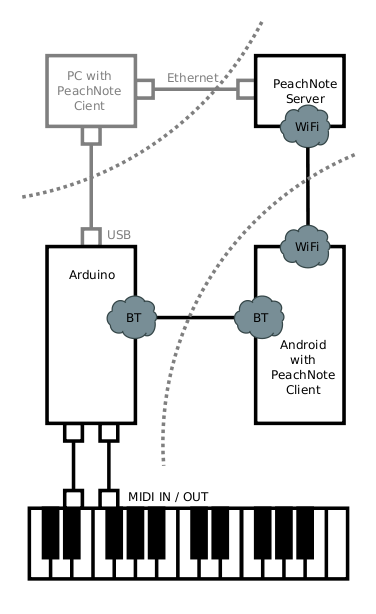 The extended abstract about PeachNote Piano has been accepted as a demonstration presentation to appear at the ISMIR (International Society for Music Information Retrieval) 2011 conference in Miami. To know more about PeachNote Piano come see us at our demo stand (during the [Late Breaking and Demo Session](http://ismir2011.ismir.net/program2011.html#demo)) or read the paper: "Peachnote Piano: Making MIDI instruments social and smart using Arduino, Android and Node.js":\[PeachNote_Piano_ISMIR_Demo.pdf\]. What follows here is the introduction of the extended abstract:
 While working on a Latex document with several collaborators some problems arise:
- Who has the latest version of the TeX-files?
- Which LaTeX distributions are in use (MiKTeX, LiveTex,...)
- Are all [LaTeX packages](http://en.wikibooks.org/wiki/LaTeX/Packages) correctly installed on each computer?
- Why is the bibliography, generated with BiBTeX, not included or incomplete?
- How does the final PDF look like when it is build by one of the collaborators, with a different LaTeX distribution?
Especially installing and maintaining LaTeX distributions on different platforms (Mac OS X, Linux, Windows) in combination with a lot of LaTeX packages can be challenging. This blog post presents a way to deal with these problems.
### Solution
The solution proposed here uses a build-server. The server is responsible for compiling the LaTeX source files and creating a PDF-file when the source files are modified. The source files should be available on the server should be in sync with the latest versions of the collaborators. Also the new PDF-file should be distributed. The syncing and distribution of files is done using a Dropbox install. Each author installs a Dropbox share (available on all platforms) which is also installed on the server. When an author modifies a file, this change is propagated to the server, which, in turn, builds a PDF and sends the resulting file back. This has the following advantages:
- Everyone always has the latest version of files;
- Only one LaTeX install needs to be maintained (on the server);
- The PDF is the same for each collaborator;
- You can modify files on every platform with Dropbox support (Linux, Mac OS X, Windows) and even smartphones;
- Compiling a large LaTeX file can be computationally intensive, a good task for a potentially beefy server.
### Implementation
The implementation of this is done with a couple of bash-scripts running on Ubuntu Linux. LaTeX compilation is handeled by the LiveTeX distribution. The first script `compile.bash` handles compilation in multiple stages: the cross referencing and BiBTeX bibliography need a couple of runs to get everything right.
\`\`\`ruby\
#!/bin/bash\
#first iteration: generate aux file\
pdflatex -interaction=nonstopmode ---src-specials article.tex\
#run bibtex on the aux file\
bibtex article.aux\
#second iteration: include bibliography\
pdflatex -interaction=nonstopmode ---src-specials article.tex\
#third iteration: fix references\
pdflatex -interaction=nonstopmode ---src-specials article.tex\
#remove unused files\
rm article.aux article.bbl article.blg article.out\
\`\`\`
The second script `watcher.bash` is more interesting. It watches the Dropbox directory for changes (only in .tex-files) using the efficient inotify library. If a modification is detected the compile script (above) is executed.
\`\`\`ruby\
#!/bin/bash\
directory=/home/user/Dropbox/article/\
#recursivly watch te directory\
while inotifywait -r \$directory; do\
#find all files changed the last minute that match tex\
#if there are matches then do something...\
if find \$directory -mmin --1 \| grep tex; then\
#tex files changed =\> recompile\
echo "Tex file changed... compiling"\
/bin/bash \$directory/compile.bash\
#sleep a minute to prevent recompilation loop\
sleep 60\
fi\
done\
\`\`\`
To summarize: a user-friendly way of collaboration on LaTeX documents was presented. Some server side configuration needs to be done but the clients only need Dropbox and a simple text editor and can start working togheter.
---
## [PeachNote Piano](https://0110.be/posts/PeachNote_Piano.md)
- Published: 2011-09-08T06:32:37Z
- Updated: 2013-12-05T18:19:15Z
- Author: Joren
- ID: 407
- Canonical: https://0110.be/posts/PeachNote_Piano
- Tags: [Code](https://0110.be/tags/Code.md), [HoGent](https://0110.be/tags/HoGent.md), [Java](https://0110.be/tags/Java.md), [PeachNote Piano](https://0110.be/tags/PeachNote%20Piano.md), [Presentation](https://0110.be/tags/Presentation.md)
 The 25th of May 2011 Tarsos was present at the [IPEM (Institute for Psychoacoustics and Electronic Music)](http://www.ipem.ugent.be/) open house.
> IPEM (Institute for Psychoacoustics and Electronic Music) is the research center of the Department of Musicology, which is part of the Department of Art, Music and Theater Studies of Ghent University. IPEM provides a scientific basis for the cultural and creative sector, especially for music and performance arts, and does pioneering research work on the relationship between music body movement and new technologies. The institute consists of an interdisciplinary team but also welcomes visiting researchers from all over the world. One of its aims is also to actively try and validate research results during public events and by means of user studies.
There are close relations between the Royal Conservatory Ghent, where we are located, and IPEM. There is more information [about the IPEM open house](http://www.ipem.ugent.be/node/292) available. Also available is [the program of the IPEM open house 2011](http://www.ipem.ugent.be/node/293)
Tarsos was presented using a poster, a flyer and a live demo. The "poster about Tarsos":\[tarsos_poster.pdf\] and the "flyer about Tarsos":\[tarsos_flyer.pdf\] are both downloadable.
- [tarsos\_flyer.pdf](https://0110.be/files/attachments/400/tarsos_flyer.pdf)
- [tarsos\_poster.pdf](https://0110.be/files/attachments/400/tarsos_poster.pdf)
- [ipem\_logo.gif](https://0110.be/files/attachments/400/ipem_logo.gif)
---
## [Tarsos at 'First International Workhop of Folk Music Analysis'](https://0110.be/posts/Tarsos_at_%27First_International_Workhop_of_Folk_Music_Analysis%27.md)
- Published: 2011-05-13T09:46:54Z
- Updated: 2013-12-05T18:19:15Z
- Author: Joren
- ID: 393
- Canonical: https://0110.be/posts/Tarsos_at_%27First_International_Workhop_of_Folk_Music_Analysis%27
- Tags: [Computational musicology](https://0110.be/tags/Computational%20musicology.md), [Computational musicology](https://0110.be/tags/Computational%20musicology.md), [HoGent](https://0110.be/tags/HoGent.md), [Presentation](https://0110.be/tags/Presentation.md), [Tarsos](https://0110.be/tags/Tarsos.md), [featured](https://0110.be/tags/featured.md)

 Monday the 20th and Tuesday the 21th of December I attended two workshops at The Queen Mary University of London: [The Machine Listening Workshop](http://www.eecs.qmul.ac.uk/events/mlw/mlw2010/) and [Digital Music Research Network One-day Workshop 2010](http://www.elec.qmul.ac.uk/dmrn/events/dmrnp5/)
At the workshop I had an interesting meeting with Dan Tidhar. He researches harpsichord temperament estimation at QMUL (Queen Mary University of London). Together they created the [Tempest web service](http://www.isophonics.net/sawa/tempest/) where you can upload harpsichord audio and let the system guess the temperament. The process is described in the paper "High precision frequency estimation for harpsichord tuning classification". Although Tarsos was not officially part of the programme I hijacked the poster sessions to show a live demo of Tarsos with Dan's dataset.
Another interesting talk was about [2032](http://www.dynamictonality.com/2032), a tunable synthesizer with definable Harmonics. It elaborates on the ideas of Sethares about tone scales .
---
## [Latex & Version Control Introduction](https://0110.be/posts/Latex__%26_Version_Control_Introduction.md)
- Published: 2010-11-30T08:56:17Z
- Updated: 2013-12-05T18:19:15Z
- Author: Joren
- ID: 365
- Canonical: https://0110.be/posts/Latex__%26_Version_Control_Introduction
- Tags: [HoGent](https://0110.be/tags/HoGent.md), [Presentation](https://0110.be/tags/Presentation.md)
 Monday, I'll give a small presentation about Latex and Version Control for the research team at the [University College Gent, Faculty of Music](http://cons.hogent.be). The idea is to give a pragmatic overview of working with Latex and version control. The "presentation about Latex & Version control (in Dutch)":\[latex_svn_presentatie.pdf\] can be downloaded. The presentation itself is created using Latex and "the source of the presentation":\[latex_svn_presentatie.zip\] is also available. A good description of Latex can be found [here](http://swik.net/LaTeX):
> LaTeX (pronounced "latech") is a document preparation system for high-quality typesetting based on, and succeeding TeX formatting. It is a very popular format in academia, as it allows advanced document formatting capabilities not found in other common document formatting systems. Some of these capabilities include table figure notations, bibliography formatting (see BibTeX), and an advanced macro language.
Some useful references:
- [Practical Latex introduction course (in Dutch)](http://zeus.ugent.be/~gaspard/latex/)
- [UGent Latex website](http://latex.ugent.be)
- [WikiBook about Latex](http://en.wikibooks.org/wiki/Latex)
- [Eclipse](http://eclipse.org): an IDE (Integrated Development Environment) which can be used as Latex editor with version control by installing the [TeXclipse](http://texlipse.sourceforge.net/) and [Subclipse](http://subclipse.tigris.org/) plugins.
- [latex\_svn\_presentatie.zip](https://0110.be/files/attachments/365/latex_svn_presentatie.zip)
- [latex\_icon.png](https://0110.be/files/attachments/365/latex_icon.png)
- [latex\_svn\_presentatie.pdf](https://0110.be/files/attachments/365/latex_svn_presentatie.pdf)
---
## [Seminar - Research on Music History and Analysis](https://0110.be/posts/Seminar_-_Research_on_Music_History_and_Analysis.md)
- Published: 2010-11-26T14:39:40Z
- Updated: 2013-12-05T18:19:15Z
- Author: Joren
- ID: 364
- Canonical: https://0110.be/posts/Seminar_-_Research_on_Music_History_and_Analysis
- Tags: [Computational musicology](https://0110.be/tags/Computational%20musicology.md), [HoGent](https://0110.be/tags/HoGent.md), [Music Information Retrieval](https://0110.be/tags/Music%20Information%20Retrieval.md), [Presentation](https://0110.be/tags/Presentation.md)
This post contains links to genuinely useful software to do signal based audio analysis.
- [Sonic Visualizer](http://www.sonicvisualiser.org): As its name suggests Sonic Visualizer contains a lot different visualisations for audio. It can be used for analysis (pitch,beat,chroma,...) with [VAMP-plugins](http://vamp-plugins.org). To quote *"The aim of Sonic Visualiser is to be the first program you reach for when want to study a musical recording rather than simply listen to it"*. It is the swiss army knife of audio analysis.
- [BeatRoot](http://www.eecs.qmul.ac.uk/~simond/beatroot/) is designed specifically for one goal: beat tracking. It can be used for e.g. comparing tempi of different performances of the same piece or to track tempo deviation within one piece.
- [Tartini](http://tartini.net) is capable to do real-time pitch analysis of sound. You can e.g. play into a microphone with a violin and see the harmonics you produce and adapt you playing style based on visual feedback. It also contains a pitch deviation measuring apparatus to analyse vibrato.
- [Tarsos](http://tarsos.0110.be) is software for tone scale analysis. It is useful to extract tone scales from audio. Different tuning systems can be seen, extracted and compared. It also contains the ability to play along with the original song with a tuned midi keyboard .
[Melodic Match](http://www.melodicmatch.com) is a different beast. It does not work on signal level but processes symbolic audio. More to the point it searches through MusicXML files - which can be created from MIDI-files. See its website for use cases. Melodic Match is only available for Windows.
During a lecture at the [University College Gent, Faculty of Music](http://cons.hogent.be) these tools were presented with some examples. "The slides (Slides in Dutch)":\[presentatie.pdf\] and "a zip-file with audio samples, slides and software":\[Tarsos-presentatie.zip\] are available for reference. Most of the time was given to Tarsos, the software we developed.
[Olmo Cornelis](http://webs.hogent.be/olmocornelis/) also gave a lecture about his own research and how Tarsos fits in the bigger picture. "His presentation (Slides in English)":\[lezing_Olmo_Cornelis_zonder_audio.ppt\] and "the presentation with audio":\[lezing_Olmo_Cornelis_met_audio.zip\] are also available here.





- [presentatie.pdf](https://0110.be/files/attachments/364/presentatie.pdf)
- [Tarsos-presentatie.zip](https://0110.be/files/attachments/364/Tarsos-presentatie.zip)
- [lezing\_Olmo\_Cornelis\_zonder\_audio.ppt](https://0110.be/files/attachments/364/lezing_Olmo_Cornelis_zonder_audio.ppt)
- [lezing\_Olmo\_Cornelis\_met\_audio.zip](https://0110.be/files/attachments/364/lezing_Olmo_Cornelis_met_audio.zip)
---
## [Tarsos Presented at the "Perspectives for Computational Musicology" Symposium](https://0110.be/posts/Tarsos_Presented_at_the_%22Perspectives_for_Computational_Musicology%22_Symposium.md)
- Published: 2010-10-06T14:42:01Z
- Updated: 2013-12-05T18:19:15Z
- Author: Joren
- ID: 341
- Canonical: https://0110.be/posts/Tarsos_Presented_at_the_%22Perspectives_for_Computational_Musicology%22_Symposium
- Tags: [Computational ethnomusicology](https://0110.be/tags/Computational%20ethnomusicology.md), [HoGent](https://0110.be/tags/HoGent.md), [Music Information Retrieval](https://0110.be/tags/Music%20Information%20Retrieval.md), [Presentation](https://0110.be/tags/Presentation.md), [featured](https://0110.be/tags/featured.md)
 Yesterday Tarsos was publicly presented at the symposium [Perspectives for Computational Musicology](https://www.meertens.knaw.nl/cms/nl/agenda-othermenu-70/143334-5-oktober-2010) in Amsterdam. The first public presentation of Tarsos, excluding this website. The symposium was organized by [the Meertens Institute](https://www.meertens.knaw.nl/cms/en) on the occasion of Peter van Kranenburg's PhD defense.
The presentation included a live demo of a daily build of Tarsos (a Friday evening build) which worked, surprisingly, without hiccups. The presentation was done by [Olmo Cornelis](http://cons.hogent.be/nl/onderzoek/onderzoeksprojecten/olmo-cornelis/bio). This was the small introduction:
> **Tarsos - a Platform for Pitch Analysis of Ethnic Music**