---
title: 'Between: 2011/12/01 en 2011/12/31 - 0110.be'
canonical: https://0110.be/date/2011/12
markdown_url: https://0110.be/date/2011/12.md
page: 0
posts_per_page: 30
total_posts: 7
filters:
year: 2011
month: 12
previous:
next:
---
# Between: 2011/12/01 en 2011/12/31 - 0110.be
## [Pitch, Pitch Interval, and Pitch Ratio Representation](https://0110.be/posts/Pitch%2C_Pitch_Interval%2C_and_Pitch_Ratio_Representation.md)
- Published: 2011-12-21T13:42:05Z
- Updated: 2013-12-05T18:19:15Z
- Author: Joren
- ID: 354
- Canonical: https://0110.be/posts/Pitch%2C_Pitch_Interval%2C_and_Pitch_Ratio_Representation
- Tags: [HoGent](https://0110.be/tags/HoGent.md), [Tarsos](https://0110.be/tags/Tarsos.md)
To prevent confusion about pitch representation in general and pitch representation in Tarsos specifically I wrote a "document about pitch, pitch Interval, and pitch ratio representation":\[pitch_representation.pdf\]. The abstract goes as follows:
This document describes how pitch can be represented using various units. More specifically it documents how a software program to analyse pitch in music, Tarsos, represents pitch. This document contains definitions of and remarks on different pitch and pitch interval representations. For good measure we need a definition of pitch, here the definition from \[McLeod 2009\] is used: *The pitch frequency is the frequency of a pure sine wave which has the same perceived sound as the sound of interest.* For remarks and examples of cases where the pitch frequency does not coincide with the fundamental frequency of the signal, also see \[McLeod 2009\] . In this text pitch, pitch interval and pitch ratio are briefly discussed.
- [pitch\_representation.pdf](https://0110.be/files/attachments/354/pitch_representation.pdf)
---
## [TarsosDSP sample application: Utter Asterisk](https://0110.be/posts/TarsosDSP_sample_application%3A_Utter_Asterisk.md)
- Published: 2011-12-15T14:30:42Z
- Updated: 2013-12-05T18:19:15Z
- Author: Joren
- ID: 404
- Canonical: https://0110.be/posts/TarsosDSP_sample_application%3A_Utter_Asterisk
- Tags: [HoGent](https://0110.be/tags/HoGent.md), [TarsosDSP](https://0110.be/tags/TarsosDSP.md)
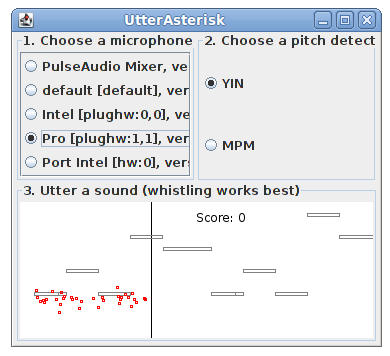
The DSP library of Tarsos, aptly named TarsosDSP, contains an implementation of a game that bares some resemblance to SingStar. It is called UtterAsterisk. It is meant to be a technical demonstration showing real-time pitch detection in pure java using a [YIN](http://recherche.ircam.fr/equipes/pcm/cheveign/ps/2002_JASA_YIN_proof.pdf) -implementation.
"Download Utter Asterisk":\[UtterAsterisk.jar\] and try to sing (utter) as close to the melody as possible. The [souce code for Utter Asterisk](https://github.com/JorenSix/TarsosDSP) is available on github.

- [UtterAsterisk.jar](https://0110.be/files/attachments/404/UtterAsterisk.jar)
---
## [TarsosDSP used in jAM - Java Automatic Music Transcription](https://0110.be/posts/TarsosDSP_used_in_jAM_-_Java_Automatic_Music_Transcription.md)
- Published: 2011-12-12T09:13:14Z
- Updated: 2013-12-05T18:19:15Z
- Author: Joren
- ID: 399
- Canonical: https://0110.be/posts/TarsosDSP_used_in_jAM_-_Java_Automatic_Music_Transcription
- Tags: [HoGent](https://0110.be/tags/HoGent.md), [Java](https://0110.be/tags/Java.md), [TarsosDSP](https://0110.be/tags/TarsosDSP.md)
TarsosDSP, a small Java DSP library, has been used in a bachelor thesis: [Entwicklung eines Systems zur automatischen Notentranskription von monophonischem Audiomaterial](http://saeft.com/jAM/assets/Bachelorarbeit.pdf) by Michael Wager.
The goal of the thesis was to develop an automatic transcription system for monophonic music. You can download the latest version of [jAM - Java Automatic Music Transcription](http://saeft.com/jAM/index.php/index/download).
If you want to use TarsosDSP, please consult the [TarsosDSP page on github](https://github.com/JorenSix/TarsosDSP) or read [more about TarsosDSP](https://0110.be/tag/TarsosDSP) here.
---
## [Kinderuniversiteit - Muziek onder de microscoop!](https://0110.be/posts/Kinderuniversiteit_-_Muziek_onder_de_microscoop%21.md)
- Published: 2011-12-12T08:41:21Z
- Updated: 2013-12-05T18:19:15Z
- Author: Joren
- ID: 326
- Canonical: https://0110.be/posts/Kinderuniversiteit_-_Muziek_onder_de_microscoop%21
- Tags: [Dutch](https://0110.be/tags/Dutch.md), [HoGent](https://0110.be/tags/HoGent.md), [Java](https://0110.be/tags/Java.md), [Presentation](https://0110.be/tags/Presentation.md)
Zondag 18 december 2011 gaf ik een workshop voor de [Gentse kinderuniversiteit](http://kinderuniversiteit.be). Het thema van de kinderuniversiteit was [Muziek onder de microscoop](http://www.kinderuniversiteit.be/event/muziek-onder-de-microscoop). De teaser voor de workshop is hier te vinden:
WORKSHOP - Muziek (ont)luisteren op de computer\
Is het mogelijk om piano te spelen op een tafel? Kan een computer luisteren naar muziek en er van genieten? Wat is muziek eigenlijk, en hoe werkt geluid? \
Tijdens deze workshop worden de voorgaande vragen beantwoord met enkele computerprogramma's!
Concreet worden enkele componenten van geluid (en bij uitbreiding, muziek) gedemonstreerd met computerprogrammaatjes gemaakt in het conservatorium:
- "Geluidssterkte":\[SoundDetector.jar\]: een decibel-meter met een bepaalde drempelwaarde. Probeer zo luid mogelijk te doen en zie hoe moeilijk het is om, eens een bepaald niveau bereikt is, in decibel te stijgen.
- "Toonhoogte":\[UtterAsterisk.jar\]: een klein spelletje om toonhoogte aan te tonen. Probeer zo juist mogelijk te zingen of te fluiten en vergelijk je score.
- "Percussie":\[PercussionDetector.jar\]: dit programma reageert op handgeklap. Hoe kan je het onderscheid maken tussen bijvoorbeeld een fluittoon en handgeklap?
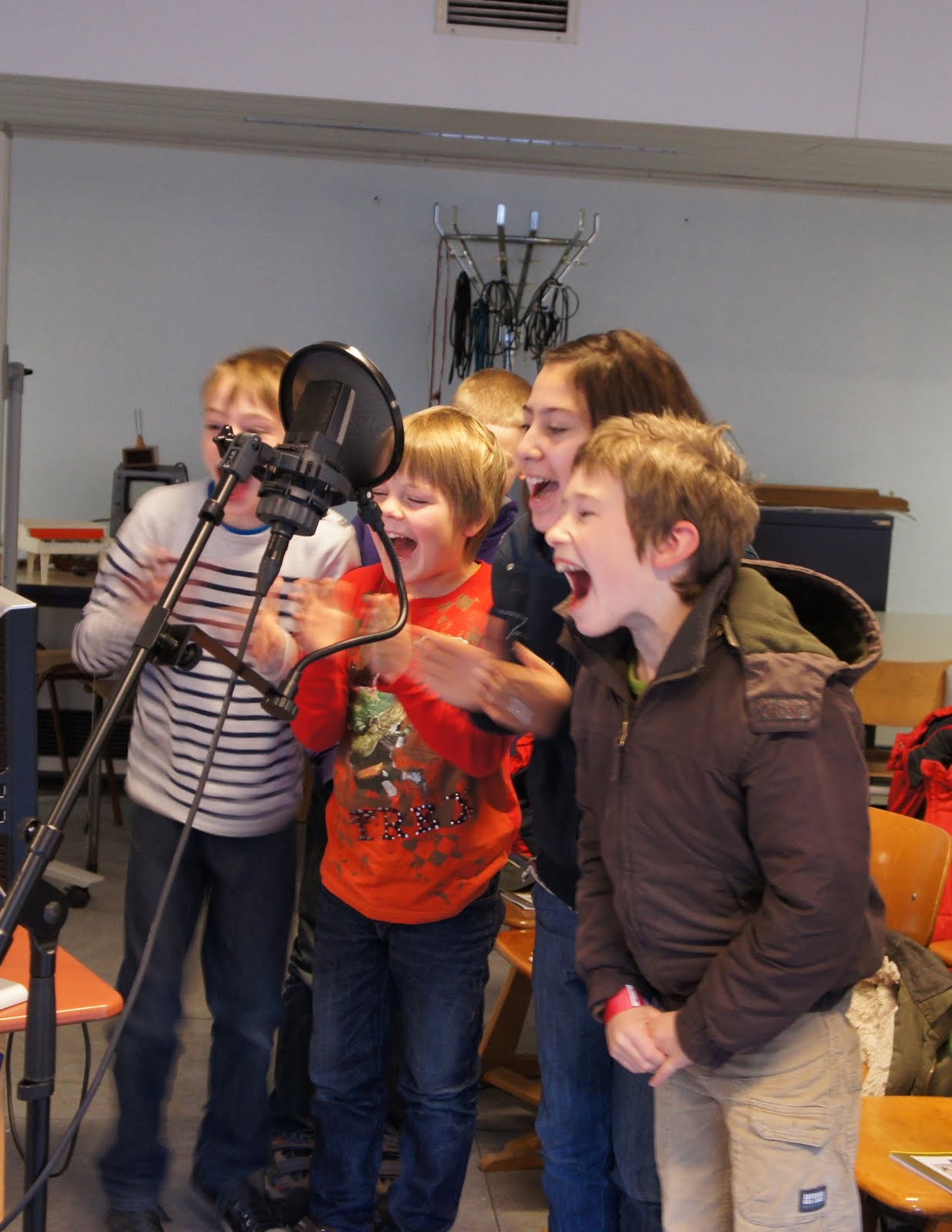
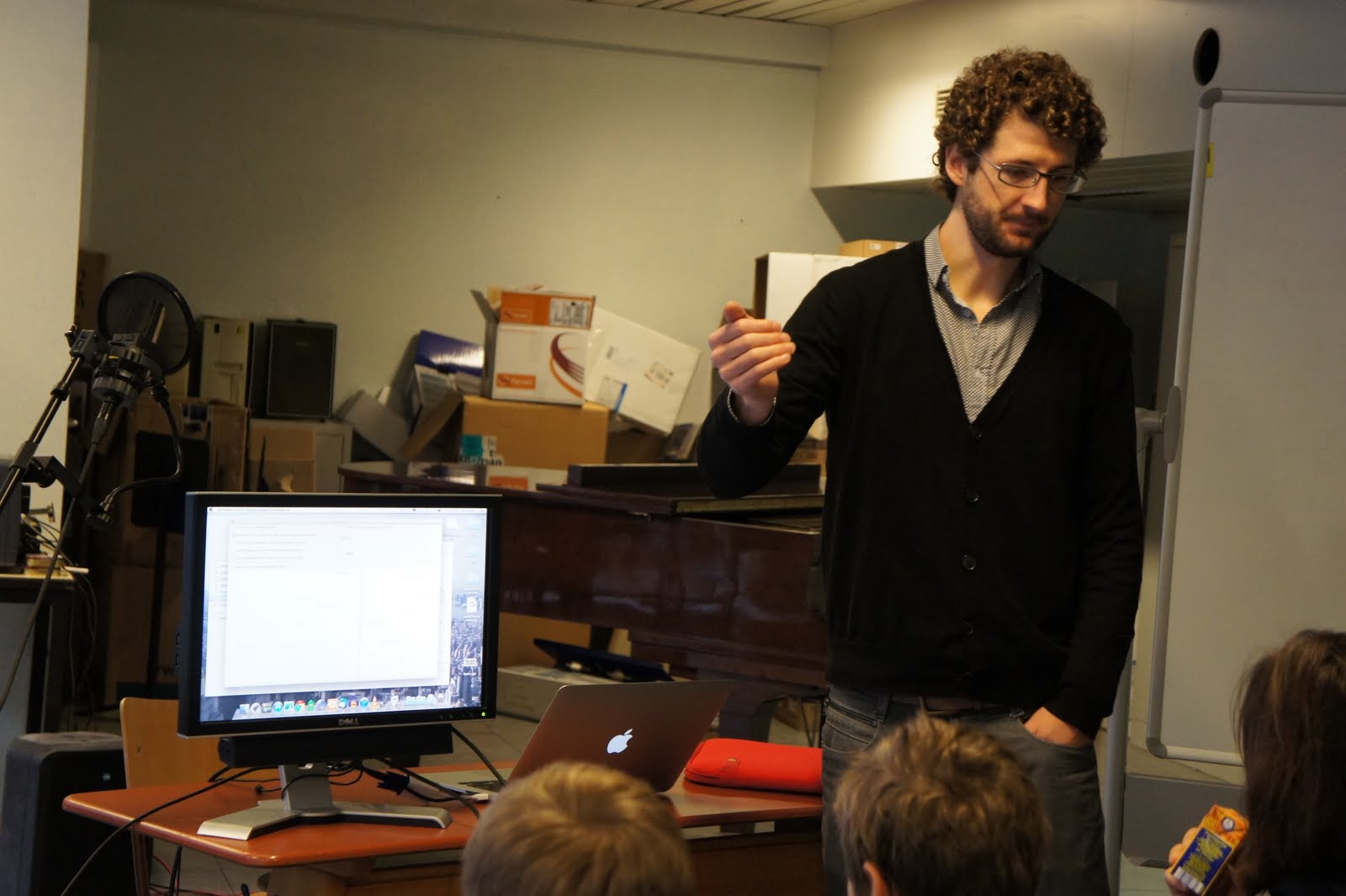
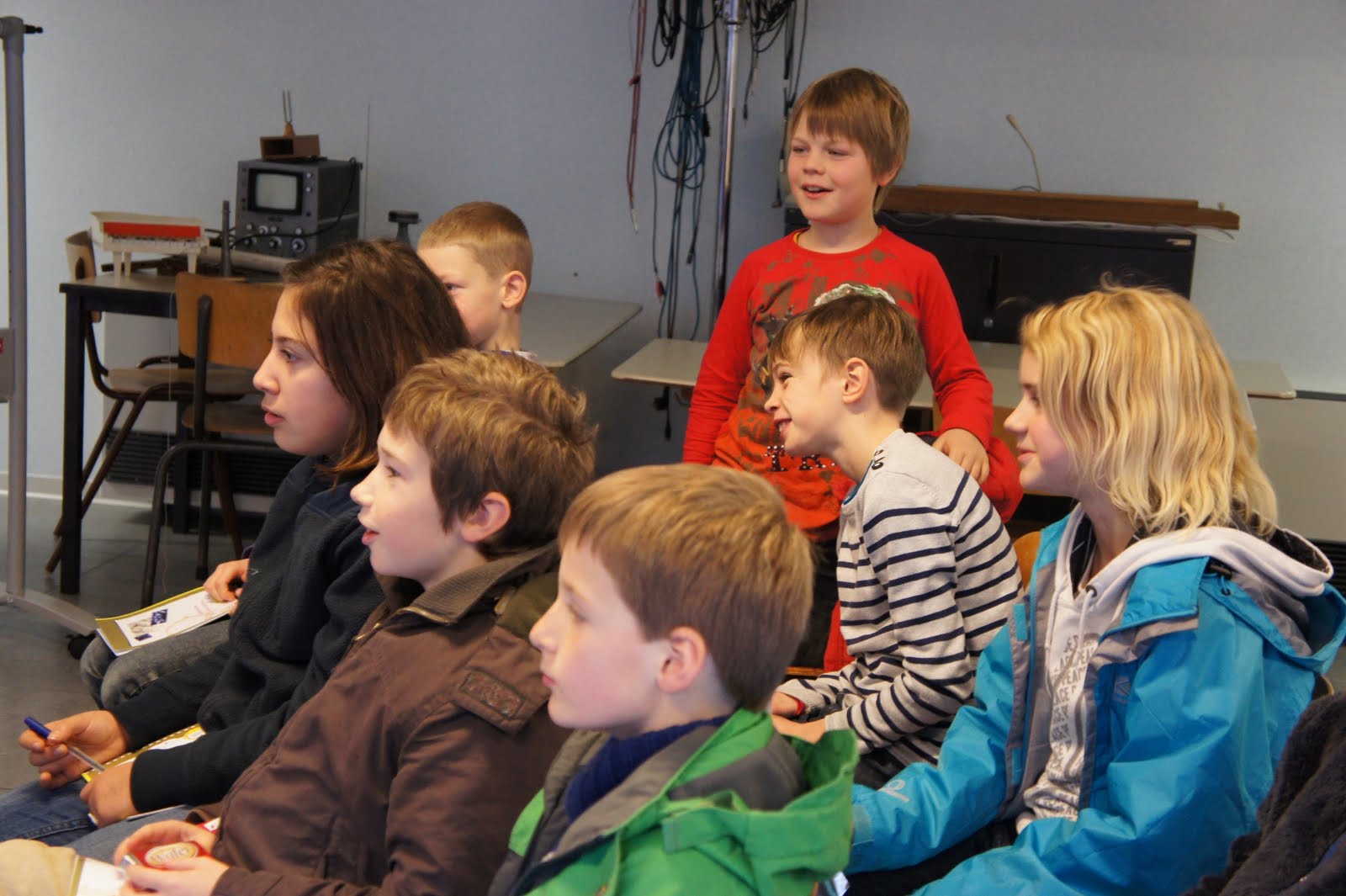
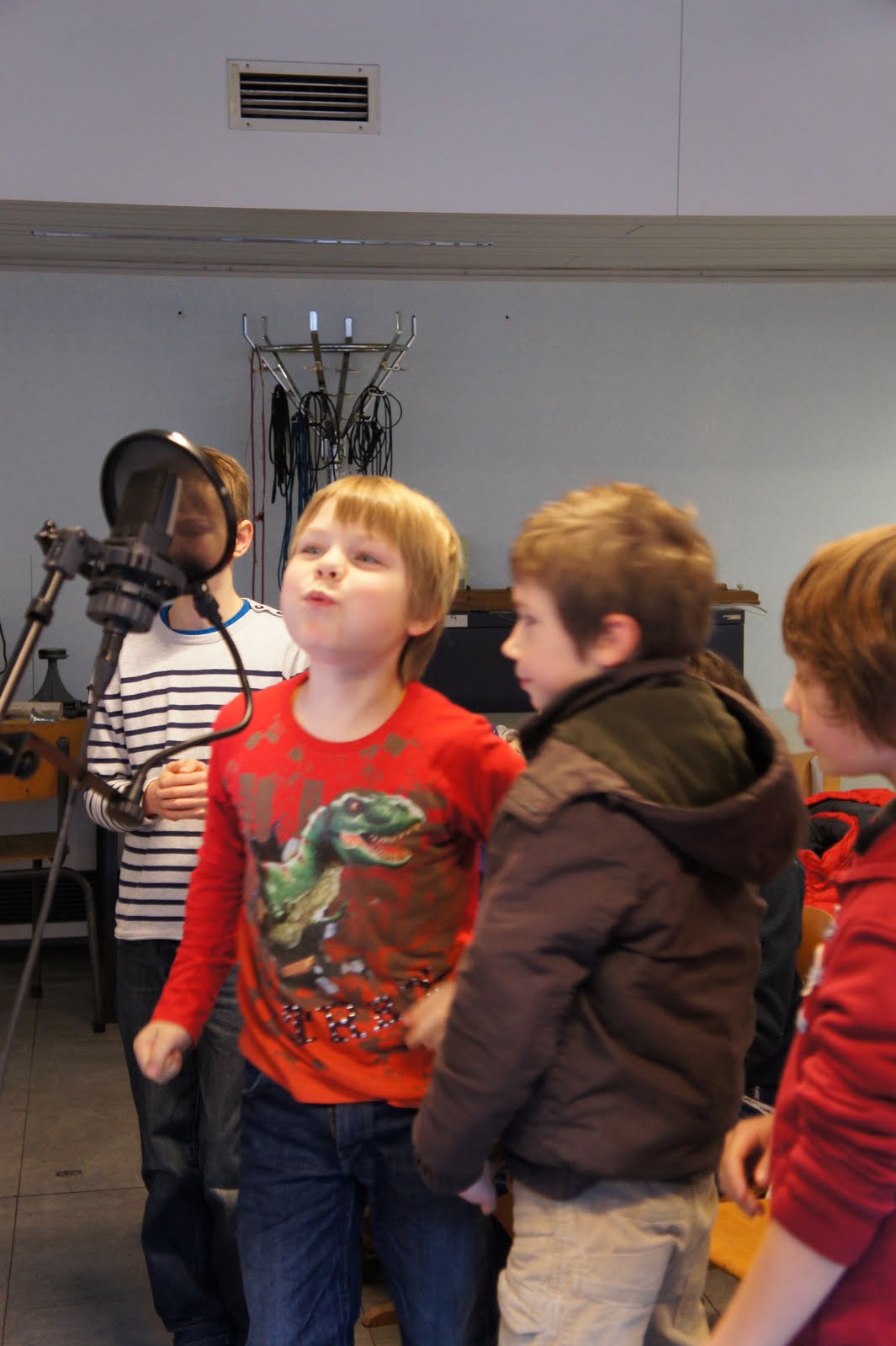
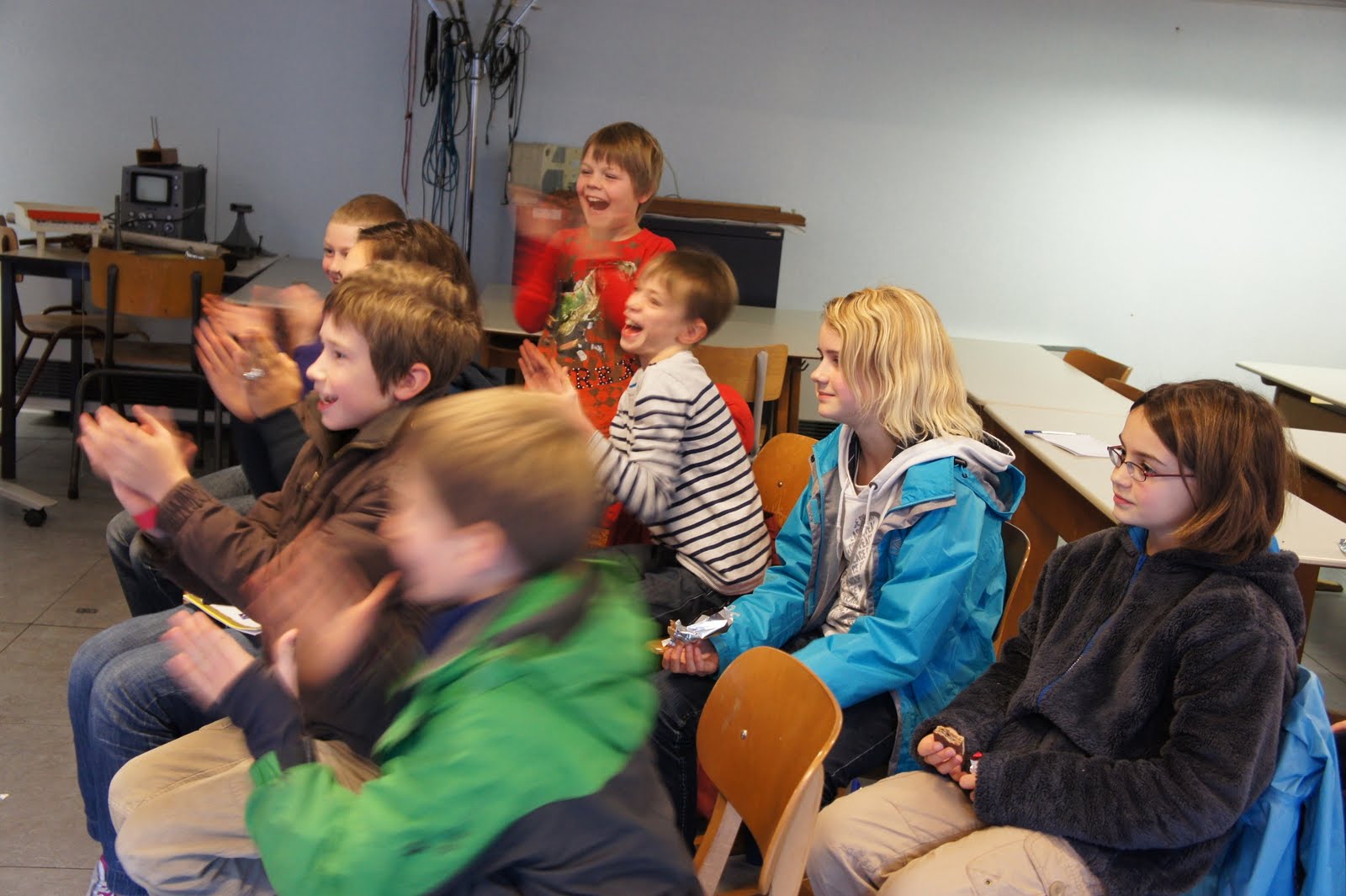
De foto's hieronder geven een sfeerbeeld.

- [logo-with-arrow.png](https://0110.be/files/attachments/326/logo-with-arrow.png)
- [UtterAsterisk.jar](https://0110.be/files/attachments/326/UtterAsterisk.jar)
- [PercussionDetector.jar](https://0110.be/files/attachments/326/PercussionDetector.jar)
- [PitchDetector.jar](https://0110.be/files/attachments/326/PitchDetector.jar)
- [SoundDetector.jar](https://0110.be/files/attachments/326/SoundDetector.jar)
---
## [How To: Generate an Audio Fingerprinting Data Set With Sox Audio Effects](https://0110.be/posts/How_To%3A_Generate_an_Audio_Fingerprinting_Data_Set_With_Sox_Audio_Effects.md)
- Published: 2011-12-07T09:42:13Z
- Updated: 2013-12-05T18:19:15Z
- Author: Joren
- ID: 391
- Canonical: https://0110.be/posts/How_To%3A_Generate_an_Audio_Fingerprinting_Data_Set_With_Sox_Audio_Effects
- Tags: [Code](https://0110.be/tags/Code.md), [HoGent](https://0110.be/tags/HoGent.md)
A small part of Tarsos has been turned into a [audio fingerprinting application](https://0110.be/artikels/lees/Robust_Audio_Fingerprinting_with_Tarsos_and_Pitch_Class_Histograms). The idea of audio fingerprinting is to create a condensed representation of an audio file. A perceptually similar audio file should generate similar fingerprints. To test how robust a fingerprinting technique is, a data set with audio files that are alike in some way is practical.
[SoX - Sound eXchange](http://sox.sourceforge.net/) is a command line utility for sound processing. It can apply audio effects to a sound. Using these effects and a set of unmodified songs an audio fingerprinting data set can be created. To generate such a data set SoX can be used to:
- Trim the first x seconds of a file
- Speed-up or slow-down the audio
- Change the pitch of a file without modifying the tempo
- Generate background noise (white noise is used)
- Reverse the audio stream
\`\`\`ruby\
#Trim the first 10 seconds\
sox input.wav output.wav trim 10
#speed-up of 10%\
sox input.wav output.wav speed 1.10
#change the pitch upwards 100 cents (one semitone)\
#without changing the tempo\
sox input.wav output.wav pitch 100
#generate white noise with the length of input.wav\
sox input.wav noise.wav synth whitenoise\
#mix the white noise with the input to generate noisy output\
#-v defines how loud the white noise is\
sox -m input.wav -v 0.1 noise.wav output.wav
#reverse the audio\
sox input.wav output.wav reverse\
\`\`\`
A ruby script to generate a lot of these files can be found "attached":\[audio_fingerprinting_dataset_generator.rb.txt\].
- [audio\_fingerprinting\_dataset\_generator.rb.txt](https://0110.be/files/attachments/391/audio_fingerprinting_dataset_generator.rb.txt)
---
## [The Power of the Pentatonic Scale](https://0110.be/posts/The_Power_of_the_Pentatonic_Scale.md)
- Published: 2011-12-06T14:05:56Z
- Updated: 2013-12-05T18:19:15Z
- Author: Joren
- ID: 387
- Canonical: https://0110.be/posts/The_Power_of_the_Pentatonic_Scale
- Tags: [Computational musicology](https://0110.be/tags/Computational%20musicology.md), [HoGent](https://0110.be/tags/HoGent.md), [Tarsos](https://0110.be/tags/Tarsos.md), [featured](https://0110.be/tags/featured.md)
The following video shows Bobby McFerrin demonstrating the power of the pentatonic scale. It is a fascinating demonstration of how quickly a (western) audience of the World Science Festival 2009 adapts to an unusual tone scale:
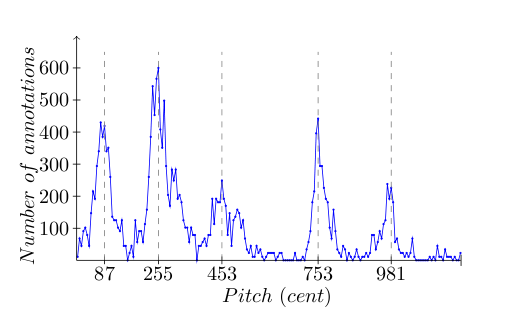
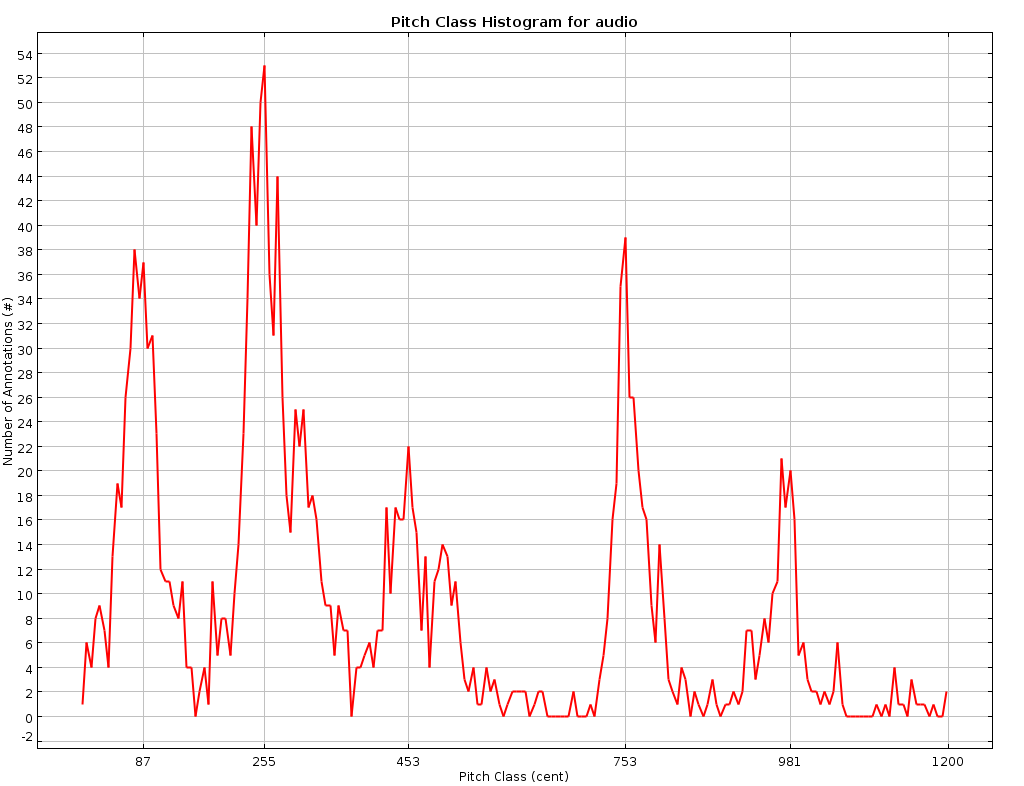
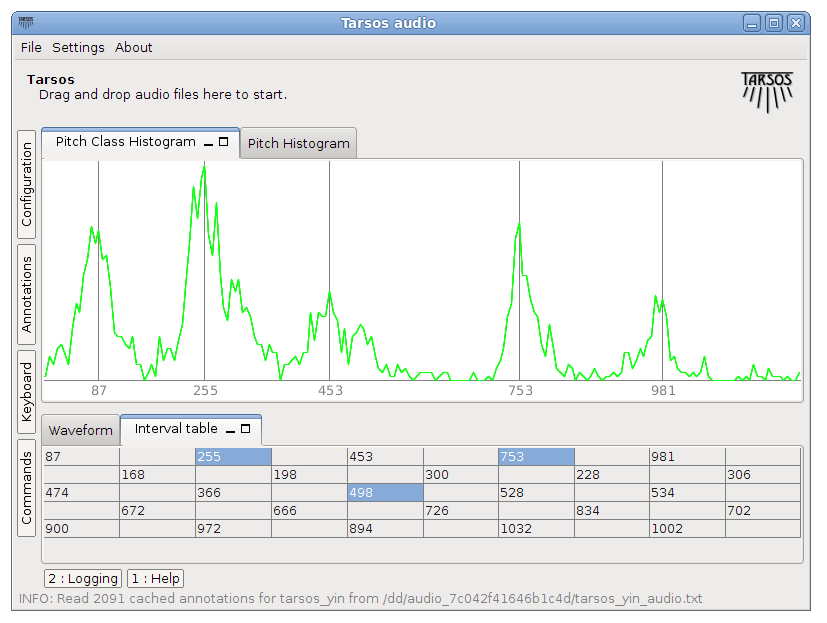
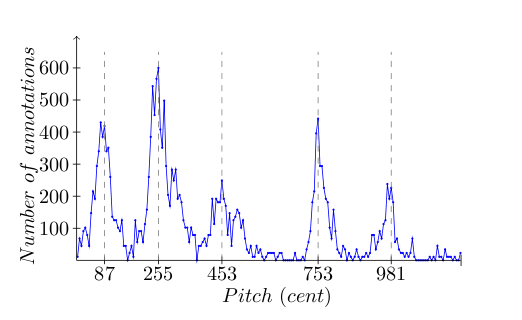
With Tarsos the scale used in the example can be found. This is the result of a quick analysis: it becomes clear that this, in fact, a pentatonic scale with an unequal octave division. A perfect fifth is present between 255 and 753 cents:
- [scale\_bobby.png](https://0110.be/files/attachments/387/scale_bobby.png)
- [audio\_pitch\_class\_histogram.tex](https://0110.be/files/attachments/387/audio_pitch_class_histogram.tex)
- [audio\_pitch\_class\_histogram.pdf](https://0110.be/files/attachments/387/audio_pitch_class_histogram.pdf)
---
## [Software for Music Analysis](https://0110.be/posts/Software_for_Music_Analysis.md)
- Published: 2011-12-02T00:00:00Z
- Updated: 2016-08-22T13:10:11Z
- Author: Joren
- ID: 383
- Canonical: https://0110.be/posts/Software_for_Music_Analysis
- Tags: [Computational musicology](https://0110.be/tags/Computational%20musicology.md), [HoGent](https://0110.be/tags/HoGent.md), [Music Information Retrieval](https://0110.be/tags/Music%20Information%20Retrieval.md), [Presentation](https://0110.be/tags/Presentation.md)
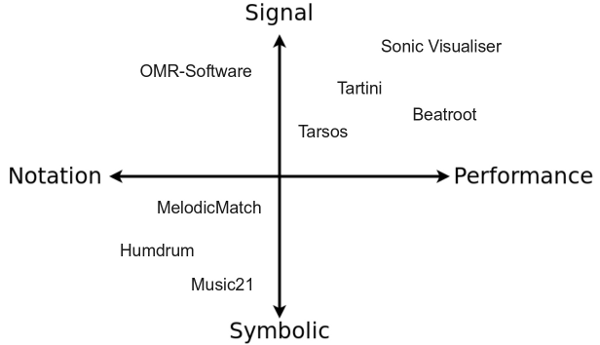
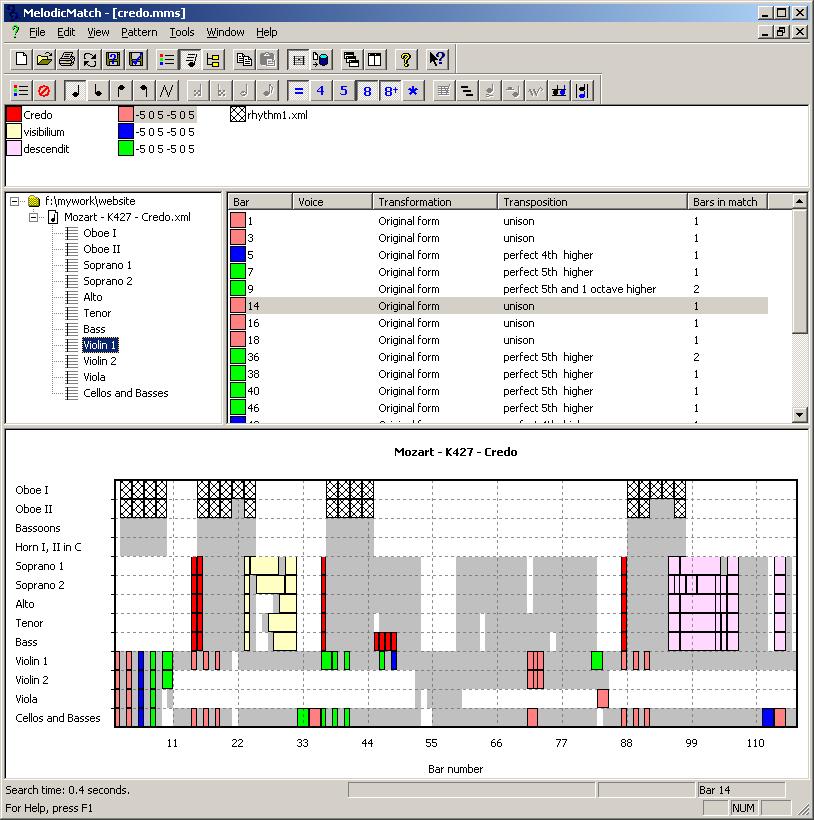
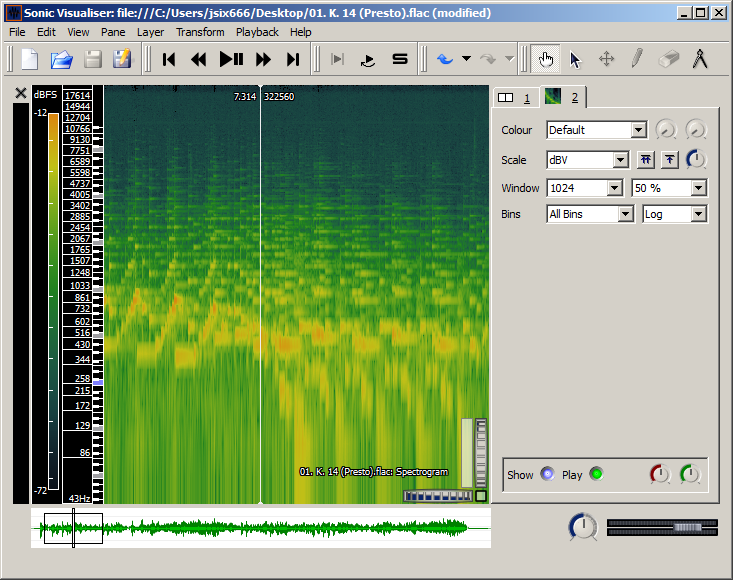
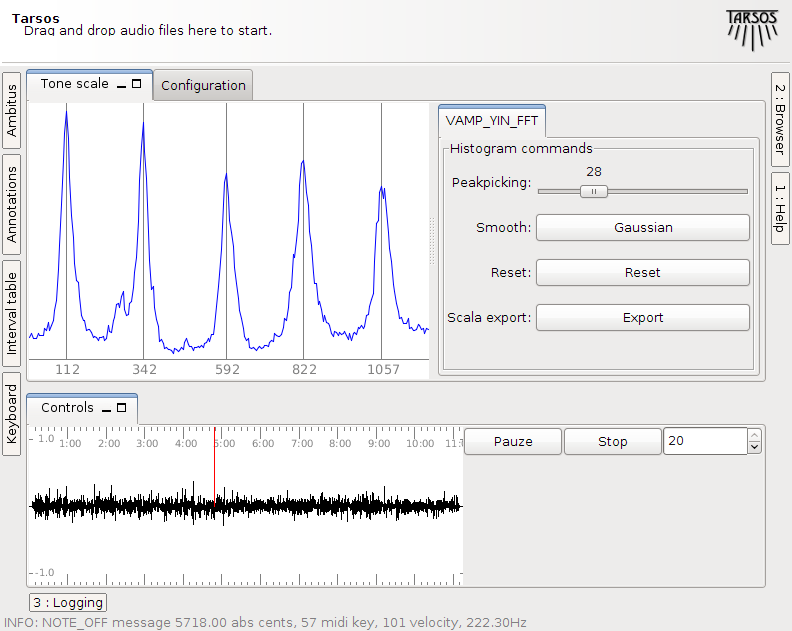
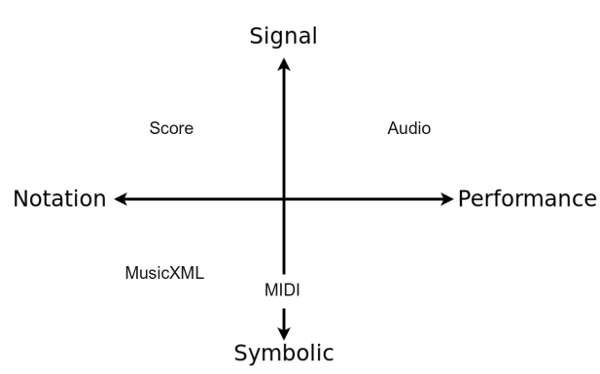
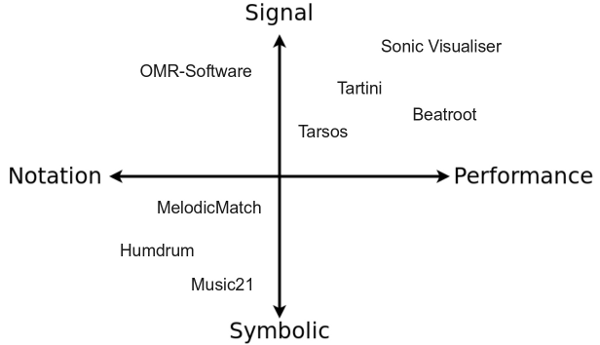
Friday the second of December I presented a talk about software for music analysis. The aim was to make clear which type of research topics can benefit from measurements by software for music analysis. Different types of digital music representations and examples of software packages were explained.
Following presentation was used during the talk. ("ppt":\[2011.12.02.software_for_music_analysis.ppt\], "odp":\[2011.12.02.software_for_music_analysis.odp\]):
- [Sonic Visualizer](http://www.sonicvisualiser.org): As its name suggests Sonic Visualizer contains a lot different visualisations for audio. It can be used for analysis (pitch,beat,chroma,...) with [VAMP-plugins](http://vamp-plugins.org). To quote *"The aim of Sonic Visualiser is to be the first program you reach for when want to study a musical recording rather than simply listen to it"*. It is the swiss army knife of audio analysis.
- [BeatRoot](http://www.eecs.qmul.ac.uk/~simond/beatroot/) is designed specifically for one goal: beat tracking. It can be used for e.g. comparing tempi of different performances of the same piece or to track tempo deviation within one piece.
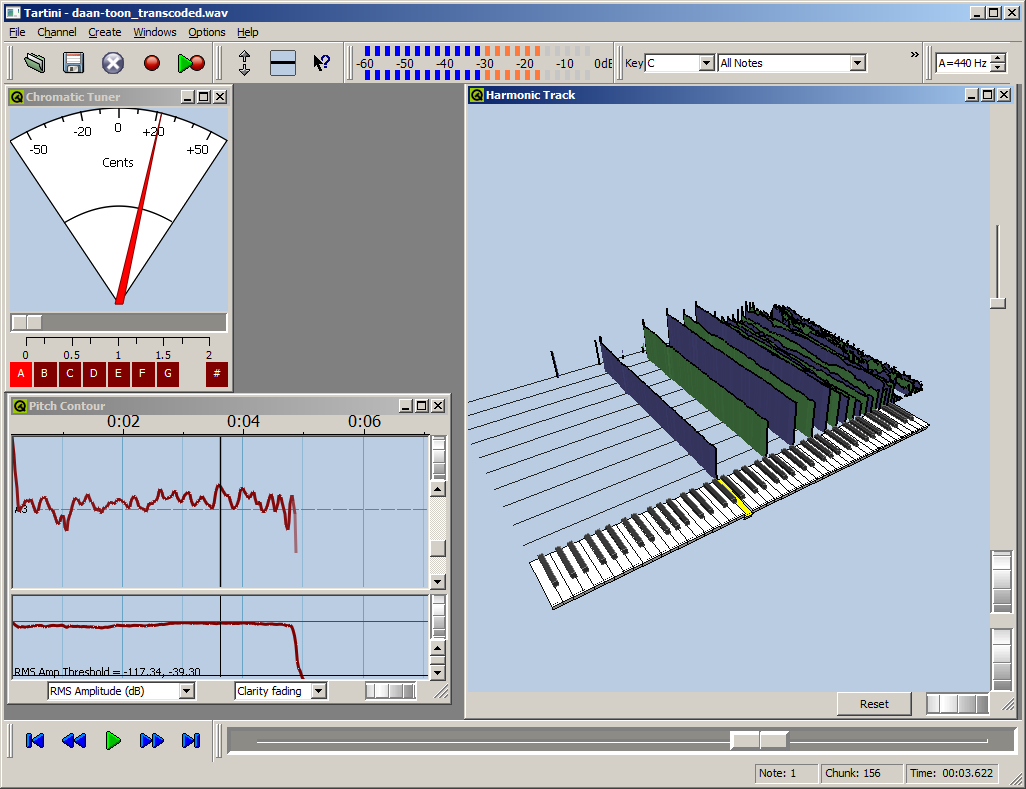
- [Tartini](http://tartini.net) is capable to do real-time pitch analysis of sound. You can e.g. play into a microphone with a violin and see the harmonics you produce and adapt you playing style based on visual feedback. It also contains a pitch deviation measuring apparatus to analyse vibrato.
- [Tarsos](http://tarsos.0110.be) is software for tone scale analysis. It is useful to extract tone scales from audio. Different tuning systems can be seen, extracted and compared. It also contains the ability to play along with the original song with a tuned midi keyboard .
To show the different digital representations of music one example (Liebestraum 3 by Liszt) was used in different formats:
- "Score (PDF)":\[00.partituur.liebestraum_3.pdf\]
- "MusicXML":\[01.musicXML-liebestraum_no_3.xml\]
- "MIDI as notation":\[01.deadpan_midi.wav\]
- "MIDI as performance":\[02.performed_midi.wav\]
- "Acoustic performance":\[03.human.performance.wav\]
- [02.performed\_midi.wav](https://0110.be/files/attachments/383/02.performed_midi.wav)
- [01.deadpan\_midi.wav](https://0110.be/files/attachments/383/01.deadpan_midi.wav)
- [2011.12.02.software\_for\_music\_analysis.ppt](https://0110.be/files/attachments/383/2011.12.02.software_for_music_analysis.ppt)
- [2011.12.02.software\_for\_music\_analysis.odp](https://0110.be/files/attachments/383/2011.12.02.software_for_music_analysis.odp)
- [03.human.performance.wav](https://0110.be/files/attachments/383/03.human.performance.wav)
- [digital\_registration\_filetypes.png](https://0110.be/files/attachments/383/digital_registration_filetypes.png)
- [00.partituur.liebestraum\_3.pdf](https://0110.be/files/attachments/383/00.partituur.liebestraum_3.pdf)
- [01.MusicXML-extract.txt](https://0110.be/files/attachments/383/01.MusicXML-extract.txt)
- [digital\_registration\_software.png](https://0110.be/files/attachments/383/digital_registration_software.png)
- [01.musicXML-liebestraum\_no\_3.xml](https://0110.be/files/attachments/383/01.musicXML-liebestraum_no_3.xml)
- [2011.12.02.software\_for\_music\_analysis.pdf](https://0110.be/files/attachments/383/2011.12.02.software_for_music_analysis.pdf)
---
 TarsosDSP, a small Java DSP library, has been used in a bachelor thesis: [Entwicklung eines Systems zur automatischen Notentranskription von monophonischem Audiomaterial](http://saeft.com/jAM/assets/Bachelorarbeit.pdf) by Michael Wager.
The goal of the thesis was to develop an automatic transcription system for monophonic music. You can download the latest version of [jAM - Java Automatic Music Transcription](http://saeft.com/jAM/index.php/index/download).
If you want to use TarsosDSP, please consult the [TarsosDSP page on github](https://github.com/JorenSix/TarsosDSP) or read [more about TarsosDSP](https://0110.be/tag/TarsosDSP) here.
---
## [Kinderuniversiteit - Muziek onder de microscoop!](https://0110.be/posts/Kinderuniversiteit_-_Muziek_onder_de_microscoop%21.md)
- Published: 2011-12-12T08:41:21Z
- Updated: 2013-12-05T18:19:15Z
- Author: Joren
- ID: 326
- Canonical: https://0110.be/posts/Kinderuniversiteit_-_Muziek_onder_de_microscoop%21
- Tags: [Dutch](https://0110.be/tags/Dutch.md), [HoGent](https://0110.be/tags/HoGent.md), [Java](https://0110.be/tags/Java.md), [Presentation](https://0110.be/tags/Presentation.md)
Zondag 18 december 2011 gaf ik een workshop voor de [Gentse kinderuniversiteit](http://kinderuniversiteit.be). Het thema van de kinderuniversiteit was [Muziek onder de microscoop](http://www.kinderuniversiteit.be/event/muziek-onder-de-microscoop). De teaser voor de workshop is hier te vinden:
TarsosDSP, a small Java DSP library, has been used in a bachelor thesis: [Entwicklung eines Systems zur automatischen Notentranskription von monophonischem Audiomaterial](http://saeft.com/jAM/assets/Bachelorarbeit.pdf) by Michael Wager.
The goal of the thesis was to develop an automatic transcription system for monophonic music. You can download the latest version of [jAM - Java Automatic Music Transcription](http://saeft.com/jAM/index.php/index/download).
If you want to use TarsosDSP, please consult the [TarsosDSP page on github](https://github.com/JorenSix/TarsosDSP) or read [more about TarsosDSP](https://0110.be/tag/TarsosDSP) here.
---
## [Kinderuniversiteit - Muziek onder de microscoop!](https://0110.be/posts/Kinderuniversiteit_-_Muziek_onder_de_microscoop%21.md)
- Published: 2011-12-12T08:41:21Z
- Updated: 2013-12-05T18:19:15Z
- Author: Joren
- ID: 326
- Canonical: https://0110.be/posts/Kinderuniversiteit_-_Muziek_onder_de_microscoop%21
- Tags: [Dutch](https://0110.be/tags/Dutch.md), [HoGent](https://0110.be/tags/HoGent.md), [Java](https://0110.be/tags/Java.md), [Presentation](https://0110.be/tags/Presentation.md)
Zondag 18 december 2011 gaf ik een workshop voor de [Gentse kinderuniversiteit](http://kinderuniversiteit.be). Het thema van de kinderuniversiteit was [Muziek onder de microscoop](http://www.kinderuniversiteit.be/event/muziek-onder-de-microscoop). De teaser voor de workshop is hier te vinden:
WORKSHOP - Muziek (ont)luisteren op de computer\ Is het mogelijk om piano te spelen op een tafel? Kan een computer luisteren naar muziek en er van genieten? Wat is muziek eigenlijk, en hoe werkt geluid?