---
title: 'Between: 2024/02/01 en 2024/02/29 - 0110.be'
canonical: https://0110.be/date/2024/2
markdown_url: https://0110.be/date/2024/2.md
page: 0
posts_per_page: 30
total_posts: 1
filters:
year: 2024
month: 2
previous:
next:
---
# Between: 2024/02/01 en 2024/02/29 - 0110.be
## [3D modeling with ChatGPT - Solidified ephemerality](https://0110.be/posts/3D_modeling_with_ChatGPT_-_Solidified_ephemerality.md)
- Published: 2024-02-21T00:00:00Z
- Updated: 2025-12-10T13:04:12Z
- Author: Joren
- ID: 541
- Canonical: https://0110.be/posts/3D_modeling_with_ChatGPT_-_Solidified_ephemerality
- Tags: [Code](https://0110.be/tags/Code.md), [UGent](https://0110.be/tags/UGent.md)
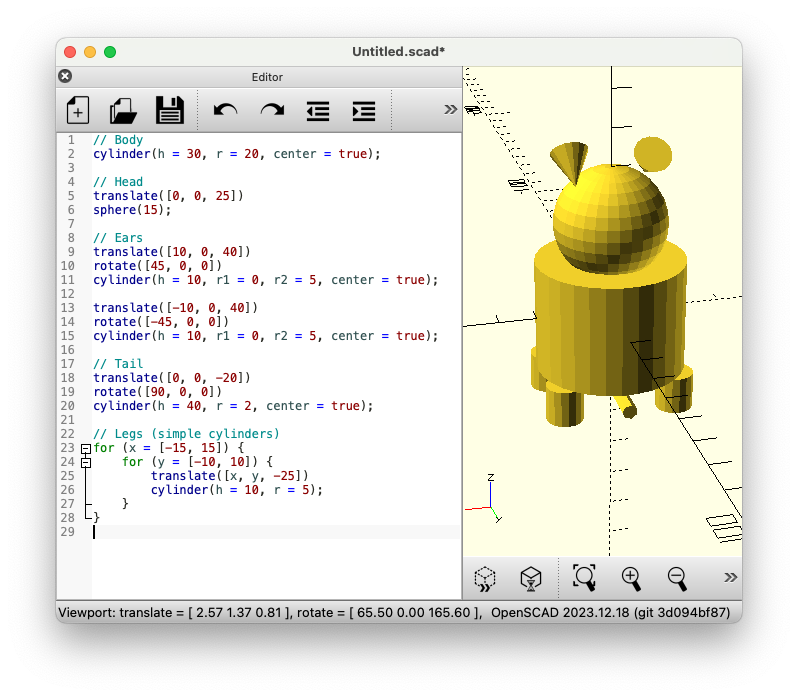
I have asked ChatGPT to generate 3D models. ChatGPT can not generate 3D models directly but 3D models can generated via intermediary [OpenSCAD](https://openscad.org/news.html) scripts: OpenSCAD provides a scripting language to describe objects which can be combined to form 3D models. ChatGPT understands the syntax of this scripting language and generates perfectly cromulent scripts. I have asked two versions of ChatGPT to generate a 3D model of a house, a cat, a stick figure, a chair and a tree. The results are interesting...
ChatGPT 3.5 chair
ChatGPT 4.0 chair
ChatGPT 3.5 cat
ChatGPT 4.0 cat
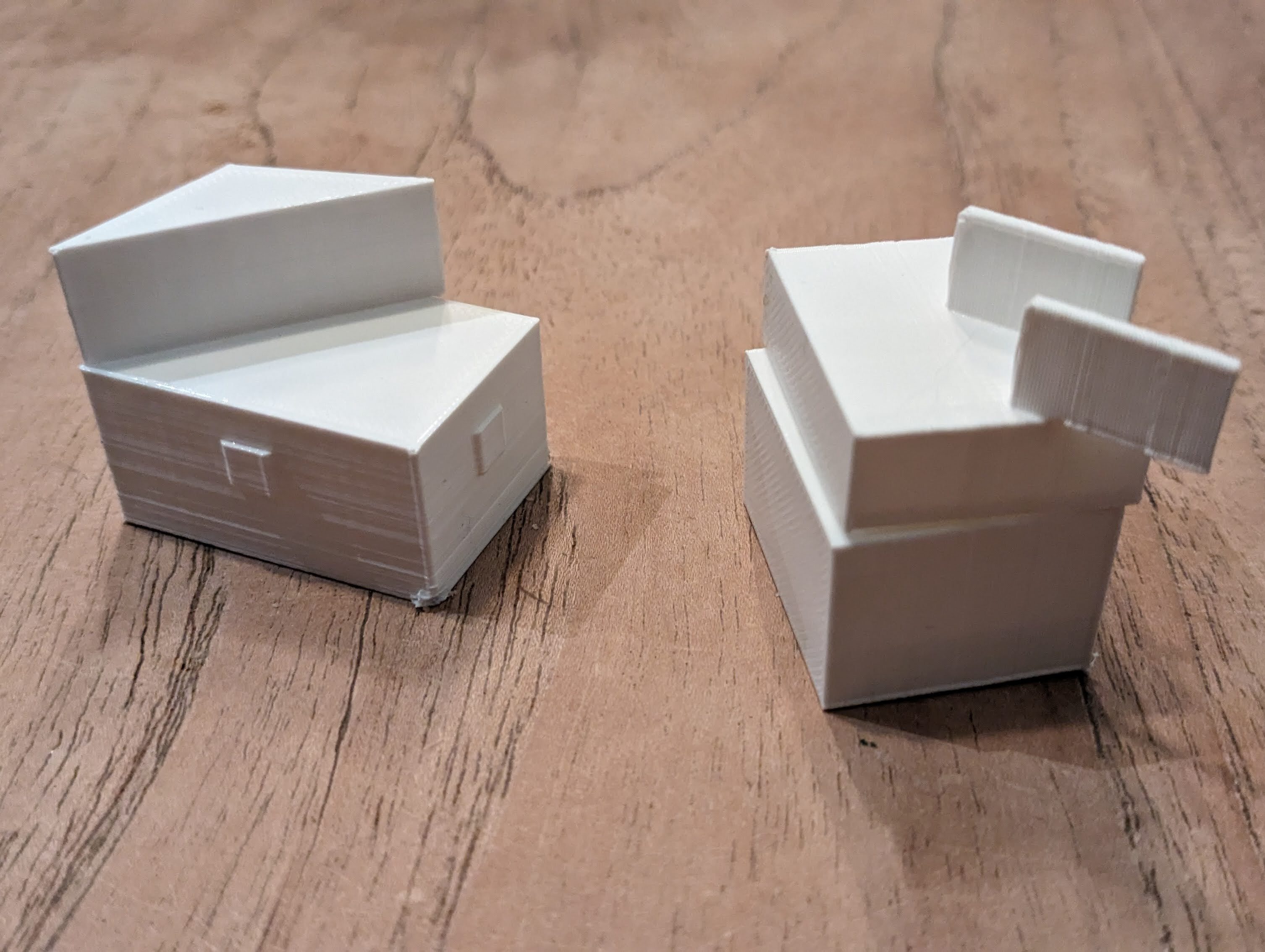
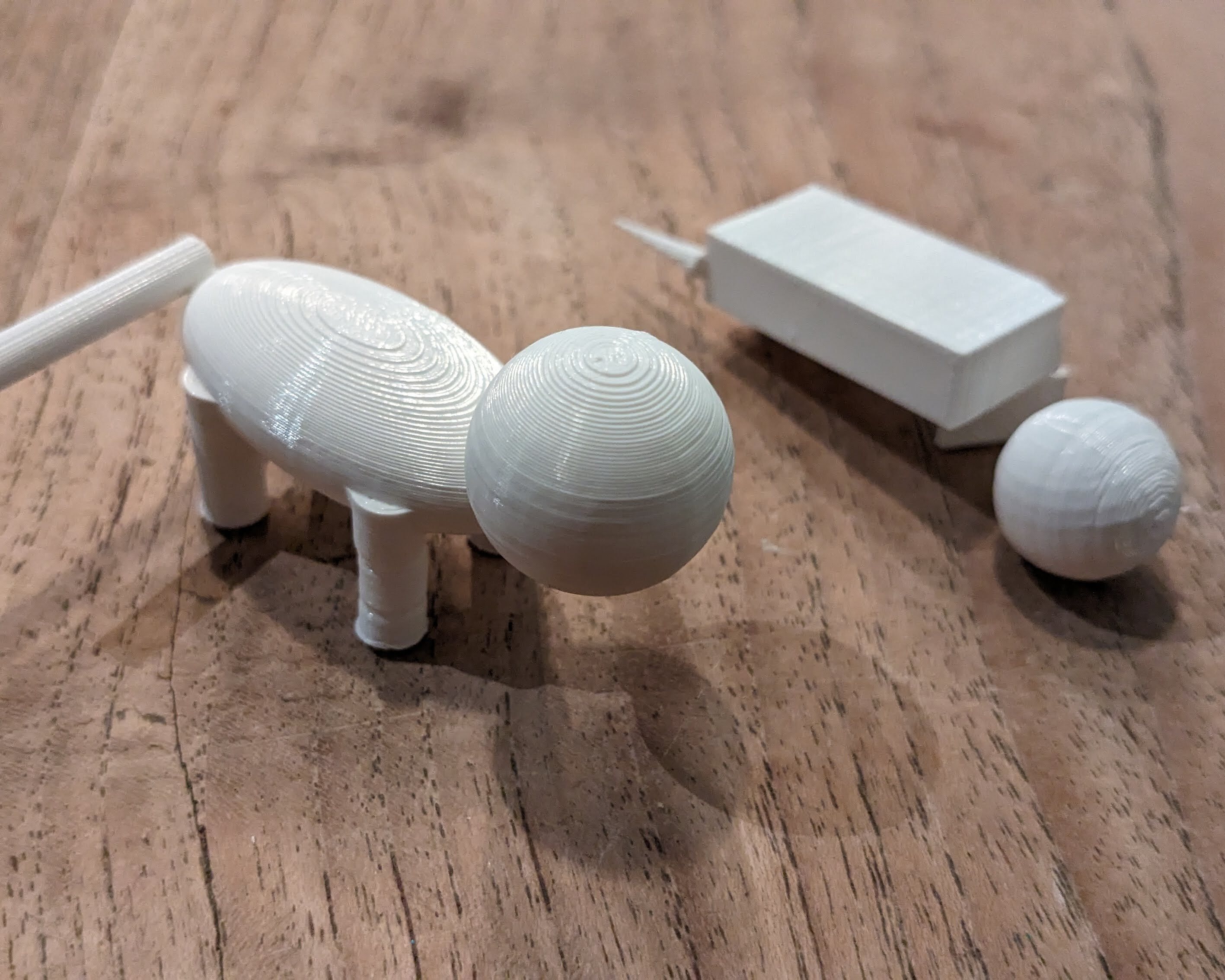
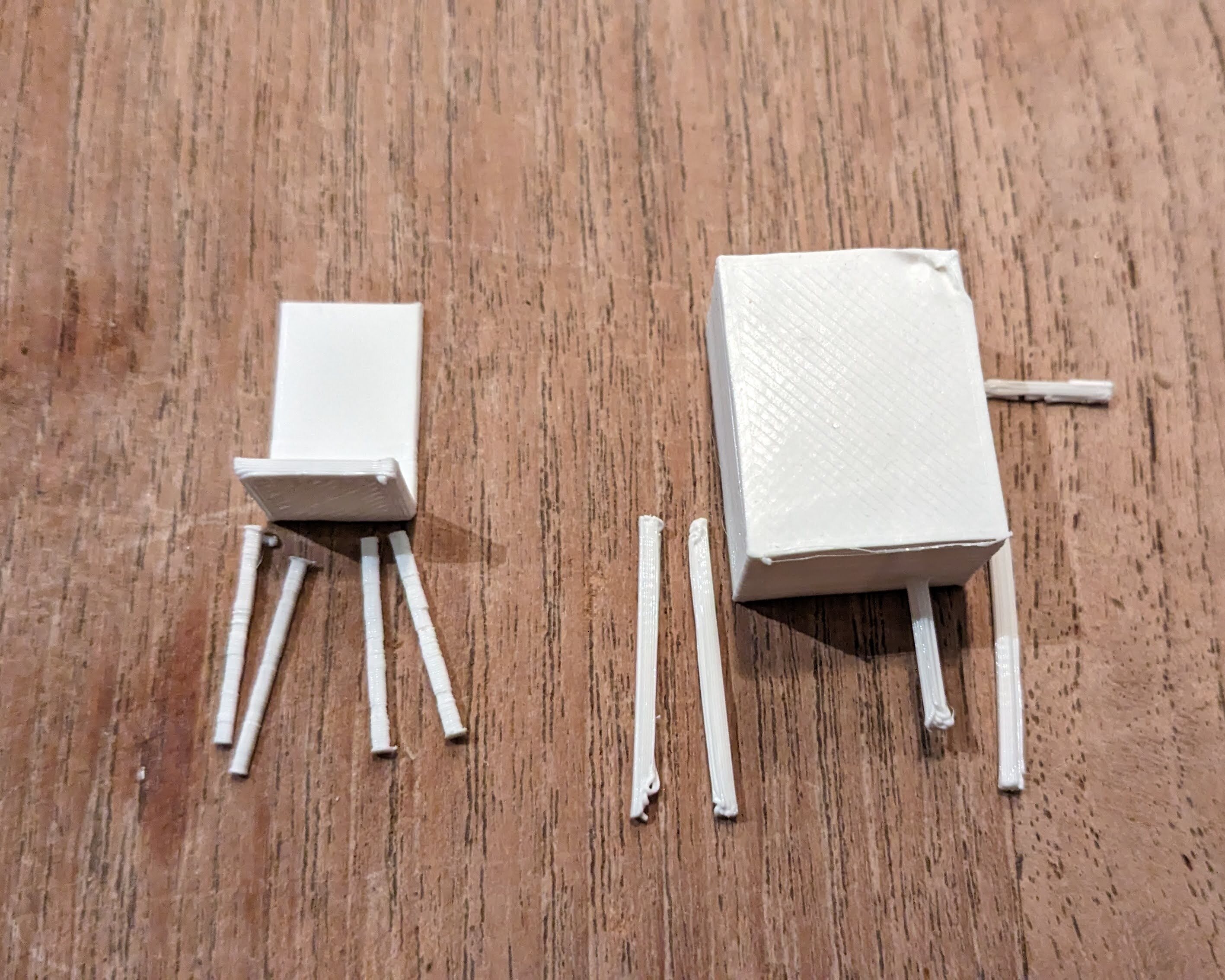
The models immediately make the difference between ChatGPT 3.5 Turbo and ChatGPT 4.0 clear: 4.0 generates much better models with, at least, recognizable elements: a chair has four legs, a cat has a head and a tail. It is impressive that reasonable 3D models are generated but there is still room for improvement: proportions are not respected and elements are not always connected. Anyway, if __the 3D-models can be seen as a way to visualize code quality__, then 4.0 is a clear improvement and it makes me curious about future ChatGPT versions. It also made me reflect on a couple of aspects of LLMs in general.
 Fig: a black box generating 3D models.
* **ephemerality** The response of a LLM to a prompt is ephemeral: the same prompt causes a different response depending on context, randomness and the position of heavenly bodies - or so it seems. Traditional software systems follow a strict set of clear rules and provide deterministic, predictable and reliable results. The inverse is true for LLMs which takes some getting used to. As a user, an LLM is effectively a [vantablack](https://en.wikipedia.org/wiki/Vantablack) box - there is no way to know why a certain response was given instead of another.
* **Updates** LLMs services - and SaaS in general - have an additional feature which makes them even more unpredictable: updates to systems can happen without notice. After a recent unannounced update, for example, [ChatGPT 4 started to produce gibberish](https://status.openai.com/incidents/ssg8fh7sfyz3). This adds another layer to the already uncontrollable and ephemeral nature of responses to LLM prompts.
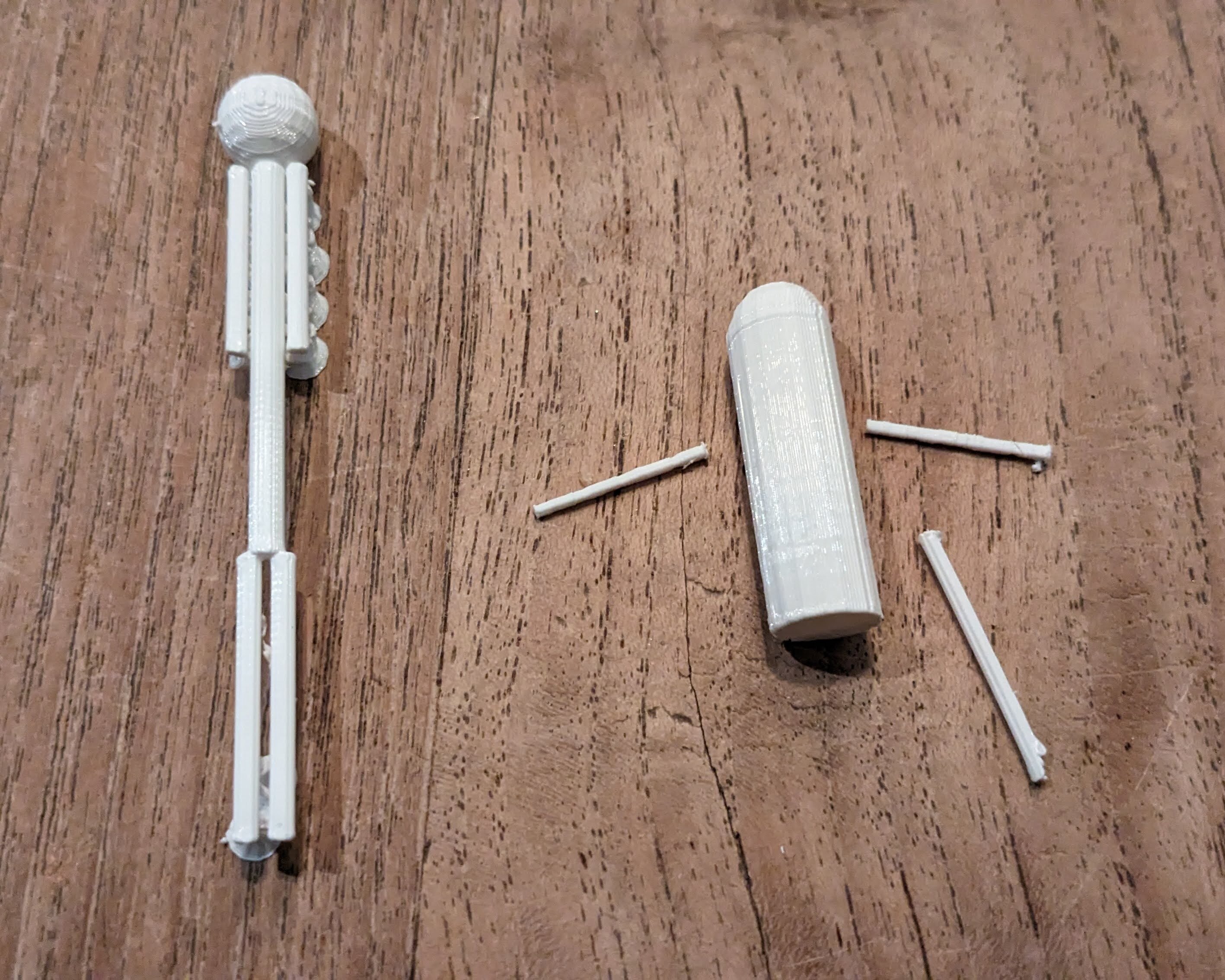
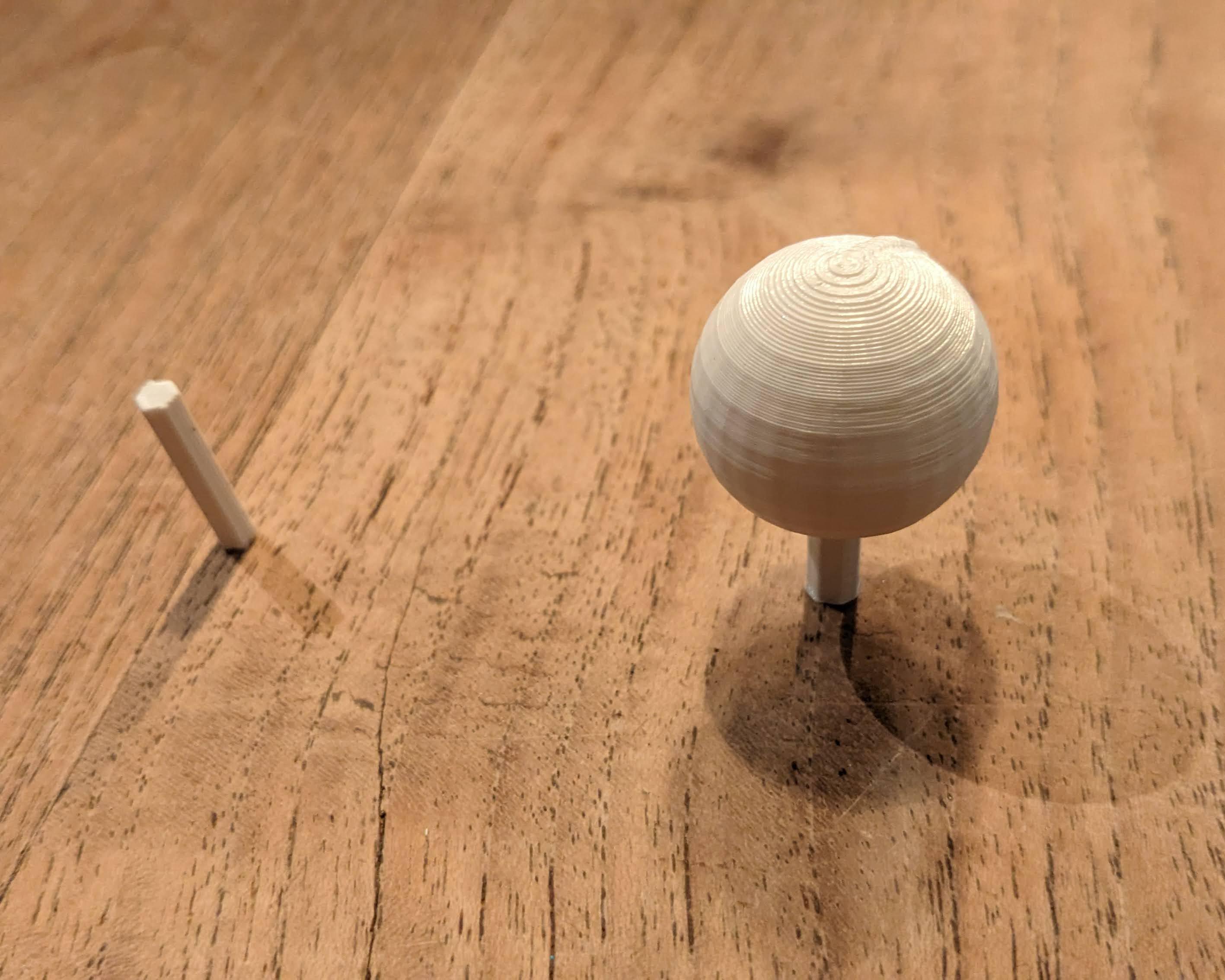
To counter the ephemeral quality of prompt responses, I have 3D printed the generated [3D models](https://0110.be/files/attachments/541/ChatGPT3D.zip). Some pictures can be found below. I find that these physical, tangible, immutable objects provide a comforting counterbalance to the digital, ephemeral nature of LLM responses. Additionally, it highlights the absurdity of the generated models.
There are other ways to solidify ephemerality: [crochet patterns](https://www.theguardian.com/technology/2023/feb/26/chatgpt-generated-crochet-pattern-results), juggling patterns, guitar tablature, music notation all have some kind of structured text representation which LLMs can generate and which can have a physical representation. I would encourage people to bring prompt responses to the physical world: it really makes the - current - limitations of LLMs very clear.
---