---
title: Posts tagged Muziek
canonical: https://0110.be/tags/Muziek
markdown_url: https://0110.be/tags/Muziek.md
page: 0
posts_per_page: 30
total_posts: 8
filters:
tag: Muziek
previous:
next:
---
# Posts tagged Muziek
## [USB MIDI interface for the NeXTCube - ISPW board](https://0110.be/posts/USB_MIDI_interface_for_the_NeXTCube_-_ISPW_board.md)
- Published: 2023-05-05T00:00:00Z
- Updated: 2025-11-29T14:18:42Z
- Author: Joren
- ID: 514
- Canonical: https://0110.be/posts/USB_MIDI_interface_for_the_NeXTCube_-_ISPW_board
- Tags: [Code](https://0110.be/tags/Code.md), [Harde waren](https://0110.be/tags/Harde%20waren.md), [Muziek](https://0110.be/tags/Muziek.md), [UGent](https://0110.be/tags/UGent.md)
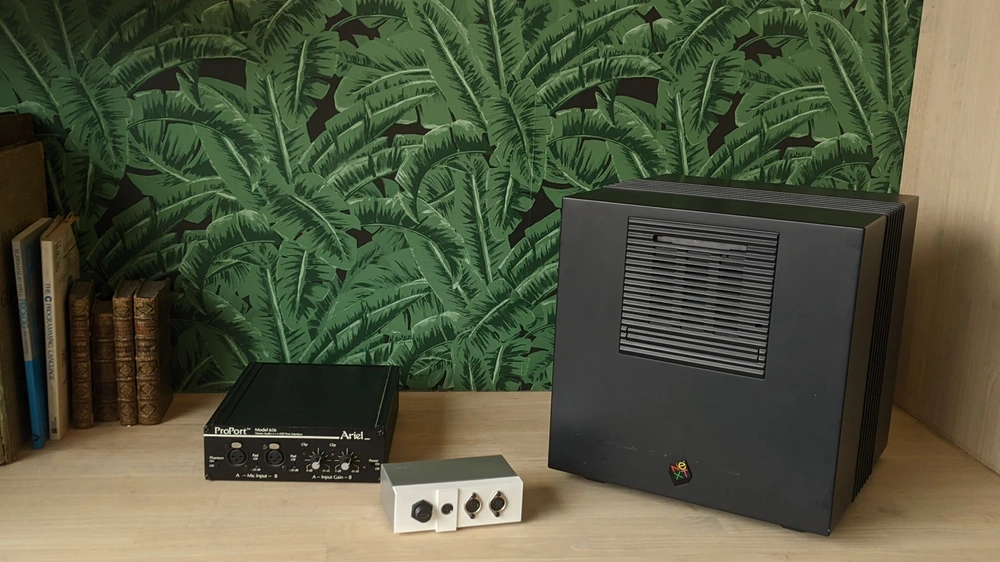
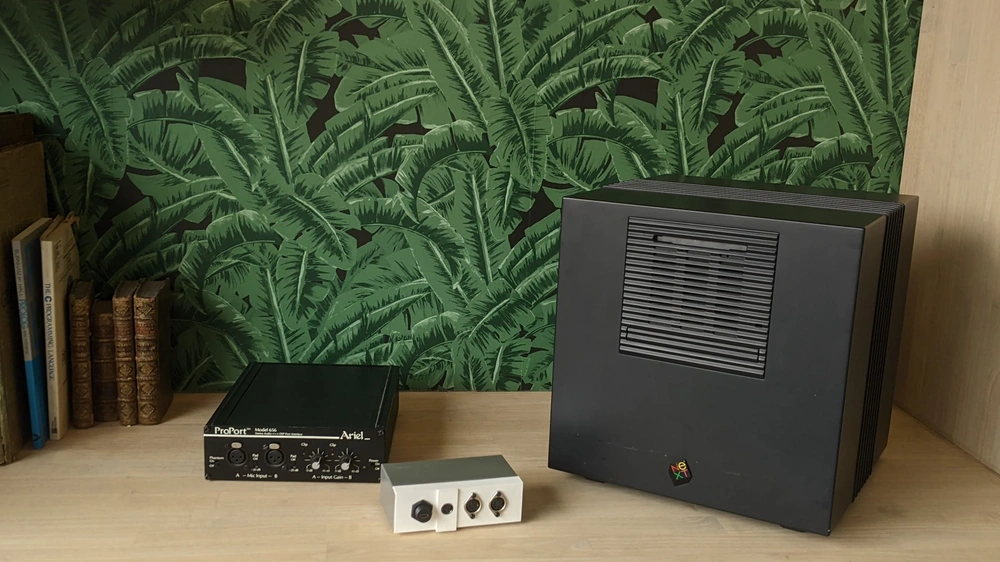
I have recently [restored a NeXTCube with an ISPW Ariel soundcard](https://0110.be/posts/Electronic_Music_and_the_NeXTcube_-_Running_MAX_on_the_IRCAM_Musical_Workstation) with the aim to put it in the hands of artists and researchers in the context of a [living electronic music instrument heritage project](https://asil.ugent.be/projects/#heritageinstruments). To make the cube talk to keyboards, synths or other audio workstations I have built a *MIDI interface for the NeXTcube*.
Fig: the NeXTCube with the Ariel ProPort and MIDI input/output interface.
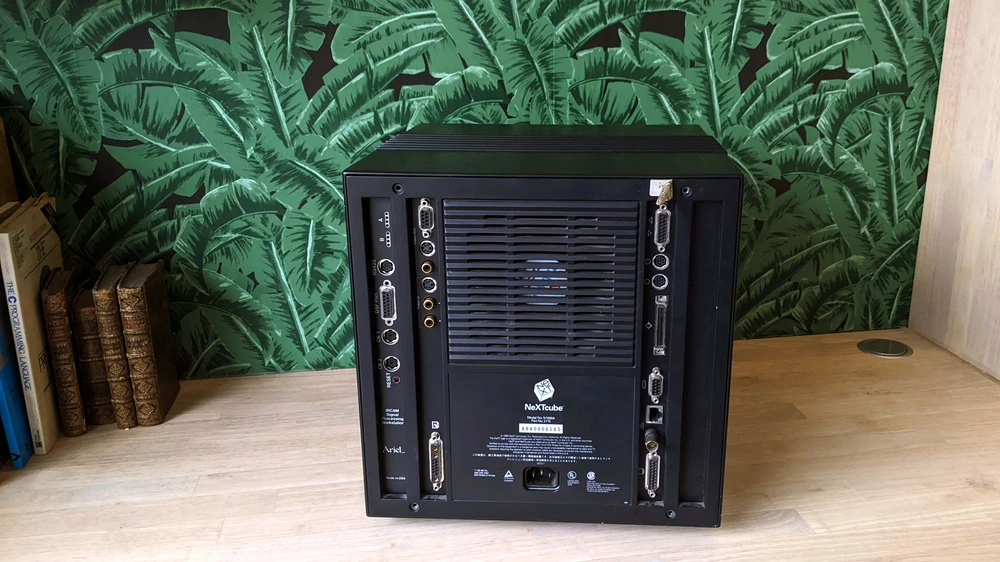
Recently, I was able to restore a NeXTCube and install an early version of MAX - a graphical music programming environment. However, a crucial part of the system was missing: there was no way to do [MIDI input/output](https://en.wikipedia.org/wiki/MIDI). MIDI is used to connect controllers, keyboards, synthesizers or other musical instruments to the audio workstation. The NeXTCube itself has [a serial port which allows users to connect MIDI devices](https://www.nextcomputers.org/NeXTfiles/Docs/connectivity.pdf). Next to the serial port on the mainboard, the NeXTCube I am working with also has a RS-422 serial port on the ISPW 'soundcard'. The serial port uses RS-422 and mini DIN 8 connectors which provide MIDI input and output. While the MIDI data bytes are transmitted according to spec, the *connector and the electrical signals are not compatible with standard MIDI*.
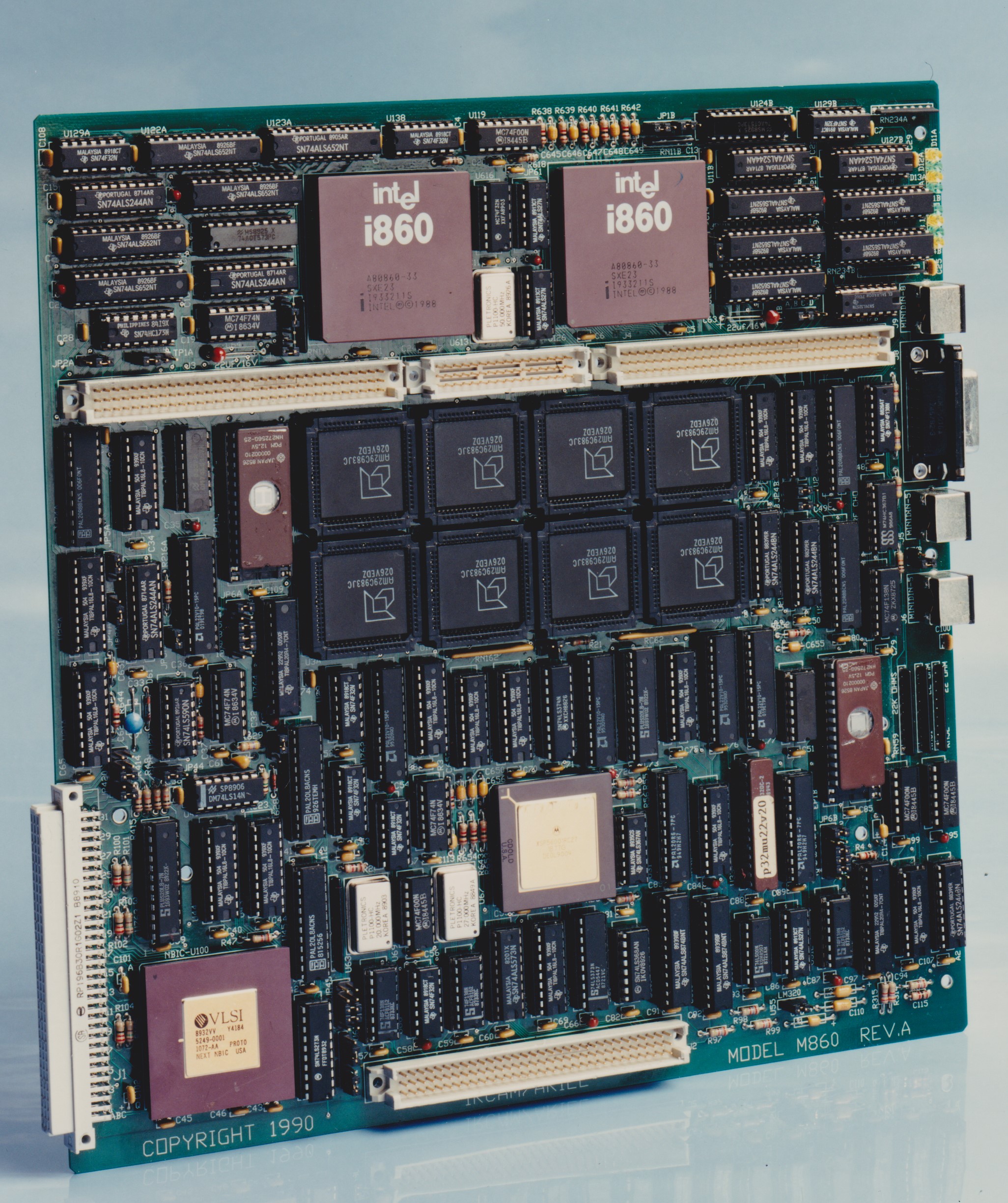
Fig: the IRCAM/Ariel ISPW soundcard with mini DIN-8 RS-433 serial port on the right.
For MIDI I/O we need a device which allows to connect the RS-422 MIDI to both legacy MIDI devices and to computers via USB MIDI. If a MIDI event arrives from the NeXTCube's RS-422 it needs to be passed through to the USB and legacy MIDI ports and the other way around. The [Teensy platform](https://www.pjrc.com/teensy/) is ideal: it supports hardware serial and USB MIDI. In this retro-computing project, it seems wasteful to use the 600MHz Teensy 4.0 only for message passing: the Teensy has much more computing power than NeXTcube but it is cheap, easy to program, available and practical.
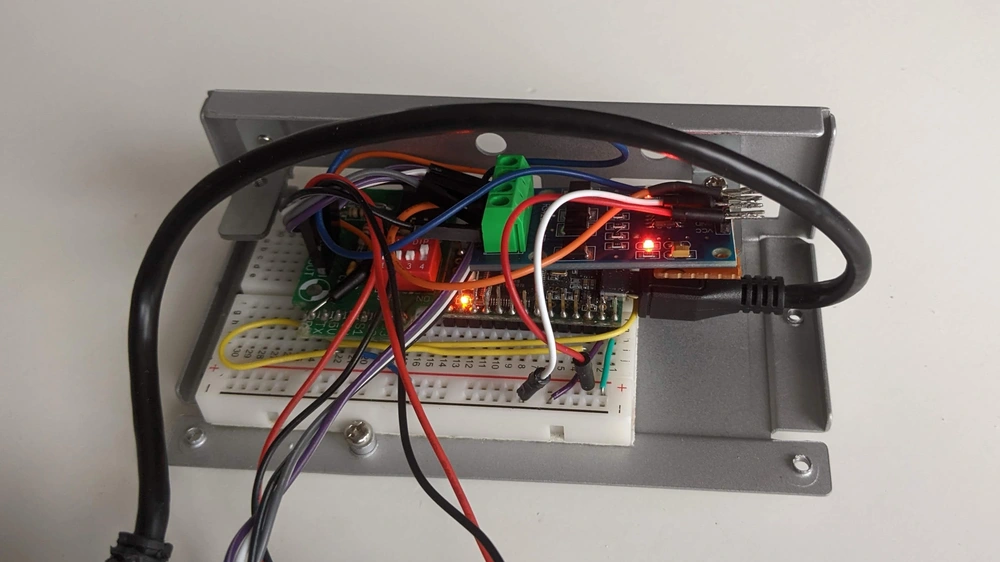
The RS-422 serial port uses --6V to 6V logic which needs to be transformed to the 0V to 3.3V logic for the Teensy microcontroller. A PCB provides this capability and is connected to a hardware serial port of the Teensy. The pinout of the RS-422 port was measured via a scope and matched the [documentation](https://allpinouts.org/pinouts/connectors/serial/apple-macintosh-rs-422-serial/). The Teensy has an `usbMIDI` mode and can present itself as a standard MIDI device to a PC. Two [opto-isolated legacy MIDI DIN-5 ports](https://www.sparkfun.com/products/12898) were connected to another hardware serial port. The software on the Teensy conducts the "three-way MIDI message passing":\[midi_passthrough.ino\].
Vid: Max/FTS FM synth reacting to USB MIDI input.
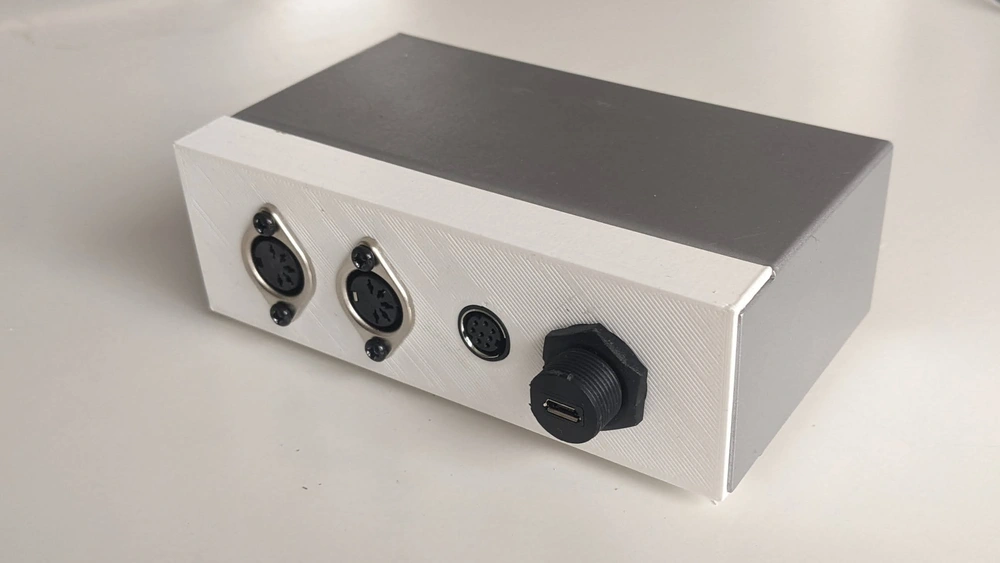
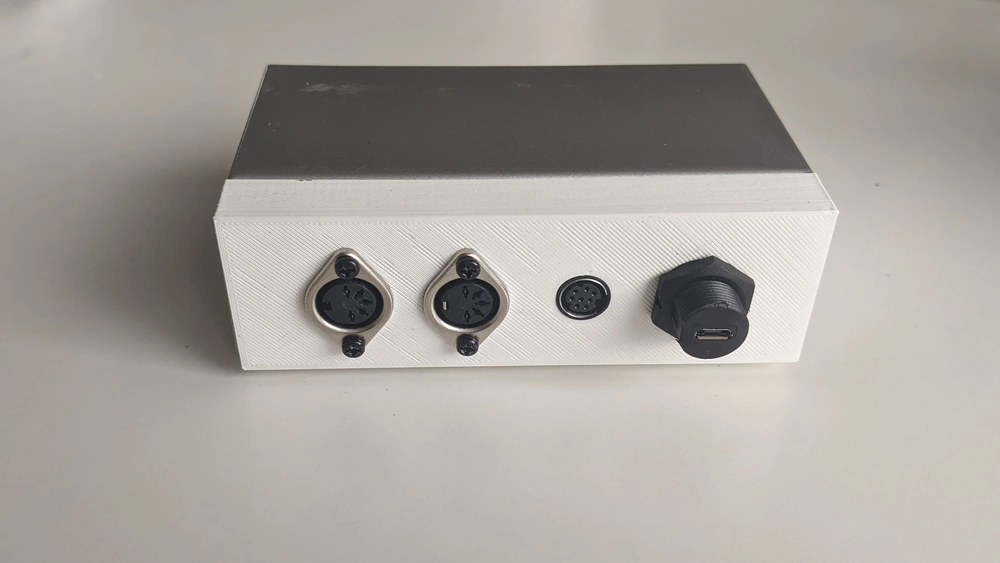
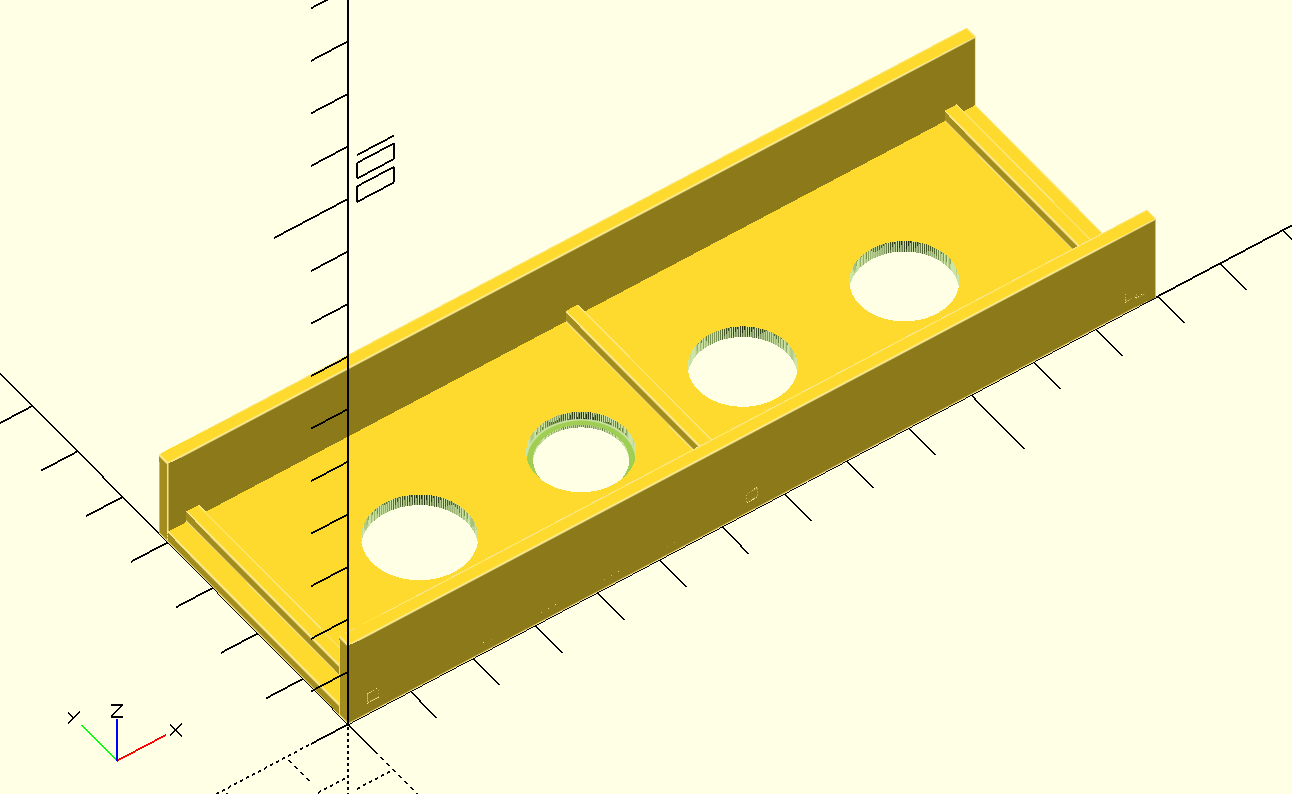
The electronics were fixed into a reused metal enclosure. The front panel of the enclosure was replaced by a custom 3D printed panel. The front contains the RS-422 port, two MIDI DIN 5 ports and a micro usb port either for power alone or MIDI messages and power. Feel free to check out the "OpenSCAD design with a level MINI DIN8 hole":\[midi_box.scad\].
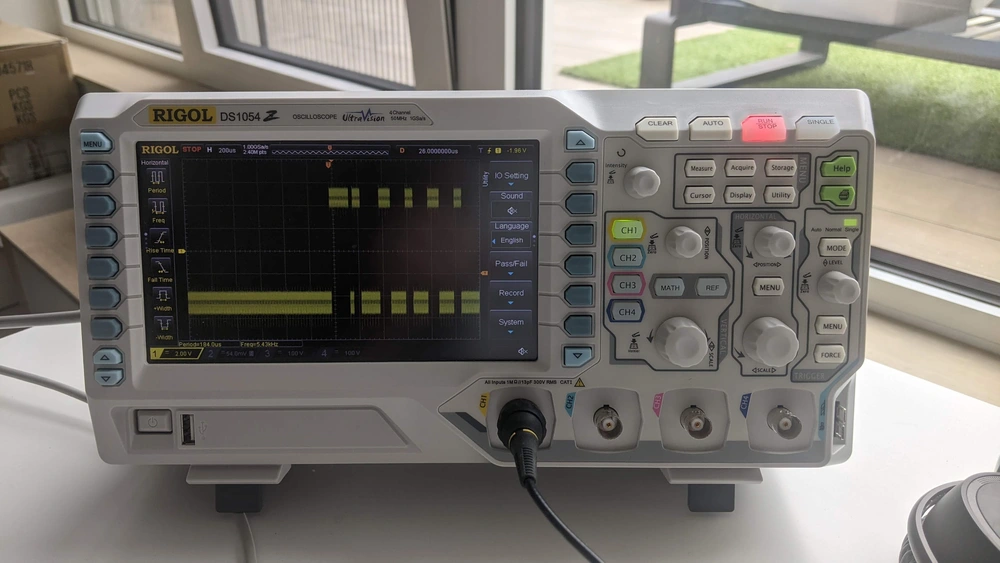
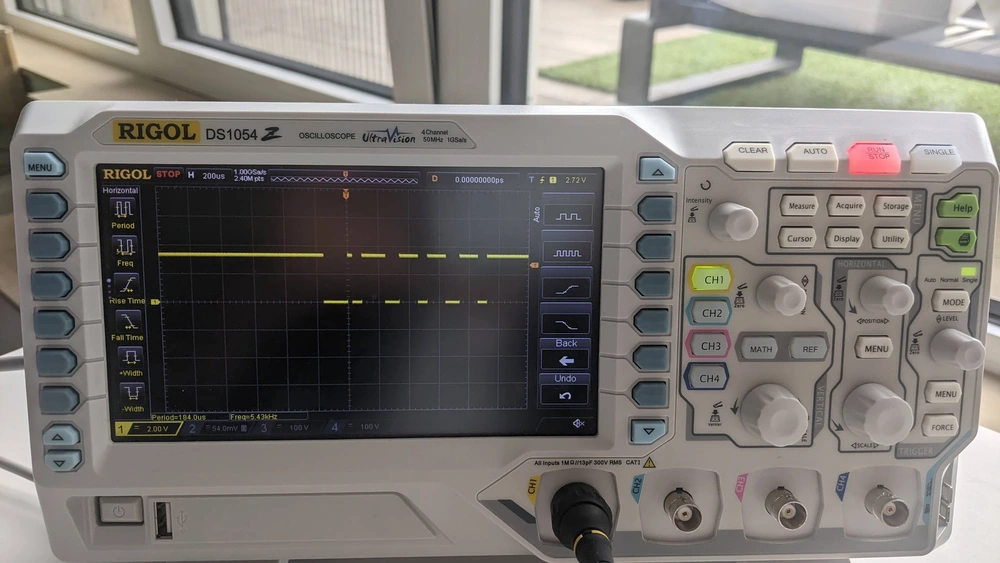
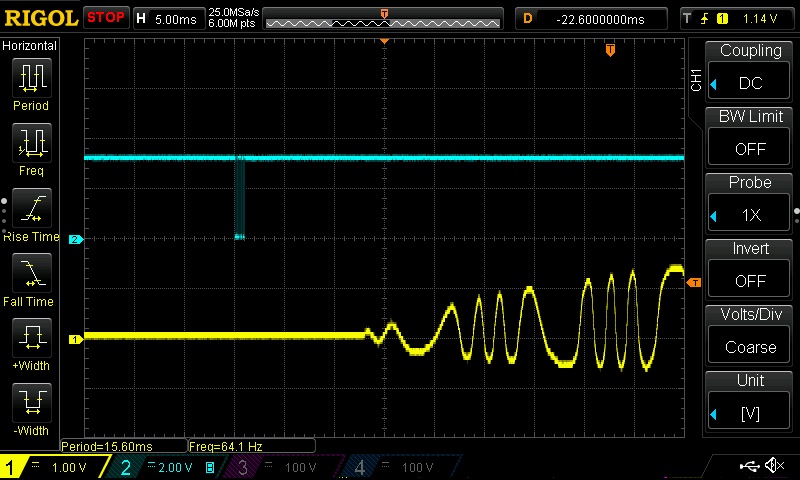
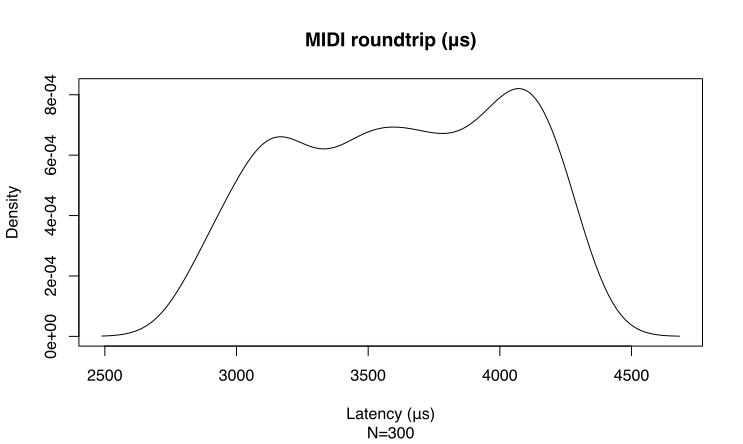
With a working MIDI interface for the NeXTcube allows interfacing with MIDI keyboards and controllers. It can also be used to measure roundtrip latency. MIDI to sound latency determines how long it takes between pressing a MIDI key and hearing sound. MIDI to MIDI roundtrip latency determines how long it takes to process, parse and return a MIDI message. For a responsive, reliable system both types of latencies should be constant and preferably in the range of 10ms or below.
Fig: Measured MIDI roundtrip latency on the ISPW board for the NeXTCube.
Measuring the MIDI roundtrip latency shows that the system is able to respond in 3.6+--0.4 ms (N=300). A combination of a MAX patch and "Teensy firmware":\[next_midi_roundtrip_latency.ino\] was used to measure this automatically. The MIDI-to-audio latency was measured a few times manually and always was around 13ms. These figures show that the system is ideal for low-latency real-time music making in its default configuration. In MAX the audio buffer sizes could be reduced to achieve an even lower latency but with the risk of running into buffer underruns and audio glitches.
Small [discussion the USB MIDI interface for the NeXTCube on Hackaday](https://hackaday.com/2023/05/16/midi-interface-for-nextcube-plugs-into-the-past/#comments)
- [ariel\_soundcard\_IRCAM\_ISPW.jpg](https://0110.be/files/attachments/514/ariel_soundcard_IRCAM_ISPW.jpg)
- [midi\_box.scad](https://0110.be/files/attachments/514/midi_box.scad)
- [midi\_roundtrip\_latency.svg](https://0110.be/files/attachments/514/midi_roundtrip_latency.svg)
- [midi\_passthrough.ino](https://0110.be/files/attachments/514/midi_passthrough.ino)
- [next\_midi\_roundtrip\_latency.ino](https://0110.be/files/attachments/514/next_midi_roundtrip_latency.ino)
- [midi\_roundtrip\_test.pat](https://0110.be/files/attachments/514/midi_roundtrip_test.pat)
- [nextcube\_midi\_proport.webp](https://0110.be/files/attachments/514/nextcube_midi_proport.webp)
- [midi\_box\_example\_web.webp](https://0110.be/files/attachments/514/midi_box_example_web.webp)
- [midi\_box\_example\_web.mp4](https://0110.be/files/attachments/514/midi_box_example_web.mp4)
---
## [Electronic Music and the NeXTcube - Running MAX on the IRCAM Musical Workstation](https://0110.be/posts/Electronic_Music_and_the_NeXTcube_-_Running_MAX_on_the_IRCAM_Musical_Workstation.md)
- Published: 2023-05-02T00:00:00Z
- Updated: 2025-12-19T13:49:45Z
- Author: Joren
- ID: 512
- Canonical: https://0110.be/posts/Electronic_Music_and_the_NeXTcube_-_Running_MAX_on_the_IRCAM_Musical_Workstation
- Tags: [Harde waren](https://0110.be/tags/Harde%20waren.md), [Music Information Retrieval](https://0110.be/tags/Music%20Information%20Retrieval.md), [Muziek](https://0110.be/tags/Muziek.md), [UGent](https://0110.be/tags/UGent.md)
The NeXTcube is an influential machine in computing history. The NeXTcube, with an additional soundcard, was also one of the first off-the-shelf devices for high-quality, real-time music applications. I have restored a NeXTcube to run an early version of MAX, an environment for interactive music applications.
### The NeXTcube context and the *IRCAM Musical Workstation*
In 1990 NeXT started selling the NeXTcube, a high-end workstation. It introduced or brought together many concepts (objective-c, the Mach kernel, postscript, an app store) which are still in use today. The NeXTcube's influence is especially felt in the Apple ecosystem with Mac OS X, iPhones and iPads being direct decedents of NeXT's line of computers.
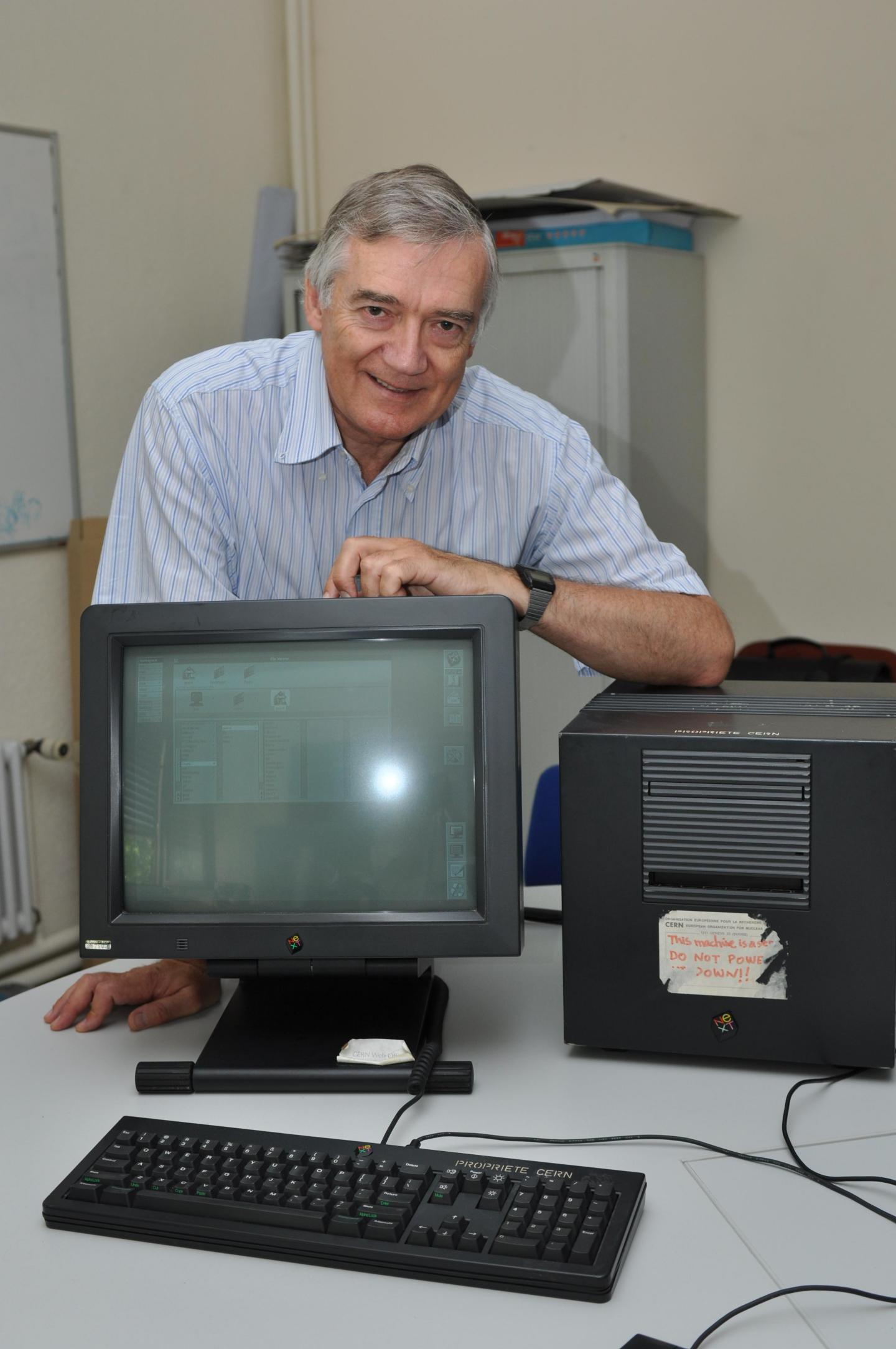
Due to its high price, the NeXTcube was not a commercial success. It mainly ended up at companies or in the hands of researchers. Two of those researchers, Tim Berners-Lee and [Robert Cailliau](https://en.wikipedia.org/wiki/Robert_Cailliau) created the first [`http` server and web browser](https://cds.cern.ch/record/1547556) at CERN on a NeXTcube. Coincidently, [the http software was publicly released exactly 30 years ago](https://web30.web.cern.ch/web-history.html) today. Famously, the cube was also used to develop games like the original Doom and Quake. So yes, the NeXTcube runs Doom.
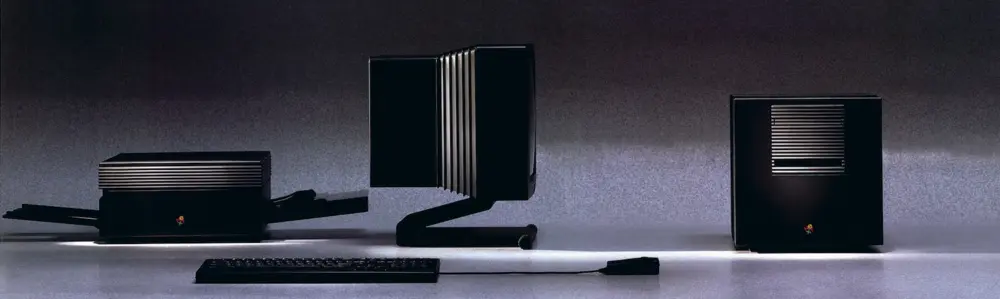
Fig: the NeXTcube's design stood out compared to the contemporary beige box PCs.
Less well known is the fact that the NeXTcube is also one of the first computing devices capable enough for real-time, high-quality interactive music applications. In the mid 1980s this was still a dream at [IRCAM](https://www.ircam.fr/), a French research institute with the aim to *'contribute to the renewal of musical expression through science and technology'*. The bespoke hardware and software systems for music applications from the mid 80s were further developed and commercialised in the early 90s. Together these developments resulted in a commercially available version of the "*IRCAM Musical Workstation (IMW)*", an early, if not the first, off-the-shelf computer for interactive music applications.
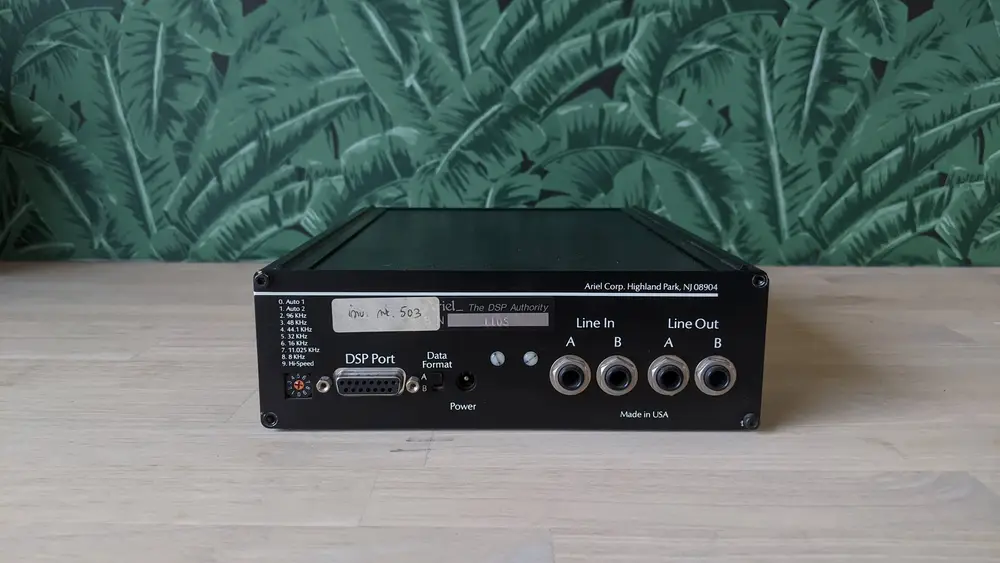
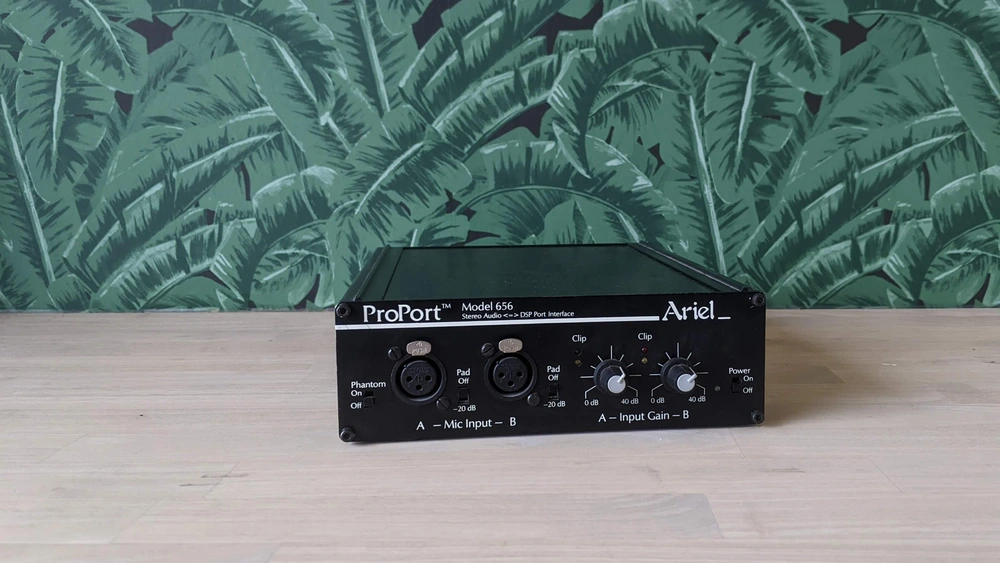
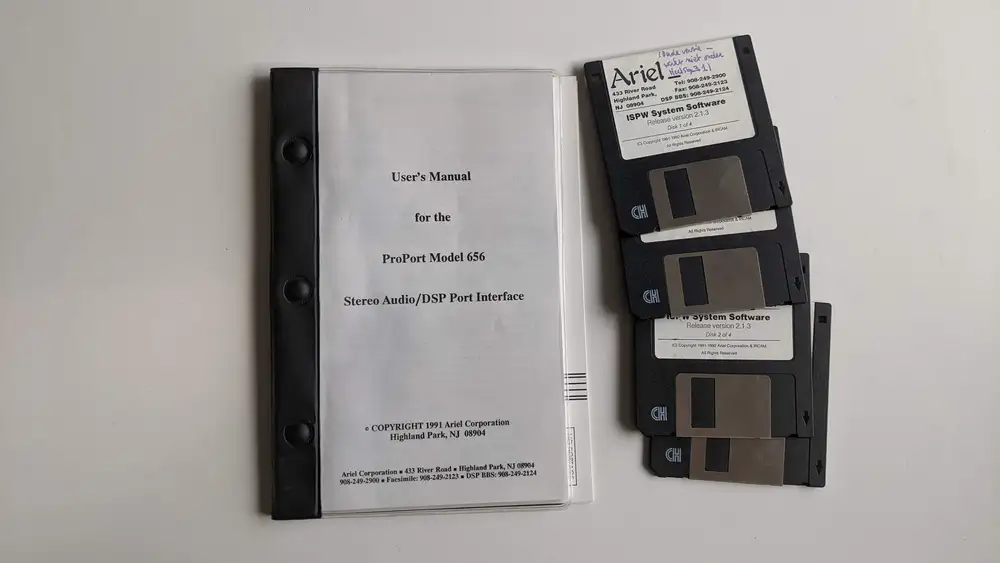
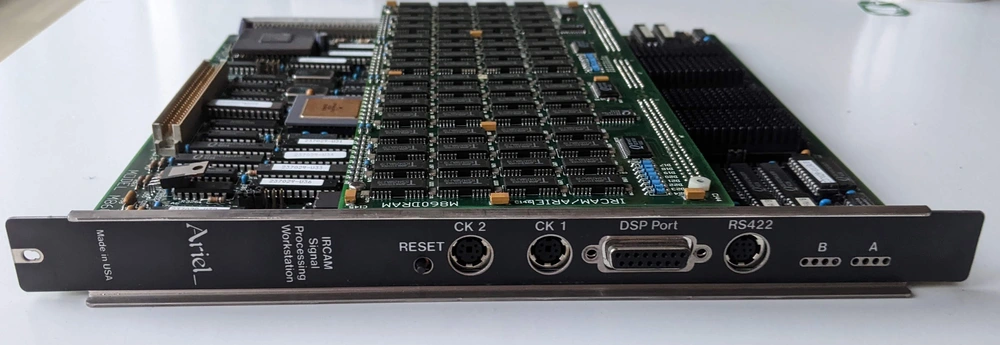
The IRCAM Musical Workstation (IMW), sometimes called the IRCAM Signal Processing Workstation (ISPW), consisted of several hard and software modules working together to enable interactive music applications. An important component was a 'soundcard' which had two beefy 40MHz [i860 intel CPUs](https://en.wikipedia.org/wiki/Intel_i860) for DSP. When installed in the NeXTcube, the soundcard had more computing power than the rest of the computer. This is similar to modern computers where some graphics cards have more raw computing power than the main CPU. The soundcard was developed at IRCAM and commercialized by Ariel inc. under the name "Ariel ProPort".
The IRCAM Ariel DSP coprocessor, soundcard.
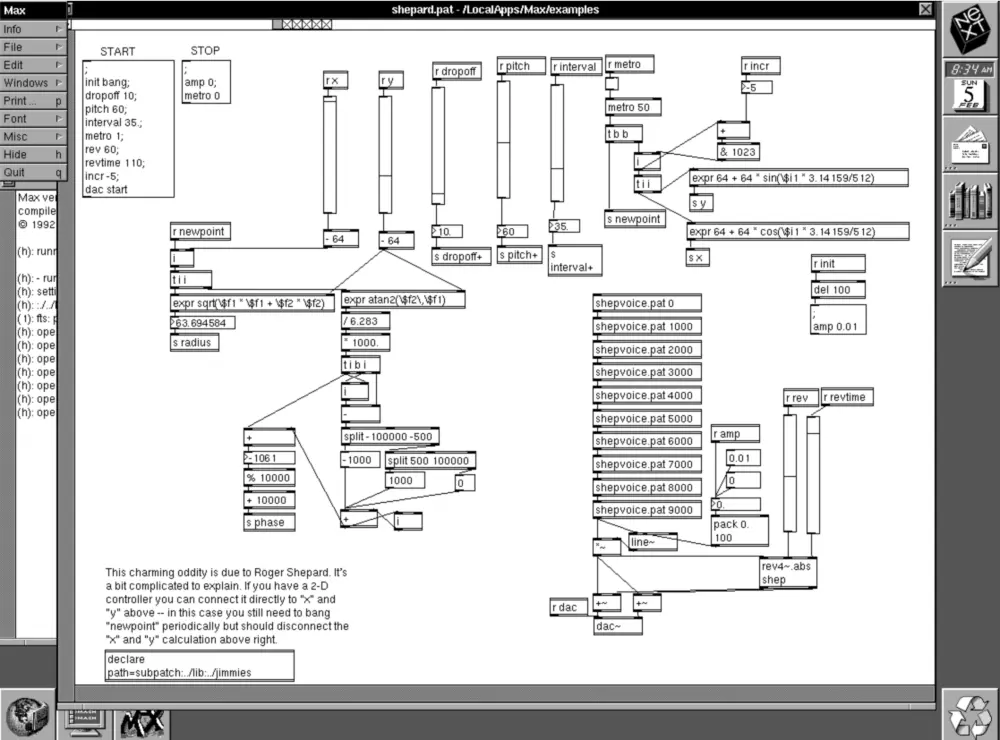
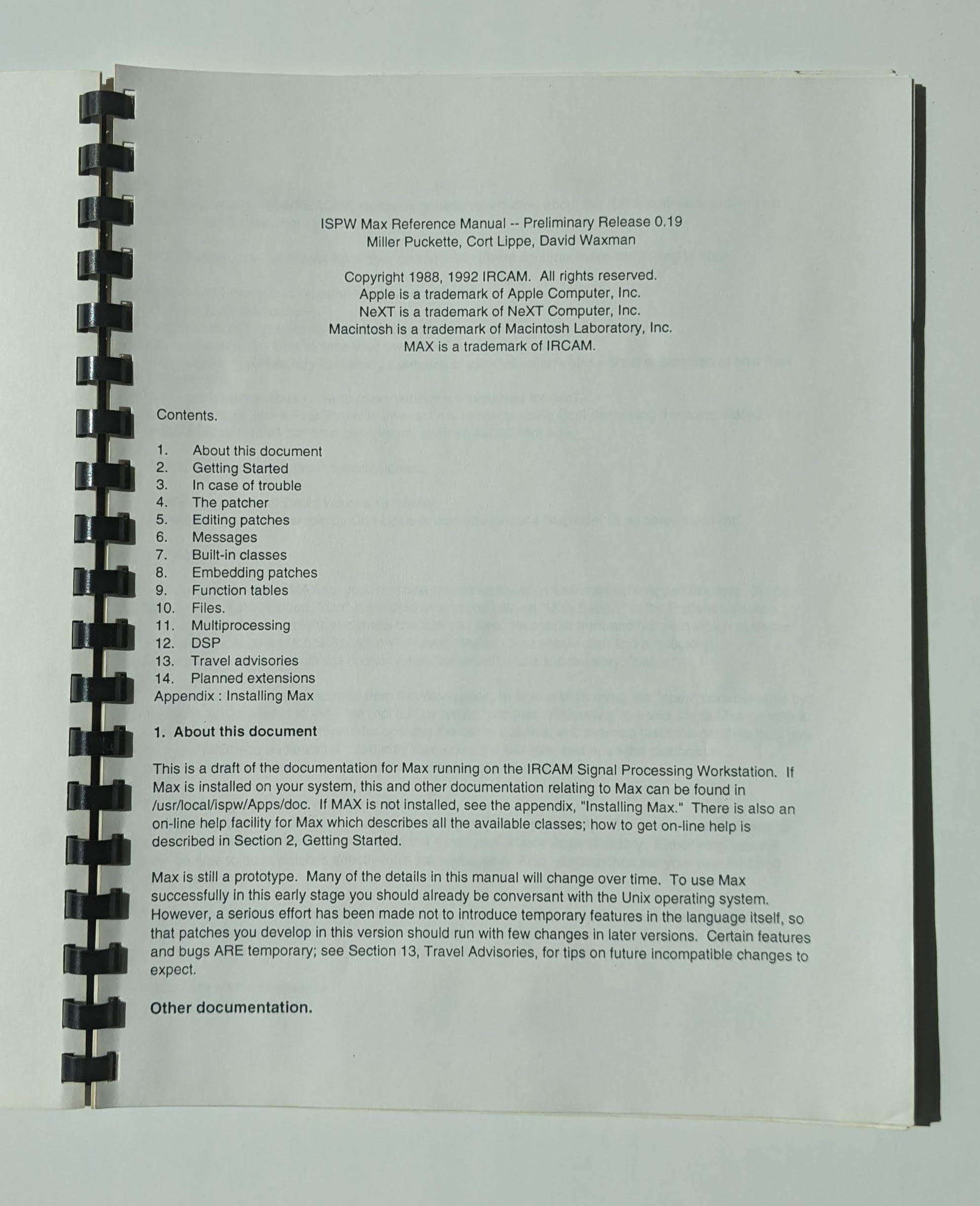
A few software environments were developed at IRCAM which made use of the new hardware. One was Animal, another, was the much more influential MAX. MAX provides a graphical programming environment specific for music applications. Descendants of MAX are still used today, see [Ableton Max for Live](https://www.ableton.com/en/live/max-for-live/) and [Pure Data](https://puredata.info). I consider the *introduction of MAX as a pivotal point in electronic music history*. Up until the introduction of MAX, creating a new electronic music instrument meant bespoke hardware development. With MAX, this is done purely in software. This made electronic sound or instrument design not only faster but also accessible to a much wider audience of composers, artists and thinkerers.
### The NeXTcube at IPEM
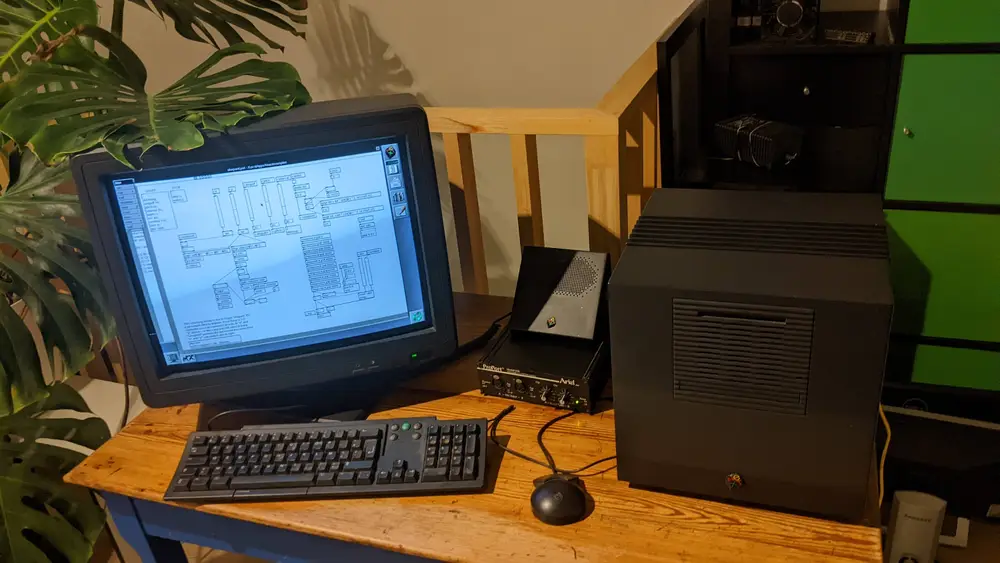
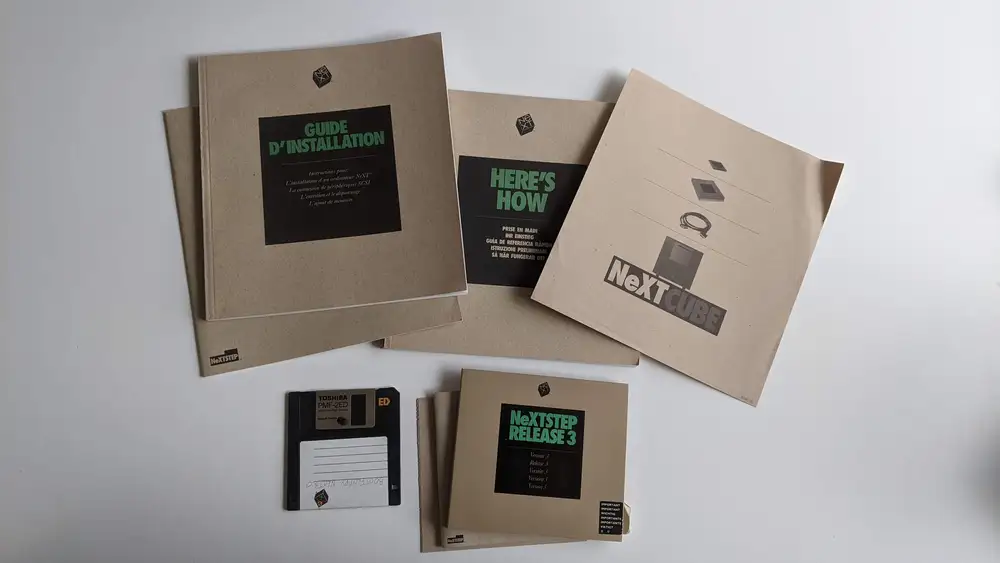
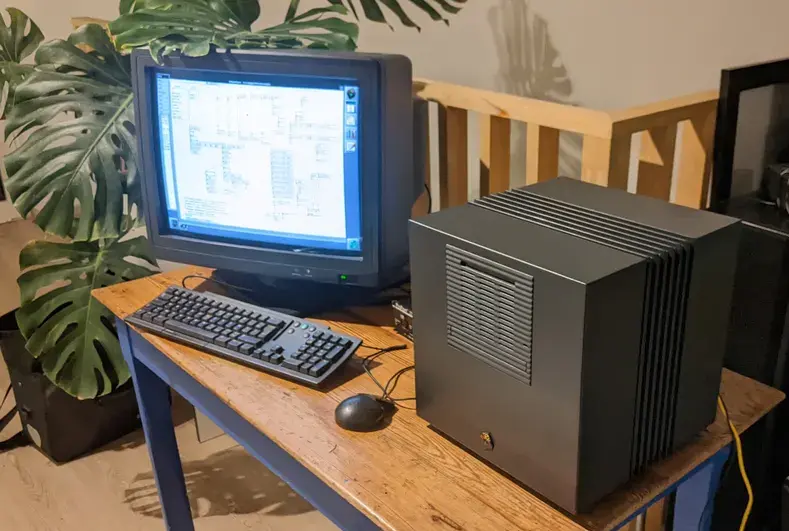
IPEM was an early electronic music production studio embedded at Ghent University, Belgium. Now it is active as a internationally acclaimed [research center for interdisciplinary music research](https://www.ugent.be/lw/kunstwetenschappen/ipem/en). In the early 90s IPEM acquired a [NeXTcube Turbo](https://en.wikipedia.org/wiki/NeXTcube_Turbo) with an internal diskette drive, SCSI hard disk, NextDimension color graphics card and an Ariel ProPort DSP/ISPW module. The cube was preserved well and came with many of the original software, books and manuals. I have been trying to get this machine working and configure it as an "*IRCAM Musical Workstation*".
IPEM's NeXTcube with IRCAM Ariel ProPort.
There were a few practical issues: the mouse was broken, the hard drive unreliable and the main system fan loud and full of dust. The mouse had a broken cable which was fixed, the hard drive was replaced by a [SCSI2SD](https://www.scsi2sd.com) setup and the fan was replaced with a new one. On the software side of things, the Internet Archive hosts [NeXTStep 3.3](https://archive.org/details/NeXTSTEP33CISC) which, after many attempts, was installed on the cube. Unfortunately there seemed to be a compatibility issue. The Ariel ProPort kernel module did not work. I started over installed NeXTStep 3.1, with the same result. Finally, I installed NeXTStep 3.0 which was compatible with the kernel module and MAX/FTS!
Vid: Max/FTS with a commercial Ariel soundcard running on a NeXTcube Turbo.
The restoration of the IRCAM Signal Processing Workstation instruments fits in a [university project on living heritage](https://asil.ugent.be/projects/#heritageinstruments) The idea is to get key historic electronic music instruments into the hands of researchers and artists to pull the fading knowledge on these devices back into a living culture of interaction. This idea already resulted in an album: [DEEWEE Sessions vol. 01](https://store.deeweestudio.com/products/deewee-sessions-vol-01). Currently the collection includes a 1960s reverb plate, an EMS Synti 100 analog synthesizer from the 70s, a Yamaha DX7 (80s) and finally the NeXTCube/ISPW represents the early 90s and the departure of physical instruments to immaterial software based systems.
**Acknowledgements & Further reading**
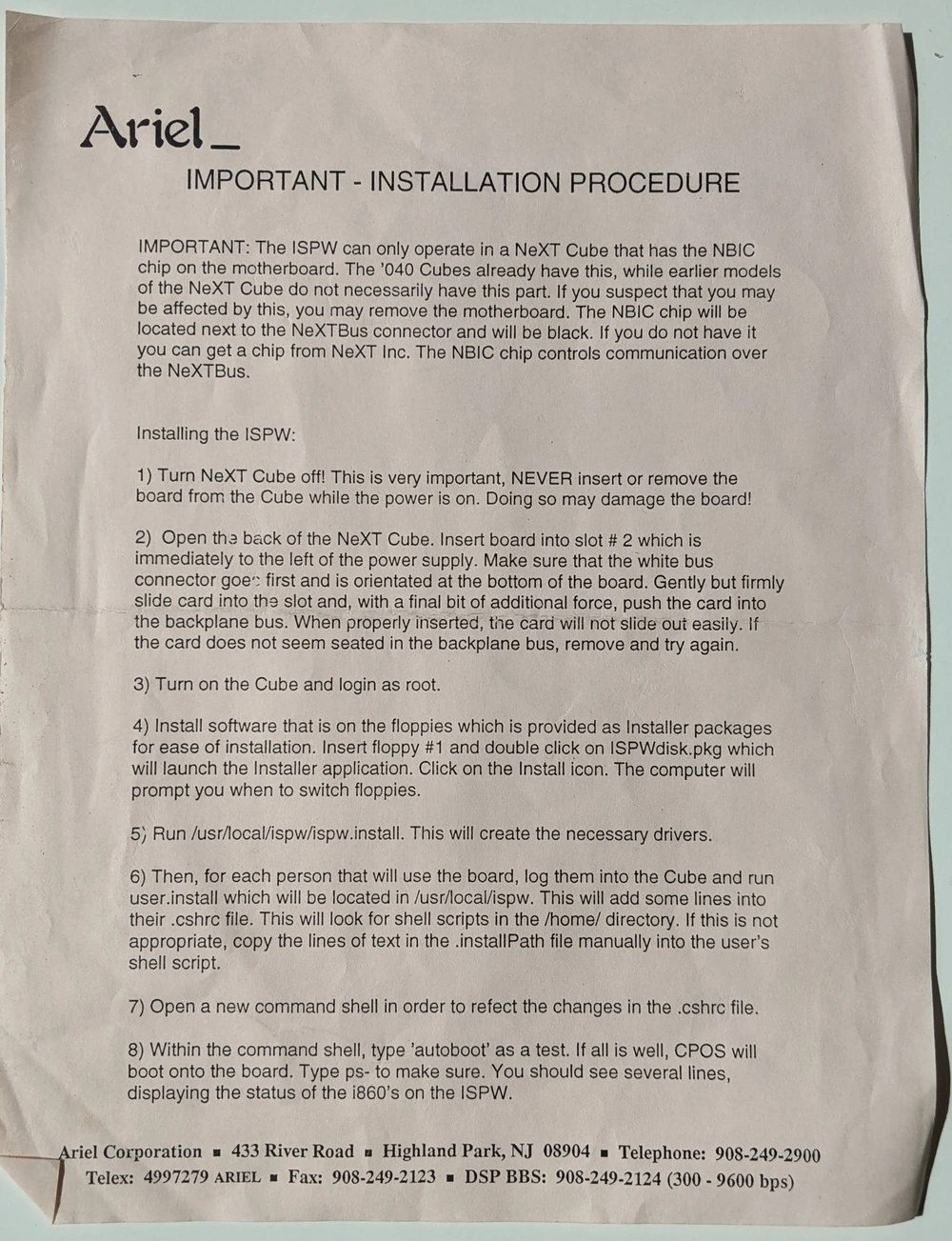
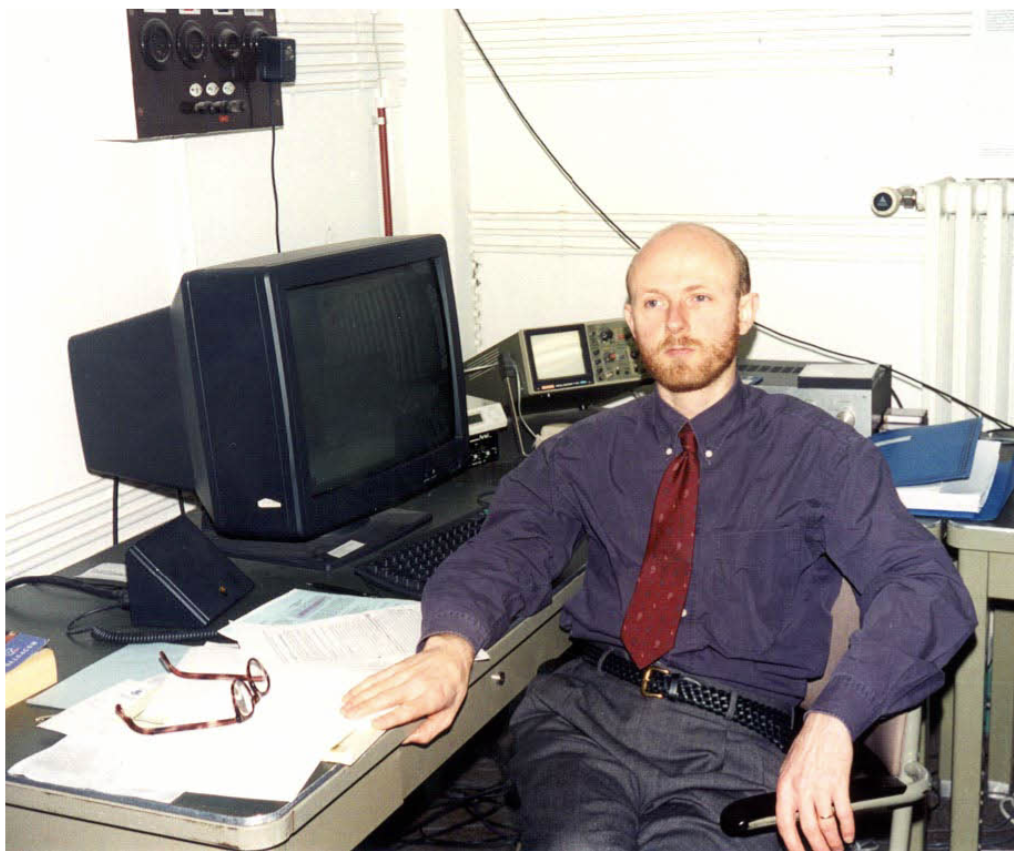
This project was made possible with the support of the Belgian [Music Instrument Museum](https://mim.be) and [IPEM, Ghent University](https://www.ugent.be/lw/kunstwetenschappen/ipem/en). I was fortunate to get assistance by Ivan Schepers and Marc Leman at IPEM but also by the main developers of MAX: [Miller Puckette](http://msp.ucsd.edu/). I would also like to thank Anthony Agnello formerly at Ariel Corp for additional image material and info. I also found the [WinWorld](https://winworldpc.com/product/nextstep/3x) and [NeXTComputers](https://www.nextcomputers.org/NeXTfiles/Images/Rare_NeXT_Hardware/NeXTcube/ISPW/) communities and resources extremely helpful. Below a picture from the [CERN public archives]( https://cds.cern.ch/record/1547556?ln=en) and Ghent University Archive is included. Thanks a lot!
See also the [discussion on this article at Hacker News](https://news.ycombinator.com/item?id=35800380 )\
Lindemann, E., Dechelle, F., Smith, B., & Starkier, M. (1991). [*The Architecture of the IRCAM Musical Workstation*](https://doi.org/10.2307/3680764) - Computer Music Journal, 15(3), 41--49. \
Puckette, M. (1991). [*FTS: A Real-Time Monitor for Multiprocessor Music Synthesis*](https://doi.org/10.2307/3680766). Computer Music Journal, 15(3), 58--67. \
Puckette, M. 1988. [*The Patcher*](http://msp.ucsd.edu/Publications/icmc88.pdf), Proceedings, ICMC. San Francisco: International Computer Music Association, pp. 420-429. \
Puckette, M. 1991. [*Combining Event and Signal Processing in the MAX Graphical Programming Environment.*](http://msp.ucsd.edu/Publications/cmj91-max.ps) Computer Music Journal 15(3): 68-77.\

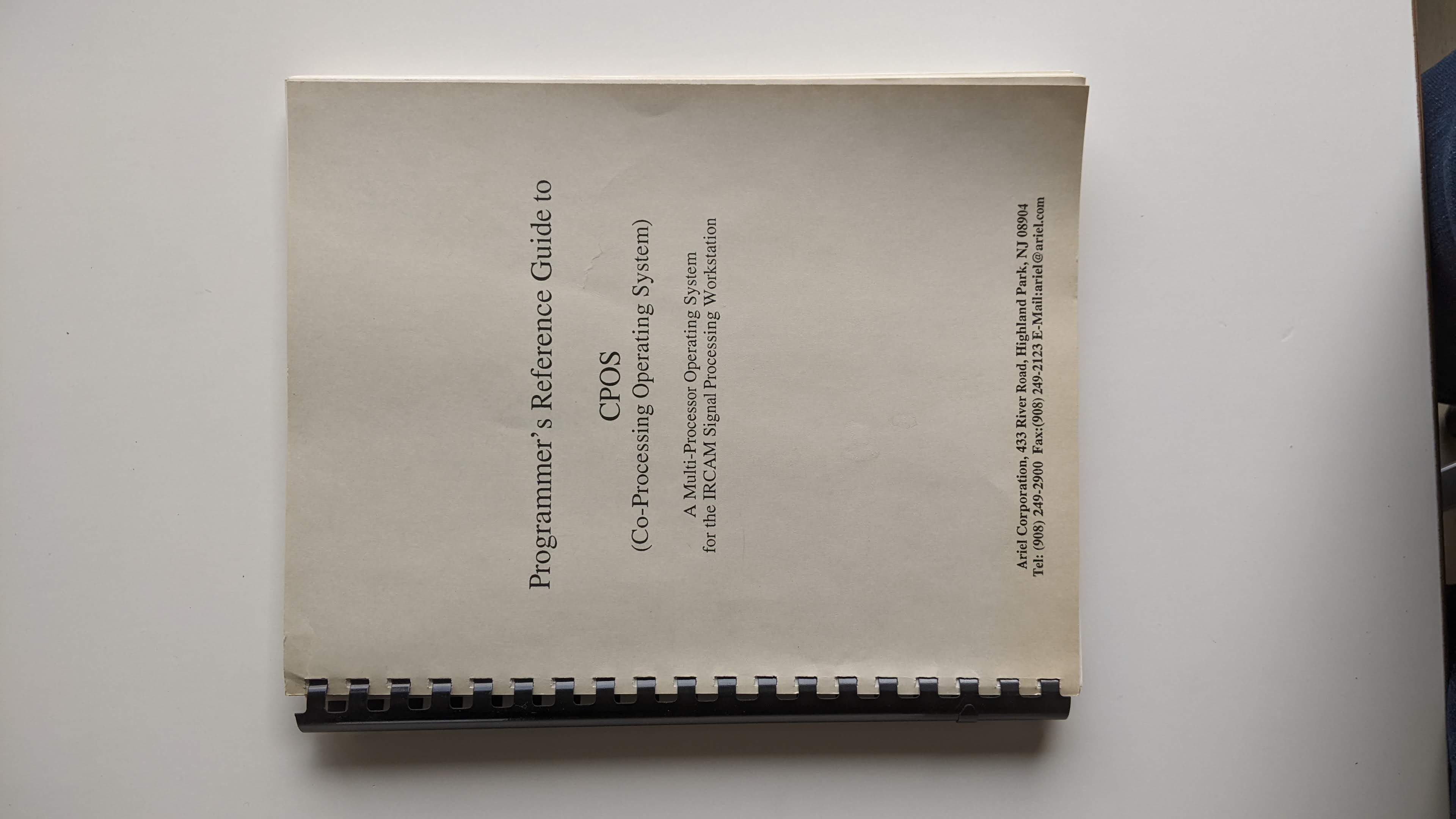
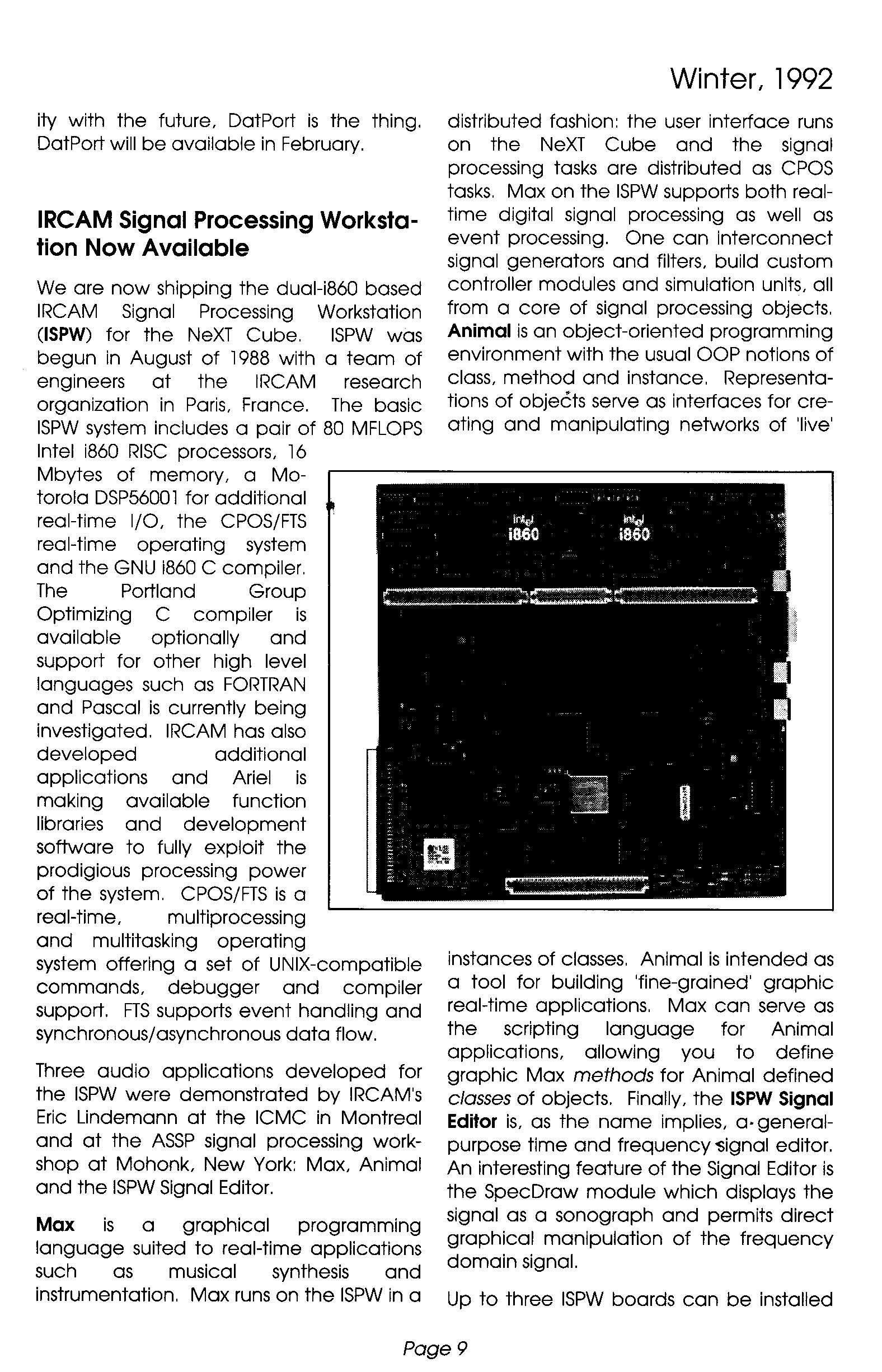
---
## [SINGmaster Android App uses TarsosDSP](https://0110.be/posts/SINGmaster_Android_App_uses_TarsosDSP.md)
- Published: 2015-04-24T00:00:00Z
- Updated: 2015-07-10T12:09:11Z
- Author: Joren
- ID: 431
- Canonical: https://0110.be/posts/SINGmaster_Android_App_uses_TarsosDSP
- Tags: [Code](https://0110.be/tags/Code.md), [Java](https://0110.be/tags/Java.md), [Muziek](https://0110.be/tags/Muziek.md), [TarsosDSP](https://0110.be/tags/TarsosDSP.md), [UGent](https://0110.be/tags/UGent.md)
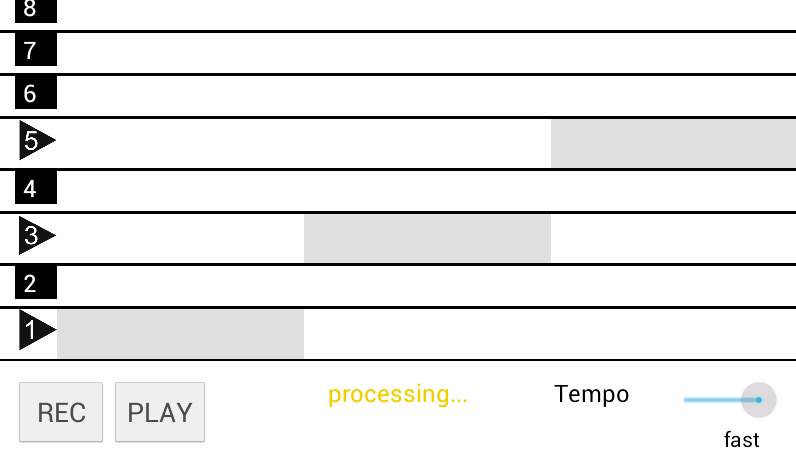
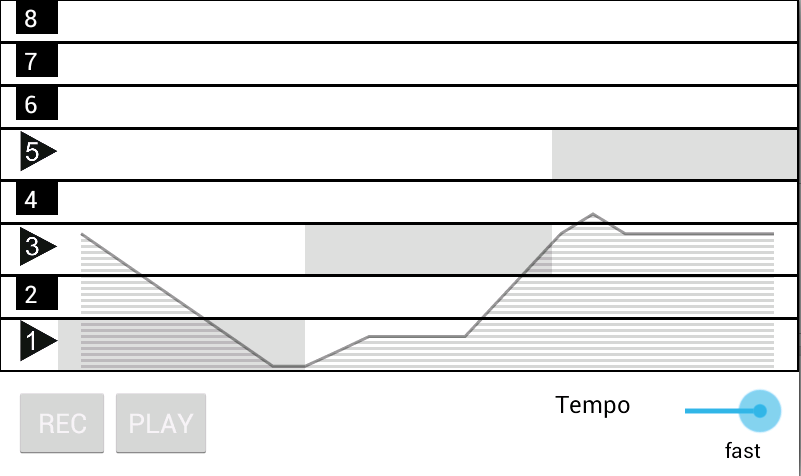
TarsosDSP is a real-time audio processing library written in Java. Since version 2.0 it is compatible with Android. Judging by the number of forks of the [TarsosDSP GitHub repository](https://github.com/JorenSix/TarsosDSP) Android compatibility increased the popularity of the library. Now the first Android application which uses TarsosDSP has found its way to the Google Play store. Download and play with [SINGmaster](https://play.google.com/store/apps/details?id=bg.singmaster.gui) to see an application of the pitch tracking capabilities within TarsosDSP. The SINGmaster description:
> *"SING master is a smart phone app that helps you to learn how to sing. SING master presents a collection of practical exercises (on the most important building blocks of melodies). Colours and sounds guide you in the exercise. After recording, SING master gives visual feedback : you can see and hear your voice. This is important so that you can identify where your mistakes are."*
Another application in the Play Store that uses TarsosDSP is [CuePitcher](https://play.google.com/store/apps/details?id=io.github.mindosoft.cuepitcher).
- [singmaster\_logo.png](https://0110.be/files/attachments/431/singmaster_logo.png)
---
## [Text to Speech to Speech Recognition - Am I Sitting in a Room?](https://0110.be/posts/Text_to_Speech_to_Speech_Recognition_-_Am_I_Sitting_in_a_Room%3F.md)
- Published: 2012-03-24T00:00:00Z
- Updated: 2013-12-05T18:19:15Z
- Author: Joren
- ID: 324
- Canonical: https://0110.be/posts/Text_to_Speech_to_Speech_Recognition_-_Am_I_Sitting_in_a_Room%3F
- Tags: [0110.be](https://0110.be/tags/0110.be.md), [Code](https://0110.be/tags/Code.md), [Hackerspace Ghent](https://0110.be/tags/Hackerspace%20Ghent.md), [Muziek](https://0110.be/tags/Muziek.md), [Poging tot humor](https://0110.be/tags/Poging%20tot%20humor.md), [Projecten](https://0110.be/tags/Projecten.md)
This post is about a hack I did for the 2012 [Amsterdam music hack days](http://amsterdam.musichackday.org/2012/index.php?page=Main+page). From the website:
> The Amsterdam Music Hack Day is a full weekend of hacking in which participants will conceptualize, create and present their projects. Music + software + mobile + hardware + art + the web. Anything goes as long as it's music related
The hackathon was organized at the NiMK(Nederlands instituut voor Media Kunst) the 25th and 24th of May. My hack tries to let a phone start a conversation on its own. It does this by speaking a text and listening to the spoken text with speech recognition. The speech recognition introduces all kinds of interesting permutations of the original text. The recognized text is spoken again and so a dreamlike, unique nonsensical discussion starts. It lets you hear what goes on in the mind of the phone.
The idea is based on Alvin Lucier's *I am Sitting in a Room* form 1969 which is embedded below. He used analogue tapes to generate a similar recursive loop. It is a better implementation of [something I did a couple of years ago](http://0110.be/artikels/lees/Text_To_Speech_Recognition).
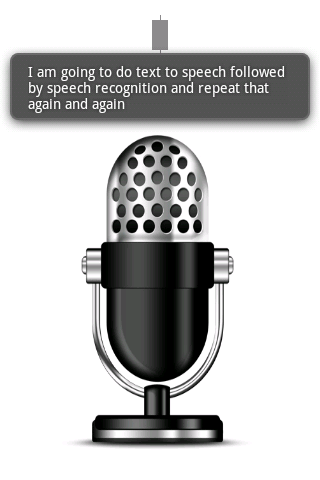
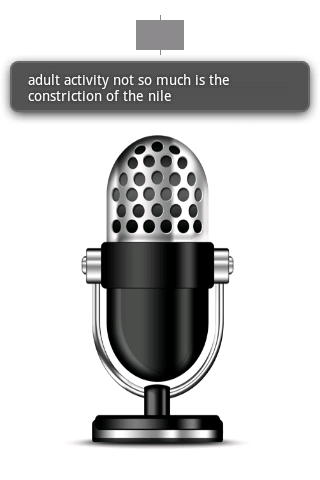
The implementation is done with Android and its API's. Both speech recognition and text to speech are available on android. Those API's are used and a user interface shows the recognized text. An example of a session can be found below:
To install the application you can download "Tryalogue.apk":\[Tryalogue.apk\] of use the QR-code below. You need Android 2.3 with Voice Recognition and TTS installed. Also needed is an internet connection. "The source":\[Tryalogue.zip\] is also up for grabs.
- [screenshot.png](https://0110.be/files/attachments/324/screenshot.png)
- [Tryalogue.apk](https://0110.be/files/attachments/324/Tryalogue.apk)
- [Tryalogue.zip](https://0110.be/files/attachments/324/Tryalogue.zip)
- [apk.png](https://0110.be/files/attachments/324/apk.png)
---
## [YIN Pitch Tracker in JAVA](https://0110.be/posts/YIN_Pitch_Tracker_in_JAVA.md)
- Published: 2010-04-09T00:00:00Z
- Updated: 2020-11-17T09:04:25Z
- Author: Joren
- ID: 66
- Canonical: https://0110.be/posts/YIN_Pitch_Tracker_in_JAVA
- Tags: [0110.be](https://0110.be/tags/0110.be.md), [Code](https://0110.be/tags/Code.md), [Cultuur](https://0110.be/tags/Cultuur.md), [Muziek](https://0110.be/tags/Muziek.md), [Projecten](https://0110.be/tags/Projecten.md)
To make [Tarsos](http://0110.be/) more portable I wrote a pitch tracker in pure JAVA using the [YIN algorithm](http://recherche.ircam.fr/equipes/pcm/cheveign/ps/2002_JASA_YIN_proof.pdf) based on the implementation in C of [aubio](http://aubio.org). The implementation also uses some code written by Karl Helgasson and Teun de Lange of the [Jazzperiments project](http://www.jazzperiments.com/jazzperiments.html).
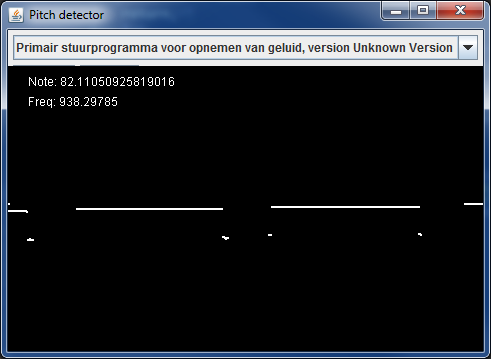
It can be used to perform real time pitch detection or to analyse files. To use it as a real time pitch detector just start the "JAR-file":\[pitch_detector_yin.jar\] by double clicking. To analyse a file execute one of the following. The first results in a list of annotations (text), the second shows the annotations graphically.
\`\`\`ruby\
java -jar pitch_detector_yin.jar flute.novib.mf.C5B5.wav\
java -jar pitch_detector_yin.jar ---file flute.novib.mf.C5B5.wav\
\`\`\`
The provided "flute sample":\[flute.novib.mf.C5B5.wav\] is from [*The Musical Samples* library of the University of Iowa](http://theremin.music.uiowa.edu/MIS.html) and converted to mono wav. The source code of the pitch tracker can be found below.
**Update:** the Yin implementation in Java has been incorporated into the [TarsosDSP project](https://github.com/JorenSix/TarsosDSP). An open source, Real-Time Audio Processing Framework in Java.
- [pitch\_detector\_yin.jar](https://0110.be/files/attachments/66/pitch_detector_yin.jar)
- [pitch\_detector\_yin\_src.zip](https://0110.be/files/attachments/66/pitch_detector_yin_src.zip)
- [flute.novib.mf.C5B5.wav](https://0110.be/files/attachments/66/flute.novib.mf.C5B5.wav)
---
## [Collaborative Filtering: Onderzoek & implementatie](https://0110.be/posts/Collaborative_Filtering%3A_Onderzoek_%26_implementatie.md)
- Published: 2008-06-13T00:00:00Z
- Updated: 2013-12-05T18:19:15Z
- Author: Joren
- ID: 108
- Canonical: https://0110.be/posts/Collaborative_Filtering%3A_Onderzoek_%26_implementatie
- Tags: [0110.be](https://0110.be/tags/0110.be.md), [Code](https://0110.be/tags/Code.md), [Collaborative Filtering](https://0110.be/tags/Collaborative%20Filtering.md), [Cultuur](https://0110.be/tags/Cultuur.md), [Jazz](https://0110.be/tags/Jazz.md), [Muziek](https://0110.be/tags/Muziek.md), [School](https://0110.be/tags/School.md), [Thesis](https://0110.be/tags/Thesis.md), [Vooruit](https://0110.be/tags/Vooruit.md)

Gisteren werd de laatste hand gelegd aan de thesis over collaborative filtering (CF) waar Greet Dolvelde en ikzelf een jaar mee bezig zijn geweest. Als je hier meer over wilt weten dan kan je het werk "Collaborative Filtering: Onderzoek & implementatie \[pdf\]":\[collaborative_filtering_onderzoek_en_implementatie.pdf\] downloaden. De intiemste details van verschillende CF-benaderingen worden er in geuren en kleuren uit de doeken gedaan. Uit de poster zou moeten duidelijk zijn waarover de thesis eigenlijk gaat:
De poster is ook "verkrijgbaar in pdf-formaat":\[poster.pdf\].
- [vooruit\_logo.png](https://0110.be/files/attachments/108/vooruit_logo.png)
- [poster.png](https://0110.be/files/attachments/108/poster.png)
- [poster.pdf](https://0110.be/files/attachments/108/poster.pdf)
- [poster-klein.png](https://0110.be/files/attachments/108/poster-klein.png)
- [thesis.pdf](https://0110.be/files/attachments/108/thesis.pdf)
- [collaborative\_filtering\_onderzoek\_en\_implementatie.pdf](https://0110.be/files/attachments/108/collaborative_filtering_onderzoek_en_implementatie.pdf)
---
## [Stage bij kunstencentrum Vooruit](https://0110.be/posts/Stage_bij_kunstencentrum_Vooruit.md)
- Published: 2007-05-22T00:00:00Z
- Updated: 2013-12-05T18:19:15Z
- Author: Joren
- ID: 191
- Canonical: https://0110.be/posts/Stage_bij_kunstencentrum_Vooruit
- Tags: [0110.be](https://0110.be/tags/0110.be.md), [Code](https://0110.be/tags/Code.md), [Cultuur](https://0110.be/tags/Cultuur.md), [Muziek](https://0110.be/tags/Muziek.md), [School](https://0110.be/tags/School.md), [Thesis](https://0110.be/tags/Thesis.md), [Vooruit](https://0110.be/tags/Vooruit.md)

Kunstencentrum Vooruit heeft sinds kort een nieuwe site opgericht. Aan de site is een community luik gekoppeld waarop gebruikers een profiel kunnen aanmaken en evenementen op een persoonlijke wishlist kunnen plaatsen. Daarnaast kunnen ze er ook tickets voor voorstellingen kopen. Ook kunnen de gebruikers relaties tussen zichzelf en vrienden leggen.
Aan de hand van die gegevens en de gegevens van in het back-office systeem zou het mogelijk moeten zijn om een cultureel profiel op te stellen van de gebruikers en ze gepersonaliseerde, relevante tips geven. De voordelen van zo'n Customer Intelligence systeem zijn legio:
- Kunstencentrum Vooruit leert zijn klanten beter kennen
- De klanten krijgen gepersonaliseerde tips en hierdoor wordt hun culturele interesse geprikkeld
- Trends kunnen makkelijker ontdekt worden
- Er kan gerichter reclame gevoerd worden
- ...
En dat C.I. systeem gaan wij volgend jaar ontwikkelen. Er zal een uitgebreid onderzoek gebeuren naar de manier waarop en daarna wordt een implementatie gekoppeld met de in Ruby on Rails ontwikkelde website.
---
## [Muzieksmaak in een grafiekje](https://0110.be/posts/Muzieksmaak_in_een_grafiekje.md)
- Published: 2007-05-10T00:00:00Z
- Updated: 2013-12-05T18:19:15Z
- Author: Joren
- ID: 187
- Canonical: https://0110.be/posts/Muzieksmaak_in_een_grafiekje
- Tags: [0110.be](https://0110.be/tags/0110.be.md), [Cultuur](https://0110.be/tags/Cultuur.md), [Jazz](https://0110.be/tags/Jazz.md), [Muziek](https://0110.be/tags/Muziek.md)
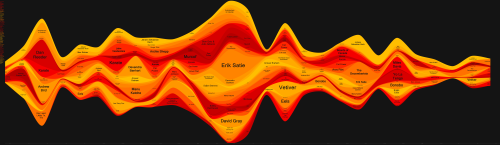
Dit is een grafiekje waarop je de evolutie van mijn muziekale smaak kan zien tijdens de voorbije twee jaar. De dikte van de stroom toont de populariteit tijdens die periode aan. Onderaan staat er in het klein een tijdslijn. Klik voor de (erg) grote versie.


 TarsosDSP is a real-time audio processing library written in Java. Since version 2.0 it is compatible with Android. Judging by the number of forks of the [TarsosDSP GitHub repository](https://github.com/JorenSix/TarsosDSP) Android compatibility increased the popularity of the library. Now the first Android application which uses TarsosDSP has found its way to the Google Play store. Download and play with [SINGmaster](https://play.google.com/store/apps/details?id=bg.singmaster.gui) to see an application of the pitch tracking capabilities within TarsosDSP. The SINGmaster description:
> *"SING master is a smart phone app that helps you to learn how to sing. SING master presents a collection of practical exercises (on the most important building blocks of melodies). Colours and sounds guide you in the exercise. After recording, SING master gives visual feedback : you can see and hear your voice. This is important so that you can identify where your mistakes are."*
Another application in the Play Store that uses TarsosDSP is [CuePitcher](https://play.google.com/store/apps/details?id=io.github.mindosoft.cuepitcher).


- [singmaster\_logo.png](https://0110.be/files/attachments/431/singmaster_logo.png)
---
## [Text to Speech to Speech Recognition - Am I Sitting in a Room?](https://0110.be/posts/Text_to_Speech_to_Speech_Recognition_-_Am_I_Sitting_in_a_Room%3F.md)
- Published: 2012-03-24T00:00:00Z
- Updated: 2013-12-05T18:19:15Z
- Author: Joren
- ID: 324
- Canonical: https://0110.be/posts/Text_to_Speech_to_Speech_Recognition_-_Am_I_Sitting_in_a_Room%3F
- Tags: [0110.be](https://0110.be/tags/0110.be.md), [Code](https://0110.be/tags/Code.md), [Hackerspace Ghent](https://0110.be/tags/Hackerspace%20Ghent.md), [Muziek](https://0110.be/tags/Muziek.md), [Poging tot humor](https://0110.be/tags/Poging%20tot%20humor.md), [Projecten](https://0110.be/tags/Projecten.md)
TarsosDSP is a real-time audio processing library written in Java. Since version 2.0 it is compatible with Android. Judging by the number of forks of the [TarsosDSP GitHub repository](https://github.com/JorenSix/TarsosDSP) Android compatibility increased the popularity of the library. Now the first Android application which uses TarsosDSP has found its way to the Google Play store. Download and play with [SINGmaster](https://play.google.com/store/apps/details?id=bg.singmaster.gui) to see an application of the pitch tracking capabilities within TarsosDSP. The SINGmaster description:
> *"SING master is a smart phone app that helps you to learn how to sing. SING master presents a collection of practical exercises (on the most important building blocks of melodies). Colours and sounds guide you in the exercise. After recording, SING master gives visual feedback : you can see and hear your voice. This is important so that you can identify where your mistakes are."*
Another application in the Play Store that uses TarsosDSP is [CuePitcher](https://play.google.com/store/apps/details?id=io.github.mindosoft.cuepitcher).


- [singmaster\_logo.png](https://0110.be/files/attachments/431/singmaster_logo.png)
---
## [Text to Speech to Speech Recognition - Am I Sitting in a Room?](https://0110.be/posts/Text_to_Speech_to_Speech_Recognition_-_Am_I_Sitting_in_a_Room%3F.md)
- Published: 2012-03-24T00:00:00Z
- Updated: 2013-12-05T18:19:15Z
- Author: Joren
- ID: 324
- Canonical: https://0110.be/posts/Text_to_Speech_to_Speech_Recognition_-_Am_I_Sitting_in_a_Room%3F
- Tags: [0110.be](https://0110.be/tags/0110.be.md), [Code](https://0110.be/tags/Code.md), [Hackerspace Ghent](https://0110.be/tags/Hackerspace%20Ghent.md), [Muziek](https://0110.be/tags/Muziek.md), [Poging tot humor](https://0110.be/tags/Poging%20tot%20humor.md), [Projecten](https://0110.be/tags/Projecten.md)
 This post is about a hack I did for the 2012 [Amsterdam music hack days](http://amsterdam.musichackday.org/2012/index.php?page=Main+page). From the website:
> The Amsterdam Music Hack Day is a full weekend of hacking in which participants will conceptualize, create and present their projects. Music + software + mobile + hardware + art + the web. Anything goes as long as it's music related
The hackathon was organized at the NiMK(Nederlands instituut voor Media Kunst) the 25th and 24th of May. My hack tries to let a phone start a conversation on its own. It does this by speaking a text and listening to the spoken text with speech recognition. The speech recognition introduces all kinds of interesting permutations of the original text. The recognized text is spoken again and so a dreamlike, unique nonsensical discussion starts. It lets you hear what goes on in the mind of the phone.
The idea is based on Alvin Lucier's *I am Sitting in a Room* form 1969 which is embedded below. He used analogue tapes to generate a similar recursive loop. It is a better implementation of [something I did a couple of years ago](http://0110.be/artikels/lees/Text_To_Speech_Recognition).
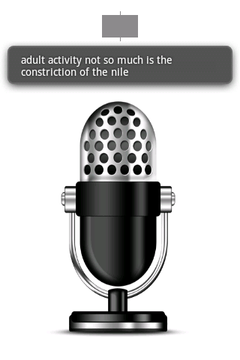
The implementation is done with Android and its API's. Both speech recognition and text to speech are available on android. Those API's are used and a user interface shows the recognized text. An example of a session can be found below:
To install the application you can download "Tryalogue.apk":\[Tryalogue.apk\] of use the QR-code below. You need Android 2.3 with Voice Recognition and TTS installed. Also needed is an internet connection. "The source":\[Tryalogue.zip\] is also up for grabs.
This post is about a hack I did for the 2012 [Amsterdam music hack days](http://amsterdam.musichackday.org/2012/index.php?page=Main+page). From the website:
> The Amsterdam Music Hack Day is a full weekend of hacking in which participants will conceptualize, create and present their projects. Music + software + mobile + hardware + art + the web. Anything goes as long as it's music related
The hackathon was organized at the NiMK(Nederlands instituut voor Media Kunst) the 25th and 24th of May. My hack tries to let a phone start a conversation on its own. It does this by speaking a text and listening to the spoken text with speech recognition. The speech recognition introduces all kinds of interesting permutations of the original text. The recognized text is spoken again and so a dreamlike, unique nonsensical discussion starts. It lets you hear what goes on in the mind of the phone.
The idea is based on Alvin Lucier's *I am Sitting in a Room* form 1969 which is embedded below. He used analogue tapes to generate a similar recursive loop. It is a better implementation of [something I did a couple of years ago](http://0110.be/artikels/lees/Text_To_Speech_Recognition).
The implementation is done with Android and its API's. Both speech recognition and text to speech are available on android. Those API's are used and a user interface shows the recognized text. An example of a session can be found below:
To install the application you can download "Tryalogue.apk":\[Tryalogue.apk\] of use the QR-code below. You need Android 2.3 with Voice Recognition and TTS installed. Also needed is an internet connection. "The source":\[Tryalogue.zip\] is also up for grabs.
](https://0110.be/files/attachments/187/smaak.png)