---
title: Posts tagged Presentation
canonical: https://0110.be/tags/Presentation
markdown_url: https://0110.be/tags/Presentation.md
page: 0
posts_per_page: 30
total_posts: 42
filters:
tag: Presentation
previous:
next: https://0110.be/tags/Presentation.md?page=1
---
# Posts tagged Presentation
## [Sampo-UI 4.0 released at SEMANTiCS 2026](https://0110.be/posts/Sampo-UI_4.0_released_at_SEMANTiCS_2026.md)
- Published: 2026-09-16T00:00:00Z
- Updated: 2026-09-16T13:08:21Z
- Author: Joren
- ID: 585
- Canonical: https://0110.be/posts/Sampo-UI_4.0_released_at_SEMANTiCS_2026
- Tags: [Presentation](https://0110.be/tags/Presentation.md), [UGent](https://0110.be/tags/UGent.md)
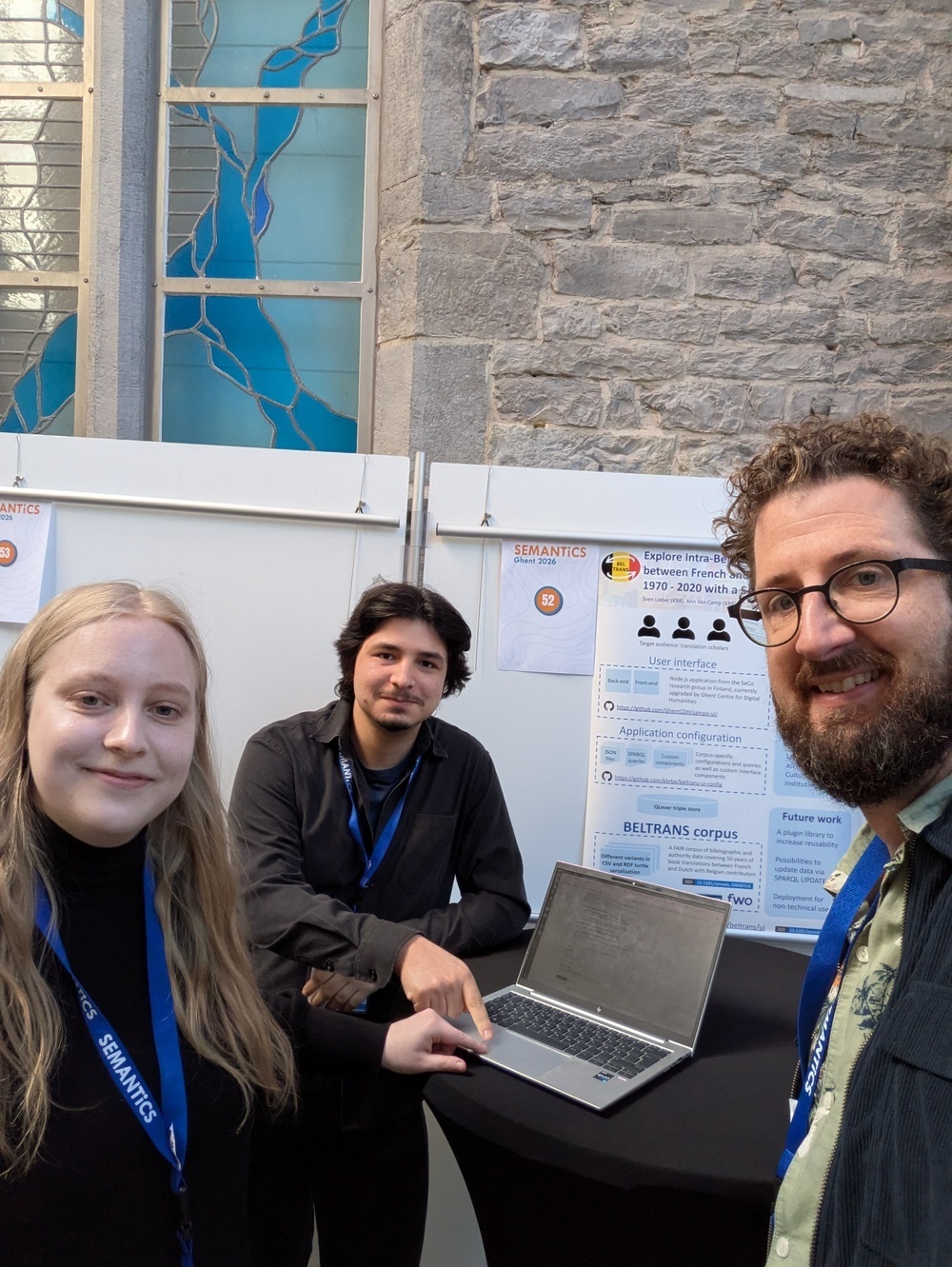
Sampo-UI 4 was officially released at the SEMANTiCS conference in Ghent. Together with Jahid Chetti, Heikki, Annastiina Ahola and Frederic Lamsens, we worked on bringing the GhentCDH fork back into the [main Sampo-UI repository](https://github.com/SemanticComputing/sampo-ui).
The release includes an updated software stack, a clearer separation between the shared core and project-specific configuration, and a new plug-in system. These changes make it easier to reuse components across projects and keep portals up to date.
The GhentCDH fork has now been merged upstream. Our work continues as part of the shared Sampo-UI project, in collaboration with the original SeCo team.
For more on the changes and their use in our projects, see [Sampo-UI Meets Ontop](https://0110.be/posts/Sampo-UI_Meets_Ontop%3A_Publishing_Relational_Digital_Humanities_Data_-_Semantics_2026).
```
---
## [Explore Intra-Belgian book translation flows with a SAMPO-UI](https://0110.be/posts/Explore_Intra-Belgian_book_translation_flows_with_a_SAMPO-UI.md)
- Published: 2026-09-16T00:00:00Z
- Updated: 2026-09-16T08:10:58Z
- Author: Joren
- ID: 584
- Canonical: https://0110.be/posts/Explore_Intra-Belgian_book_translation_flows_with_a_SAMPO-UI
- Tags: [Presentation](https://0110.be/tags/Presentation.md), [Projecten](https://0110.be/tags/Projecten.md), [Research papers](https://0110.be/tags/Research%20papers.md), [UGent](https://0110.be/tags/UGent.md)
Another contribution presented at the [SEMANTiCS conference](https://2026-eu.semantics.cc/) in Ghent was a Sampo-UI portal for the BELTRANS project. I made a small contribution to the software and the paper, working with colleagues at KBR, the Royal Library of Belgium.
> *[Explore Intra-Belgian book translation flows with a SAMPO-UI](https://0110.be/files/attachments/584/BELTRANS_SAMPO.pdf)*, Sven Lieber¹, Ann Van Camp¹, Joren Six², Julie M. Birkholz¹ ²
> ¹ KBR — Royal Library of Belgium
> ² Ghent University, Department of History & Ghent Centre for Digital Humanities
The BELTRANS project studied book translations between Dutch and French from 1970 to 2020, involving at least one Belgian author, scenarist, illustrator or editor. The resulting dataset brings together publication metadata from different libraries. Making these data available is one thing; making them easy to explore is another.
The [BELTRANS portal](https://w3id.org/kbr/beltrans/ui) uses Sampo-UI to let researchers filter publications, browse authors and publishers, explore maps and download selected data as CSV. It uses the modernized Sampo-UI core described in my [Sampo-UI Meets Ontop post](https://0110.be/posts/Sampo-UI_Meets_Ontop%3A_Publishing_Relational_Digital_Humanities_Data_-_Semantics_2026). Here, the data are served by QLever, a graph database with a SPARQL endpoint. The same interface components find another use, this time for translation history.
> **Abstract**: *In the field of Big Translation History, (historical) book translation flows are studied based on publication metadata. This research data is often kept internally or only provided as domain-specific MARC21 records, a standard library format. Within the recently completed BELTRANS project, we created a large integrated data corpus of worldwide translations between Dutch and French between 1970 and 2020, where at least one Belgian was involved as author, scenarist, illustrator or editor, to study intra-belgian book translation flows, and published the corpus as FAIR data. In this paper we present the SAMPO-UI-based platform that can be used by non-technical users to explore the underlying BELTRANS Linked Data corpus. The off-the-shelf software SAMPO-UI was configured to build a user interface allowing the exploration of our data related to book publications, authors, publishers and linked temporal and geospatial information. The different search perspectives, filters and visualizations enable researchers to explore the corpus or download self-chosen subsets, without having to process the large underlying data dumps. Both the application and corpus data are opened up in a sustainable way, i.e. besides deposits at research repositories, the application is hosted in the long term at the Royal Library of Belgium (KBR) and the integrated data is equipped with provenance information allowing to click-through to the related metadata records at different national libraries. Future work can extend the application itself with novel visualization techniques or different download formats if necessary. Also, this application can serve as a role model to inspire other researchers to distribute their corpora as Linked Data and via such a SAMPO-UI platform.*
The [BELTRANS corpus](https://doi.org/10.5281/zenodo.20668316) and the [portal configuration](https://github.com/kbrbe/beltrans-ui-config) are available for reuse.
---
## [Sampo-UI Meets Ontop: Publishing Relational Digital Humanities Data - Semantics 2026](https://0110.be/posts/Sampo-UI_Meets_Ontop%3A_Publishing_Relational_Digital_Humanities_Data_-_Semantics_2026.md)
- Published: 2026-09-16T00:00:00Z
- Updated: 2026-09-16T07:46:02Z
- Author: Joren
- ID: 582
- Canonical: https://0110.be/posts/Sampo-UI_Meets_Ontop%3A_Publishing_Relational_Digital_Humanities_Data_-_Semantics_2026
- Tags: [Code](https://0110.be/tags/Code.md), [GhentCDH](https://0110.be/tags/GhentCDH.md), [Presentation](https://0110.be/tags/Presentation.md), [UGent](https://0110.be/tags/UGent.md)
The [SEMANTiCS conference](https://2026-eu.semantics.cc/) took place in Ghent from 15 to 17 September 2026. Our contribution was a collaboration between GhentCDH and the Semantic Computing Research Group at Aalto University on publishing humanities data with Sampo-UI and Ontop.
> *[Sampo-UI Meets Ontop: Publishing Relational Digital Humanities Data on the Semantic Web](https://0110.be/files/attachments/582/semantics-poster-sampo-ui.pdf)*, Joren Six¹, Jahid Chetti¹, Annastiina Ahola², Frederic Lamsens¹, Heikki Rantala², Eero Hyvönen²
> ¹ Ghent University, Ghent Centre for Digital Humanities ([GhentCDH](https://www.ghentcdh.ugent.be))
> ² Aalto University, Department of Computer Science, Semantic Computing Research Group ([SeCo](https://seco.cs.aalto.fi))
At GhentCDH, we often publish research datasets in the digital humanities. Several projects need similar search filters, map visualizations and data exports. Sampo-UI makes it possible to reuse these components when the data is available as Linked Data. In collaboration with the original Sampo-UI team, we worked on modernizing the framework. Our first contribution separates the shared core from project-specific configuration, making updates and reuse more manageable. The second uses Ontop to expose existing *relational databases* through a SPARQL endpoint. This lets us use Sampo-UI while keeping the database infrastructure and tooling we already have. Having one fewer database system to maintain is welcome.
> **Abstract**: *The Sampo model and its Sampo-UI framework have become an established approach for publishing Cultural Heritage and Digital Humanities data on the Semantic Web. Sampo-UI enables exploration of data originating from SPARQL endpoints through faceted search across multiple views with seamlessly integrated visualization and data analytic tools. Here, we present two contributions to the Sampo-UI ecosystem: (i) a separation of Sampo-UI core from application-specific configuration; decoupling core and application simplifies updates and facilitates reuse of efforts, and (ii) the use of Ontop --- a virtual knowledge graph system --- to expose relational databases through a SPARQL endpoint and Sampo-UI. The use of relational databases and reuse of tooling and expertise around relational databases lower the operational burden of publishing small-to-medium-sized datasets typical of digital humanities projects. These contributions originated outside the original Sampo-UI team but were developed in collaboration with it, and are being prepared for upstream integration. We illustrate the approach with two projects at Ghent University: one on Roman coin finds in Belgium (NuMAD) and one on historic Belgian company data (BelHisFirm). Both portals run the same Sampo-UI core with a different configuration, and operate on existing institutional relational database infrastructure without a dedicated graph database.*
The demo below shows the NuMAD portal for exploring Roman coin finds in Belgium through the modernized Sampo-UI. Another [demo presents historical records of Belgian companies](https://0110.be/files/attachments/582/belhisfirm_demo.mp4) through the BelHisFirm portal. Both portals run the same Sampo-UI core with different configurations, demonstrating the flexibility of the system.
Alongside the [Sampo-UI Meets Ontop paper](https://0110.be/files/attachments/582/sampo-ui_ontop-semantics_2026.pdf), a [conference poster on Sampo-UI](https://0110.be/files/attachments/582/semantics-poster-sampo-ui.pdf) that I prepared is also available.
Video: NuMAD — exploring Roman coin finds in Belgium.
---
## [ Introduction to Sampo-UI at FedOSC Linked Open Data Visualisation Workshop](https://0110.be/posts/_Introduction_to_Sampo-UI_at_FedOSC_Linked_Open_Data_Visualisation_Workshop.md)
- Published: 2026-09-08T00:00:00Z
- Updated: 2026-09-08T12:02:58Z
- Author: Joren
- ID: 583
- Canonical: https://0110.be/posts/_Introduction_to_Sampo-UI_at_FedOSC_Linked_Open_Data_Visualisation_Workshop
- Tags: [GhentCDH](https://0110.be/tags/GhentCDH.md), [Presentation](https://0110.be/tags/Presentation.md), [UGent](https://0110.be/tags/UGent.md)
FedOSC, the Belgian Federal Open Science Cloud, supports open science and research data management at Belgium's federal scientific institutions. On 8 September 2026, it organised a [day on data visualisation and Linked Open Data](https://fedosc.miraheze.org/wiki/Events/DataViz) at KIK-IRPA in Brussels, with talks, demos and a approaches on cultural heritage datasets.
My contribution to the closing talks was an introduction to Sampo-UI, an open-source framework for building search and visualisation interfaces on top of Linked Open Data. I explained why we use it at the Ghent Centre for Digital Humanities: several projects need similar filters, maps and data exports, so it makes sense to reuse a common framework. The presentation covers how Sampo-UI works, our contributions to it, and a practical example with the NuMAD coin database.
The [Sampo-UI presentation](https://0110.be/attachment/cors/2026.09.08-sampo-ui-fedosc-brussels/index.html) is available online and embedded below.
---
## [Guest lecture on \`Music Information Retrieval - Opportunities for digital musicology'](https://0110.be/posts/Guest_lecture_on_%60Music_Information_Retrieval_-_Opportunities_for_digital_musicology%27.md)
- Published: 2025-11-13T00:00:00Z
- Updated: 2025-11-13T11:19:36Z
- Author: Joren
- ID: 572
- Canonical: https://0110.be/posts/Guest_lecture_on_%60Music_Information_Retrieval_-_Opportunities_for_digital_musicology%27
- Tags: [Presentation](https://0110.be/tags/Presentation.md), [UGent](https://0110.be/tags/UGent.md)
This morning I gave a guest lecture introducing the field of music information retrieval to musicology students at Ghent University. Next to the more general MIR intro, two specific topics are fleshed out: duplicate detection and pitch patterns in music around the world. Two topic I have been working on before.
The presentation has the form of an interactive website via [reveal.js](https://revealjs.com/). It features a couple of slides which are full-blown applications or have an interactive sound visualization component. Please do try out the slides and check the [Music Information Retrieval - Opportunities for digital musicology](https://0110.be/attachment/cors/2025.11.MIR-Intro/index.html) presentation or try it below.
- [MIR\_intro.pdf](https://0110.be/files/attachments/572/MIR_intro.pdf)
---
## [GhentCDH at the Faculty Research Day](https://0110.be/posts/GhentCDH_at_the_Faculty_Research_Day.md)
- Published: 2024-11-27T00:00:00Z
- Updated: 2024-11-27T10:07:51Z
- Author: Joren
- ID: 551
- Canonical: https://0110.be/posts/GhentCDH_at_the_Faculty_Research_Day
- Tags: [GhentCDH](https://0110.be/tags/GhentCDH.md), [Presentation](https://0110.be/tags/Presentation.md), [UGent](https://0110.be/tags/UGent.md)
The [research day of the faculty of Arts and Philosophy of Ghent University](https://www.lwresearchday.ugent.be/) took place last November. The theme of the day was ‘*From Source to Understanding*’ and the program gave an overview of the breadth of research at our faculty with topics as logic, history, archeology, chemistry, geography, language studies, ... There were several contributions by our group: the Ghent Center for Digital Humanities. The contribution by me and my close colleagues [was a poster about a reusable text annotation](https://0110.be/files/attachments/551/poster_text_annotation.webp) building block.
Fig: Poster on a text annotation component.
At GhentCDH we support several text annotation projects and have extracted a text annotation component for reuse. The abstract reads:
> "*Text annotation is essential for analyzing ancient texts, identifying entities in texts, or documenting evolving grammar. There is a need for reusable annotation methods which copes with challenges such as overlapping annotations, filtering annotation types, and enabling large-scale collaboration and computational analysis on text annotation work.*
>
> *We present a reusable text annotation component built with TypeScript and Vue 3. It provides an intuitive interface for creating, visualizing, and editing annotations, it allows component users to enrich annotations with complex metadata, and facilitates flexible annotation filtering. This solution meets many needs of researchers in digital humanities and ancient language studies and will be used in several GhentCDH projects.*"
Get more info, try it out and use it in your project by checking the [text annotator source code repository](https://github.com/GhentCDH/vue_component_annotated_text).
---
## [ISMIR 2020 - Virtual Conference](https://0110.be/posts/ISMIR_2020_-_Virtual_Conference.md)
- Published: 2020-10-20T00:00:00Z
- Updated: 2025-11-29T14:33:11Z
- Author: Joren
- ID: 477
- Canonical: https://0110.be/posts/ISMIR_2020_-_Virtual_Conference
- Tags: [Command Line Application](https://0110.be/tags/Command%20Line%20Application.md), [Presentation](https://0110.be/tags/Presentation.md), [UGent](https://0110.be/tags/UGent.md)
From 11-16 October 2020 the latest instalment of the ISMIR conference series was held. Due to the pandemic, the 21st ISMIR conference was the first virtual one. As usual, participants and presenters from around the world joined the conference. For the first time, however, not all participants synchronised their circadian rhythm. By repeating most events with 12h in between, the organisers managed to put together a schedule befitting nearly all participants.
The virtual format had some clear advantages: travel was not needed, so (environmental) cost was low. Attendance fees were lower than usual since no spaces or catering was needed. This democratised the conference experience and attendance reached a record high.
The scientific program of the conference was impressive and varied. It is At the conferences Late Breaking/Demo session I presented [Olaf: Overly Lightweight Acoustic Fingerprinting](https://program.ismir2020.net/lbd_418.html).
---
## [LW Research Day 2019 on Digital Humanities](https://0110.be/posts/LW_Research_Day_2019_on_Digital_Humanities.md)
- Published: 2019-09-10T00:00:00Z
- Updated: 2019-10-03T08:53:08Z
- Author: Joren
- ID: 473
- Canonical: https://0110.be/posts/LW_Research_Day_2019_on_Digital_Humanities
- Tags: [Presentation](https://0110.be/tags/Presentation.md), [Research papers](https://0110.be/tags/Research%20papers.md), [UGent](https://0110.be/tags/UGent.md)
On the 9th of September 2019 the second [research day organized by the faculty of Arts and Philosophy of Ghent University](https://www.lwresearchday.ugent.be/) took place. The theme of the day was 'Digital Humanities' and [the program](https://www.lwresearchday.ugent.be/programme/) gave an overview of the breadth of research at our faculty with topics as logic, history, archeology, chemistry, geography
Together with Jeska, I presented an ongoing study on musical interaction. In the study one of the measurements was the body movement of two participants. This is done with boards that are equipped with weight sensors. The data that comes out of this can be inspected for synchronisation, quality and quantity of movement, movement periodicities.
The hardware is the work of Ivan Schepers, the software used to capture and transmit messages is called "the MIDImorphosis" and developed by me. The research is in collaboration with Jeska Buhman, Marc Leman and Alessandro Dell'Anna. An article with detailed findings is forthcoming.
---
## [AAWM/FMA 2019 - Birmingham ](https://0110.be/posts/AAWM%2FFMA_2019_-_Birmingham_.md)
- Published: 2019-07-02T00:00:00Z
- Updated: 2025-11-29T14:37:46Z
- Author: Joren
- ID: 471
- Canonical: https://0110.be/posts/AAWM%2FFMA_2019_-_Birmingham_
- Tags: [Folk Music Analysis (FMA) conference](https://0110.be/tags/Folk%20Music%20Analysis%20%28FMA%29%20conference.md), [Music Information Retrieval](https://0110.be/tags/Music%20Information%20Retrieval.md), [Presentation](https://0110.be/tags/Presentation.md), [Research papers](https://0110.be/tags/Research%20papers.md), [UGent](https://0110.be/tags/UGent.md)
I am currently in Birmingham, UK at the 2019 at the joint [Analytical Approaches to World Music (AAWM) and Folk Music Conference (FMA)](http://fma2019.bcu.ac.uk). The opening concert by the [RBC folk ensemble](https://www.youtube.com/watch?v=TxcMPWTlaaI) already provided the most lively and enthusiastic conference opening probably ever. Especially considering the early morning hour (9.30). At the conference, two studies will be presented on which I collaborated:
### Automatic comparison of human music, speech, and bird song suggests uniqueness of human scales
"Automatic comparison of human music, speech, and bird song suggests uniqueness of human scales":\[FMA2019_paper_12.pdf\] by Jiei Kuroyanagi, Shoichiro Sato, Meng-Jou Ho, Gakuto Chiba, Joren Six, Peter Pfordresher, Adam Tierney, Shinya Fujii and Patrick Savage
> The uniqueness of human music relative to speech and animal song has been extensively debated, but rarely directly measured. We applied an automated scale analysis algorithm to a sample of 86 recordings of human music, human speech, and bird songs from around the world. We found that human music throughout the world uniquely emphasized scales with small-integer frequency ratios, particularly a perfect 5th (3:2 ratio), while human speech and bird song showed no clear evidence of consistent scale-like tunings. We speculate that the uniquely human tendency toward scales with small-integer ratios may relate to the evolution of synchronized group performance among humans.
### Automatic comparison of global children's and adult songs
"Automatic comparison of global children's and adult songs":\[FMA2019_paper_13.pdf\] by Shoichiro Sato, Joren Six, Peter Pfordresher, Shinya Fujii and Patrick Savage
> Music throughout the world varies greatly, yet some musical features like scale structure display striking crosscultural similarities. Are there musical laws or biological constraints that underlie this diversity? The "vocal mistuning" hypothesis proposes that cross-cultural regularities in musical scales arise from imprecision in vocal tuning, while the integer-ratio hypothesis proposes that they arise from perceptual principles based on psychoacoustic consonance. In order to test these hypotheses, we conducted automatic comparative analysis of 100 children's and adult songs from throughout the world. We found that children's songs tend to have narrower melodic range, fewer scale degrees, and less precise intonation than adult songs, consistent with motor limitations due to their earlier developmental stage. On the other hand, adult and children's songs share some common tuning intervals at small-integer ratios, particularly the perfect 5th (\~3:2 ratio). These results suggest that some widespread aspects of musical scales may be caused by motor constraints, but also suggest that perceptual preferences for simple integer ratios might contribute to cross-cultural regularities in scale structure. We propose a "sensorimotor hypothesis" to unify these competing theories.
---
## [ISMIR 2018 Conference - Automatic Analysis Of Global Music Recordings suggests Scale Tuning Universals](https://0110.be/posts/ISMIR_2018_Conference_-_Automatic_Analysis_Of_Global_Music_Recordings__suggests_Scale_Tuning_Universals.md)
- Published: 2018-09-24T00:00:00Z
- Updated: 2019-07-03T13:46:15Z
- Author: Joren
- ID: 462
- Canonical: https://0110.be/posts/ISMIR_2018_Conference_-_Automatic_Analysis_Of_Global_Music_Recordings__suggests_Scale_Tuning_Universals
- Tags: [IPEM](https://0110.be/tags/IPEM.md), [ISMIR](https://0110.be/tags/ISMIR.md), [Music Information Retrieval](https://0110.be/tags/Music%20Information%20Retrieval.md), [Presentation](https://0110.be/tags/Presentation.md), [Research papers](https://0110.be/tags/Research%20papers.md), [UGent](https://0110.be/tags/UGent.md)
Thanks to the support of a travel grant by the faculty of Arts and Philosophy of Ghent University I was able to attend the ISMIR 2018 conference. A conference on Music Information Retrieval. I am co author on a contribution for the [the Late-Breaking / Demos session](http://ismir2018.ircam.fr/pages/events-lbd.html)
> The structure of musical scales has been proposed to reflect universal acoustic principles based on simple integer ratios. However, some studying tuning in small samples of non-Western cultures have argued that such ratios are not universal but specific to Western music. To address this debate, we applied an algorithm that could automatically analyze and cross-culturally compare scale tunings to a global sample of 50 music recordings, including both instrumental and vocal pieces. Although we found great cross-cultural diversity in most scale degrees, these preliminary results also suggest a strong tendency to include the simplest possible integer ratio within the octave (perfect fifth, 3:2 ratio, \~700 cents) in both Western and non-Western cultures. This suggests that cultural diversity in musical scales is not without limit, but is constrained by universal psycho-acoustic principles that may shed light on the evolution of human music.
- [musical\_scales\_extended\_abstract\_\_0826\_revision\_copy.pdf](https://0110.be/files/attachments/462/musical_scales_extended_abstract__0826_revision_copy.pdf)
- [animated\_logo.gif](https://0110.be/files/attachments/462/animated_logo.gif)
- [ismir\_2018\_logo.jpg](https://0110.be/files/attachments/462/ismir_2018_logo.jpg)
---
## [JNMR article - Beyond documentation – The digital philology of interaction heritage](https://0110.be/posts/JNMR_article_-_Beyond_documentation_%E2%80%93_The_digital_philology_of_interaction_heritage.md)
- Published: 2018-07-31T00:00:00Z
- Updated: 2018-09-26T13:13:46Z
- Author: Joren
- ID: 464
- Canonical: https://0110.be/posts/JNMR_article_-_Beyond_documentation_%E2%80%93_The_digital_philology_of_interaction_heritage
- Tags: [JNMR](https://0110.be/tags/JNMR.md), [Presentation](https://0110.be/tags/Presentation.md), [Research papers](https://0110.be/tags/Research%20papers.md), [UGent](https://0110.be/tags/UGent.md)
Marc Leman and myself have recently published an article in the Journal of New Music Research for a special issue on Digital Philology for Multimedia Cultural Heritage. Our contribution is titled [Beyond documentation -- The digital philology of interaction heritage](https://www.tandfonline.com/doi/abs/10.1080/09298215.2018.1479428)
> A philologist's approach to heritage is traditionally based on the curation of documents, such as text, audio and video. However, with the advent of interactive multimedia, heritage becomes floating and volatile, and not easily captured in documents. We propose an approach to heritage that goes beyond documents. We consider the crucial role of institutes for interactive multimedia (as motor of a living culture of interaction) and propose that the digital philologist's task will be to promote the collective/shared responsibility of (interactive) documenting, engage engineering in developing interactive approaches to heritage, and keep interaction-heritage alive through the education of citizens.
---
## [MIR Meetup Berlin - Acoustic Fingerprinting in Research](https://0110.be/posts/MIR_Meetup_Berlin_-_Acoustic_Fingerprinting_in_Research.md)
- Published: 2018-04-26T00:00:00Z
- Updated: 2025-11-29T14:40:22Z
- Author: Joren
- ID: 461
- Canonical: https://0110.be/posts/MIR_Meetup_Berlin_-_Acoustic_Fingerprinting_in_Research
- Tags: [Computational musicology](https://0110.be/tags/Computational%20musicology.md), [Presentation](https://0110.be/tags/Presentation.md), [UGent](https://0110.be/tags/UGent.md)
I was kindly invited by SoundCloud to give a presentation on "Acoustic fingerprinting in research". The presentation took place during one of the "MIR Meetups" in Berlin on Monday, April 23, 2018. Before my presentation there was a presentation by Derek and Josh (both SoundCloud engineers) detailing the state of the internal fingerprinting system of SoundCloud.
During my presentation I gave an overview of various applications of acoustic fingerprinting in a music research environment and detailed how these applications can be handled and are implemented in [Panako: an open source fingerprinting system](http://panako.be)
Below the slides used during the presentation can be found:
---
## [Engineering systematic musicology](https://0110.be/posts/Engineering_systematic_musicology.md)
- Published: 2018-02-02T00:00:00Z
- Updated: 2025-11-29T14:41:35Z
- Author: Joren
- ID: 460
- Canonical: https://0110.be/posts/Engineering_systematic_musicology
- Tags: [Presentation](https://0110.be/tags/Presentation.md), [UGent](https://0110.be/tags/UGent.md)
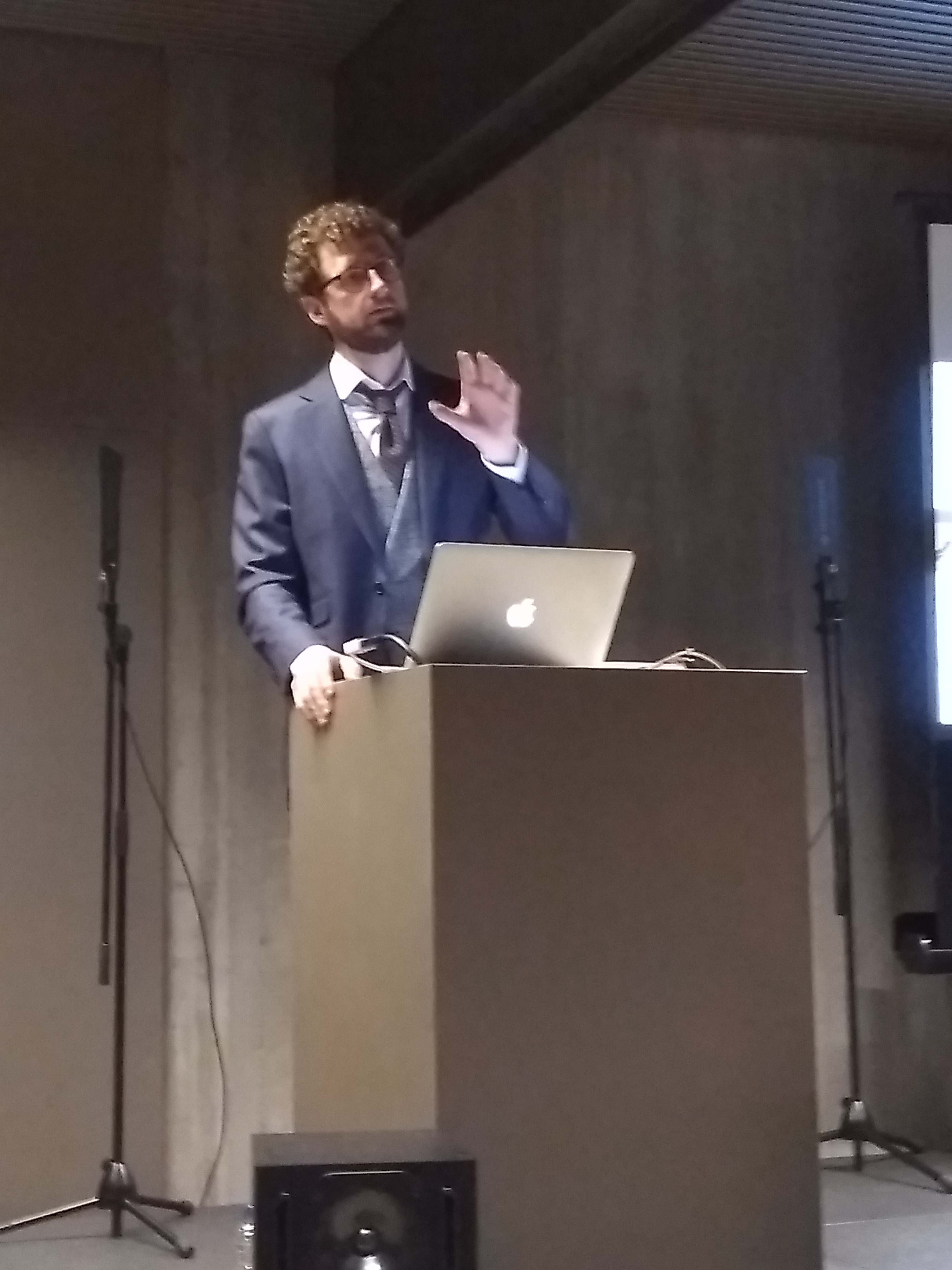
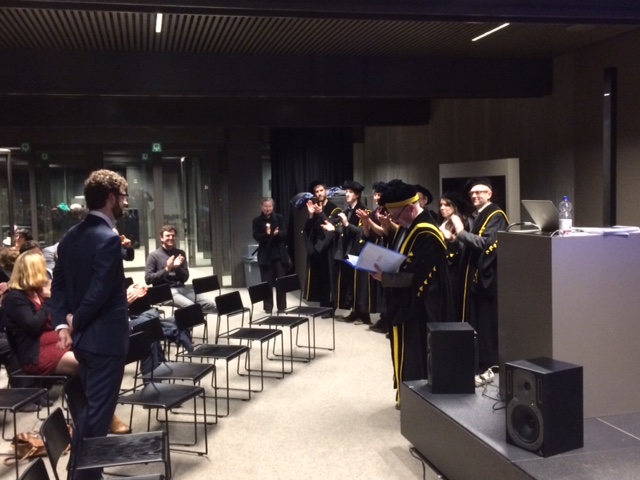
The 11th of January I successfully completed my PhD training under mentorship of Marc Leman with a public defense at [de Krook](http://dekrook.be) in Ghent.
I also handed in my dissertation titled [Engineering systematic musicology: methods and services for computational and empirical music research](https://0110.be/files/attachments/460/2018.01.phd.joren.six-Engineering.systematic.musicology.pdf) ([version of record](https://biblio.ugent.be/publication/8544101)). The dissertation bundles several of [my publications](https://0110.be/Publications) and places them in a framework in the introduction and reflects upon these in the conclusion. The publications all contribute either directly to the field of systematic musicology (e.g. tone scale research) or contributes indirectly by facilitating specific research tasks (e.g. synchronization of multi-modal research data).
The presentation during my defense was meant for a broader audience. During the presentation I gave examples of the research topics I have been working and focused on how these are connected. The [presentation titled Engineering systematic musicology](https://0110.be/phd/presentation/) can be seen by following the previous link and is included below. The slide with the live spectrogram and the slide with the map need to be started by *double clicking* otherwise they remain empty.
The presentation is essentially an interactive HTML5 website build with the [reveal.js](https://revealjs.com) framework. This has the advantage that multimedia is well supported and all kinds of interactions can be scripted. The presentation above, for example, uses the web audio API for live audio visualization and the google maps API for interactive maps. Video integration is also seamless. It would be a struggle to achieve similar multi-media heavy presentations with other presentation software packages such as Impress, Keynote or Powerpoint.

- [2018.01.phd.joren.six-Engineering.systematic.musicology.pdf](https://0110.be/files/attachments/460/2018.01.phd.joren.six-Engineering.systematic.musicology.pdf)
---
## [IRCDL 2018 - Applications of Duplicate Detection in Music Archives: from Metadata Comparison to Storage Optimisation](https://0110.be/posts/IRCDL_2018_-_Applications_of_Duplicate_Detection_in_Music_Archives%3A_from_Metadata_Comparison_to_Storage_Optimisation.md)
- Published: 2018-01-23T00:00:00Z
- Updated: 2025-11-29T14:42:43Z
- Author: Joren
- ID: 458
- Canonical: https://0110.be/posts/IRCDL_2018_-_Applications_of_Duplicate_Detection_in_Music_Archives%3A_from_Metadata_Comparison_to_Storage_Optimisation
- Tags: [Computational ethnomusicology](https://0110.be/tags/Computational%20ethnomusicology.md), [IPEM](https://0110.be/tags/IPEM.md), [Presentation](https://0110.be/tags/Presentation.md), [Research papers](https://0110.be/tags/Research%20papers.md), [UGent](https://0110.be/tags/UGent.md)
Together with Federica Bressan I have contributed to the [Italian Research Conference on Digital Libraries 2018](http://ircdl2018.dimi.uniud.it/):
> *"Since 2005, the Italian Research Conference on Digital Libraries has served as an important national forum focused on digital libraries and associated technical, practical, and social issues. IRCDL encompasses the many meanings of the term "digital libraries", including new forms of information institutions; operational information systems with all manner of digital content; new means of selecting, collecting, organizing, and distributing digital content..."*
The 26th of January Federica presented our joint contribution titled "Applications of Duplicate Detection in Music Archives: from Metadata Comparison to Storage Optimisation". The work focuses on applications of duplicate detection for managing digital music archives. It aims to make this mature music information retrieval (MIR) technology better known to archivists and provide clear suggestions on how this technology can be used in practice. More specifically applications are discussed to complement meta-data, to link or merge digital music archives, to improve listening experiences and to re-use segmentation data.
The [version of record](https://link.springer.com/chapter/10.1007/978-3-319-73165-0_10) of the article and an [author version](https://0110.be/files/attachments/458/2018.IRCDL-duplicates-article-author-version.pdf) are available. The [presentation](https://0110.be/files/attachments/458/2018.IRCDL-duplicates-presentation.pdf) is available here as well.
- [2018.IRCDL-duplicates-presentation.pdf](https://0110.be/files/attachments/458/2018.IRCDL-duplicates-presentation.pdf)
- [2018.IRCDL-duplicates-article-author-version.pdf](https://0110.be/files/attachments/458/2018.IRCDL-duplicates-article-author-version.pdf)
---
## [International Symposium on Computational Ethnomusicological Archiving](https://0110.be/posts/International_Symposium_on_Computational_Ethnomusicological_Archiving.md)
- Published: 2017-11-24T00:00:00Z
- Updated: 2017-12-13T09:00:47Z
- Author: Joren
- ID: 457
- Canonical: https://0110.be/posts/International_Symposium_on_Computational_Ethnomusicological_Archiving
- Tags: [Computational ethnomusicology](https://0110.be/tags/Computational%20ethnomusicology.md), [Computational musicology](https://0110.be/tags/Computational%20musicology.md), [Music Information Retrieval](https://0110.be/tags/Music%20Information%20Retrieval.md), [Presentation](https://0110.be/tags/Presentation.md), [UGent](https://0110.be/tags/UGent.md)
This weekend the University Hamburg - Institute for Systematic Musicology and more specifically Christian D. Koehn organized the [International Symposium on Computational Ethnomusicological Archiving](https://www.fbkultur.uni-hamburg.de/sm/iscea.html). The symposium featured a broad selection of research topics (physical modelling of instruments, MIR research, 3D scanning techniques, technology for (re)spacialisation of music, library sciences) which all had a relation with archiving musics of the world:
> *How could existing digital technologies in the field of music information retrieval, artificial intelligence, and data networking be efficiently implemented with regard to digital music archives? How might current and future developments in these fields benefit researchers in ethnomusicology? How can analytical data about musical sound and descriptive data about musical culture be more comprehensively integrated?*
I was able to attend the symposium and contributed with a talk titled "Challenges and opportunities for computational analysis of wax cylinders":\[2017.12.Hamburg-Wax-presentation.pdf\] and by chairing a panel discussion. The symposium was kindly sponsored by the VolkswagenStiftung. The talk had the following abstract:
> *In this presentation we describe our experience of working with computational analysis on digitized wax cylinder recordings. The audio quality of these recordings is limited which poses challenges for standard MIR tools. Unclear recording and playback speeds further hinder some types of audio analysis. Moreover, due to a lack of systematical meta-data notation it is often uncertain where a single recording originates or when exactly it was recorded. However, being the oldest available sound recordings, they are invaluable witnesses of various musical practices and they are opportunities to improve the understanding of these practices. Next to sketching these general concerns, we present results of the analysis of pitch content of 400 wax cylinder recordings from Indiana University (USA) and from the Royal Museum from Central Africa (Belgium). The scales of the 400 recordings are mapped and analyzed as a set. It is found that the fifth is almost always present and that scales with four and five pitch classes are organized similarly and differ from those with six and seven pitch classes, latter center around intervals of 170 cents, and former around 240 cents.*
- [2017.12.Hamburg-Wax-presentation.pdf](https://0110.be/files/attachments/457/2017.12.Hamburg-Wax-presentation.pdf)
- [ISCEA-final-program.pdf](https://0110.be/files/attachments/457/ISCEA-final-program.pdf)
---
## [4th International Digital Libraries for Musicology workshop (DLfM 2017)](https://0110.be/posts/4th_International_Digital_Libraries_for_Musicology_workshop_%28DLfM_2017%29.md)
- Published: 2017-10-28T00:00:00Z
- Updated: 2017-12-05T13:56:47Z
- Author: Joren
- ID: 456
- Canonical: https://0110.be/posts/4th_International_Digital_Libraries_for_Musicology_workshop_%28DLfM_2017%29
- Tags: [Computational musicology](https://0110.be/tags/Computational%20musicology.md), [Music Information Retrieval](https://0110.be/tags/Music%20Information%20Retrieval.md), [Panako](https://0110.be/tags/Panako.md), [Presentation](https://0110.be/tags/Presentation.md), [Research papers](https://0110.be/tags/Research%20papers.md), [UGent](https://0110.be/tags/UGent.md)
I have contributed to the 4th International Digital Libraries for Musicology workshop (DLfM 2017) which was organized in Shanghai, China. It was a satellite event of the ISMIR 2017 conference. Unfortunately I did not mange to find funding to attend the workshop, I did however contribute as co-author to two proceeding papers. Both were presented by Reinier de Valk (thanks again).
### [MIRchiving: Challenges and opportunities of connecting MIR research and digital music archives](https://dl.acm.org/citation.cfm?id=3144755)
By Reinier de Valk (DANS), Anja Volk (Utrecht University), Andre Holzapfel (KTH Royal Institute of Technology) , Aggelos Pikrakis (University of Piraeus), Nadine Kroher (University of Seville - IMUS) and Joren Six (Ghent University - IPEM). Next to the [version of record](https://dl.acm.org/citation.cfm?id=3144755) there is also an author version available of the contribution titled "MIRchiving: Challenges and opportunities of connecting MIR research and digital music archives":\[2017.DLfM.MIRchiving-author.pdf\].
> This study is a call for action for the music information retrieval (MIR) community to pay more attention to collaboration with digital music archives. The study, which resulted from an interdisciplinary workshop and subsequent discussion, matches the demand for MIR technologies from various archives with what is already supplied by the MIR community. We conclude that the expressed demands can only be served sustainably through closer collaborations. Whereas MIR systems are described in scientific publications, usable implementations are often absent. If there is a runnable system, user documentation is often sparse----posing a huge hurdle for archivists to employ it. This study sheds light on the current limitations and opportunities of MIR research in the context of music archives by means of examples, and highlights available tools. As a basic guideline for collaboration, we propose to interpret MIR research as part of a value chain. We identify the following benefits of collaboration between MIR researchers and music archives: new perspectives for content access in archives, more diverse evaluation data and methods, and a more application-oriented MIR research workflow.
### [Applications of duplicate detection: linking meta-data and merging music archives: The experience of the IPEM historical archive of electronic music](https://dl.acm.org/citation.cfm?id=3144759)
By Federica Bressan, Joren Six and Marc Leman (Ghent University - IPEM). Next to the [version of record](https://dl.acm.org/citation.cfm?id=3144759) there is also an author version available of the contribution titled "Applications of duplicate detection: linking meta-data and merging music archives: The experience of the IPEM historical archive of electronic music":\[2017.dlfm_duplicates-author.pdf\].
> This work focuses on applications of duplicate detection for managing digital music archives. It aims to make this mature music information retrieval (MIR) technology better known to archivists and provide clear suggestions on how this technology can be used in practice. More specifically applications are discussed to complement meta-data, to link or merge digital music archives, to improve listening experiences and to re-use segmentation data. The IPEM archive, a digitized music archive containing early electronic music, provides a case study.
The [full DLfM 2017 proceedings](https://dl.acm.org/citation.cfm?id=3144749) are published by ACM.
- [2017.DLfM.MIRchiving-author.pdf](https://0110.be/files/attachments/456/2017.DLfM.MIRchiving-author.pdf)
- [2017.dlfm\_duplicates-author.pdf](https://0110.be/files/attachments/456/2017.dlfm_duplicates-author.pdf)
- [dlfm.png](https://0110.be/files/attachments/456/dlfm.png)
---
## [ESCOM 2017 - Regularity and asynchrony when tapping to tactile, auditory and combined pulses](https://0110.be/posts/ESCOM_2017_-_Regularity_and_asynchrony_when_tapping_to_tactile%2C_auditory_and_combined_pulses.md)
- Published: 2017-07-31T00:00:00Z
- Updated: 2017-08-02T15:40:23Z
- Author: Joren
- ID: 455
- Canonical: https://0110.be/posts/ESCOM_2017_-_Regularity_and_asynchrony_when_tapping_to_tactile%2C_auditory_and_combined_pulses
- Tags: [Presentation](https://0110.be/tags/Presentation.md), [UGent](https://0110.be/tags/UGent.md)
The 25th anniversary edition of the [ESCOM 2017 Conference](http://www.escom2017.org/) conference was organised in August 2017 by the IPEM research group from Ghent University. ESCOM is the conference of the [European Society for the Cognitive Sciences of Music](http://www.escom.org/.I) had two contributions to the conference.
The first was a collaboration with Frank Desmet, Micheline Lesaffre, Nathalie Ehrlé and Séverine Samson. The contribution is titled "Multimodal Analysis of Synchronization Data from Patients with Dementia":\[Desmet-et-al.pdf\]. It details a famework to analyze data in an experiment for patients with dementia.
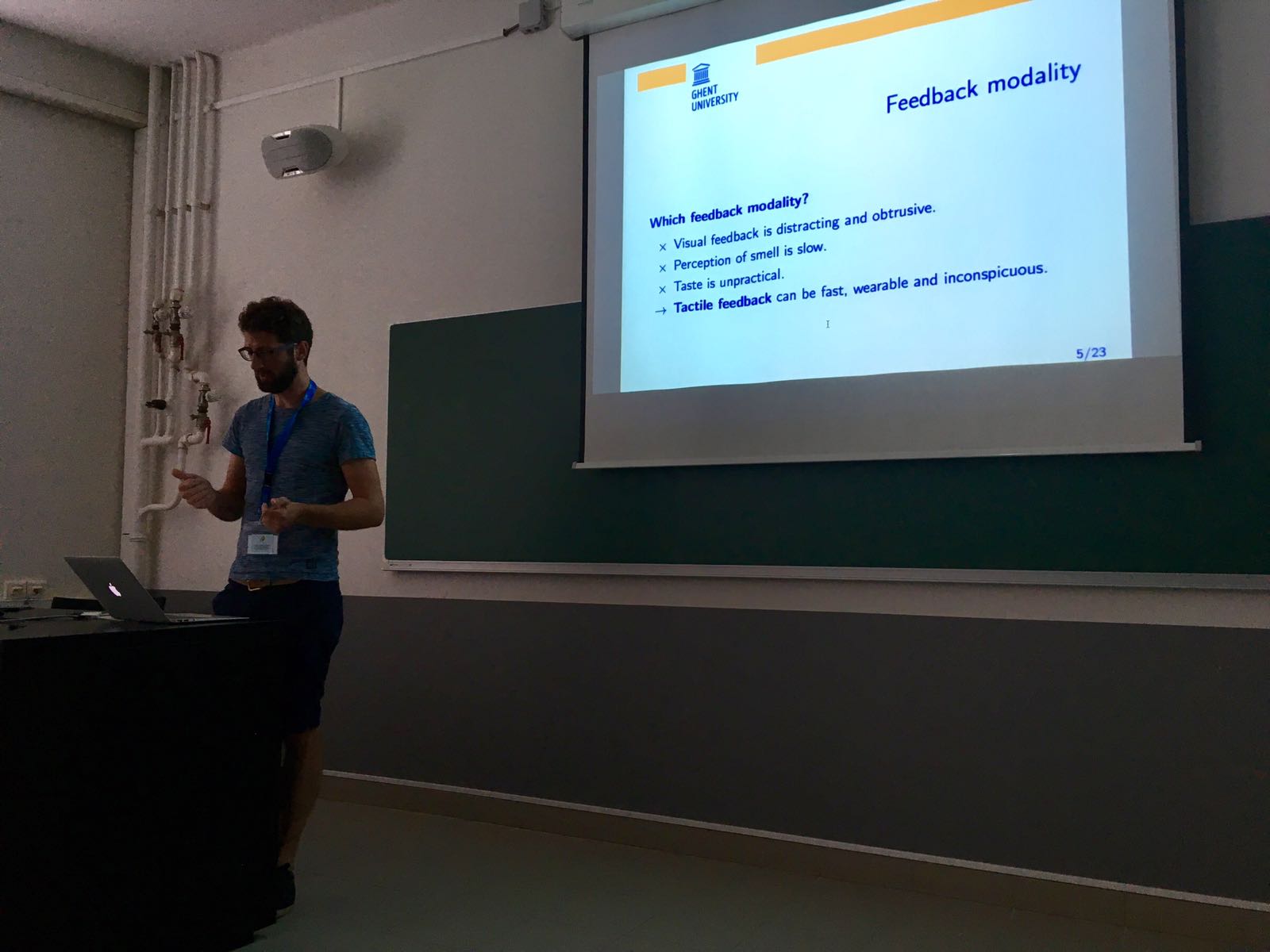
For the second contribution I was the main researcher. It is the result of a project with students of the systematic musicology course at Ghent University (Laura Arens, Hade Demoor, Thomas Kint) . The contribution is called "Regularity and asynchrony when tapping to tactile, auditory and combined pulses":\[2017.escom_multimodal_async.pdf\]
The presentation "details a multi sensory tapping task":\[six-escom2017-presentation.pdf\] with the aim to develop an assistive technology for dancers.
---
## [Connecting Musical Modules - Musical Hardware and Software Interfaces](https://0110.be/posts/Connecting_Musical_Modules_-_Musical_Hardware_and_Software_Interfaces.md)
- Published: 2016-03-19T00:00:00Z
- Updated: 2025-11-29T19:33:25Z
- Author: Joren
- ID: 445
- Canonical: https://0110.be/posts/Connecting_Musical_Modules_-_Musical_Hardware_and_Software_Interfaces
- Tags: [Hackerspace Ghent](https://0110.be/tags/Hackerspace%20Ghent.md), [IPEM](https://0110.be/tags/IPEM.md), [Presentation](https://0110.be/tags/Presentation.md), [UGent](https://0110.be/tags/UGent.md)
I have given a presentation at the the [Newline](https://0x20.be/newline/2016/) conference, a yearly event organized by the [Hackerspace Ghent](http://0x20.be). It was about:
> "In this talk I will give a practical overview on how to connect hard- and software components for musical applications. Next to an overview there will be demos! Do you want to make a musical instrument using a light sensor? Use your smartphone as an input device for a synth? Or are you simply interested in simple low-latency communication between devices? Come to this talk! More concretely the talk will feature the Axoloti audio board, Teensy micro-controller with audio board, MIDI and OSC protocols, Android MIDI features and some sensors."
During the presentation the hard and software components were demonstrated. More concretely an introduction was given to the following:
- [Axoloti audio board](http://www.axoloti.com/): An audio DSP board.
- [Teensy 3.2](https://www.pjrc.com/teensy): A general purpose microcontroller with audio capabilities.
- [TarsosDSP](https://github.com/JorenSix/TarsosDSP): A library for audio processing in Java available for Android.
The "presentation about DIY musical modules":\[2016.03.19.music-interfaces.pdf\] can be downloaded here.
- [2016.03.19.music-interfaces.pdf](https://0110.be/files/attachments/445/2016.03.19.music-interfaces.pdf)
- [logo.png](https://0110.be/files/attachments/445/logo.png)
---
## [Lecture on MIR - Tone Scale Extraction - Acoustic Fingerprinting](https://0110.be/posts/Lecture_on_MIR_-_Tone_Scale_Extraction_-_Acoustic_Fingerprinting.md)
- Published: 2015-10-30T00:00:00Z
- Updated: 2025-11-29T19:35:10Z
- Author: Joren
- ID: 444
- Canonical: https://0110.be/posts/Lecture_on_MIR_-_Tone_Scale_Extraction_-_Acoustic_Fingerprinting
- Tags: [Presentation](https://0110.be/tags/Presentation.md), [UGent](https://0110.be/tags/UGent.md)
This morning, the 30th of October 2015, I gave a lecture on Music Information Retrieval in general and two MIR-tasks in particular. The two more detailed tasks were tone scale analysis and acoustic fingerprinting.
During the lecture some live demonstrations were done with [Panako](http://panako.be) and [Tarsos](https://0110.be/Software). Also some examples from [TarsosDSP](https://0110.be/Software) were used. Excerpts of the music used is available [here](https://0110.be/files/attachments/444/Acoustica-MIR-Tarsos-Panako-examples.zip), this is especially interesting if you want to repeat the demos. [Sonic visualizer](http://www.sonicvisualiser.org/), [Music21](http://web.mit.edu/music21/) and [MuseScore](https://musescore.org/) were also mentioned during the lecture.
The [presentation about Music Information Retrieval](https://0110.be/files/attachments/444/2015.10.30.MIR-Acoustica.pdf) and the [handouts](https://0110.be/files/attachments/444/2015.10.30.MIR-Acoustica-handout.pdf) can be found here als well.
- [Acoustica-MIR-Tarsos-Panako-examples.zip](https://0110.be/files/attachments/444/Acoustica-MIR-Tarsos-Panako-examples.zip)
- [2015.10.30.MIR-Acoustica-handout.pdf](https://0110.be/files/attachments/444/2015.10.30.MIR-Acoustica-handout.pdf)
- [2015.10.30.MIR-Acoustica.pdf](https://0110.be/files/attachments/444/2015.10.30.MIR-Acoustica.pdf)
- [slide.jpg](https://0110.be/files/attachments/444/slide.jpg)
---
## [Audio Fingerprinting - Opportunities for digital musicology](https://0110.be/posts/Audio_Fingerprinting_-_Opportunities_for_digital_musicology.md)
- Published: 2014-11-25T00:00:00Z
- Updated: 2025-11-29T22:11:24Z
- Author: Joren
- ID: 425
- Canonical: https://0110.be/posts/Audio_Fingerprinting_-_Opportunities_for_digital_musicology
- Tags: [Computational musicology](https://0110.be/tags/Computational%20musicology.md), [IPEM](https://0110.be/tags/IPEM.md), [Music Information Retrieval](https://0110.be/tags/Music%20Information%20Retrieval.md), [Panako](https://0110.be/tags/Panako.md), [Presentation](https://0110.be/tags/Presentation.md), [UGent](https://0110.be/tags/UGent.md)
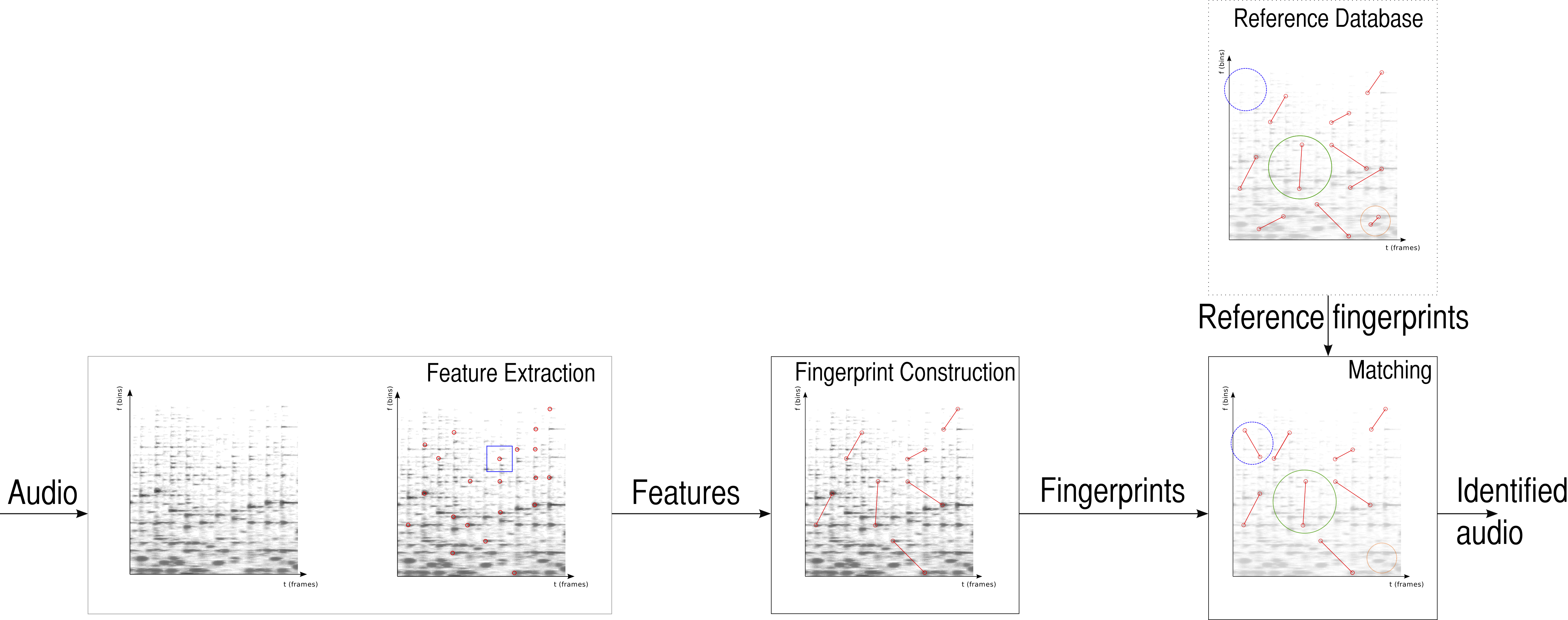
The 27th of November, 2014 a lecture on audio fingerprinting and its applications for digital musicology will be given at [IPEM](http://www.ipem.ugent.be/). The lecture introduces audio fingerprinting, explains an audio fingerprinting technique and then goes on to explain how such algorithm offers opportunities for large scale digital musicological applications. Here you can download the slides about [audio fingerprinting and its opportunities for digital musicology](https://0110.be/files/attachments/425/2014.11.27.aucoustic_fingerprinting.pdf).
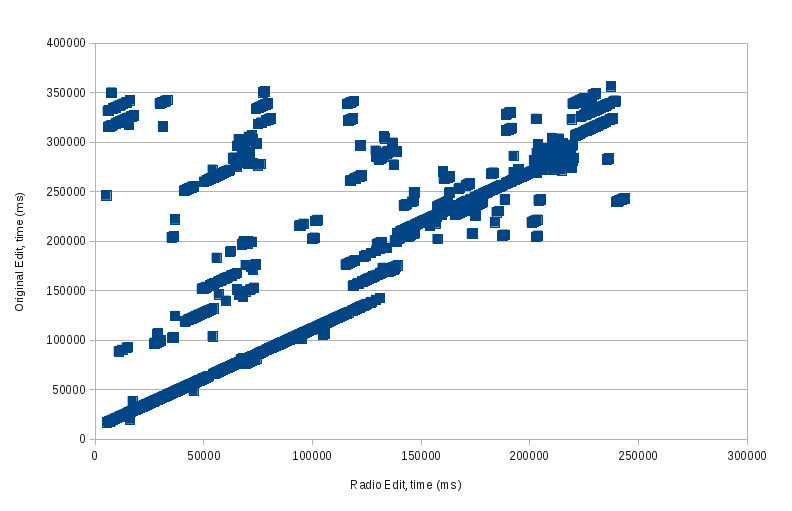
With the explained audio fingerprinting technique a specific form of very reliable musical structure analysis can be done. Below, in the figure section, an example of repetitive structure in the song [Ribs Out](https://www.youtube.com/watch?v=WI7MonB-hig) is shown. Another example is comparing edits or versions of songs. Below, also in the figure section, the radio edit of Daft Punk's Get Lucky is compared with the original version. Audio synchronization using fingerprinting is another application that is actively used in the field of digital musicology to [align audio with extracted features](http://acousticbrainz.org/).
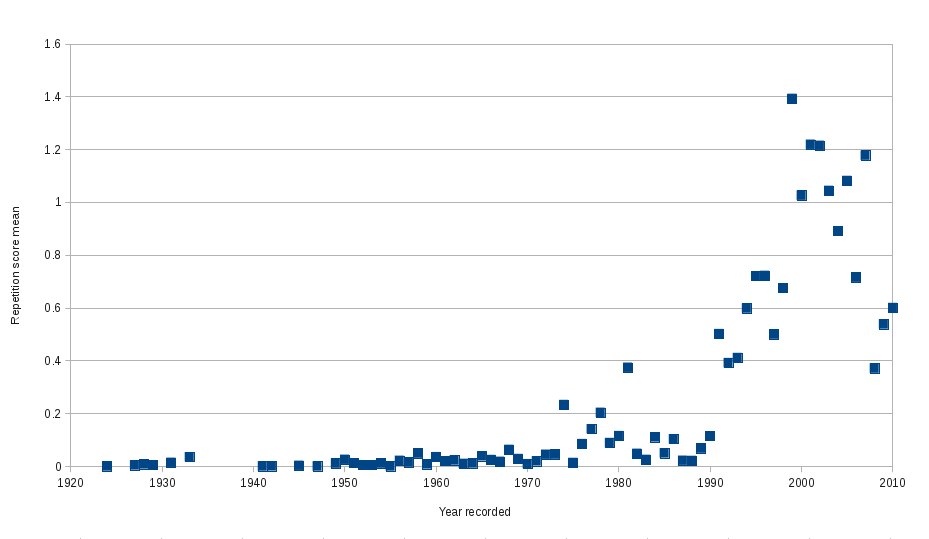
Since acoustic fingerprinting makes structure analysis very efficiently it can be applied on a large scale (20k songs). The figure below shows that identical repetition is something that has been used more and more since the mid 1970's. The trend probably aligns with the amount of technical knowledge needed to 'copy and paste' a snippet of music.
\
Fig: How much identical repetition is used in music, over the years.
The [Panako audio fingerprinting system](http://panako.be) was used to generate data for these case studies. The lecture and this post are partly inspired by [a blog post by Paul Brossier](http://aubio.org/news/20091111-2339_shazam).

- [2014.11.27.aucoustic\_fingerprinting.pdf](https://0110.be/files/attachments/425/2014.11.27.aucoustic_fingerprinting.pdf)
- [get\_lucky\_radio\_vs\_original.ods](https://0110.be/files/attachments/425/get_lucky_radio_vs_original.ods)
- [music\_structure\_analysis\_ribs\_out.ods](https://0110.be/files/attachments/425/music_structure_analysis_ribs_out.ods)
- [repetition\_over\_time.ods](https://0110.be/files/attachments/425/repetition_over_time.ods)
---
## [ISMIR 2014 - Panako - A Scalable Acoustic Fingerprinting System Handling Time-Scale and Pitch Modification](https://0110.be/posts/ISMIR_2014_-_Panako_-_A_Scalable_Acoustic_Fingerprinting_System_Handling_Time-Scale_and_Pitch_Modification.md)
- Published: 2014-10-27T00:00:00Z
- Updated: 2025-11-29T22:14:07Z
- Author: Joren
- ID: 424
- Canonical: https://0110.be/posts/ISMIR_2014_-_Panako_-_A_Scalable_Acoustic_Fingerprinting_System_Handling_Time-Scale_and_Pitch_Modification
- Tags: [Computational musicology](https://0110.be/tags/Computational%20musicology.md), [IPEM](https://0110.be/tags/IPEM.md), [ISMIR](https://0110.be/tags/ISMIR.md), [Music Information Retrieval](https://0110.be/tags/Music%20Information%20Retrieval.md), [Presentation](https://0110.be/tags/Presentation.md), [Research papers](https://0110.be/tags/Research%20papers.md), [UGent](https://0110.be/tags/UGent.md)
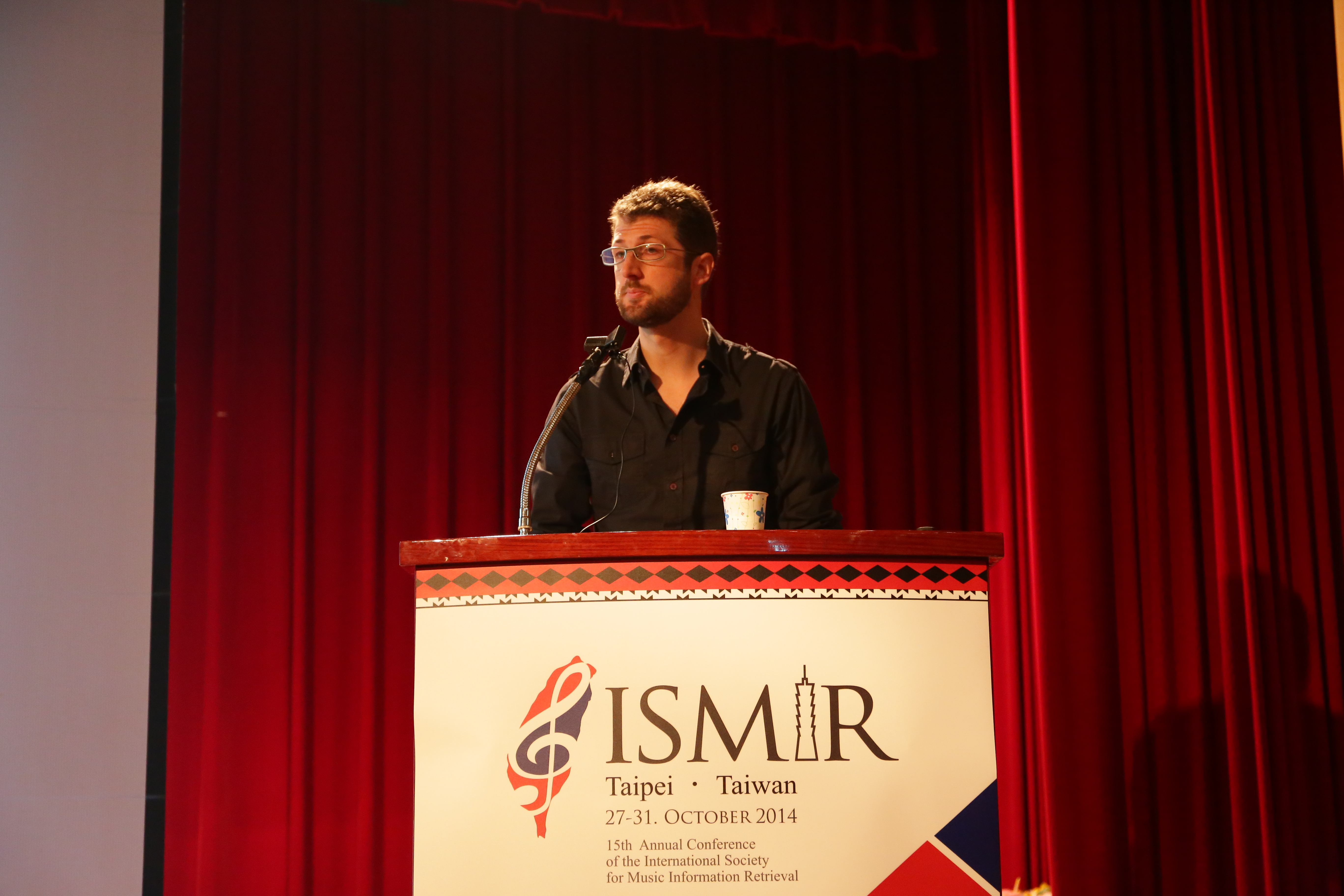
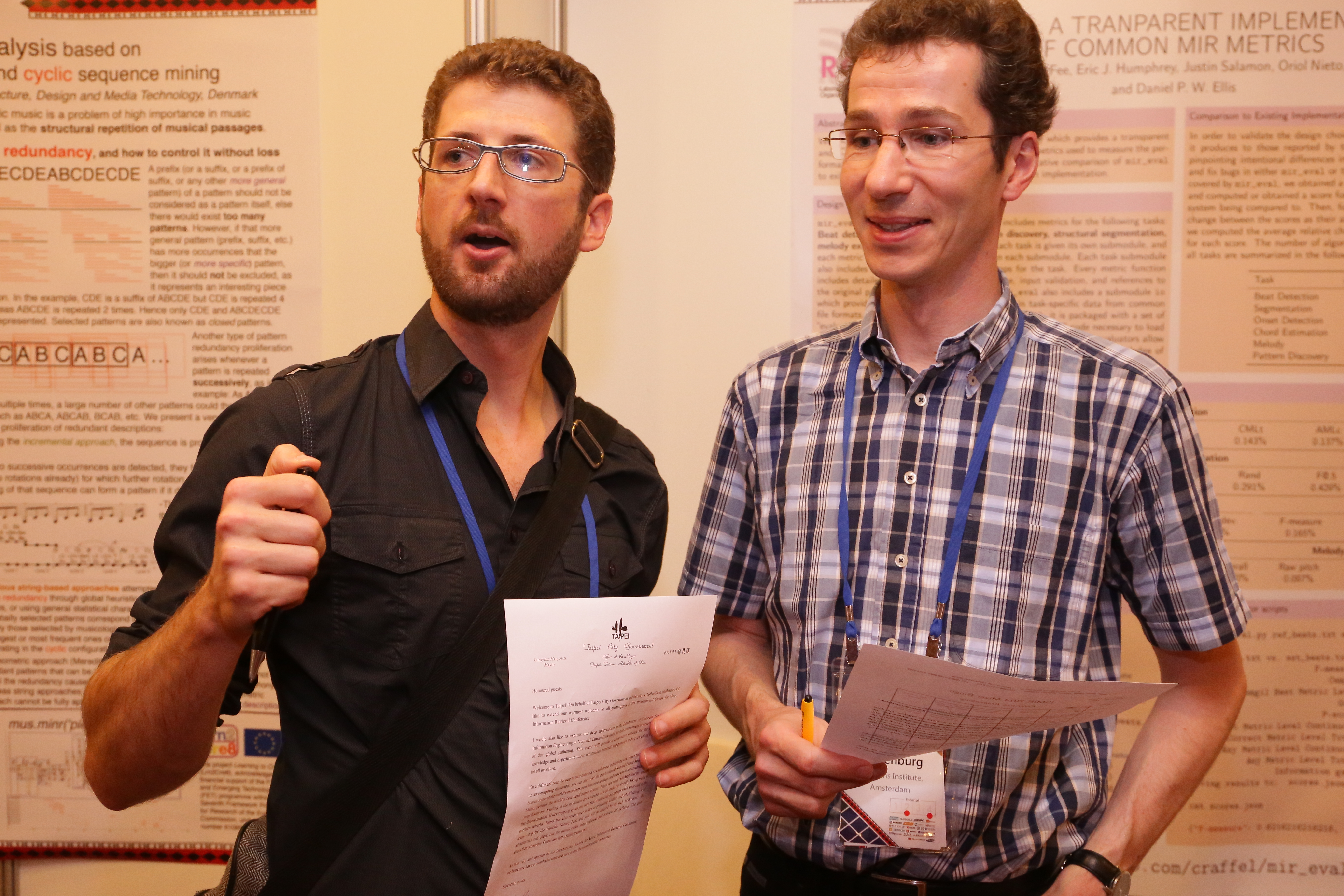
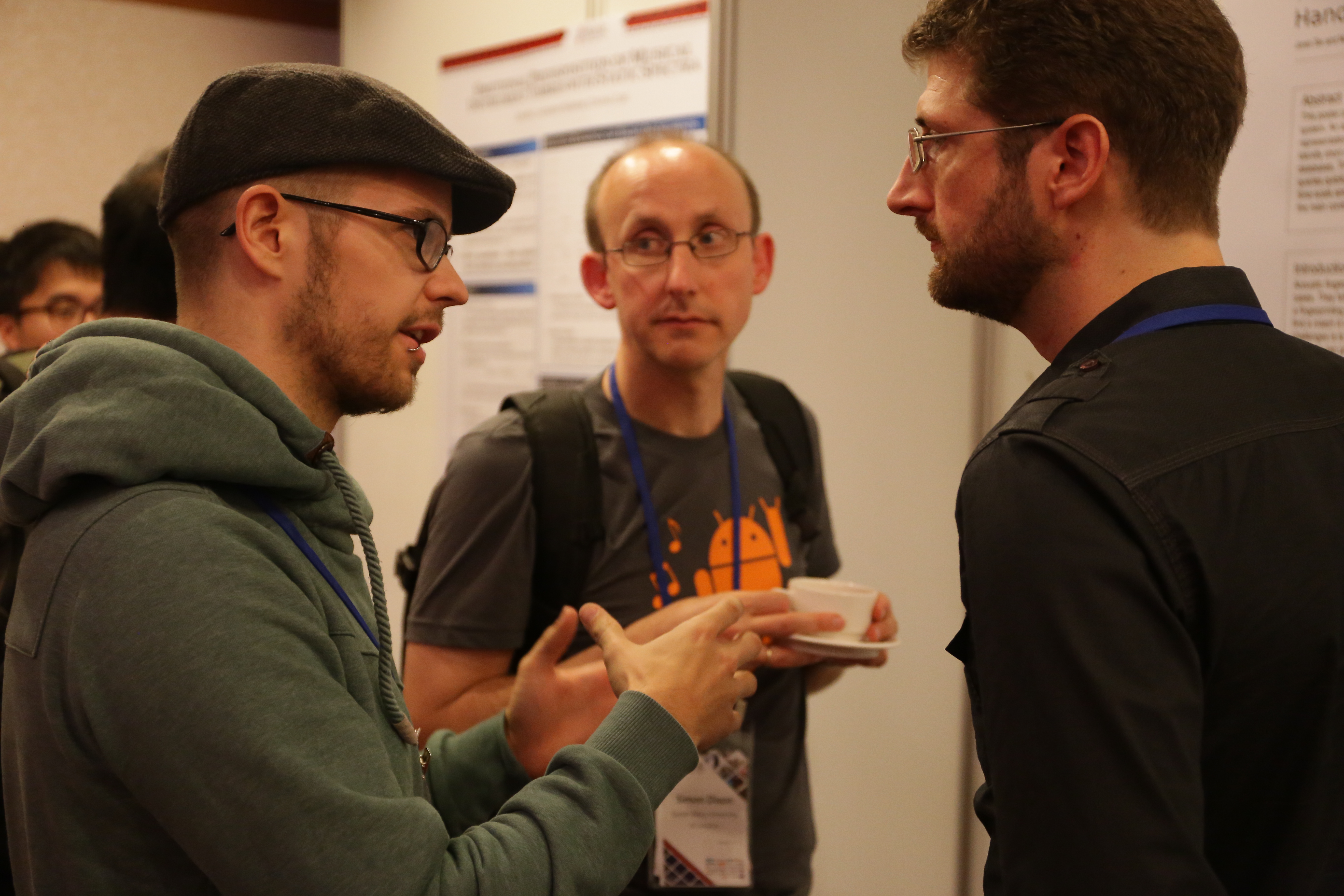
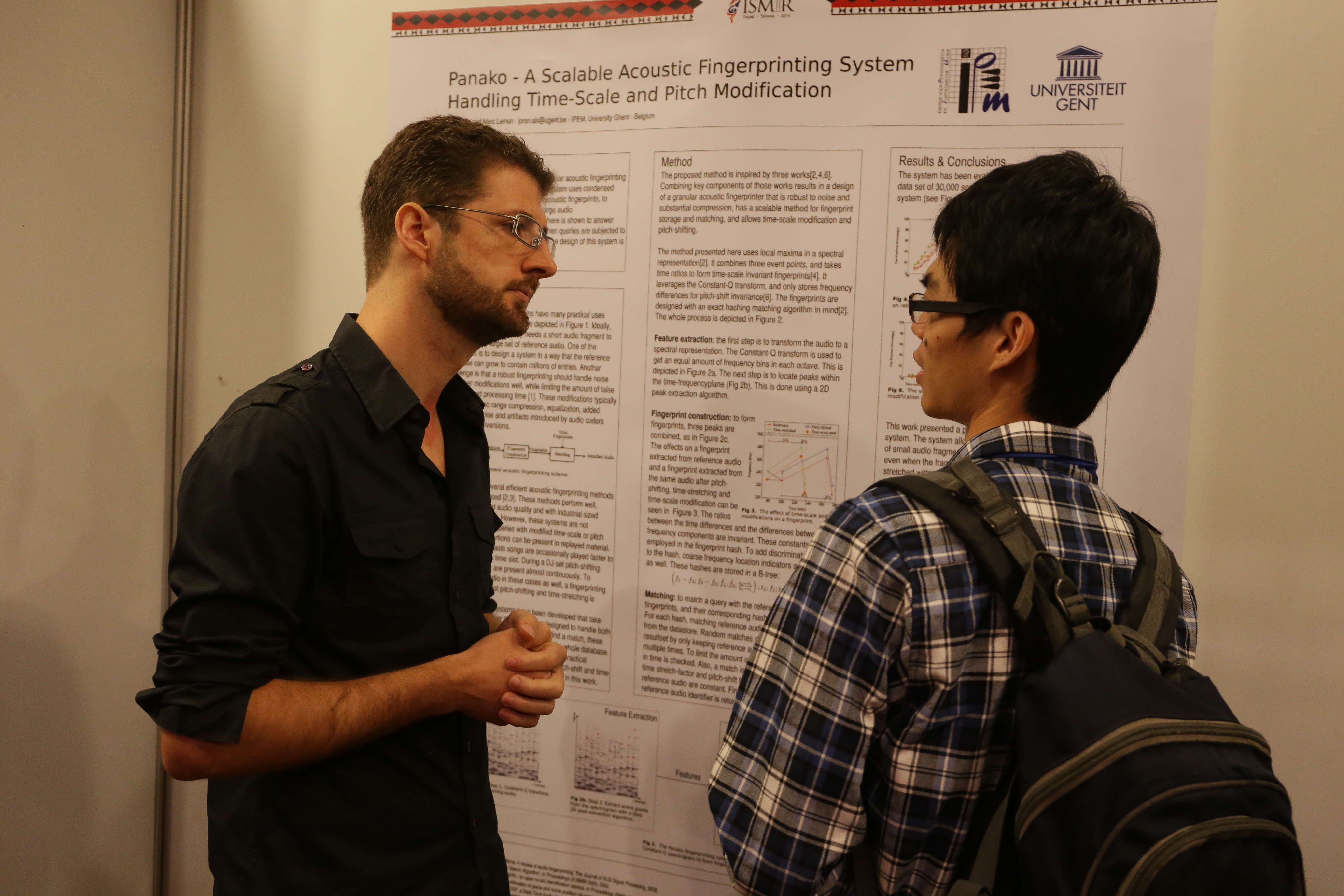
At [ISMIR 2014](http://www.terasoft.com.tw/conf/ismir2014) i will present a paper on a fingerprinting system. ISMIR is the annual conference of the International Society for Music Information Retrieval is the world's leading interdisciplinary forum on accessing, analyzing, and organizing digital music of all sorts. This years instalment takes place in Taipei, Taiwan. My contribution is a paper titled [Panako - A Scalable Acoustic Fingerprinting System Handling Time-Scale and Pitch Modification](http://www.terasoft.com.tw/conf/ismir2014/proceedings/T048_122_Paper.pdf), it will be presented during a poster session the 27th of October.
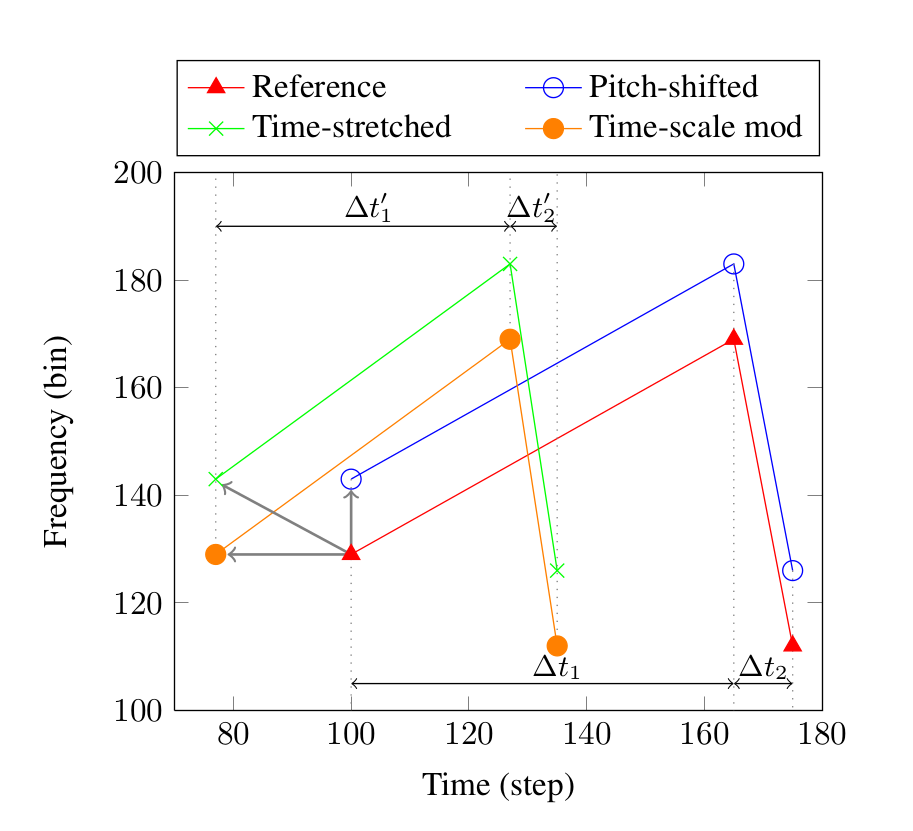
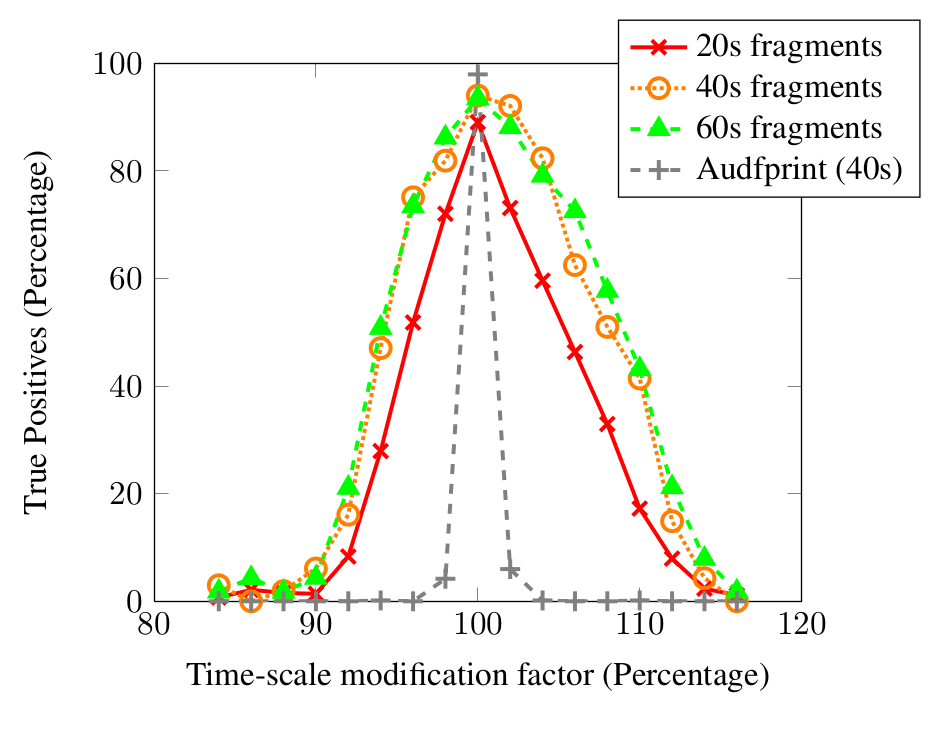
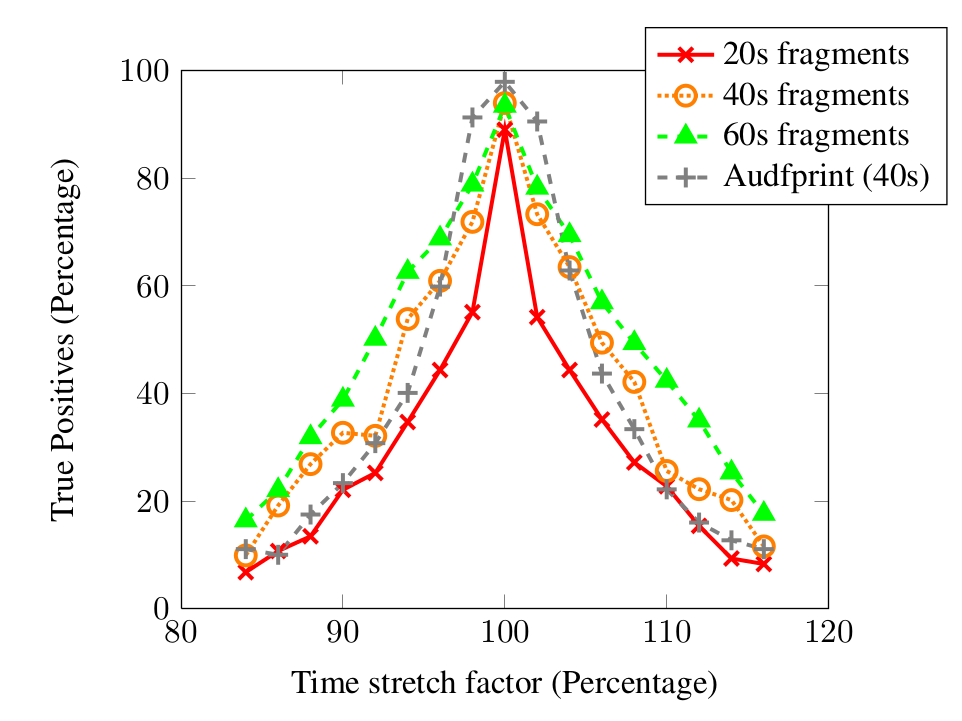
> *This paper presents a scalable granular acoustic fingerprinting system. An acoustic fingerprinting system uses condensed representation of audio signals, acoustic fingerprints, to identify short audio fragments in large audio databases. A robust fingerprinting system generates similar fingerprints for perceptually similar audio signals. The system presented here is designed to handle time-scale and pitch modifications. The open source implementation of the system is called Panako and is evaluated on commodity hardware using a freely available reference database with fingerprints of over 30,000 songs. The results show that the system responds quickly and reliably on queries, while handling time-scale and pitch modifications of up to ten percent.*
> *The system is also shown to handle GSM-compression, several audio effects and band-pass filtering. After a query, the system returns the start time in the reference audio and how much the query has been pitch-shifted or time-stretched with respect to the reference audio. The design of the system that offers this combination of features is the main contribution of this paper.*
The system is available, together with documentation and information on how to reproduce the results from the ISMIR paper, on the Panako website. Also available for download is the [Panako poster (pdf)](https://0110.be/files/attachments/424/panako_poster.pdf), [Panako ISMIR paper](https://0110.be/files/attachments/424/ismir_2014_panako_fingerprinter.pdf) and the [Panako poster (inkscape SVG)](https://0110.be/files/attachments/424/panako_poster_portrait.svg).



- [panako\_poster.png](https://0110.be/files/attachments/424/panako_poster.png)
- [panako\_poster.pdf](https://0110.be/files/attachments/424/panako_poster.pdf)
- [panako\_poster\_portrait.svg](https://0110.be/files/attachments/424/panako_poster_portrait.svg)
- [ismir\_2014\_panako\_fingerprinter.pdf](https://0110.be/files/attachments/424/ismir_2014_panako_fingerprinter.pdf)
---
## [TarsosDSP Paper and Presentation at AES 53rd International conference on Semantic Audio](https://0110.be/posts/TarsosDSP_Paper_and_Presentation_at_AES_53rd_International_conference_on_Semantic_Audio.md)
- Published: 2013-12-24T00:00:00Z
- Updated: 2014-01-16T13:25:46Z
- Author: Joren
- ID: 411
- Canonical: https://0110.be/posts/TarsosDSP_Paper_and_Presentation_at_AES_53rd_International_conference_on_Semantic_Audio
- Tags: [Presentation](https://0110.be/tags/Presentation.md), [Research papers](https://0110.be/tags/Research%20papers.md), [TarsosDSP](https://0110.be/tags/TarsosDSP.md), [UGent](https://0110.be/tags/UGent.md)
TarsosDSP will be presented at the [AES 53rd International conference on Semantic Audio](http://www.aes.org/conferences/53/) in London . During the conference both a presentation and demonstration of the paper "*TarsosDSP, a Real-Time Audio Processing Framework in Java*":\[aes53_tarsos_dsp.pdf\], by Joren Six, Olmo Cornelis and Marc Leman, in *Proceedings of the 53rd AES Conference (AES 53rd)*, 2014. From their website:
> *Semantic Audio is concerned with content-based management of digital audio recordings. The rapid evolution of digital audio technologies, e.g. audio data compression and streaming, the availability of large audio libraries online and offline, and recent developments in content-based audio retrieval have significantly changed the way digital audio is created, processed, and consumed. New audio content can be produced at lower cost, while also large audio archives at libraries or record labels are opening to the public. Thus the sheer amount of available audio data grows more and more each day. Semantic analysis of audio resulting in high-level metadata descriptors such as musical chords and tempo, or the identification of speakers facilitate content-based management of audio recordings. Aside from audio retrieval and recommendation technologies, the semantics of audio signals are also becoming increasingly important, for instance, in object-based audio coding, as well as intelligent audio editing, and processing. Recent product releases already demonstrate this to a great extent, however, more innovative functionalities relying on semantic audio analysis and management are imminent. These functionalities may utilise, for instance, (informed) audio source separation, speaker segmentation and identification, structural music segmentation, or social and Semantic Web technologies, including ontologies and linked open data.*
> *This conference will give a broad overview of the state of the art and address many of the new scientific disciplines involved in this still-emerging field. Our purpose is to continue fostering this line of interdisciplinary research. This is reflected by the wide variety of invited speakers presenting at the conference.*
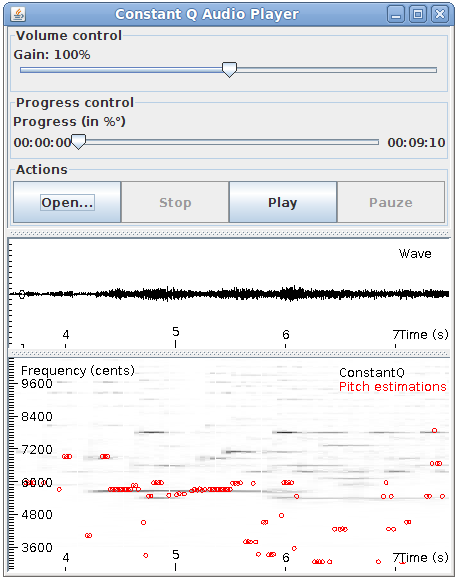
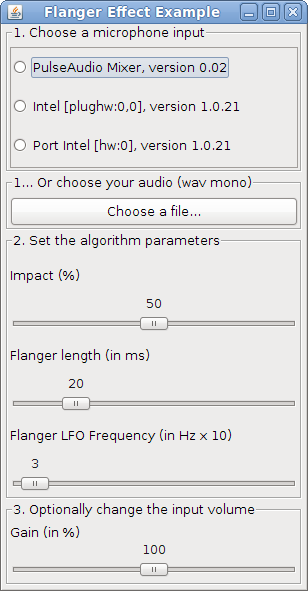
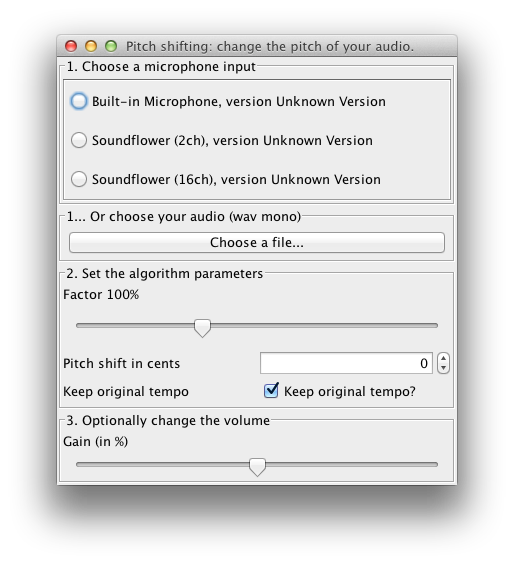
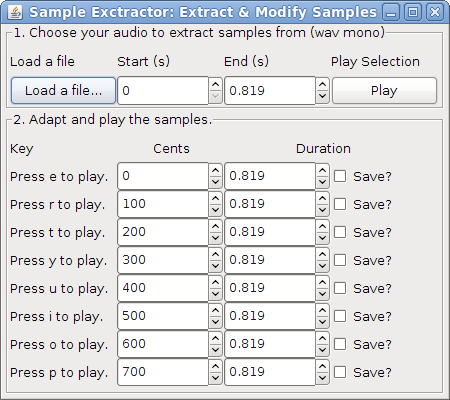
The paper presents TarsosDSP, a framework for real-time audio analysis and processing. Most libraries and frameworks offer either audio analysis and feature extraction or audio synthesis and processing. TarsosDSP is one of a only a few frameworks that offers both analysis, processing and feature extraction in real-time, a unique feature in the Java ecosystem. The framework contains practical audio processing algorithms, it can be extended easily, and has no external dependencies. Each algorithm is implemented as simple as possible thanks to a straightforward processing pipeline. TarsosDSP's features include a resampling algorithm, onset detectors, a number of pitch estimation algorithms, a time stretch algorithm, a pitch shifting algorithm, and an algorithm to calculate the Constant-Q. The framework also allows simple audio synthesis, some audio effects, and several filters. The Open Source framework is a valuable contribution to the MIR-Community and ideal fit for interactive MIR-applications on Android. The full paper can be downloaded "*TarsosDSP, a Real-Time Audio Processing Framework in Java*":\[aes53_tarsos_dsp.pdf\]
A BibTeX entry for the paper can be found below.
\`\`\`ruby\
\@inproceedings{six2014tarsosdsp,\
author = {Joren Six and Olmo Cornelis and Marc Leman},\
title = {{TarsosDSP, a Real-Time Audio Processing Framework in Java}},\
booktitle = {{Proceedings of the 53rd AES Conference (AES 53rd)}},\
year = 2014\
}\
\`\`\`

- [aes53\_tarsos\_dsp.pdf](https://0110.be/files/attachments/411/aes53_tarsos_dsp.pdf)
---
## [ICMC 2012 - Sound to Scale to Sound, a Setup for Microtonal Exploration and Composition](https://0110.be/posts/ICMC_2012_-_Sound_to_Scale_to_Sound%2C_a_Setup_for_Microtonal_Exploration_and_Composition.md)
- Published: 2012-08-31T00:00:00Z
- Updated: 2014-02-13T10:53:56Z
- Author: Joren
- ID: 369
- Canonical: https://0110.be/posts/ICMC_2012_-_Sound_to_Scale_to_Sound%2C_a_Setup_for_Microtonal_Exploration_and_Composition
- Tags: [Computational ethnomusicology](https://0110.be/tags/Computational%20ethnomusicology.md), [HoGent](https://0110.be/tags/HoGent.md), [Java](https://0110.be/tags/Java.md), [Presentation](https://0110.be/tags/Presentation.md), [Tarsos](https://0110.be/tags/Tarsos.md), [featured](https://0110.be/tags/featured.md)
At this years ICMC Conference, [ICMC 2012](http://www.icmc2012.si/) we presented a paper describing a way to experiment with tone scales and how to use Tarsos as a compositional tool. What follows are some pointers to the presentation, paper and to other interesting talks that were presented there.
ICMC 2012 was organized in Ljubljana from the 9 to 14 septembre and had a very dense program of talks, posters, presentations, demos and concerts.
Since 1974 the International Computer Music Conference has been the major international forum for the presentation of the full range of outcomes from technical and musical research, both musical and theoretical, related to the use of computers in music. This annual conference regularly travels the globe, with recent conferences in the Americas, Europe and Asia. This year we welcome the conference to Slovenia for the first time.
### Sound to Scale to Sound, a Setup for Microtonal Exploration and Composition
Our contribution to the conference was a paper titled "Sound to Scale to Sound, a Setup for Microtonal Exploration and Composition":\[icmc2012_submission_45.pdf\].
If you want to cite our work, this BibTeX entry is included for your convenience:
\`\`\`ruby\
\@inproceedings{cornelis2012sound_to_scale,\
author = {Olmo Cornelis and Joren Six},\
title = {{Sound to Scale to Sound, a Setup for Microtonal Exploration and Composition}},\
booktitle = {{Proceedings of the 2012 International Computer Music Conference,\
(ICMC 2012)}},\
year = {2012},\
publisher = {The International Computer Music Association}\
}\
\`\`\`
### Program highlights
What follows are a number of pointers to my personal program highlights.
Verena Thomas presented two very well polished software tools. One to detect patterns in scores, called motifviewer and a tool to search in score databases in a multi-modal way. The [Probado tool](http://probado.iai.uni-bonn.de:8080/) does score-to-audio alignment and much more.
[Gibber](http://www.charlie-roberts.com/gibber/) is an impressive live-coding environment with an easy syntax. Since it is all done with javascript you can start playing with it immediately. [Overtone](http://overtone.github.com/) Another live-coding environment, presented at the conference by Sam Aaron, was equally impressive. It is programmed using the Closure language.
At ICMC there were a number of tools to assist in composition. One of those is [The Bach Project](http://www.bachproject.net/bach/home_page.html), by Andrea Agostini. Togheter with CatART by Diemo Swartz it forms a very expressive platform to work with sound, which was demonstrated by Aaron Einbond and Christopher Trapani in their paper titled *Precise Pitch Control In Real Time Corpus-Based Concatenative Synthesis*. Diemo Swartz presented work on Audio Mosaicing, it can be seen as a follow-up to [AuidioGuild](http://crca.ucsd.edu/~ben/audioGuide/) by Ben Hackbarth.
I also got to know the work by [Thomas Grill](http://grrrr.org), on his website a nice piece of software can be found a Python implementation of the [Non Stationary Gabor Transform (NSGT)](http://grrrr.org/research/software/nsgt/). Another software system I got to know is the functional signal processing programming language [FAUST](http://en.wikipedia.org/wiki/FAUST_(programming_language))
My personal highlights of the concert programme include the works by Johannes Kreidler, Aura Pon, Daniel Mayer, Alexander Schubert and the remarkable performance by Dexter Ford. The concept behind Soundlog by Johannes Kretz was also interesting.
- [ICMC\_Logo.png](https://0110.be/files/attachments/369/ICMC_Logo.png)
- [2012.09.08-Sound\_to\_Scale\_to\_Sound\_\_a\_Setup\_for\_Microtonal\_Exploration\_and\_Composition.odp](https://0110.be/files/attachments/369/2012.09.08-Sound_to_Scale_to_Sound__a_Setup_for_Microtonal_Exploration_and_Composition.odp)
- [icmc2012\_submission\_45.pdf](https://0110.be/files/attachments/369/icmc2012_submission_45.pdf)
---
## [CIM 2012 - Revealing and Listening to Scales From the Past; Tone Scale Analysis of Archived Central-African Music Using Computational Means](https://0110.be/posts/CIM_2012_-_Revealing_and_Listening_to_Scales_From_the_Past%3B_Tone_Scale_Analysis_of_Archived_Central-African_Music_Using_Computational_Means.md)
- Published: 2012-08-31T00:00:00Z
- Updated: 2014-02-13T10:58:38Z
- Author: Joren
- ID: 351
- Canonical: https://0110.be/posts/CIM_2012_-_Revealing_and_Listening_to_Scales_From_the_Past%3B_Tone_Scale_Analysis_of_Archived_Central-African_Music_Using_Computational_Means
- Tags: [Computational musicology](https://0110.be/tags/Computational%20musicology.md), [HoGent](https://0110.be/tags/HoGent.md), [Music Information Retrieval](https://0110.be/tags/Music%20Information%20Retrieval.md), [Presentation](https://0110.be/tags/Presentation.md), [Research papers](https://0110.be/tags/Research%20papers.md), [Tarsos](https://0110.be/tags/Tarsos.md), [featured](https://0110.be/tags/featured.md)
What follows is about the [Conference on Interdisciplinary Musicology (CIM2012)](http://gfm2012.uni-goettingen.de/cim12/CIM12/Home.html) and the [15th international Conference of the Gesellschaft fur Musikfoschung](http://gfm2012.uni-goettingen.de/GfM2012/Home.html). First this text will give information about our contribution to CIM2012: *Revealing and Listening to Scales From the Past; Tone Scale Analysis of Archived Central-African Music Using Computational Means* and then a number of highlights of the conference follow. The joint conference took place from the 4th to the 8th of september 2012.
In 2012, CIM will tackle the subject of History. Hosted by the University of Göttingen, whose one time music director Johann Nikolaus Forkel is widely regarded as one of the founders of modern music historiography, CIM12 aims to promote collaborations that provoke and explore new methods and methodologies for establishing, evaluating, preserving and communicating knowledge of music and musical practices of past societies and the factors implicated in both the preservation and transformation of such practices over time.
### Revealing and Listening to Scales From the Past; Tone Scale Analysis of Archived Central-African Music Using Computational Means
Our contribution ton CIM 2012 is titled "Revealing and Listening to Scales From the Past; Tone Scale Analysis of Archived Central-African Music Using Computational Means":\[CIM12_Submission.pdf\]. The aim was to show how tone scales of the past, e.g. organ tuning, can be extracted and sonified. During the demo special attention was given to historic Central African tuning systems. The presentation I gave is included below and or available for "download":\[2012.09.05-Revealing_and_listening_to_scales_from_the_past\_\_tone_scale_analysis_of_archived_Central-African_music_using_computational_means..ppt\]
### Highlights
What follows are some personal highlights for the [Conference on Interdisciplinary Musicology (CIM2012)](http://gfm2012.uni-goettingen.de/cim12/CIM12/Home.html) and the [15th international Conference of the Gesellschaft fur Musikfoschung](http://gfm2012.uni-goettingen.de/GfM2012/Home.html). The joint conference took place from the 4th to the 8th of september 2012.
The work presented by Rytis Ambrazevicius et al. *Modal changes in traditional Lithuanian singing: Diachronic aspect* has a lot in common with our research, it was interesting to see their approach. Another highlight of the conference was the whole session organized by Klaus-Peter Brenner around Mbira music.
Rainer Polak gave a talk titled *'Swing, Groove and Metre. Asymmetric Feels, Metric Ambiguity and Metric Transformation in African Musics'*. He showed how research about rhythm in jazz research, music theory and empirical musicology ( amongst others) could be bridged and applied to ethnic music.
The overview Eleanore Selfridge-Field gave during her talk *Between an Analogue Past and a Digital Future: The Evolving Digital Present* was refreshing. She had a really clear view on all the different ways musicology and digital media can benifit from each-other.
From the concert programme I found two especially interesting: the lecture-performance by Margarete Maierhofer-Lischka and Frauke Aulbert of [*Lotofagos*](http://www.youtube.com/watch?v=tYD30v0PgoI), a piece by Beat Furrer and *Burdocks* composed and performed by Christian Wolff and a bunch of enthusiastic students.
- [Forkeljpg.jpg](https://0110.be/files/attachments/351/Forkeljpg.jpg)
- [CIM12\_Submission.pdf](https://0110.be/files/attachments/351/CIM12_Submission.pdf)
- [2012.09.05-Revealing\_and\_listening\_to\_scales\_from\_the\_past\_\_tone\_scale\_analysis\_of\_archived\_Central-African\_music\_using\_computational\_means..ppt](https://0110.be/files/attachments/351/2012.09.05-Revealing_and_listening_to_scales_from_the_past__tone_scale_analysis_of_archived_Central-African_music_using_computational_means..ppt)
---
## [Analytical Approaches To World Music - Microtonal Scale Exploration in Central Africa](https://0110.be/posts/Analytical_Approaches_To_World_Music_-_Microtonal_Scale_Exploration_in_Central_Africa.md)
- Published: 2012-06-06T06:54:04Z
- Updated: 2013-12-05T18:19:15Z
- Author: Joren
- ID: 342
- Canonical: https://0110.be/posts/Analytical_Approaches_To_World_Music_-_Microtonal_Scale_Exploration_in_Central_Africa
- Tags: [Computational ethnomusicology](https://0110.be/tags/Computational%20ethnomusicology.md), [Computational musicology](https://0110.be/tags/Computational%20musicology.md), [HoGent](https://0110.be/tags/HoGent.md), [Presentation](https://0110.be/tags/Presentation.md), [Tarsos](https://0110.be/tags/Tarsos.md), [featured](https://0110.be/tags/featured.md)
At the 2012 [AAWM (Analytical Approaches To World Music)](http://www.aawmconference.com/aawm2012/papers.htm) conference we presented a way to explore tone scales in the music of Central Africa. Since the audience consisted of (ethno)musicologists, the main focus of the presentation was on the applicication part, the technical aspects were only briefly mentioned.
The extended abstract can be consulted: [Towards the tangible: microtonal scale exploration in Central-African music](http://www.aawmconference.com/aawm2012/papers/cornelis_p.pdf)
The conference program itself was very diverse and interesting.
- [2012.05.11-Towards\_the\_Tangible\_-\_Microtonal\_Scale\_Exploration\_in\_Central-African\_Music.odp](https://0110.be/files/attachments/342/2012.05.11-Towards_the_Tangible_-_Microtonal_Scale_Exploration_in_Central-African_Music.odp)
- [AAWM\_abstract\_short.doc](https://0110.be/files/attachments/342/AAWM_abstract_short.doc)
---
## [Guest Lecture at MIT - Ethnic Music Analysis: Challenges & Opportunities - Tarsos as a Case Study](https://0110.be/posts/Guest_Lecture_at_MIT_-_Ethnic_Music_Analysis%3A__Challenges_%26_Opportunities_-_Tarsos_as_a_Case_Study.md)
- Published: 2012-05-07T00:00:00Z
- Updated: 2014-02-13T10:56:44Z
- Author: Joren
- ID: 362
- Canonical: https://0110.be/posts/Guest_Lecture_at_MIT_-_Ethnic_Music_Analysis%3A__Challenges_%26_Opportunities_-_Tarsos_as_a_Case_Study
- Tags: [Computational ethnomusicology](https://0110.be/tags/Computational%20ethnomusicology.md), [HoGent](https://0110.be/tags/HoGent.md), [Presentation](https://0110.be/tags/Presentation.md)
Thursday the 3th of May I gave a guest lecture titled 'Ethnic Music Analysis: Challenges & Opportunities' it featured Tarsos as a Case Study. The goal was to identify the difficulties when dealing with ethnic music and to show a possible approach, the approach implemented by Tarsos.
The invitation to give the guest lecture came from [Michael Cuthbert](http://web.mit.edu/music/facstaff/cuthbert.html) who is one of the driving forces behind [music21](http://mit.edu/music21/). The audience was a small group of double majors in both musicology and computer science: the ideal profile to gather useful feedback.
- [2012.05.03-Ethnic\_Music\_Analysis.pdf](https://0110.be/files/attachments/362/2012.05.03-Ethnic_Music_Analysis.pdf)
- [2012.05.03-Ethnic\_Music\_Analysis.odp](https://0110.be/files/attachments/362/2012.05.03-Ethnic_Music_Analysis.odp)
---
## [Kinderuniversiteit - Muziek onder de microscoop!](https://0110.be/posts/Kinderuniversiteit_-_Muziek_onder_de_microscoop%21.md)
- Published: 2011-12-12T08:41:21Z
- Updated: 2013-12-05T18:19:15Z
- Author: Joren
- ID: 326
- Canonical: https://0110.be/posts/Kinderuniversiteit_-_Muziek_onder_de_microscoop%21
- Tags: [Dutch](https://0110.be/tags/Dutch.md), [HoGent](https://0110.be/tags/HoGent.md), [Java](https://0110.be/tags/Java.md), [Presentation](https://0110.be/tags/Presentation.md)
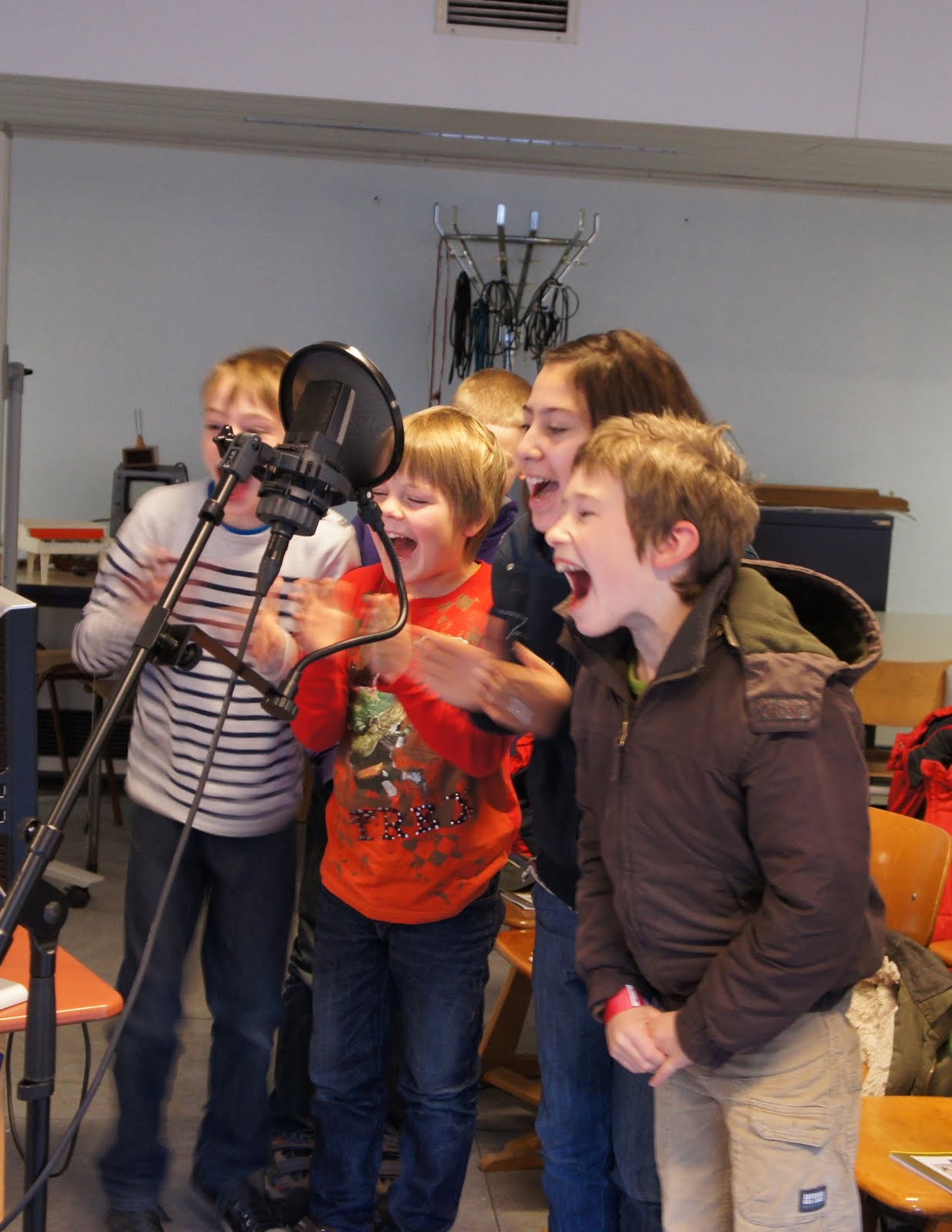
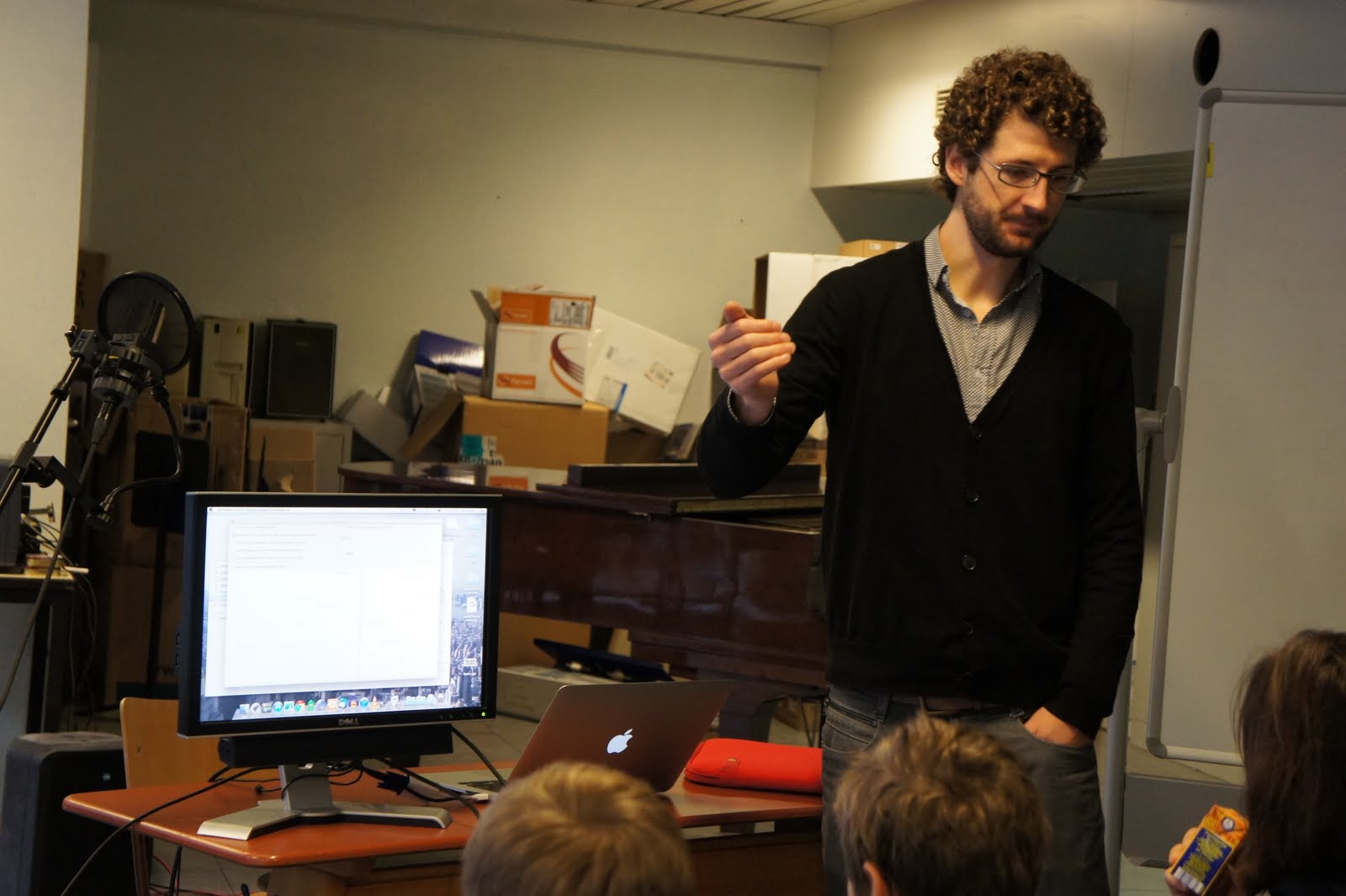
Zondag 18 december 2011 gaf ik een workshop voor de [Gentse kinderuniversiteit](http://kinderuniversiteit.be). Het thema van de kinderuniversiteit was [Muziek onder de microscoop](http://www.kinderuniversiteit.be/event/muziek-onder-de-microscoop). De teaser voor de workshop is hier te vinden:
WORKSHOP - Muziek (ont)luisteren op de computer\
Is het mogelijk om piano te spelen op een tafel? Kan een computer luisteren naar muziek en er van genieten? Wat is muziek eigenlijk, en hoe werkt geluid? \
Tijdens deze workshop worden de voorgaande vragen beantwoord met enkele computerprogramma's!
Concreet worden enkele componenten van geluid (en bij uitbreiding, muziek) gedemonstreerd met computerprogrammaatjes gemaakt in het conservatorium:
- "Geluidssterkte":\[SoundDetector.jar\]: een decibel-meter met een bepaalde drempelwaarde. Probeer zo luid mogelijk te doen en zie hoe moeilijk het is om, eens een bepaald niveau bereikt is, in decibel te stijgen.
- "Toonhoogte":\[UtterAsterisk.jar\]: een klein spelletje om toonhoogte aan te tonen. Probeer zo juist mogelijk te zingen of te fluiten en vergelijk je score.
- "Percussie":\[PercussionDetector.jar\]: dit programma reageert op handgeklap. Hoe kan je het onderscheid maken tussen bijvoorbeeld een fluittoon en handgeklap?
De foto's hieronder geven een sfeerbeeld.

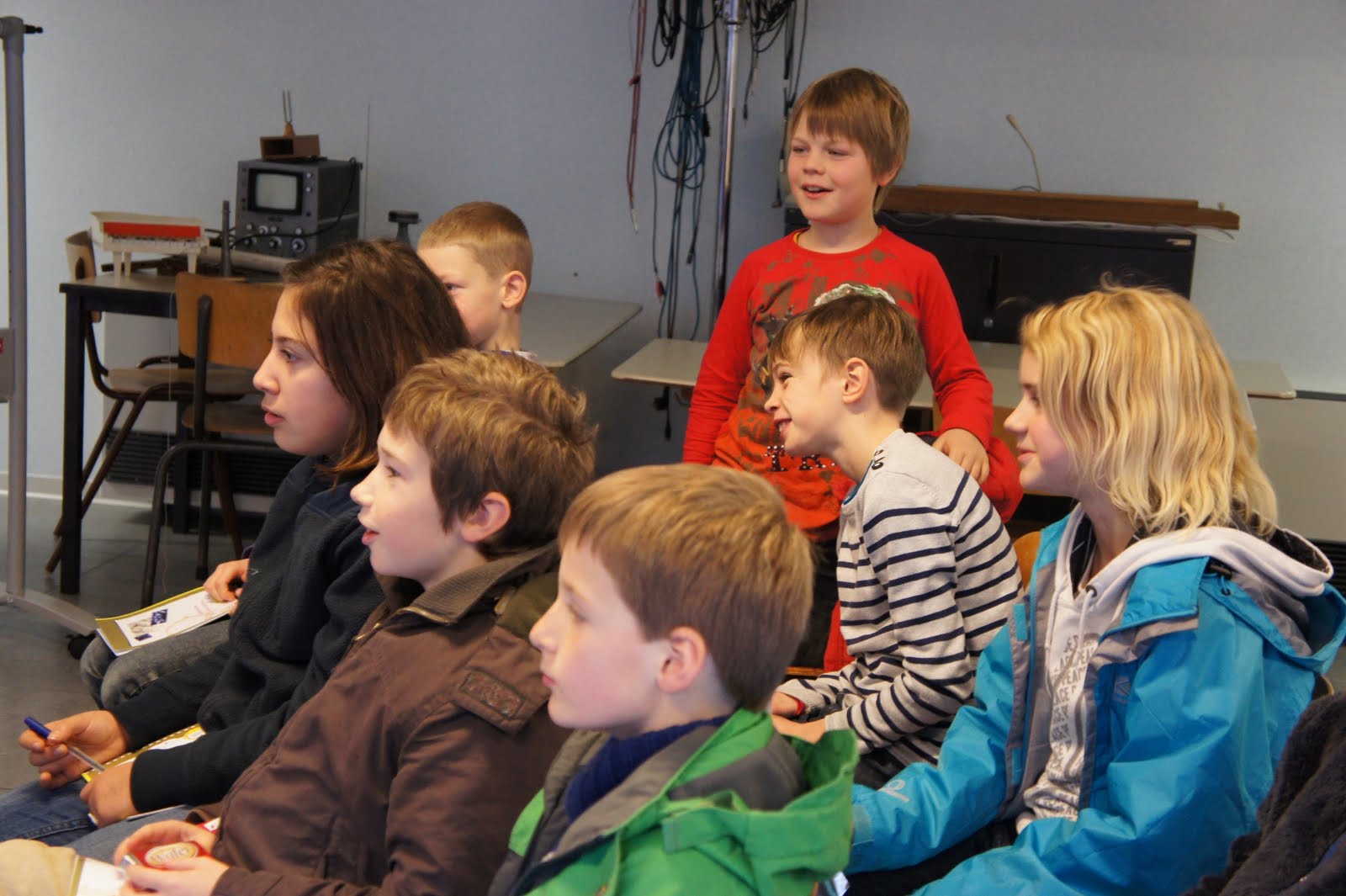
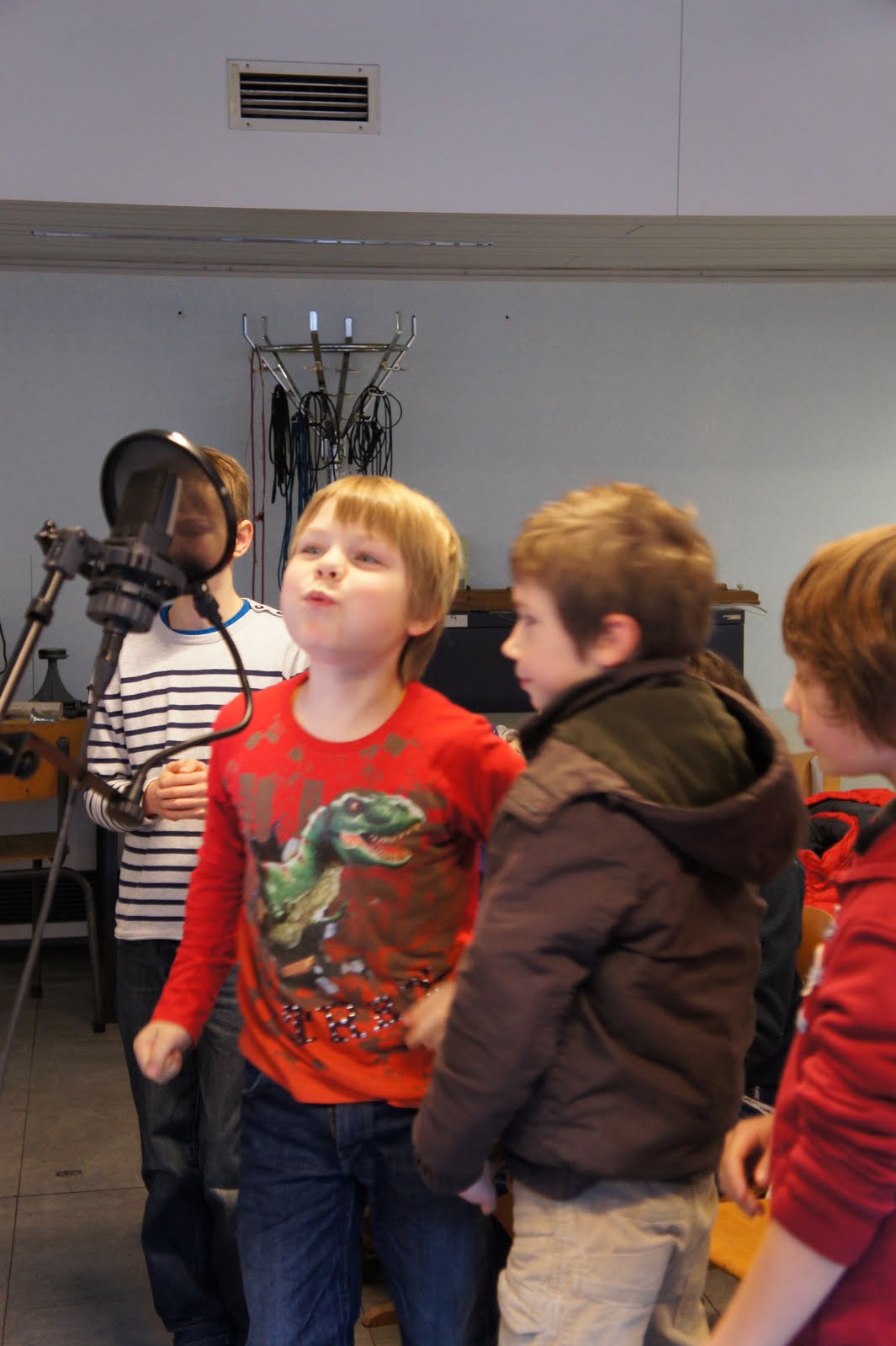
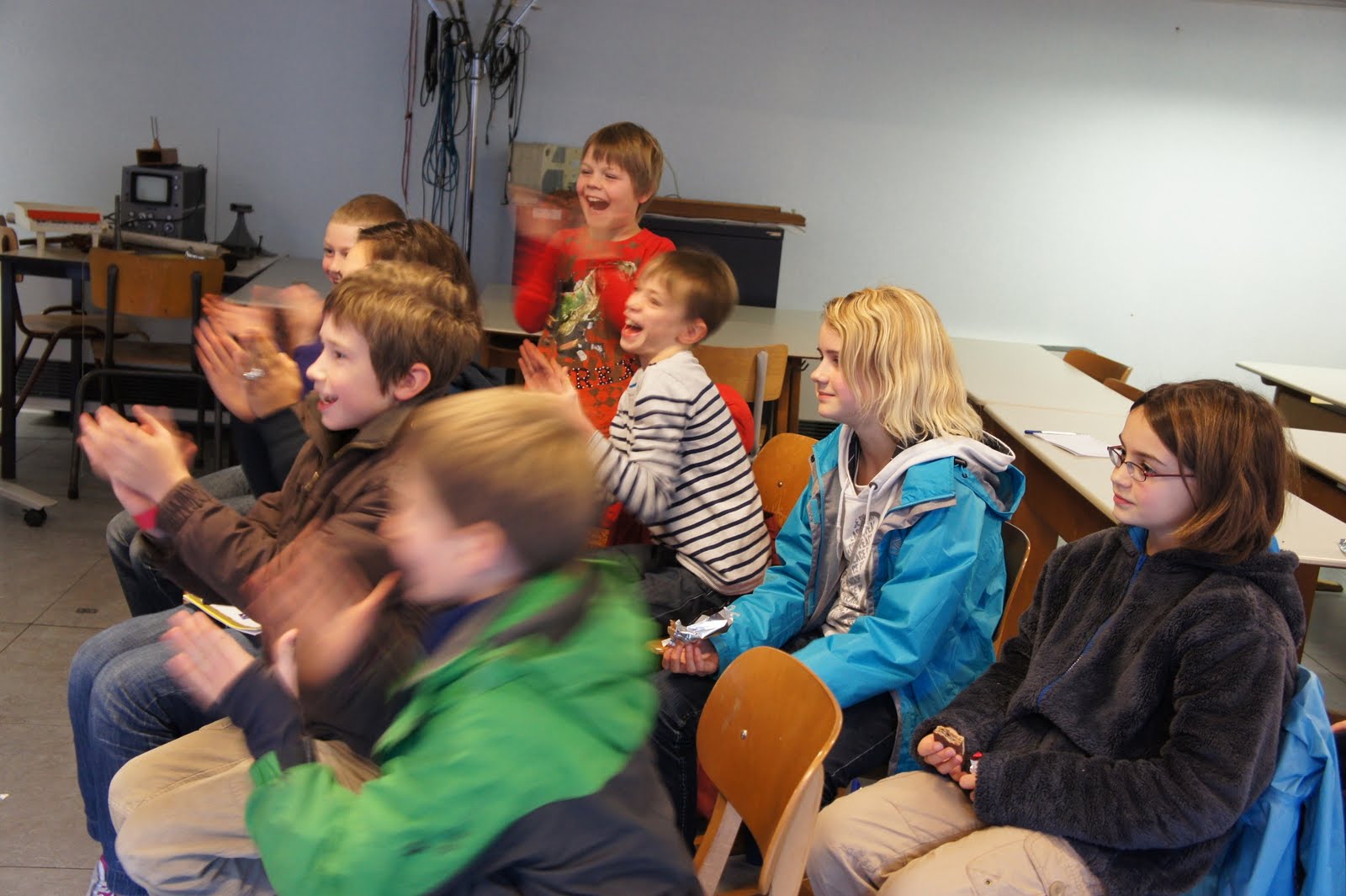
- [logo-with-arrow.png](https://0110.be/files/attachments/326/logo-with-arrow.png)
- [UtterAsterisk.jar](https://0110.be/files/attachments/326/UtterAsterisk.jar)
- [PercussionDetector.jar](https://0110.be/files/attachments/326/PercussionDetector.jar)
- [PitchDetector.jar](https://0110.be/files/attachments/326/PitchDetector.jar)
- [SoundDetector.jar](https://0110.be/files/attachments/326/SoundDetector.jar)
---
## [Software for Music Analysis](https://0110.be/posts/Software_for_Music_Analysis.md)
- Published: 2011-12-02T00:00:00Z
- Updated: 2016-08-22T13:10:11Z
- Author: Joren
- ID: 383
- Canonical: https://0110.be/posts/Software_for_Music_Analysis
- Tags: [Computational musicology](https://0110.be/tags/Computational%20musicology.md), [HoGent](https://0110.be/tags/HoGent.md), [Music Information Retrieval](https://0110.be/tags/Music%20Information%20Retrieval.md), [Presentation](https://0110.be/tags/Presentation.md)
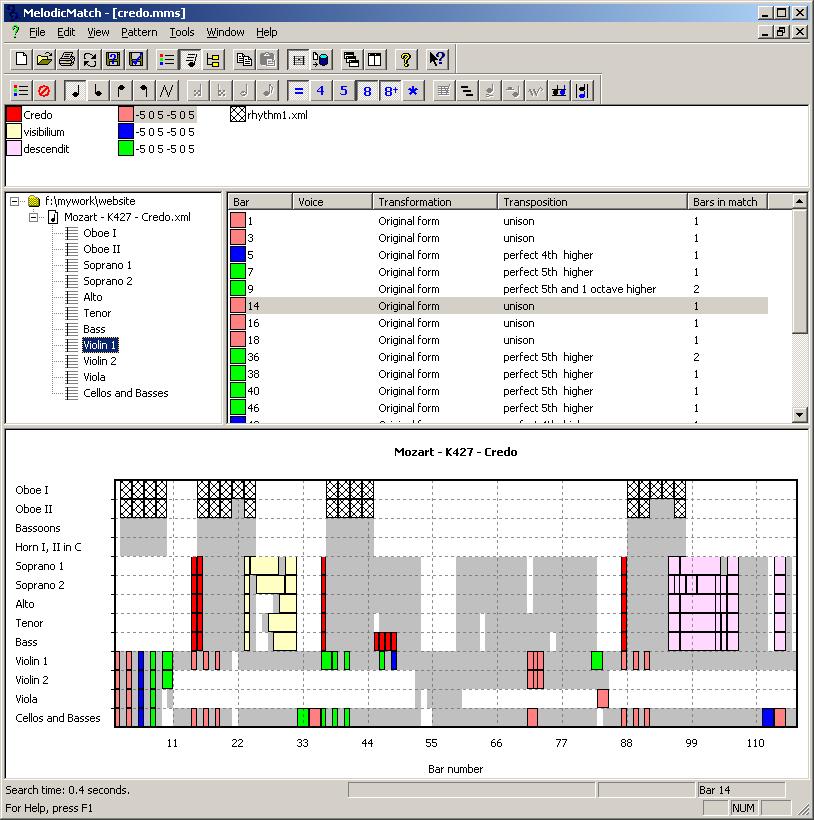
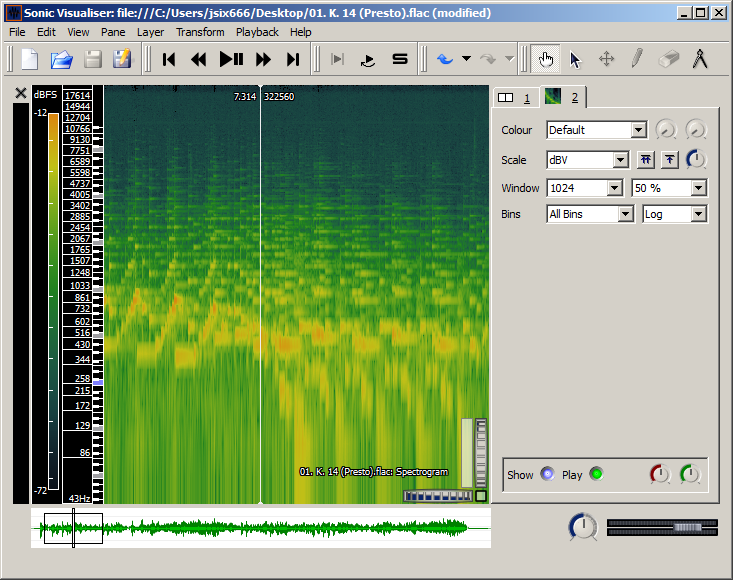
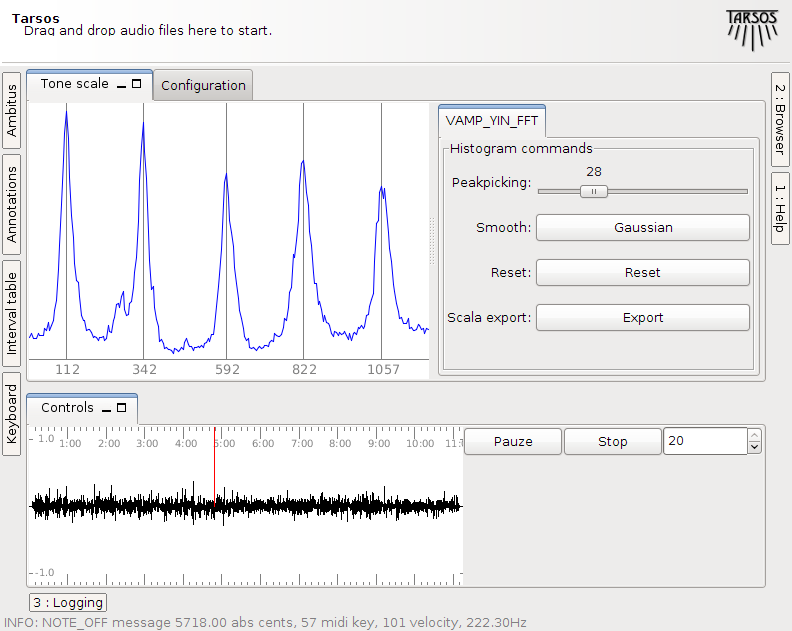
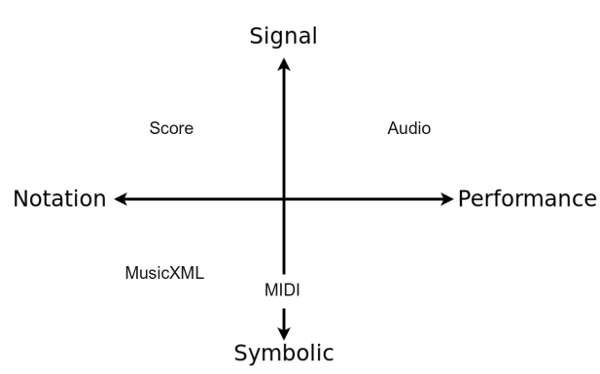
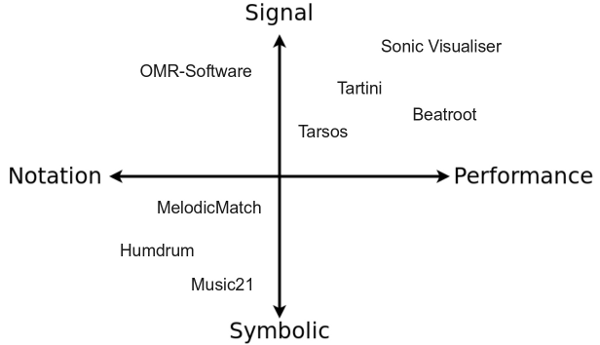
Friday the second of December I presented a talk about software for music analysis. The aim was to make clear which type of research topics can benefit from measurements by software for music analysis. Different types of digital music representations and examples of software packages were explained.
Following presentation was used during the talk. ("ppt":\[2011.12.02.software_for_music_analysis.ppt\], "odp":\[2011.12.02.software_for_music_analysis.odp\]):
- [Sonic Visualizer](http://www.sonicvisualiser.org): As its name suggests Sonic Visualizer contains a lot different visualisations for audio. It can be used for analysis (pitch,beat,chroma,...) with [VAMP-plugins](http://vamp-plugins.org). To quote *"The aim of Sonic Visualiser is to be the first program you reach for when want to study a musical recording rather than simply listen to it"*. It is the swiss army knife of audio analysis.
- [BeatRoot](http://www.eecs.qmul.ac.uk/~simond/beatroot/) is designed specifically for one goal: beat tracking. It can be used for e.g. comparing tempi of different performances of the same piece or to track tempo deviation within one piece.
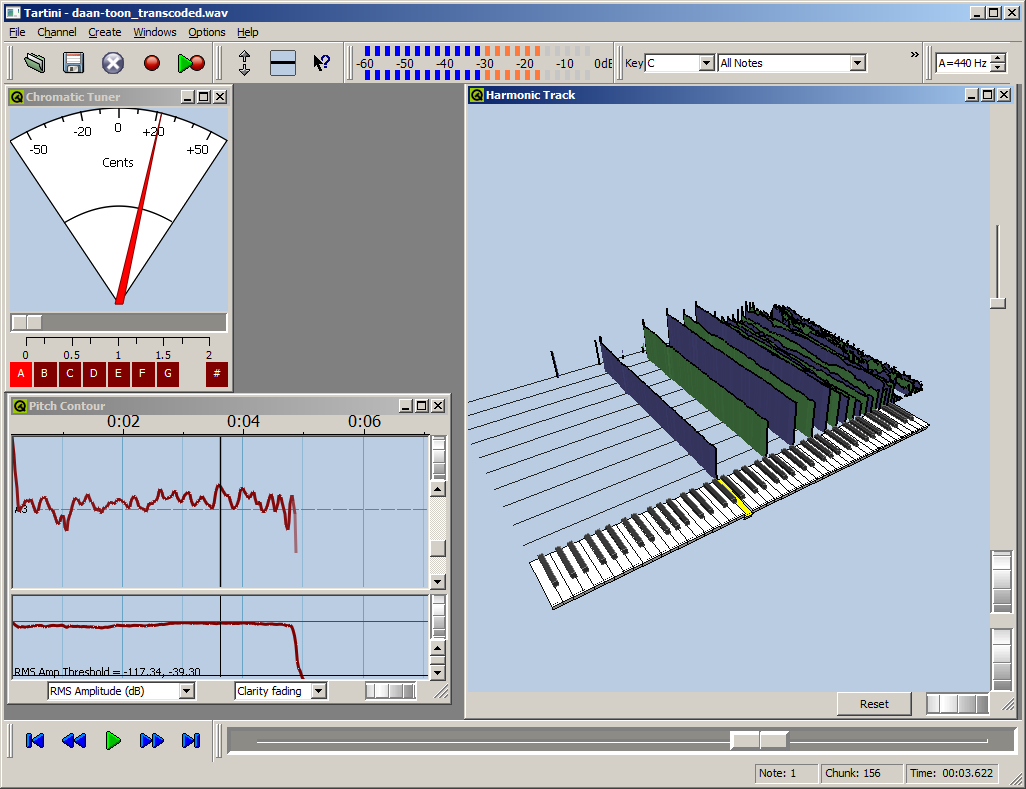
- [Tartini](http://tartini.net) is capable to do real-time pitch analysis of sound. You can e.g. play into a microphone with a violin and see the harmonics you produce and adapt you playing style based on visual feedback. It also contains a pitch deviation measuring apparatus to analyse vibrato.
- [Tarsos](http://tarsos.0110.be) is software for tone scale analysis. It is useful to extract tone scales from audio. Different tuning systems can be seen, extracted and compared. It also contains the ability to play along with the original song with a tuned midi keyboard .
To show the different digital representations of music one example (Liebestraum 3 by Liszt) was used in different formats:
- "Score (PDF)":\[00.partituur.liebestraum_3.pdf\]
- "MusicXML":\[01.musicXML-liebestraum_no_3.xml\]
- "MIDI as notation":\[01.deadpan_midi.wav\]
- "MIDI as performance":\[02.performed_midi.wav\]
- "Acoustic performance":\[03.human.performance.wav\]
- [02.performed\_midi.wav](https://0110.be/files/attachments/383/02.performed_midi.wav)
- [01.deadpan\_midi.wav](https://0110.be/files/attachments/383/01.deadpan_midi.wav)
- [2011.12.02.software\_for\_music\_analysis.ppt](https://0110.be/files/attachments/383/2011.12.02.software_for_music_analysis.ppt)
- [2011.12.02.software\_for\_music\_analysis.odp](https://0110.be/files/attachments/383/2011.12.02.software_for_music_analysis.odp)
- [03.human.performance.wav](https://0110.be/files/attachments/383/03.human.performance.wav)
- [digital\_registration\_filetypes.png](https://0110.be/files/attachments/383/digital_registration_filetypes.png)
- [00.partituur.liebestraum\_3.pdf](https://0110.be/files/attachments/383/00.partituur.liebestraum_3.pdf)
- [01.MusicXML-extract.txt](https://0110.be/files/attachments/383/01.MusicXML-extract.txt)
- [digital\_registration\_software.png](https://0110.be/files/attachments/383/digital_registration_software.png)
- [01.musicXML-liebestraum\_no\_3.xml](https://0110.be/files/attachments/383/01.musicXML-liebestraum_no_3.xml)
- [2011.12.02.software\_for\_music\_analysis.pdf](https://0110.be/files/attachments/383/2011.12.02.software_for_music_analysis.pdf)
---
## [Tarsos at 'Study Day: Tuning and Temperament - Insitute of Musical Research, London' ](https://0110.be/posts/Tarsos_at_%27Study_Day%3A_Tuning_and_Temperament_-_Insitute_of_Musical_Research%2C_London%27_.md)
- Published: 2011-10-25T22:03:49Z
- Updated: 2013-12-05T18:19:15Z
- Author: Joren
- ID: 374
- Canonical: https://0110.be/posts/Tarsos_at_%27Study_Day%3A_Tuning_and_Temperament_-_Insitute_of_Musical_Research%2C_London%27_
- Tags: [Computational ethnomusicology](https://0110.be/tags/Computational%20ethnomusicology.md), [Computational musicology](https://0110.be/tags/Computational%20musicology.md), [HoGent](https://0110.be/tags/HoGent.md), [Presentation](https://0110.be/tags/Presentation.md), [Tarsos](https://0110.be/tags/Tarsos.md)
The 17th of Octobre 2011 Tarsos was presented at the [Study Day: Tuning and Temperament](http://music.sas.ac.uk/imr-events/imr-conferences-colloquia-performance-events/study-day-tuning-and-temperament.html) which was held at the Institue of Music Research in Londen. The study day was organised by Dan Tidhar. A short description of the aim of the study day:
This is an interdisciplinary study day, bringing together musicologists, harpsichord specialists, and digital music specialists, with the aim of exploring the different angles these fields provide on the subject, and how these can be fruitfully interconnected.
We offer an optional introduction to temperament for non specialists, to equip all potential listeners with the basic concepts and terminology used throughout the day.
---
## [Tarsos presentation at 'ISMIR 2011'](https://0110.be/posts/Tarsos_presentation_at_%27ISMIR_2011%27.md)
- Published: 2011-10-25T21:55:27Z
- Updated: 2013-12-05T18:19:15Z
- Author: Joren
- ID: 368
- Canonical: https://0110.be/posts/Tarsos_presentation_at_%27ISMIR_2011%27
- Tags: [Computational ethnomusicology](https://0110.be/tags/Computational%20ethnomusicology.md), [HoGent](https://0110.be/tags/HoGent.md), [ISMIR](https://0110.be/tags/ISMIR.md), [Music Information Retrieval](https://0110.be/tags/Music%20Information%20Retrieval.md), [Presentation](https://0110.be/tags/Presentation.md), [Research papers](https://0110.be/tags/Research%20papers.md), [Tarsos](https://0110.be/tags/Tarsos.md)
Olmo Cornelis and myself just gave a presentation about Tarsos at the at the [12th International Society for Music Information Retrieval Conference](http://ismir2011.ismir.net/) which is held at Miami.
The live demo we gave went well and we got a lot of positive, interesting feedback. The [presentation about Tarsos](https://0110.be/25.10.2011.ismir_tarsos.pdf) is available here.
It was the first time in the history of ISMIR that there was a session with oral [presentations about Non-Western Music](http://ismir2011.ismir.net/program.html#OS2). We were pleased to be part of this.
The peer reviewed paper about our work: [Tarsos - a Platform to Explore Pitch Scales in Non-Western and Western Music](http://ismir2011.ismir.net/program.html#OS2) is available from the ISMIR website and embedded below:
- [2011.10.25.ismir\_tarsos.pdf](https://0110.be/files/attachments/368/2011.10.25.ismir_tarsos.pdf)
---
[Older posts](https://0110.be/tags/Presentation.md?page=1)
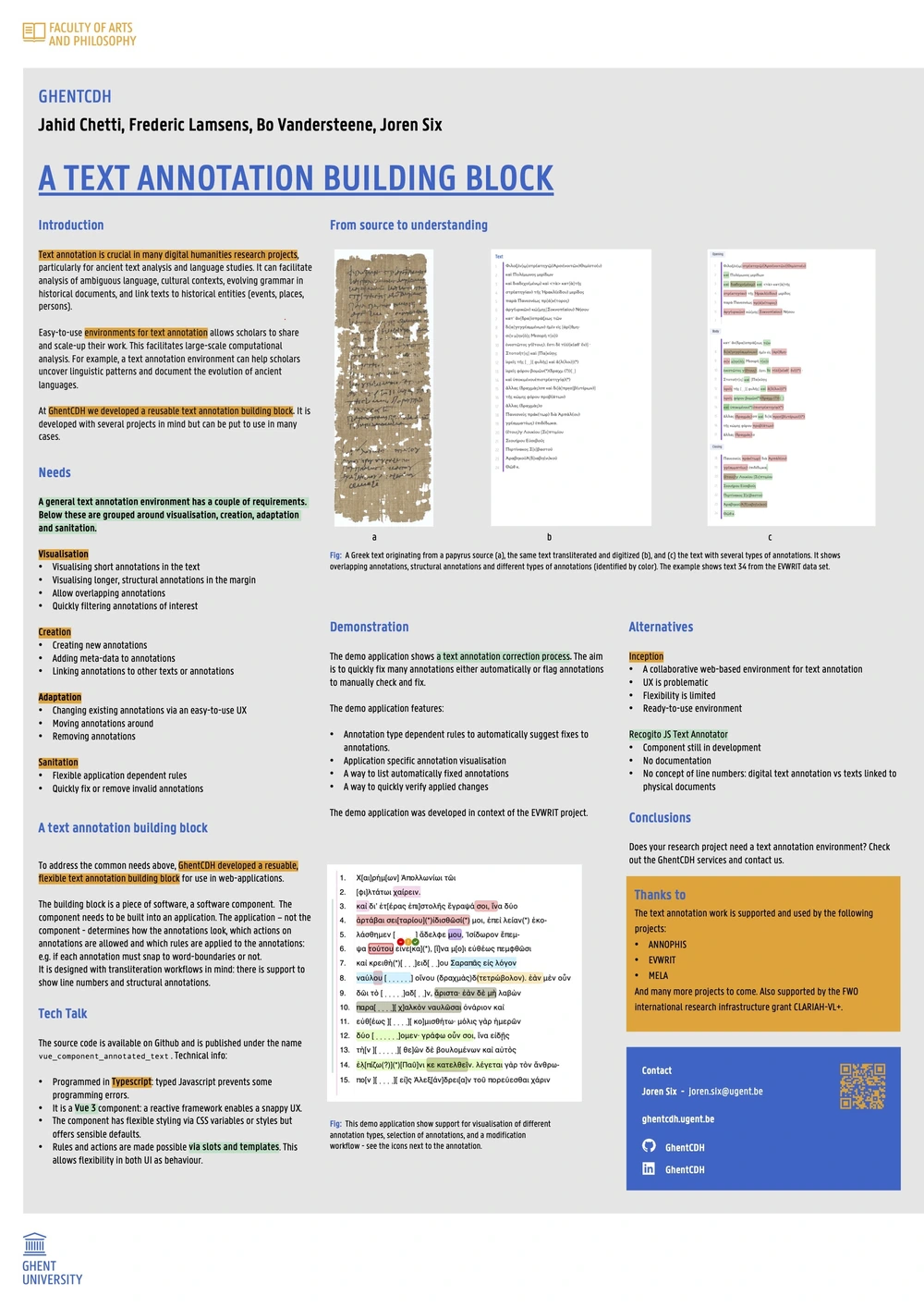
 From 11-16 October 2020 the latest instalment of the ISMIR conference series was held. Due to the pandemic, the 21st ISMIR conference was the first virtual one. As usual, participants and presenters from around the world joined the conference. For the first time, however, not all participants synchronised their circadian rhythm. By repeating most events with 12h in between, the organisers managed to put together a schedule befitting nearly all participants.
The virtual format had some clear advantages: travel was not needed, so (environmental) cost was low. Attendance fees were lower than usual since no spaces or catering was needed. This democratised the conference experience and attendance reached a record high.
The scientific program of the conference was impressive and varied. It is At the conferences Late Breaking/Demo session I presented [Olaf: Overly Lightweight Acoustic Fingerprinting](https://program.ismir2020.net/lbd_418.html).
From 11-16 October 2020 the latest instalment of the ISMIR conference series was held. Due to the pandemic, the 21st ISMIR conference was the first virtual one. As usual, participants and presenters from around the world joined the conference. For the first time, however, not all participants synchronised their circadian rhythm. By repeating most events with 12h in between, the organisers managed to put together a schedule befitting nearly all participants.
The virtual format had some clear advantages: travel was not needed, so (environmental) cost was low. Attendance fees were lower than usual since no spaces or catering was needed. This democratised the conference experience and attendance reached a record high.
The scientific program of the conference was impressive and varied. It is At the conferences Late Breaking/Demo session I presented [Olaf: Overly Lightweight Acoustic Fingerprinting](https://program.ismir2020.net/lbd_418.html).
 On the 9th of September 2019 the second [research day organized by the faculty of Arts and Philosophy of Ghent University](https://www.lwresearchday.ugent.be/) took place. The theme of the day was 'Digital Humanities' and [the program](https://www.lwresearchday.ugent.be/programme/) gave an overview of the breadth of research at our faculty with topics as logic, history, archeology, chemistry, geography

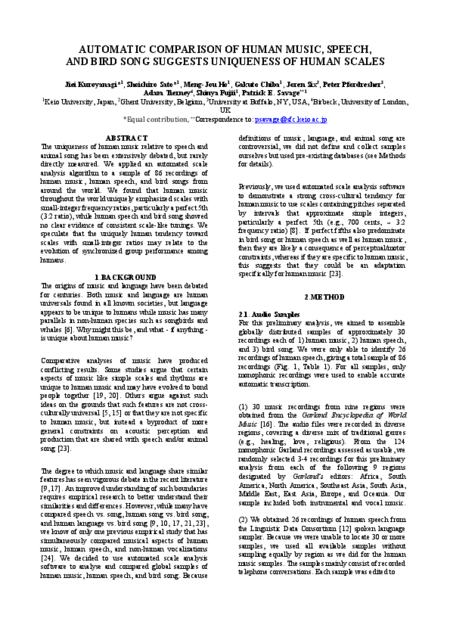 "Automatic comparison of human music, speech, and bird song suggests uniqueness of human scales":\[FMA2019_paper_12.pdf\] by Jiei Kuroyanagi, Shoichiro Sato, Meng-Jou Ho, Gakuto Chiba, Joren Six, Peter Pfordresher, Adam Tierney, Shinya Fujii and Patrick Savage
> The uniqueness of human music relative to speech and animal song has been extensively debated, but rarely directly measured. We applied an automated scale analysis algorithm to a sample of 86 recordings of human music, human speech, and bird songs from around the world. We found that human music throughout the world uniquely emphasized scales with small-integer frequency ratios, particularly a perfect 5th (3:2 ratio), while human speech and bird song showed no clear evidence of consistent scale-like tunings. We speculate that the uniquely human tendency toward scales with small-integer ratios may relate to the evolution of synchronized group performance among humans.
### Automatic comparison of global children's and adult songs
"Automatic comparison of human music, speech, and bird song suggests uniqueness of human scales":\[FMA2019_paper_12.pdf\] by Jiei Kuroyanagi, Shoichiro Sato, Meng-Jou Ho, Gakuto Chiba, Joren Six, Peter Pfordresher, Adam Tierney, Shinya Fujii and Patrick Savage
> The uniqueness of human music relative to speech and animal song has been extensively debated, but rarely directly measured. We applied an automated scale analysis algorithm to a sample of 86 recordings of human music, human speech, and bird songs from around the world. We found that human music throughout the world uniquely emphasized scales with small-integer frequency ratios, particularly a perfect 5th (3:2 ratio), while human speech and bird song showed no clear evidence of consistent scale-like tunings. We speculate that the uniquely human tendency toward scales with small-integer ratios may relate to the evolution of synchronized group performance among humans.
### Automatic comparison of global children's and adult songs
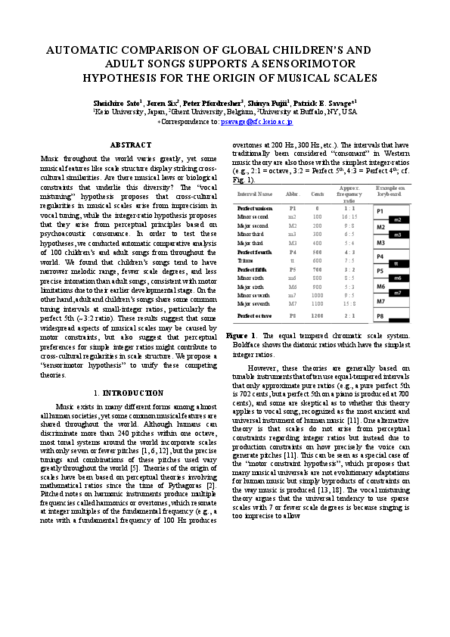 "Automatic comparison of global children's and adult songs":\[FMA2019_paper_13.pdf\] by Shoichiro Sato, Joren Six, Peter Pfordresher, Shinya Fujii and Patrick Savage
> Music throughout the world varies greatly, yet some musical features like scale structure display striking crosscultural similarities. Are there musical laws or biological constraints that underlie this diversity? The "vocal mistuning" hypothesis proposes that cross-cultural regularities in musical scales arise from imprecision in vocal tuning, while the integer-ratio hypothesis proposes that they arise from perceptual principles based on psychoacoustic consonance. In order to test these hypotheses, we conducted automatic comparative analysis of 100 children's and adult songs from throughout the world. We found that children's songs tend to have narrower melodic range, fewer scale degrees, and less precise intonation than adult songs, consistent with motor limitations due to their earlier developmental stage. On the other hand, adult and children's songs share some common tuning intervals at small-integer ratios, particularly the perfect 5th (\~3:2 ratio). These results suggest that some widespread aspects of musical scales may be caused by motor constraints, but also suggest that perceptual preferences for simple integer ratios might contribute to cross-cultural regularities in scale structure. We propose a "sensorimotor hypothesis" to unify these competing theories.
---
## [ISMIR 2018 Conference - Automatic Analysis Of Global Music Recordings suggests Scale Tuning Universals](https://0110.be/posts/ISMIR_2018_Conference_-_Automatic_Analysis_Of_Global_Music_Recordings__suggests_Scale_Tuning_Universals.md)
- Published: 2018-09-24T00:00:00Z
- Updated: 2019-07-03T13:46:15Z
- Author: Joren
- ID: 462
- Canonical: https://0110.be/posts/ISMIR_2018_Conference_-_Automatic_Analysis_Of_Global_Music_Recordings__suggests_Scale_Tuning_Universals
- Tags: [IPEM](https://0110.be/tags/IPEM.md), [ISMIR](https://0110.be/tags/ISMIR.md), [Music Information Retrieval](https://0110.be/tags/Music%20Information%20Retrieval.md), [Presentation](https://0110.be/tags/Presentation.md), [Research papers](https://0110.be/tags/Research%20papers.md), [UGent](https://0110.be/tags/UGent.md)
"Automatic comparison of global children's and adult songs":\[FMA2019_paper_13.pdf\] by Shoichiro Sato, Joren Six, Peter Pfordresher, Shinya Fujii and Patrick Savage
> Music throughout the world varies greatly, yet some musical features like scale structure display striking crosscultural similarities. Are there musical laws or biological constraints that underlie this diversity? The "vocal mistuning" hypothesis proposes that cross-cultural regularities in musical scales arise from imprecision in vocal tuning, while the integer-ratio hypothesis proposes that they arise from perceptual principles based on psychoacoustic consonance. In order to test these hypotheses, we conducted automatic comparative analysis of 100 children's and adult songs from throughout the world. We found that children's songs tend to have narrower melodic range, fewer scale degrees, and less precise intonation than adult songs, consistent with motor limitations due to their earlier developmental stage. On the other hand, adult and children's songs share some common tuning intervals at small-integer ratios, particularly the perfect 5th (\~3:2 ratio). These results suggest that some widespread aspects of musical scales may be caused by motor constraints, but also suggest that perceptual preferences for simple integer ratios might contribute to cross-cultural regularities in scale structure. We propose a "sensorimotor hypothesis" to unify these competing theories.
---
## [ISMIR 2018 Conference - Automatic Analysis Of Global Music Recordings suggests Scale Tuning Universals](https://0110.be/posts/ISMIR_2018_Conference_-_Automatic_Analysis_Of_Global_Music_Recordings__suggests_Scale_Tuning_Universals.md)
- Published: 2018-09-24T00:00:00Z
- Updated: 2019-07-03T13:46:15Z
- Author: Joren
- ID: 462
- Canonical: https://0110.be/posts/ISMIR_2018_Conference_-_Automatic_Analysis_Of_Global_Music_Recordings__suggests_Scale_Tuning_Universals
- Tags: [IPEM](https://0110.be/tags/IPEM.md), [ISMIR](https://0110.be/tags/ISMIR.md), [Music Information Retrieval](https://0110.be/tags/Music%20Information%20Retrieval.md), [Presentation](https://0110.be/tags/Presentation.md), [Research papers](https://0110.be/tags/Research%20papers.md), [UGent](https://0110.be/tags/UGent.md)
 Thanks to the support of a travel grant by the faculty of Arts and Philosophy of Ghent University I was able to attend the ISMIR 2018 conference. A conference on Music Information Retrieval. I am co author on a contribution for the [the Late-Breaking / Demos session](http://ismir2018.ircam.fr/pages/events-lbd.html)
> The structure of musical scales has been proposed to reflect universal acoustic principles based on simple integer ratios. However, some studying tuning in small samples of non-Western cultures have argued that such ratios are not universal but specific to Western music. To address this debate, we applied an algorithm that could automatically analyze and cross-culturally compare scale tunings to a global sample of 50 music recordings, including both instrumental and vocal pieces. Although we found great cross-cultural diversity in most scale degrees, these preliminary results also suggest a strong tendency to include the simplest possible integer ratio within the octave (perfect fifth, 3:2 ratio, \~700 cents) in both Western and non-Western cultures. This suggests that cultural diversity in musical scales is not without limit, but is constrained by universal psycho-acoustic principles that may shed light on the evolution of human music.
- [musical\_scales\_extended\_abstract\_\_0826\_revision\_copy.pdf](https://0110.be/files/attachments/462/musical_scales_extended_abstract__0826_revision_copy.pdf)
- [animated\_logo.gif](https://0110.be/files/attachments/462/animated_logo.gif)
- [ismir\_2018\_logo.jpg](https://0110.be/files/attachments/462/ismir_2018_logo.jpg)
---
## [JNMR article - Beyond documentation – The digital philology of interaction heritage](https://0110.be/posts/JNMR_article_-_Beyond_documentation_%E2%80%93_The_digital_philology_of_interaction_heritage.md)
- Published: 2018-07-31T00:00:00Z
- Updated: 2018-09-26T13:13:46Z
- Author: Joren
- ID: 464
- Canonical: https://0110.be/posts/JNMR_article_-_Beyond_documentation_%E2%80%93_The_digital_philology_of_interaction_heritage
- Tags: [JNMR](https://0110.be/tags/JNMR.md), [Presentation](https://0110.be/tags/Presentation.md), [Research papers](https://0110.be/tags/Research%20papers.md), [UGent](https://0110.be/tags/UGent.md)
Marc Leman and myself have recently published an article in the Journal of New Music Research for a special issue on Digital Philology for Multimedia Cultural Heritage. Our contribution is titled
Thanks to the support of a travel grant by the faculty of Arts and Philosophy of Ghent University I was able to attend the ISMIR 2018 conference. A conference on Music Information Retrieval. I am co author on a contribution for the [the Late-Breaking / Demos session](http://ismir2018.ircam.fr/pages/events-lbd.html)
> The structure of musical scales has been proposed to reflect universal acoustic principles based on simple integer ratios. However, some studying tuning in small samples of non-Western cultures have argued that such ratios are not universal but specific to Western music. To address this debate, we applied an algorithm that could automatically analyze and cross-culturally compare scale tunings to a global sample of 50 music recordings, including both instrumental and vocal pieces. Although we found great cross-cultural diversity in most scale degrees, these preliminary results also suggest a strong tendency to include the simplest possible integer ratio within the octave (perfect fifth, 3:2 ratio, \~700 cents) in both Western and non-Western cultures. This suggests that cultural diversity in musical scales is not without limit, but is constrained by universal psycho-acoustic principles that may shed light on the evolution of human music.
- [musical\_scales\_extended\_abstract\_\_0826\_revision\_copy.pdf](https://0110.be/files/attachments/462/musical_scales_extended_abstract__0826_revision_copy.pdf)
- [animated\_logo.gif](https://0110.be/files/attachments/462/animated_logo.gif)
- [ismir\_2018\_logo.jpg](https://0110.be/files/attachments/462/ismir_2018_logo.jpg)
---
## [JNMR article - Beyond documentation – The digital philology of interaction heritage](https://0110.be/posts/JNMR_article_-_Beyond_documentation_%E2%80%93_The_digital_philology_of_interaction_heritage.md)
- Published: 2018-07-31T00:00:00Z
- Updated: 2018-09-26T13:13:46Z
- Author: Joren
- ID: 464
- Canonical: https://0110.be/posts/JNMR_article_-_Beyond_documentation_%E2%80%93_The_digital_philology_of_interaction_heritage
- Tags: [JNMR](https://0110.be/tags/JNMR.md), [Presentation](https://0110.be/tags/Presentation.md), [Research papers](https://0110.be/tags/Research%20papers.md), [UGent](https://0110.be/tags/UGent.md)
Marc Leman and myself have recently published an article in the Journal of New Music Research for a special issue on Digital Philology for Multimedia Cultural Heritage. Our contribution is titled 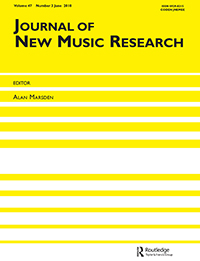 [Beyond documentation -- The digital philology of interaction heritage](https://www.tandfonline.com/doi/abs/10.1080/09298215.2018.1479428)
> A philologist's approach to heritage is traditionally based on the curation of documents, such as text, audio and video. However, with the advent of interactive multimedia, heritage becomes floating and volatile, and not easily captured in documents. We propose an approach to heritage that goes beyond documents. We consider the crucial role of institutes for interactive multimedia (as motor of a living culture of interaction) and propose that the digital philologist's task will be to promote the collective/shared responsibility of (interactive) documenting, engage engineering in developing interactive approaches to heritage, and keep interaction-heritage alive through the education of citizens.
---
## [MIR Meetup Berlin - Acoustic Fingerprinting in Research](https://0110.be/posts/MIR_Meetup_Berlin_-_Acoustic_Fingerprinting_in_Research.md)
- Published: 2018-04-26T00:00:00Z
- Updated: 2025-11-29T14:40:22Z
- Author: Joren
- ID: 461
- Canonical: https://0110.be/posts/MIR_Meetup_Berlin_-_Acoustic_Fingerprinting_in_Research
- Tags: [Computational musicology](https://0110.be/tags/Computational%20musicology.md), [Presentation](https://0110.be/tags/Presentation.md), [UGent](https://0110.be/tags/UGent.md)
I was kindly invited by SoundCloud to give a presentation on "Acoustic fingerprinting in research". The presentation took place during one of the "MIR Meetups" in Berlin on Monday, April 23, 2018. Before my presentation there was a presentation by Derek and Josh (both SoundCloud engineers) detailing the state of the internal fingerprinting system of SoundCloud.
During my presentation I gave an overview of various applications of acoustic fingerprinting in a music research environment and detailed how these applications can be handled and are implemented in [Panako: an open source fingerprinting system](http://panako.be)
Below the slides used during the presentation can be found:
---
## [Engineering systematic musicology](https://0110.be/posts/Engineering_systematic_musicology.md)
- Published: 2018-02-02T00:00:00Z
- Updated: 2025-11-29T14:41:35Z
- Author: Joren
- ID: 460
- Canonical: https://0110.be/posts/Engineering_systematic_musicology
- Tags: [Presentation](https://0110.be/tags/Presentation.md), [UGent](https://0110.be/tags/UGent.md)
The 11th of January I successfully completed my PhD training under mentorship of Marc Leman with a public defense at [de Krook](http://dekrook.be) in Ghent.
I also handed in my dissertation titled [Engineering systematic musicology: methods and services for computational and empirical music research](https://0110.be/files/attachments/460/2018.01.phd.joren.six-Engineering.systematic.musicology.pdf) ([version of record](https://biblio.ugent.be/publication/8544101)). The dissertation bundles several of [my publications](https://0110.be/Publications) and places them in a framework in the introduction and reflects upon these in the conclusion. The publications all contribute either directly to the field of systematic musicology (e.g. tone scale research) or contributes indirectly by facilitating specific research tasks (e.g. synchronization of multi-modal research data).
The presentation during my defense was meant for a broader audience. During the presentation I gave examples of the research topics I have been working and focused on how these are connected. The [presentation titled Engineering systematic musicology](https://0110.be/phd/presentation/) can be seen by following the previous link and is included below. The slide with the live spectrogram and the slide with the map need to be started by *double clicking* otherwise they remain empty.
[Beyond documentation -- The digital philology of interaction heritage](https://www.tandfonline.com/doi/abs/10.1080/09298215.2018.1479428)
> A philologist's approach to heritage is traditionally based on the curation of documents, such as text, audio and video. However, with the advent of interactive multimedia, heritage becomes floating and volatile, and not easily captured in documents. We propose an approach to heritage that goes beyond documents. We consider the crucial role of institutes for interactive multimedia (as motor of a living culture of interaction) and propose that the digital philologist's task will be to promote the collective/shared responsibility of (interactive) documenting, engage engineering in developing interactive approaches to heritage, and keep interaction-heritage alive through the education of citizens.
---
## [MIR Meetup Berlin - Acoustic Fingerprinting in Research](https://0110.be/posts/MIR_Meetup_Berlin_-_Acoustic_Fingerprinting_in_Research.md)
- Published: 2018-04-26T00:00:00Z
- Updated: 2025-11-29T14:40:22Z
- Author: Joren
- ID: 461
- Canonical: https://0110.be/posts/MIR_Meetup_Berlin_-_Acoustic_Fingerprinting_in_Research
- Tags: [Computational musicology](https://0110.be/tags/Computational%20musicology.md), [Presentation](https://0110.be/tags/Presentation.md), [UGent](https://0110.be/tags/UGent.md)
I was kindly invited by SoundCloud to give a presentation on "Acoustic fingerprinting in research". The presentation took place during one of the "MIR Meetups" in Berlin on Monday, April 23, 2018. Before my presentation there was a presentation by Derek and Josh (both SoundCloud engineers) detailing the state of the internal fingerprinting system of SoundCloud.
During my presentation I gave an overview of various applications of acoustic fingerprinting in a music research environment and detailed how these applications can be handled and are implemented in [Panako: an open source fingerprinting system](http://panako.be)
Below the slides used during the presentation can be found:
---
## [Engineering systematic musicology](https://0110.be/posts/Engineering_systematic_musicology.md)
- Published: 2018-02-02T00:00:00Z
- Updated: 2025-11-29T14:41:35Z
- Author: Joren
- ID: 460
- Canonical: https://0110.be/posts/Engineering_systematic_musicology
- Tags: [Presentation](https://0110.be/tags/Presentation.md), [UGent](https://0110.be/tags/UGent.md)
The 11th of January I successfully completed my PhD training under mentorship of Marc Leman with a public defense at [de Krook](http://dekrook.be) in Ghent.
I also handed in my dissertation titled [Engineering systematic musicology: methods and services for computational and empirical music research](https://0110.be/files/attachments/460/2018.01.phd.joren.six-Engineering.systematic.musicology.pdf) ([version of record](https://biblio.ugent.be/publication/8544101)). The dissertation bundles several of [my publications](https://0110.be/Publications) and places them in a framework in the introduction and reflects upon these in the conclusion. The publications all contribute either directly to the field of systematic musicology (e.g. tone scale research) or contributes indirectly by facilitating specific research tasks (e.g. synchronization of multi-modal research data).
The presentation during my defense was meant for a broader audience. During the presentation I gave examples of the research topics I have been working and focused on how these are connected. The [presentation titled Engineering systematic musicology](https://0110.be/phd/presentation/) can be seen by following the previous link and is included below. The slide with the live spectrogram and the slide with the map need to be started by *double clicking* otherwise they remain empty.
 I have contributed to the 4th International Digital Libraries for Musicology workshop (DLfM 2017) which was organized in Shanghai, China. It was a satellite event of the ISMIR 2017 conference. Unfortunately I did not mange to find funding to attend the workshop, I did however contribute as co-author to two proceeding papers. Both were presented by Reinier de Valk (thanks again).
### [MIRchiving: Challenges and opportunities of connecting MIR research and digital music archives](https://dl.acm.org/citation.cfm?id=3144755)
By Reinier de Valk (DANS), Anja Volk (Utrecht University), Andre Holzapfel (KTH Royal Institute of Technology) , Aggelos Pikrakis (University of Piraeus), Nadine Kroher (University of Seville - IMUS) and Joren Six (Ghent University - IPEM). Next to the [version of record](https://dl.acm.org/citation.cfm?id=3144755) there is also an author version available of the contribution titled "MIRchiving: Challenges and opportunities of connecting MIR research and digital music archives":\[2017.DLfM.MIRchiving-author.pdf\].
> This study is a call for action for the music information retrieval (MIR) community to pay more attention to collaboration with digital music archives. The study, which resulted from an interdisciplinary workshop and subsequent discussion, matches the demand for MIR technologies from various archives with what is already supplied by the MIR community. We conclude that the expressed demands can only be served sustainably through closer collaborations. Whereas MIR systems are described in scientific publications, usable implementations are often absent. If there is a runnable system, user documentation is often sparse----posing a huge hurdle for archivists to employ it. This study sheds light on the current limitations and opportunities of MIR research in the context of music archives by means of examples, and highlights available tools. As a basic guideline for collaboration, we propose to interpret MIR research as part of a value chain. We identify the following benefits of collaboration between MIR researchers and music archives: new perspectives for content access in archives, more diverse evaluation data and methods, and a more application-oriented MIR research workflow.
### [Applications of duplicate detection: linking meta-data and merging music archives: The experience of the IPEM historical archive of electronic music](https://dl.acm.org/citation.cfm?id=3144759)
By Federica Bressan, Joren Six and Marc Leman (Ghent University - IPEM). Next to the [version of record](https://dl.acm.org/citation.cfm?id=3144759) there is also an author version available of the contribution titled "Applications of duplicate detection: linking meta-data and merging music archives: The experience of the IPEM historical archive of electronic music":\[2017.dlfm_duplicates-author.pdf\].
> This work focuses on applications of duplicate detection for managing digital music archives. It aims to make this mature music information retrieval (MIR) technology better known to archivists and provide clear suggestions on how this technology can be used in practice. More specifically applications are discussed to complement meta-data, to link or merge digital music archives, to improve listening experiences and to re-use segmentation data. The IPEM archive, a digitized music archive containing early electronic music, provides a case study.
The [full DLfM 2017 proceedings](https://dl.acm.org/citation.cfm?id=3144749) are published by ACM.
- [2017.DLfM.MIRchiving-author.pdf](https://0110.be/files/attachments/456/2017.DLfM.MIRchiving-author.pdf)
- [2017.dlfm\_duplicates-author.pdf](https://0110.be/files/attachments/456/2017.dlfm_duplicates-author.pdf)
- [dlfm.png](https://0110.be/files/attachments/456/dlfm.png)
---
## [ESCOM 2017 - Regularity and asynchrony when tapping to tactile, auditory and combined pulses](https://0110.be/posts/ESCOM_2017_-_Regularity_and_asynchrony_when_tapping_to_tactile%2C_auditory_and_combined_pulses.md)
- Published: 2017-07-31T00:00:00Z
- Updated: 2017-08-02T15:40:23Z
- Author: Joren
- ID: 455
- Canonical: https://0110.be/posts/ESCOM_2017_-_Regularity_and_asynchrony_when_tapping_to_tactile%2C_auditory_and_combined_pulses
- Tags: [Presentation](https://0110.be/tags/Presentation.md), [UGent](https://0110.be/tags/UGent.md)
I have contributed to the 4th International Digital Libraries for Musicology workshop (DLfM 2017) which was organized in Shanghai, China. It was a satellite event of the ISMIR 2017 conference. Unfortunately I did not mange to find funding to attend the workshop, I did however contribute as co-author to two proceeding papers. Both were presented by Reinier de Valk (thanks again).
### [MIRchiving: Challenges and opportunities of connecting MIR research and digital music archives](https://dl.acm.org/citation.cfm?id=3144755)
By Reinier de Valk (DANS), Anja Volk (Utrecht University), Andre Holzapfel (KTH Royal Institute of Technology) , Aggelos Pikrakis (University of Piraeus), Nadine Kroher (University of Seville - IMUS) and Joren Six (Ghent University - IPEM). Next to the [version of record](https://dl.acm.org/citation.cfm?id=3144755) there is also an author version available of the contribution titled "MIRchiving: Challenges and opportunities of connecting MIR research and digital music archives":\[2017.DLfM.MIRchiving-author.pdf\].
> This study is a call for action for the music information retrieval (MIR) community to pay more attention to collaboration with digital music archives. The study, which resulted from an interdisciplinary workshop and subsequent discussion, matches the demand for MIR technologies from various archives with what is already supplied by the MIR community. We conclude that the expressed demands can only be served sustainably through closer collaborations. Whereas MIR systems are described in scientific publications, usable implementations are often absent. If there is a runnable system, user documentation is often sparse----posing a huge hurdle for archivists to employ it. This study sheds light on the current limitations and opportunities of MIR research in the context of music archives by means of examples, and highlights available tools. As a basic guideline for collaboration, we propose to interpret MIR research as part of a value chain. We identify the following benefits of collaboration between MIR researchers and music archives: new perspectives for content access in archives, more diverse evaluation data and methods, and a more application-oriented MIR research workflow.
### [Applications of duplicate detection: linking meta-data and merging music archives: The experience of the IPEM historical archive of electronic music](https://dl.acm.org/citation.cfm?id=3144759)
By Federica Bressan, Joren Six and Marc Leman (Ghent University - IPEM). Next to the [version of record](https://dl.acm.org/citation.cfm?id=3144759) there is also an author version available of the contribution titled "Applications of duplicate detection: linking meta-data and merging music archives: The experience of the IPEM historical archive of electronic music":\[2017.dlfm_duplicates-author.pdf\].
> This work focuses on applications of duplicate detection for managing digital music archives. It aims to make this mature music information retrieval (MIR) technology better known to archivists and provide clear suggestions on how this technology can be used in practice. More specifically applications are discussed to complement meta-data, to link or merge digital music archives, to improve listening experiences and to re-use segmentation data. The IPEM archive, a digitized music archive containing early electronic music, provides a case study.
The [full DLfM 2017 proceedings](https://dl.acm.org/citation.cfm?id=3144749) are published by ACM.
- [2017.DLfM.MIRchiving-author.pdf](https://0110.be/files/attachments/456/2017.DLfM.MIRchiving-author.pdf)
- [2017.dlfm\_duplicates-author.pdf](https://0110.be/files/attachments/456/2017.dlfm_duplicates-author.pdf)
- [dlfm.png](https://0110.be/files/attachments/456/dlfm.png)
---
## [ESCOM 2017 - Regularity and asynchrony when tapping to tactile, auditory and combined pulses](https://0110.be/posts/ESCOM_2017_-_Regularity_and_asynchrony_when_tapping_to_tactile%2C_auditory_and_combined_pulses.md)
- Published: 2017-07-31T00:00:00Z
- Updated: 2017-08-02T15:40:23Z
- Author: Joren
- ID: 455
- Canonical: https://0110.be/posts/ESCOM_2017_-_Regularity_and_asynchrony_when_tapping_to_tactile%2C_auditory_and_combined_pulses
- Tags: [Presentation](https://0110.be/tags/Presentation.md), [UGent](https://0110.be/tags/UGent.md)
 The 25th anniversary edition of the [ESCOM 2017 Conference](http://www.escom2017.org/) conference was organised in August 2017 by the IPEM research group from Ghent University. ESCOM is the conference of the [European Society for the Cognitive Sciences of Music](http://www.escom.org/.I) had two contributions to the conference.
The first was a collaboration with Frank Desmet, Micheline Lesaffre, Nathalie Ehrlé and Séverine Samson. The contribution is titled "Multimodal Analysis of Synchronization Data from Patients with Dementia":\[Desmet-et-al.pdf\]. It details a famework to analyze data in an experiment for patients with dementia.
For the second contribution I was the main researcher. It is the result of a project with students of the systematic musicology course at Ghent University (Laura Arens, Hade Demoor, Thomas Kint) . The contribution is called "Regularity and asynchrony when tapping to tactile, auditory and combined pulses":\[2017.escom_multimodal_async.pdf\]
The presentation "details a multi sensory tapping task":\[six-escom2017-presentation.pdf\] with the aim to develop an assistive technology for dancers.

---
## [Connecting Musical Modules - Musical Hardware and Software Interfaces](https://0110.be/posts/Connecting_Musical_Modules_-_Musical_Hardware_and_Software_Interfaces.md)
- Published: 2016-03-19T00:00:00Z
- Updated: 2025-11-29T19:33:25Z
- Author: Joren
- ID: 445
- Canonical: https://0110.be/posts/Connecting_Musical_Modules_-_Musical_Hardware_and_Software_Interfaces
- Tags: [Hackerspace Ghent](https://0110.be/tags/Hackerspace%20Ghent.md), [IPEM](https://0110.be/tags/IPEM.md), [Presentation](https://0110.be/tags/Presentation.md), [UGent](https://0110.be/tags/UGent.md)
The 25th anniversary edition of the [ESCOM 2017 Conference](http://www.escom2017.org/) conference was organised in August 2017 by the IPEM research group from Ghent University. ESCOM is the conference of the [European Society for the Cognitive Sciences of Music](http://www.escom.org/.I) had two contributions to the conference.
The first was a collaboration with Frank Desmet, Micheline Lesaffre, Nathalie Ehrlé and Séverine Samson. The contribution is titled "Multimodal Analysis of Synchronization Data from Patients with Dementia":\[Desmet-et-al.pdf\]. It details a famework to analyze data in an experiment for patients with dementia.
For the second contribution I was the main researcher. It is the result of a project with students of the systematic musicology course at Ghent University (Laura Arens, Hade Demoor, Thomas Kint) . The contribution is called "Regularity and asynchrony when tapping to tactile, auditory and combined pulses":\[2017.escom_multimodal_async.pdf\]
The presentation "details a multi sensory tapping task":\[six-escom2017-presentation.pdf\] with the aim to develop an assistive technology for dancers.

---
## [Connecting Musical Modules - Musical Hardware and Software Interfaces](https://0110.be/posts/Connecting_Musical_Modules_-_Musical_Hardware_and_Software_Interfaces.md)
- Published: 2016-03-19T00:00:00Z
- Updated: 2025-11-29T19:33:25Z
- Author: Joren
- ID: 445
- Canonical: https://0110.be/posts/Connecting_Musical_Modules_-_Musical_Hardware_and_Software_Interfaces
- Tags: [Hackerspace Ghent](https://0110.be/tags/Hackerspace%20Ghent.md), [IPEM](https://0110.be/tags/IPEM.md), [Presentation](https://0110.be/tags/Presentation.md), [UGent](https://0110.be/tags/UGent.md)
 I have given a presentation at the the [Newline](https://0x20.be/newline/2016/) conference, a yearly event organized by the [Hackerspace Ghent](http://0x20.be). It was about:
> "In this talk I will give a practical overview on how to connect hard- and software components for musical applications. Next to an overview there will be demos! Do you want to make a musical instrument using a light sensor? Use your smartphone as an input device for a synth? Or are you simply interested in simple low-latency communication between devices? Come to this talk! More concretely the talk will feature the Axoloti audio board, Teensy micro-controller with audio board, MIDI and OSC protocols, Android MIDI features and some sensors."
During the presentation the hard and software components were demonstrated. More concretely an introduction was given to the following:
- [Axoloti audio board](http://www.axoloti.com/): An audio DSP board.
- [Teensy 3.2](https://www.pjrc.com/teensy): A general purpose microcontroller with audio capabilities.
- [TarsosDSP](https://github.com/JorenSix/TarsosDSP): A library for audio processing in Java available for Android.
The "presentation about DIY musical modules":\[2016.03.19.music-interfaces.pdf\] can be downloaded here.
- [2016.03.19.music-interfaces.pdf](https://0110.be/files/attachments/445/2016.03.19.music-interfaces.pdf)
- [logo.png](https://0110.be/files/attachments/445/logo.png)
---
## [Lecture on MIR - Tone Scale Extraction - Acoustic Fingerprinting](https://0110.be/posts/Lecture_on_MIR_-_Tone_Scale_Extraction_-_Acoustic_Fingerprinting.md)
- Published: 2015-10-30T00:00:00Z
- Updated: 2025-11-29T19:35:10Z
- Author: Joren
- ID: 444
- Canonical: https://0110.be/posts/Lecture_on_MIR_-_Tone_Scale_Extraction_-_Acoustic_Fingerprinting
- Tags: [Presentation](https://0110.be/tags/Presentation.md), [UGent](https://0110.be/tags/UGent.md)
This morning, the 30th of October 2015, I gave a lecture on Music Information Retrieval in general and two MIR-tasks in particular. The two more detailed tasks were tone scale analysis and acoustic fingerprinting.
I have given a presentation at the the [Newline](https://0x20.be/newline/2016/) conference, a yearly event organized by the [Hackerspace Ghent](http://0x20.be). It was about:
> "In this talk I will give a practical overview on how to connect hard- and software components for musical applications. Next to an overview there will be demos! Do you want to make a musical instrument using a light sensor? Use your smartphone as an input device for a synth? Or are you simply interested in simple low-latency communication between devices? Come to this talk! More concretely the talk will feature the Axoloti audio board, Teensy micro-controller with audio board, MIDI and OSC protocols, Android MIDI features and some sensors."
During the presentation the hard and software components were demonstrated. More concretely an introduction was given to the following:
- [Axoloti audio board](http://www.axoloti.com/): An audio DSP board.
- [Teensy 3.2](https://www.pjrc.com/teensy): A general purpose microcontroller with audio capabilities.
- [TarsosDSP](https://github.com/JorenSix/TarsosDSP): A library for audio processing in Java available for Android.
The "presentation about DIY musical modules":\[2016.03.19.music-interfaces.pdf\] can be downloaded here.
- [2016.03.19.music-interfaces.pdf](https://0110.be/files/attachments/445/2016.03.19.music-interfaces.pdf)
- [logo.png](https://0110.be/files/attachments/445/logo.png)
---
## [Lecture on MIR - Tone Scale Extraction - Acoustic Fingerprinting](https://0110.be/posts/Lecture_on_MIR_-_Tone_Scale_Extraction_-_Acoustic_Fingerprinting.md)
- Published: 2015-10-30T00:00:00Z
- Updated: 2025-11-29T19:35:10Z
- Author: Joren
- ID: 444
- Canonical: https://0110.be/posts/Lecture_on_MIR_-_Tone_Scale_Extraction_-_Acoustic_Fingerprinting
- Tags: [Presentation](https://0110.be/tags/Presentation.md), [UGent](https://0110.be/tags/UGent.md)
This morning, the 30th of October 2015, I gave a lecture on Music Information Retrieval in general and two MIR-tasks in particular. The two more detailed tasks were tone scale analysis and acoustic fingerprinting.
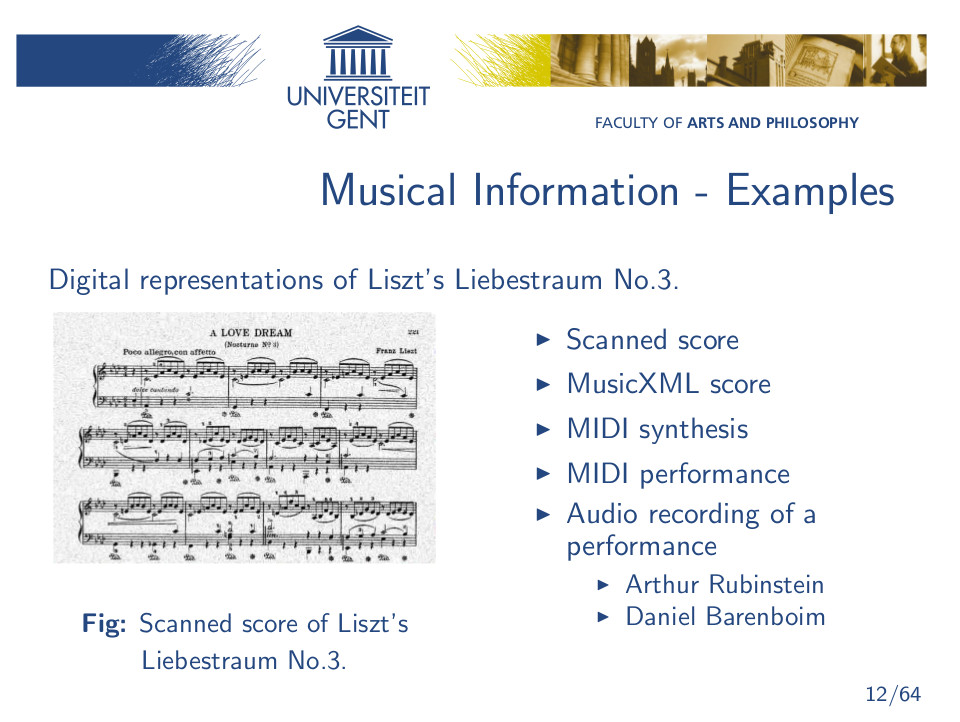
 \
\
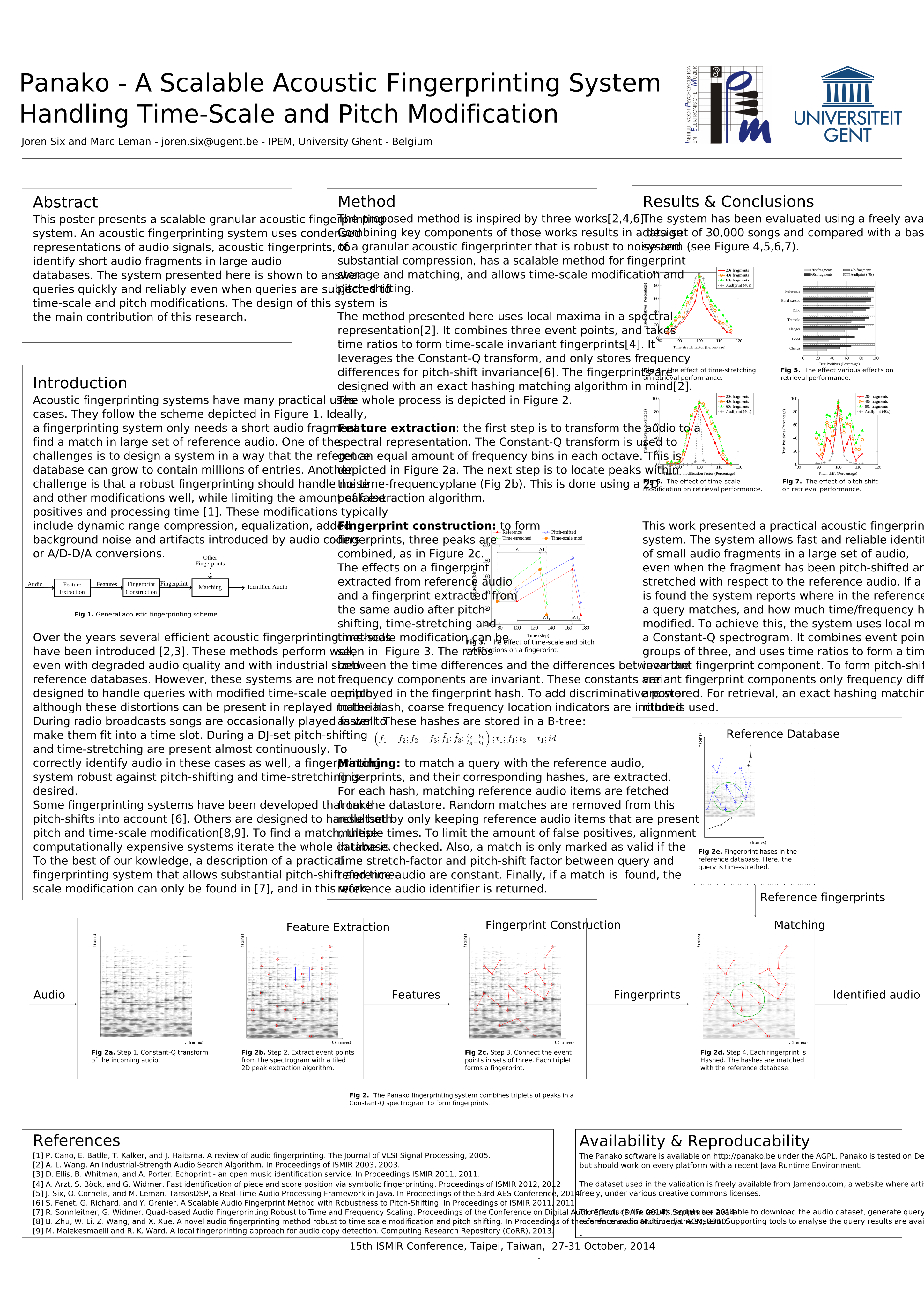 At [ISMIR 2014](http://www.terasoft.com.tw/conf/ismir2014) i will present a paper on a fingerprinting system. ISMIR is the annual conference of the International Society for Music Information Retrieval is the world's leading interdisciplinary forum on accessing, analyzing, and organizing digital music of all sorts. This years instalment takes place in Taipei, Taiwan. My contribution is a paper titled [Panako - A Scalable Acoustic Fingerprinting System Handling Time-Scale and Pitch Modification](http://www.terasoft.com.tw/conf/ismir2014/proceedings/T048_122_Paper.pdf), it will be presented during a poster session the 27th of October.
> *This paper presents a scalable granular acoustic fingerprinting system. An acoustic fingerprinting system uses condensed representation of audio signals, acoustic fingerprints, to identify short audio fragments in large audio databases. A robust fingerprinting system generates similar fingerprints for perceptually similar audio signals. The system presented here is designed to handle time-scale and pitch modifications. The open source implementation of the system is called Panako and is evaluated on commodity hardware using a freely available reference database with fingerprints of over 30,000 songs. The results show that the system responds quickly and reliably on queries, while handling time-scale and pitch modifications of up to ten percent.*
> *The system is also shown to handle GSM-compression, several audio effects and band-pass filtering. After a query, the system returns the start time in the reference audio and how much the query has been pitch-shifted or time-stretched with respect to the reference audio. The design of the system that offers this combination of features is the main contribution of this paper.*
The system is available, together with documentation and information on how to reproduce the results from the ISMIR paper, on the Panako website. Also available for download is the [Panako poster (pdf)](https://0110.be/files/attachments/424/panako_poster.pdf), [Panako ISMIR paper](https://0110.be/files/attachments/424/ismir_2014_panako_fingerprinter.pdf) and the [Panako poster (inkscape SVG)](https://0110.be/files/attachments/424/panako_poster_portrait.svg).
At [ISMIR 2014](http://www.terasoft.com.tw/conf/ismir2014) i will present a paper on a fingerprinting system. ISMIR is the annual conference of the International Society for Music Information Retrieval is the world's leading interdisciplinary forum on accessing, analyzing, and organizing digital music of all sorts. This years instalment takes place in Taipei, Taiwan. My contribution is a paper titled [Panako - A Scalable Acoustic Fingerprinting System Handling Time-Scale and Pitch Modification](http://www.terasoft.com.tw/conf/ismir2014/proceedings/T048_122_Paper.pdf), it will be presented during a poster session the 27th of October.
> *This paper presents a scalable granular acoustic fingerprinting system. An acoustic fingerprinting system uses condensed representation of audio signals, acoustic fingerprints, to identify short audio fragments in large audio databases. A robust fingerprinting system generates similar fingerprints for perceptually similar audio signals. The system presented here is designed to handle time-scale and pitch modifications. The open source implementation of the system is called Panako and is evaluated on commodity hardware using a freely available reference database with fingerprints of over 30,000 songs. The results show that the system responds quickly and reliably on queries, while handling time-scale and pitch modifications of up to ten percent.*
> *The system is also shown to handle GSM-compression, several audio effects and band-pass filtering. After a query, the system returns the start time in the reference audio and how much the query has been pitch-shifted or time-stretched with respect to the reference audio. The design of the system that offers this combination of features is the main contribution of this paper.*
The system is available, together with documentation and information on how to reproduce the results from the ISMIR paper, on the Panako website. Also available for download is the [Panako poster (pdf)](https://0110.be/files/attachments/424/panako_poster.pdf), [Panako ISMIR paper](https://0110.be/files/attachments/424/ismir_2014_panako_fingerprinter.pdf) and the [Panako poster (inkscape SVG)](https://0110.be/files/attachments/424/panako_poster_portrait.svg). At this years ICMC Conference, [ICMC 2012](http://www.icmc2012.si/) we presented a paper describing a way to experiment with tone scales and how to use Tarsos as a compositional tool. What follows are some pointers to the presentation, paper and to other interesting talks that were presented there.
ICMC 2012 was organized in Ljubljana from the 9 to 14 septembre and had a very dense program of talks, posters, presentations, demos and concerts.
At this years ICMC Conference, [ICMC 2012](http://www.icmc2012.si/) we presented a paper describing a way to experiment with tone scales and how to use Tarsos as a compositional tool. What follows are some pointers to the presentation, paper and to other interesting talks that were presented there.
ICMC 2012 was organized in Ljubljana from the 9 to 14 septembre and had a very dense program of talks, posters, presentations, demos and concerts.
 What follows is about the [Conference on Interdisciplinary Musicology (CIM2012)](http://gfm2012.uni-goettingen.de/cim12/CIM12/Home.html) and the [15th international Conference of the Gesellschaft fur Musikfoschung](http://gfm2012.uni-goettingen.de/GfM2012/Home.html). First this text will give information about our contribution to CIM2012: *Revealing and Listening to Scales From the Past; Tone Scale Analysis of Archived Central-African Music Using Computational Means* and then a number of highlights of the conference follow. The joint conference took place from the 4th to the 8th of september 2012.
WORKSHOP - Muziek (ont)luisteren op de computer\ Is het mogelijk om piano te spelen op een tafel? Kan een computer luisteren naar muziek en er van genieten? Wat is muziek eigenlijk, en hoe werkt geluid?
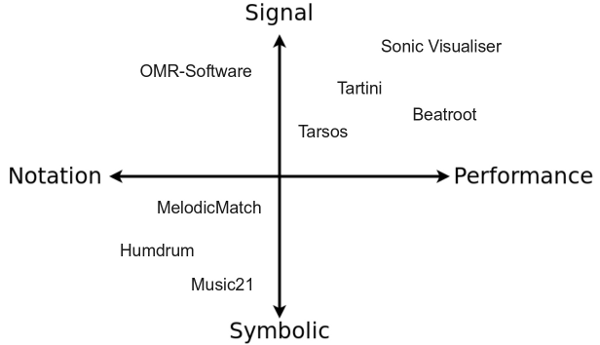
 The 17th of Octobre 2011 Tarsos was presented at the [Study Day: Tuning and Temperament](http://music.sas.ac.uk/imr-events/imr-conferences-colloquia-performance-events/study-day-tuning-and-temperament.html) which was held at the Institue of Music Research in Londen. The study day was organised by Dan Tidhar. A short description of the aim of the study day: