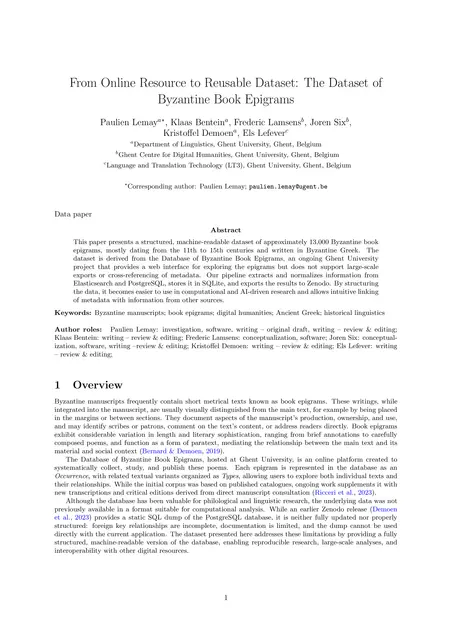
From Online Resource to Reusable Dataset: The Dataset of Byzantine Book Epigrams
Journal of Open Humanities Data

I have profiles on UGent Biblio, Google Scholar, ResearchGate, Research Portal Flanders, and UGent Research. However, this page is the most complete and regularly updated source for my publications. The full list can be found below.
Journal of Open Humanities Data
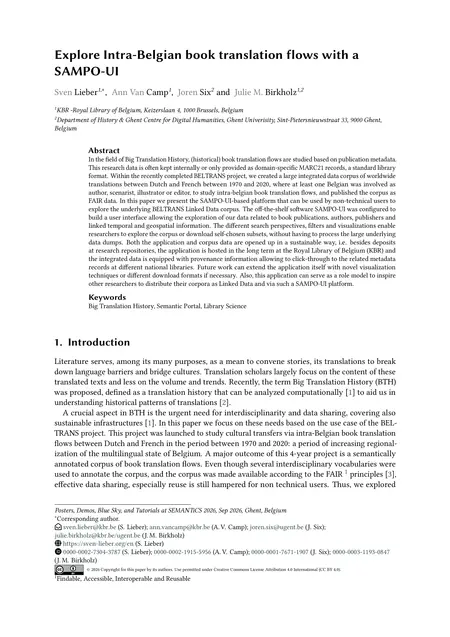
Posters, Demos, Blue Sky, and Tutorials at SEMANTiCS 2026
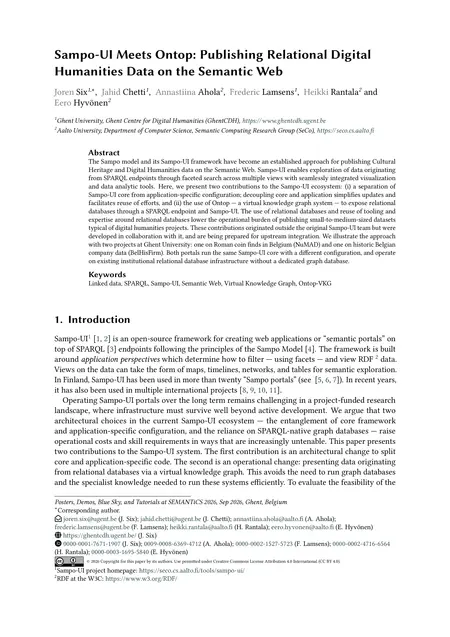
Posters, Demos, Blue Sky, and Tutorials at SEMANTICS 2026
Journal of Open Source Software
European Journal of Neuroscience,
Advances in Speech and Music Technology
Late Breaking Demo session of the 22st International Society for Music Information Retrieval Conference - ISMIR 2021
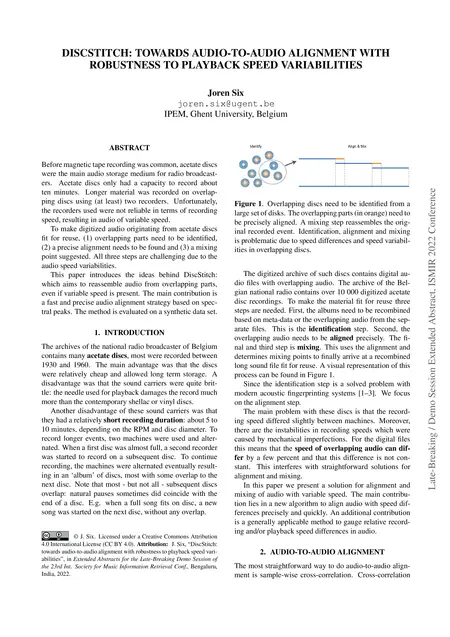
ISMIR 2022 Late Breaking / Demo abstracts
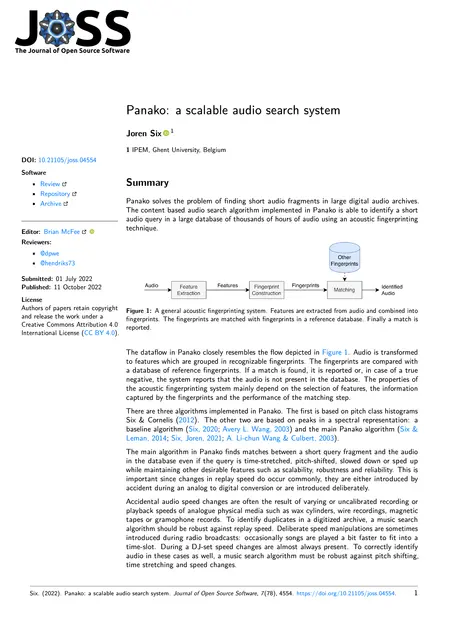
Journal of Open Source Software
Annals of the New York Academy of Science
Annals of the New York Academy of Science
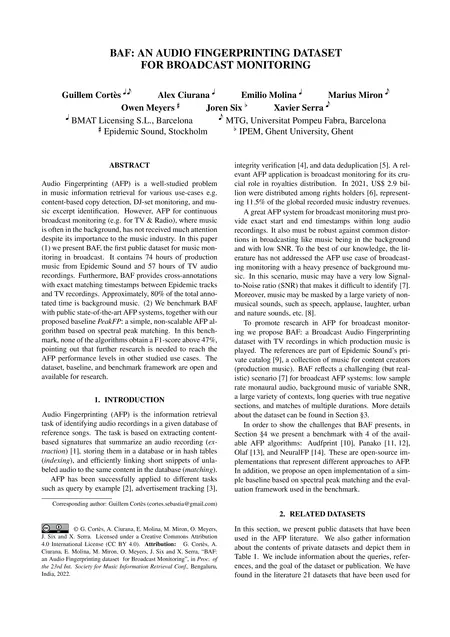
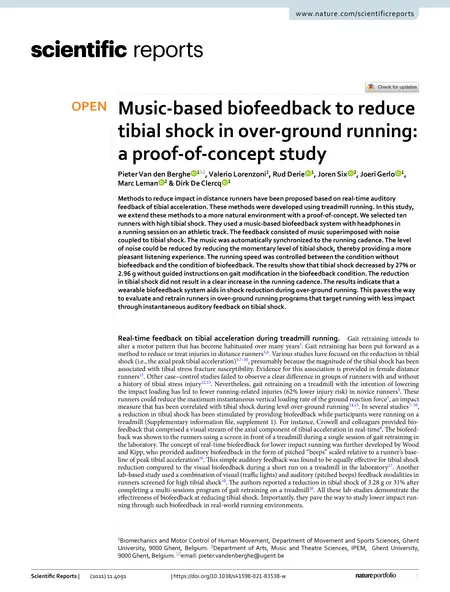
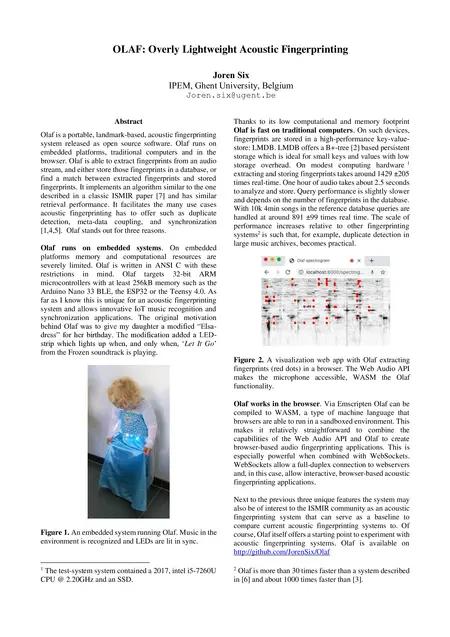
ISMIR 2020 Late Breaking / Demo abstracts
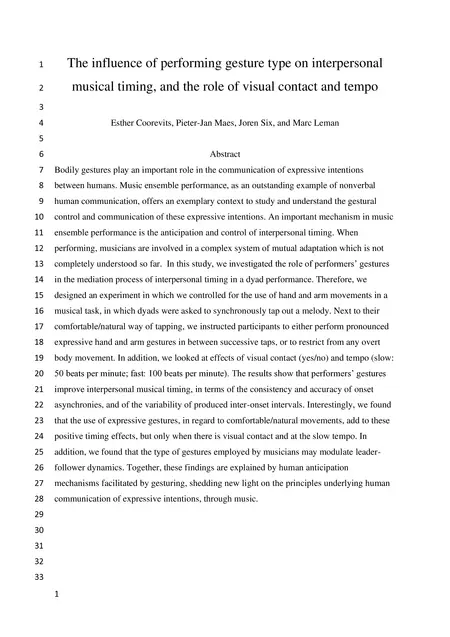
Gériatrie et Psychologie Neuropsychiatrie du Vieillissement.
Frontiers in Neuroscience
Proceedings of the 9th Folk Music Analysis (FMA) conference
Proceedings of the 9th Folk Music Analysis (FMA) conference
Journal on Multimodal User Interfaces
Extended abstracts for the Late-Breaking Demo Session of the 19th International Society for Music Information
Critical Arts South-North Cultural and Media Studies
Proceedings of the 14th Italian Research Conference on Digital Libraries (IRCDL 2018)
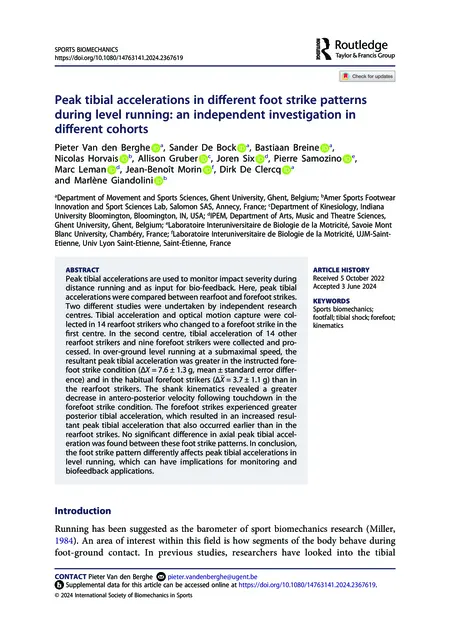
Proceedings on the 42nd American of Biomechanics Congress.
Transactions of the International Society of Music Information Retrieval
Journal of New Music Research, Special edition on Digital Philology
Proceedings of AES Conference on Semantic Audio
Proceedings of the ESCOM conference
Proceedings of the 4th International Digital Libraries for Musicology workshop (DLfM 2017)
Proceedings of the 4th International Digital Libraries for Musicology workshop (DLfM 2017)
Physics in Medicine
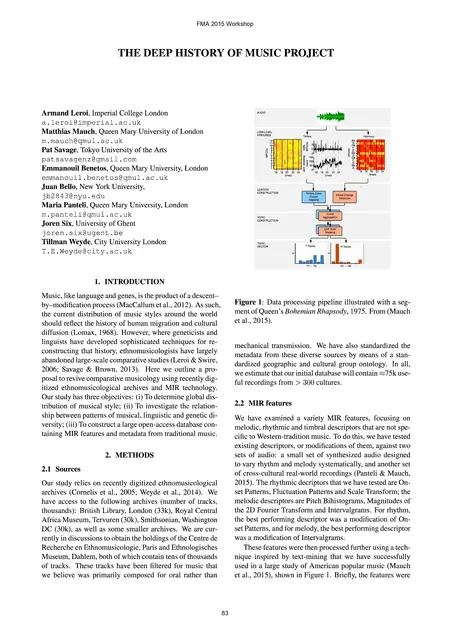
Proceedings of the 5th Folk Music Analysis (FMA) conference
Journal on Multimodal User Interfaces
Proceedings of the Audio Engineering Society Conference: 53rd International Conference: Semantic Audio
Proceedings of the 15th ISMIR Conference (ISMIR 2014)
Journal of New Music Research
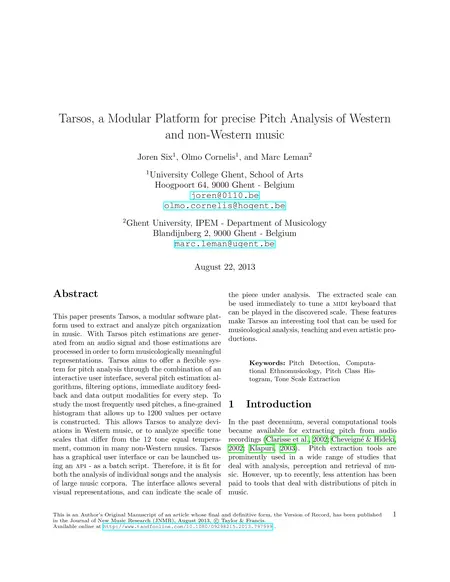
Journal of New Music Research. 42(2)
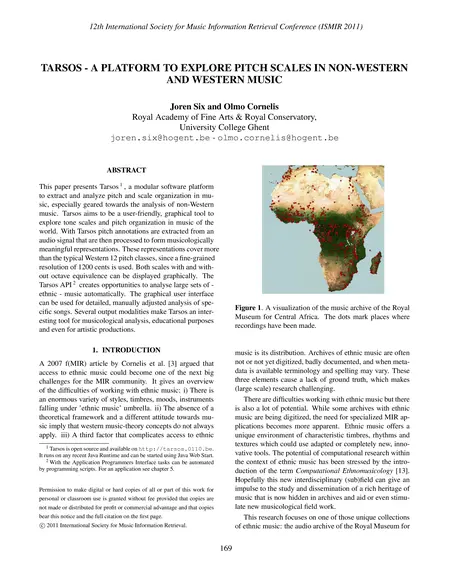
Proceedings of the 12th International Symposium on Music Information Retrieval
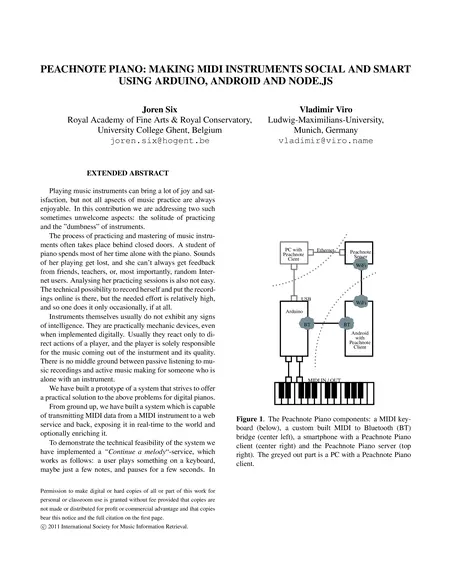
Demo Sessions of the 12th International Society for Music Information Retrieval Conference (ISMIR 2011)
Panel discussion, 2012: Technological challenges for the computational modelling of the world’s musical heritage, Folk Music Analysis Conference 2012 – FMA 2012, organizers: Polina Proutskova and Emilia Gomez, Seville, Spain
Guest lecture, 2012: Non-western music and digital humanities, for: “Studies in Western Music History: Quantitative and Computational Approaches to Music History”, M.I.T., Boston, U.S.
Guest lecture, 2011: Presenting Tarsos, a software platform for pitch analysis. At: Electrical and Electronics Eng.Dept. IYTE, Izmir, Turkey
Workshop 2017:Computational Ethnomusicology – Methodologies for a new field Leiden, The Netherlands
A002301 (2016-2017) “Grondslagen van de muzikale acoustica en sonologie” – Theory and Practice sessions together with dr. Pieter-Jan Maes
I am recognized as co-inventor on a Patent titled Low impact running WO/2020/002275
For research software see the software output page

Monday, I’ll give a small presentation about Latex and Version Control for the research team at the University College Gent, Faculty of Music. The idea is to give a pragmatic overview of working with Latex and version control. The “presentation about Latex & Version control (in Dutch)”:[latex_svn_presentatie.pdf] can be downloaded. The presentation itself is created using Latex and “the source of the presentation”:[latex_svn_presentatie.zip] is also available. A good description of Latex can be found here:
LaTeX (pronounced “latech”) is a document preparation system for high-quality typesetting based on, and succeeding TeX formatting. It is a very popular format in academia, as it allows advanced document formatting capabilities not found in other common document formatting systems. Some of these capabilities include table figure notations, bibliography formatting (see BibTeX), and an advanced macro language.
Some useful references:
Eclipse: an IDE (Integrated Development Environment) which can be used as Latex editor with version control by installing the TeXclipse and Subclipse plugins.
 Presentation and HoGent
 latex_svn_presentatie.zip, latex_icon.png, and latex_svn_presentatie.pdf
This post contains links to genuinely useful software to do signal based audio analysis.
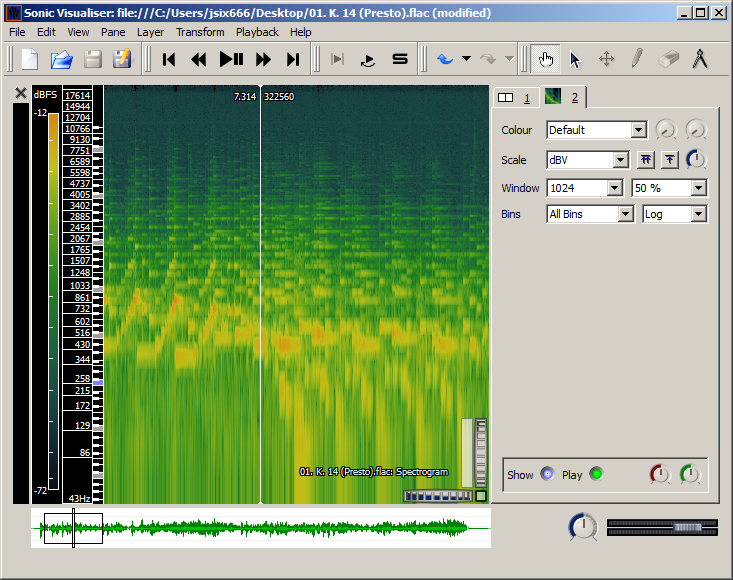
Sonic Visualizer: As its name suggests Sonic Visualizer contains a lot different visualisations for audio. It can be used for analysis (pitch,beat,chroma,…) with VAMP-plugins. To quote “The aim of Sonic Visualiser is to be the first program you reach for when want to study a musical recording rather than simply listen to it”. It is the swiss army knife of audio analysis.
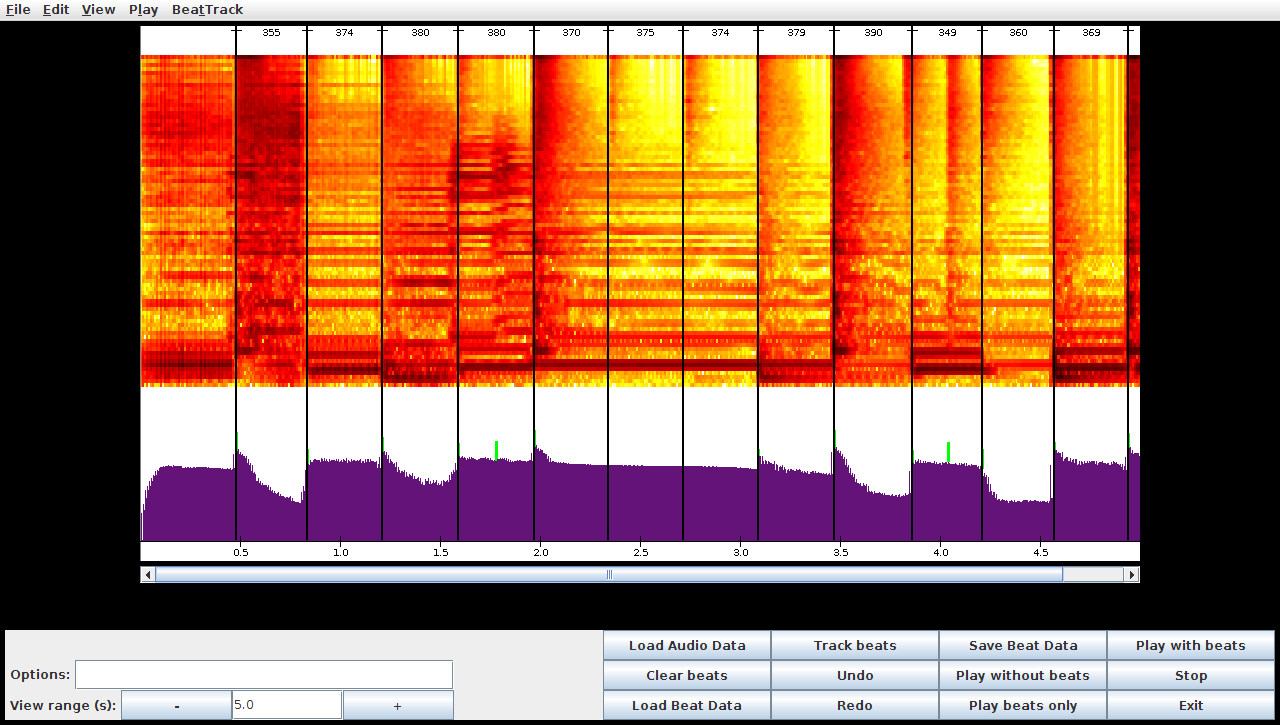
BeatRoot is designed specifically for one goal: beat tracking. It can be used for e.g. comparing tempi of different performances of the same piece or to track tempo deviation within one piece.
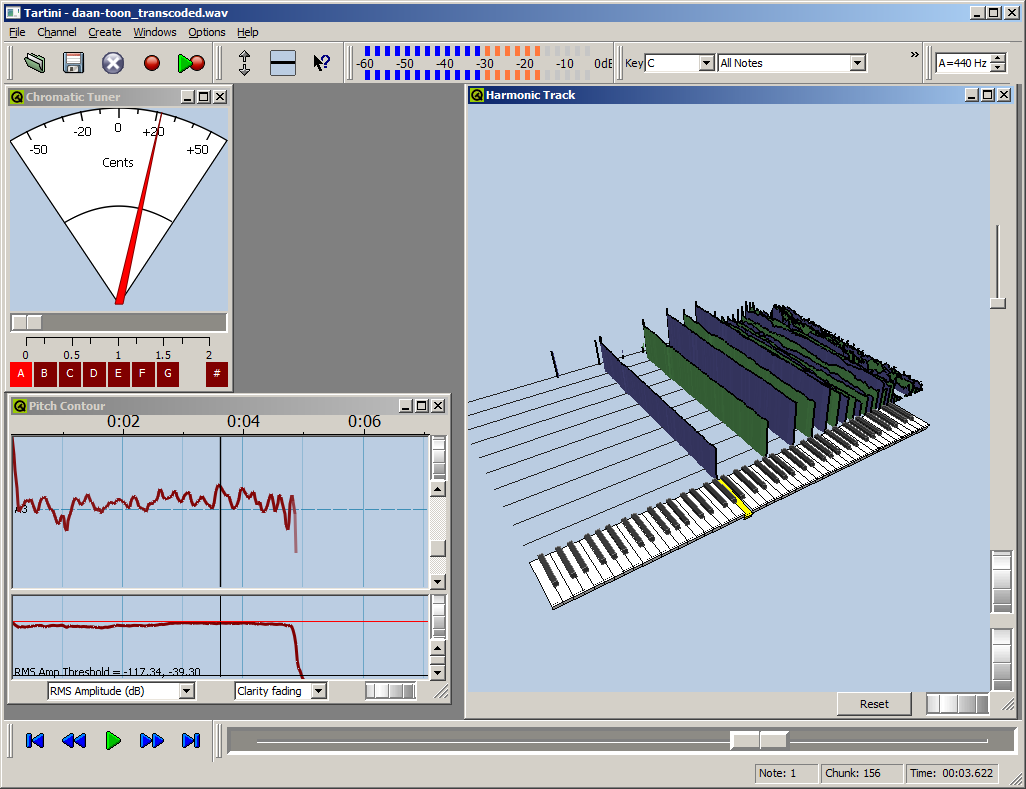
Tartini is capable to do real-time pitch analysis of sound. You can e.g. play into a microphone with a violin and see the harmonics you produce and adapt you playing style based on visual feedback. It also contains a pitch deviation measuring apparatus to analyse vibrato.
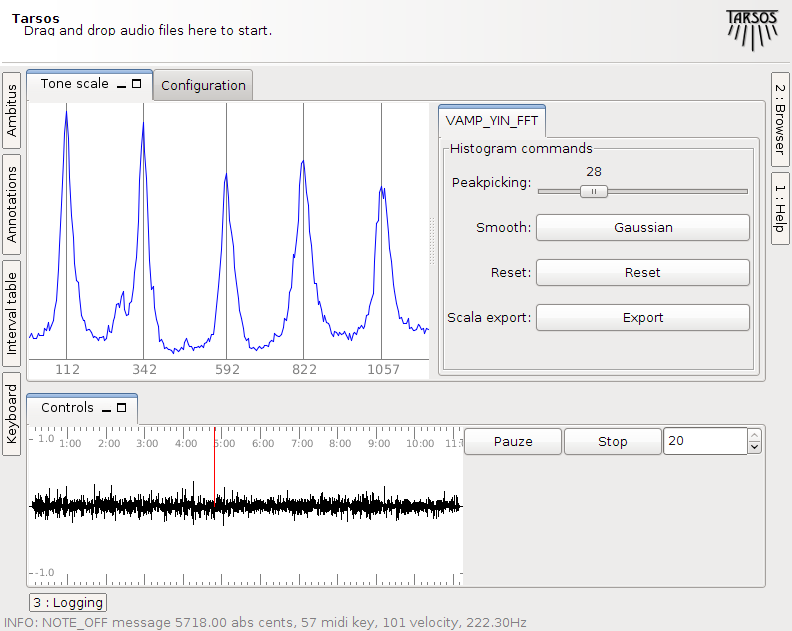
Tarsos is software for tone scale analysis. It is useful to extract tone scales from audio. Different tuning systems can be seen, extracted and compared. It also contains the ability to play along with the original song with a tuned midi keyboard .
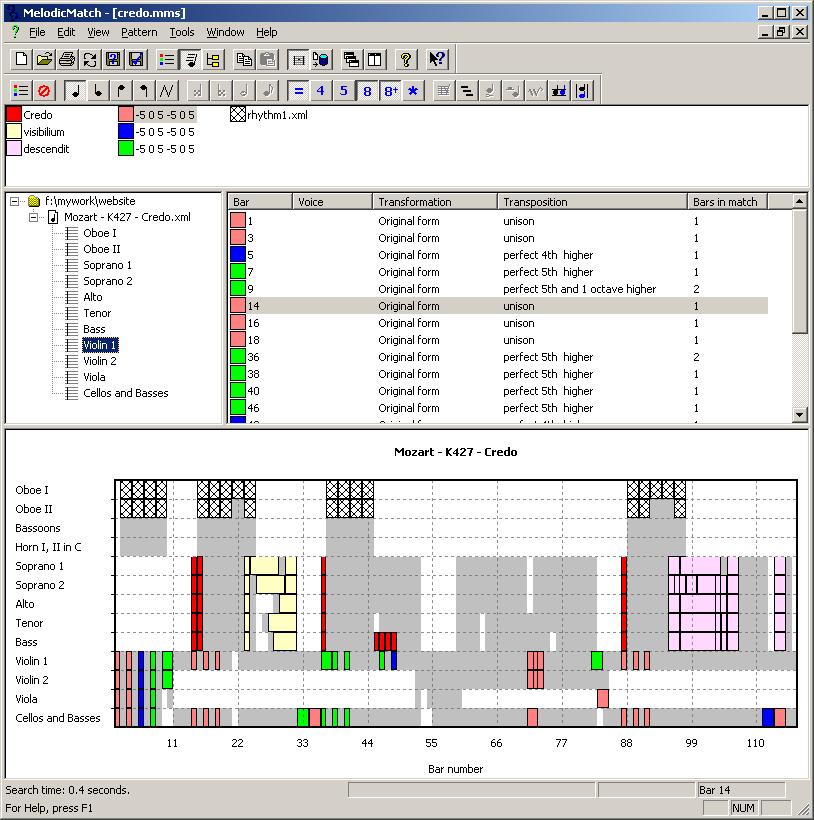
Melodic Match is a different beast. It does not work on signal level but processes symbolic audio. More to the point it searches through MusicXML files - which can be created from MIDI-files. See its website for use cases. Melodic Match is only available for Windows.
During a lecture at the University College Gent, Faculty of Music these tools were presented with some examples. “The slides (Slides in Dutch)”:[presentatie.pdf] and “a zip-file with audio samples, slides and software”:[Tarsos-presentatie.zip] are available for reference. Most of the time was given to Tarsos, the software we developed.
Olmo Cornelis also gave a lecture about his own research and how Tarsos fits in the bigger picture. “His presentation (Slides in English)”:[lezing_Olmo_Cornelis_zonder_audio.ppt] and “the presentation with audio”:[lezing_Olmo_Cornelis_met_audio.zip] are also available here.
 Music Information Retrieval, Presentation, Computational musicology, and HoGent
presentatie.pdf, Tarsos-presentatie.zip, lezing_Olmo_Cornelis_zonder_audio.ppt, and lezing_Olmo_Cornelis_met_audio.zip
 Yesterday Tarsos was publicly presented at the symposium Perspectives for Computational Musicology in Amsterdam. The first public presentation of Tarsos, excluding this website. The symposium was organized by the Meertens Institute on the occasion of Peter van Kranenburg’s PhD defense.
The presentation included a live demo of a daily build of Tarsos (a Friday evening build) which worked, surprisingly, without hiccups. The presentation was done by Olmo Cornelis. This was the small introduction:
Tarsos - a Platform for Pitch Analysis of Ethnic Music
\ Ethnic music is a vulnerable cultural heritage that has received only recently more attention within the Music Information Retrieval community. However, access to ethnic music remains problematic, as this music does not always correspond to the Western concepts of music and metadata that underlie the currently available content-based methods. During this lecture, we like to present our current research on pitch analysis of African music. TARSOS, a platform for analysis, will be presented as a powerful tool that can describe and compare scales with great detail.
To give Tarsos a try ou can start Tarsos using JAVA WebStart or download the executable Tarsos JAR-file. A JAVA 1.5 runtime is required.
Computational ethnomusicology, Music Information Retrieval, featured, Presentation, and HoGent